2026 Guide: Training Dogs With Canine Osteoarthritis
Learn how to adapt obedience and trick training for dogs with osteoarthritis in 2026. Discover low-impact mental enrichment and joint-safe conditioning tips.
The Intersection of Osteoarthritis Treatment and Behavioral Training
Canine osteoarthritis (OA) is a degenerative joint disease that affects a vast majority of senior dogs and many younger canines with developmental orthopedic conditions. As we navigate the advanced veterinary landscape of 2026, multimodal OA treatments—ranging from next-generation anti-NGF monoclonal antibodies to specialized joint supplements and physical therapy—have drastically improved the quality of life for our canine companions. However, medical treatment is only half the battle. For dog owners and professional trainers, adapting behavioral conditioning, obedience routines, and trick training to accommodate a dog with osteoarthritis is absolutely critical.
Many owners mistakenly believe that a dog undergoing OA treatment should stop training altogether. In reality, cognitive engagement and low-impact training are vital for maintaining a dog's mental health, preventing depression, and preserving the human-animal bond. The key lies in shifting our training paradigm from physical exertion to mental stimulation, ensuring that every training session respects the dog's current pain thresholds and joint limitations.
The Pain-Behavior Connection: Why Traditional Methods Fail
According to the American Animal Hospital Association (AAHA), unrecognized or under-managed pain is a leading cause of behavioral changes in dogs. A dog that suddenly refuses to perform a reliable "sit" or snaps when asked to move from a dog bed is rarely being "stubborn" or "dominant." In 2026, veterinary behaviorists universally recognize that pain-induced avoidance and aggression are primary symptoms of unmanaged osteoarthritis.
When a dog experiences joint pain, their cognitive load increases. Pain acts as a massive distraction, making it neurologically difficult for the dog to process new cues or recall previously learned commands. Therefore, before initiating any training protocol, ensure your dog's pain management plan is optimized by your veterinarian. Once pain is medically managed, training can resume with compassionate, biomechanical modifications.
Modifying Core Obedience Commands for Joint Health
Rethinking the "Sit" and "Down"
Traditional obedience training often demands strict, textbook positioning. A "proper" sit requires the dog to tuck their hindquarters squarely beneath them, placing significant flexion and weight-bearing stress on the stifle (knee) and coxofemoral (hip) joints. For a dog with hip dysplasia or bilateral stifle osteoarthritis, this position can be agonizing.
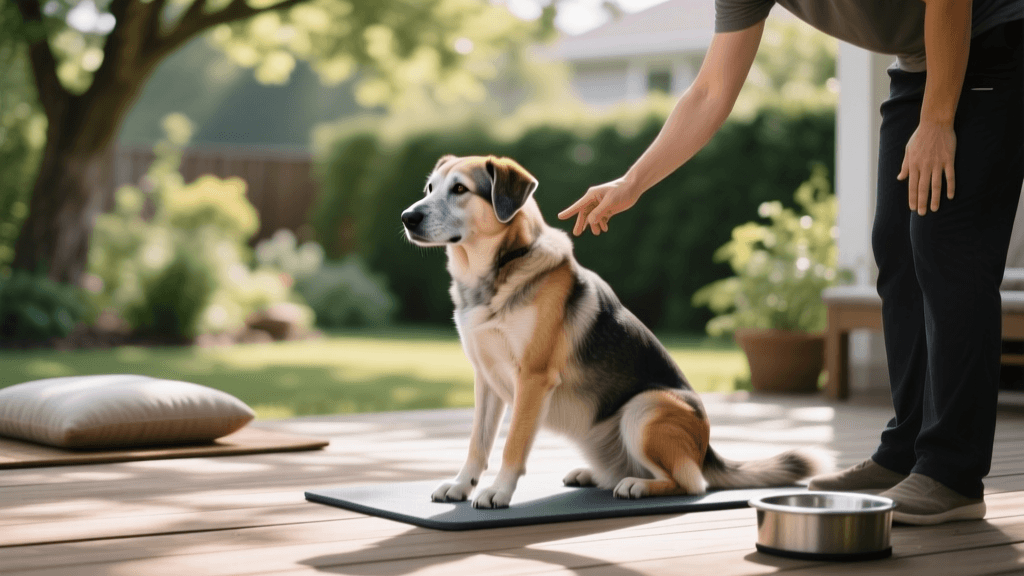
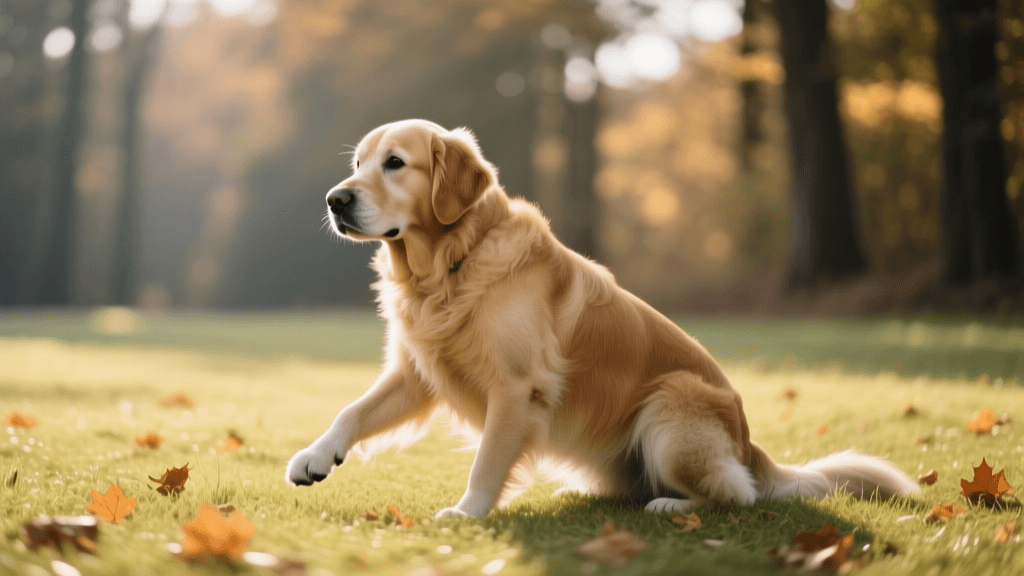
- The OA-Friendly Sit: Accept a "slipped sit" or "puppy sit" where the dog's hind legs splay out to one side. This shifts the weight off the hip joints and reduces the flexion angle. Reward the dog for the effort of stopping and engaging with you, rather than the geometric precision of their posture.
- The OA-Friendly Down: Instead of luring a dog into a tight sphinx-down, which requires them to fold their hind legs tightly beneath their body, encourage a "side-lying down" or a "stretch-down" where the hind legs extend backward. Use an elevated, orthopedic surface to lure them, so they don't have to navigate the painful transition from a stand to a hard floor.
Adapting the "Stay" and "Recall"
The "stay" command is actually one of the most valuable tools for an arthritic dog, as it prevents them from rushing toward the door or jumping onto furniture. However, you must modify how you build duration and distance. Instead of walking away and calling the dog to you (which requires sudden acceleration and deceleration), practice "duration stays" where you remain close, gradually increasing the time the dog holds a comfortable position. For the "recall," use a long training line on a soft, forgiving surface like grass or a padded agility mat, and reward the dog heavily for a controlled, walking-pace return rather than a high-speed sprint.
2026 Training Protocol: High-Impact vs. Low-Impact Modifications
To help you visualize the necessary adjustments in your daily routine, review the comparison chart below detailing traditional training methods versus the 2026 recommended low-impact modifications for arthritic dogs.
| Traditional Command / Activity | High-Impact Risk to Joints | 2026 OA-Friendly Modification |
|---|---|---|
| Sit / Down on hard floors | High joint compression, cold surface exacerbates stiffness | Use raised orthopedic cots or memory foam target mats |
| High-speed recall / Fetch | Sudden stops cause micro-trauma to carpal and shoulder joints | Rolling treats on the ground, slow-paced tracking, or flirt pole on soft dirt |
| Jumping onto grooming tables | Acute impact on hips and spine upon landing | Utilize ramp systems with high-traction grip tape |
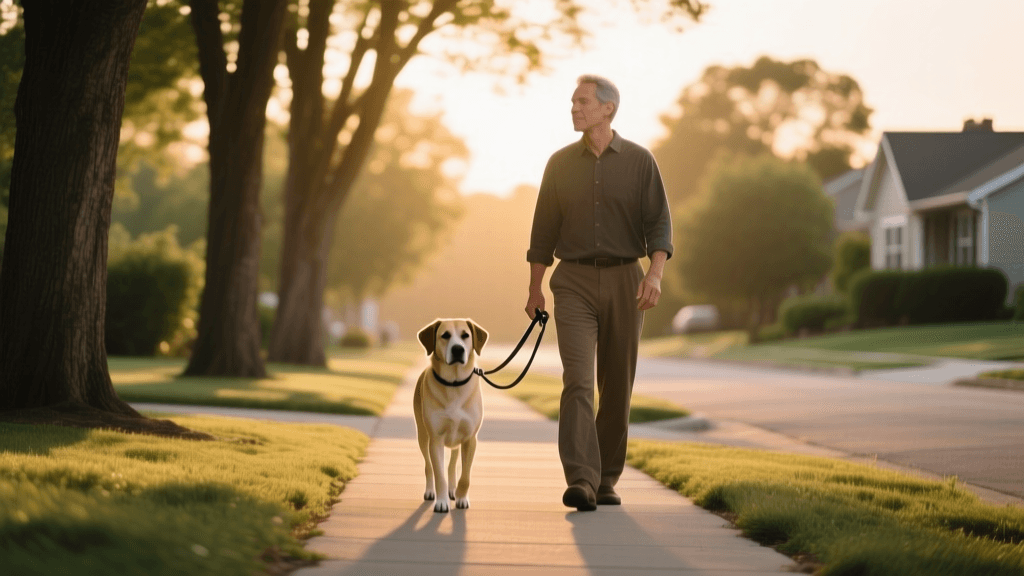
| Heel work with sharp pivots | Torsional stress on the stifle and hock joints | Straight-line loose-leash walking with wide, sweeping turns |
Mental Enrichment: The Power of Nosework and Targeting
Because physical exertion must be limited, mental fatigue becomes your primary tool for a well-behaved, satisfied dog. The American Kennel Club (AKC) heavily promotes scent work and nosework for senior and mobility-impaired dogs. Scent detection engages the canine brain's olfactory cortex, which requires immense caloric and cognitive energy. A 15-minute targeted nosework session in the living room can tire a dog out just as effectively as a two-mile hike, without putting any destructive concussive force on their cartilage.
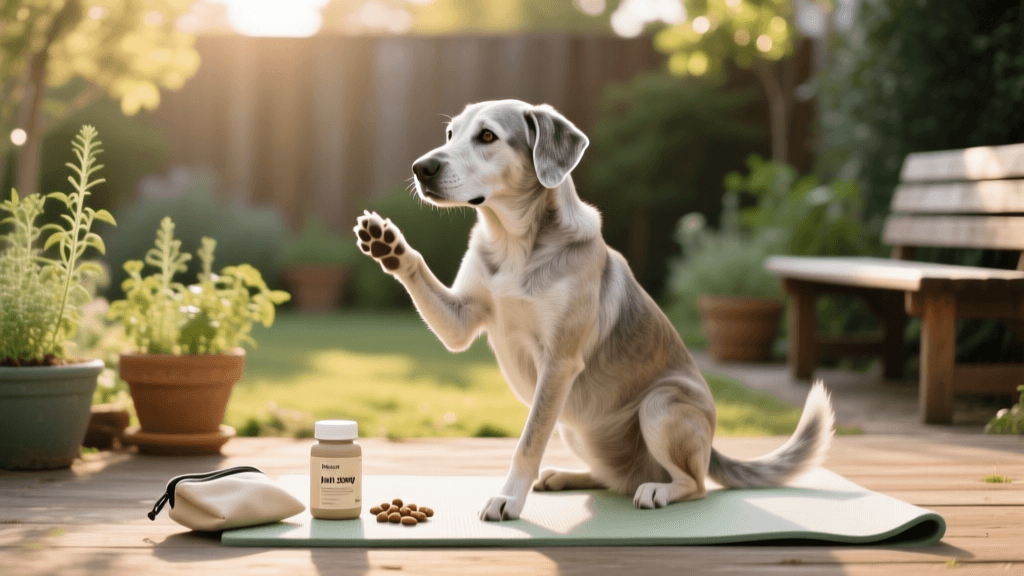
Start by hiding high-value, aromatic treats in easily accessible locations (e.g., on top of a low stool, tucked into the folds of a snuffle mat, or placed in open cardboard boxes). As the dog gains confidence, you can increase the cognitive difficulty by hiding scents in different rooms or using specific essential oils (like birch or anise) if you are pursuing competitive nosework. Another excellent low-impact behavior is "hand targeting" or "touch," where the dog simply walks up and presses their nose to your palm. This is incredibly useful for guiding a dog onto a scale at the vet or into a car without needing to physically lift them or pull their leash.
Coordinating Training with 2026 OA Medical Treatments
Successful training requires timing. In 2026, the gold standard for canine OA treatment involves a combination of daily oral NSAIDs, joint-protective nutraceuticals, and monthly anti-NGF (Nerve Growth Factor) injections. You must coordinate your training sessions to align with your dog's peak pain-relief windows.
For dogs taking daily NSAIDs, schedule your most demanding training sessions (such as learning a new, complex shaping behavior or practicing physical therapy exercises) roughly two to three hours after their morning medication, when blood plasma levels of the drug are at their peak. Avoid training late in the evening when inflammation naturally begins to rise and medication efficacy wanes. Furthermore, the Cornell University College of Veterinary Medicine emphasizes the importance of pacing. Keep all training sessions strictly between 3 to 5 minutes. Multiple micro-sessions spread throughout the day are vastly superior to a single, exhausting 20-minute session that leaves the dog stiff and sore the following morning.
Optimizing Your Training Environment
The physical space where you train is just as important as the commands you teach. Slipping on hardwood or tile floors is a primary culprit for acute joint sprains in arthritic dogs. Before beginning any training session, ensure the area is covered with interlocking foam mats, yoga mats, or specialized non-slip canine traction rugs. If you are training outdoors, avoid uneven, rocky terrain or deep, heavy mud that requires excessive joint stabilization. Stick to flat, well-maintained grass or packed dirt paths.
Additionally, invest in a high-quality, elevated orthopedic training cot. These cots allow the dog to perform "place" or "mat" commands without having to lower themselves all the way to the ground. The slight elevation reduces the range of motion required for the hips and knees, making the "place" command a safe, comfortable, and highly rewarding behavior for dogs managing chronic osteoarthritis.
Conclusion: Patience, Empathy, and Adaptation
Training a dog with canine osteoarthritis in 2026 is not about giving up on obedience; it is about evolving your methods to prioritize your dog's comfort and longevity. By replacing high-impact physical drills with cognitive enrichment, modifying foundational commands to respect joint biomechanics, and syncing your schedule with modern medical treatments, you can keep your dog's mind sharp and their spirit high. Always remember that a dog's willingness to work is directly tied to their physical comfort—train with empathy, celebrate the small victories, and embrace the gentle pace of low-impact conditioning.
jonas-cole
All our authors care for dogs every day — read more of their work on the authors page.