How to Teach Your Dog to Use Viral Talking Buttons
Learn how to teach your dog to use viral talking sound buttons. Discover step-by-step training, costs, timelines, and the science behind the trend.
The Viral 'Talking Dog' Trend Explained
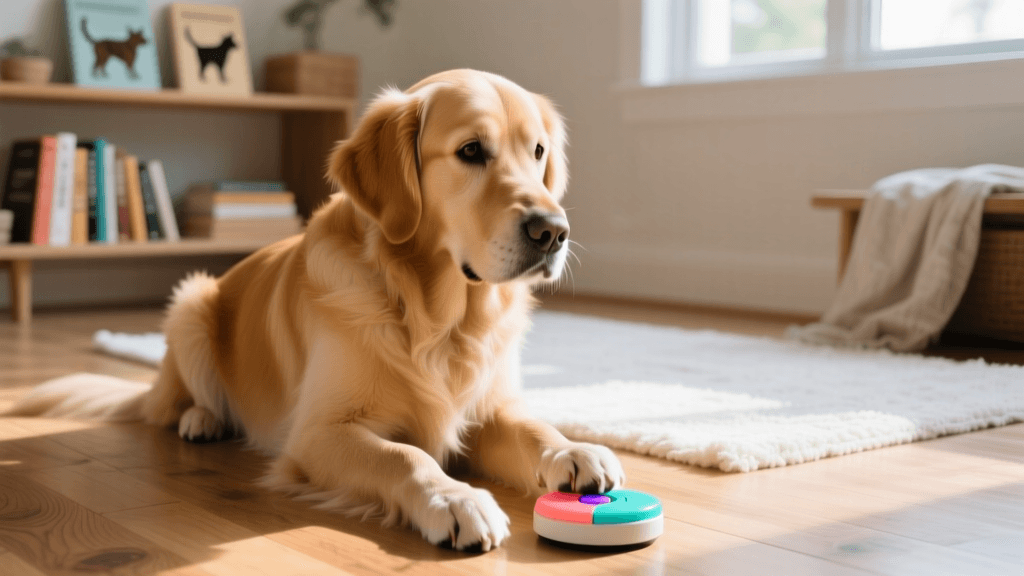
If you have spent any time on TikTok, Instagram, or YouTube over the last few years, you have likely encountered a viral 'talking dog.' From Bunny the Sheepadoodle expressing existential dread to Stella the Goldendoodle asking for walks, dogs using soundboards to communicate with their owners have taken the internet by storm. But is this just a clever trick for social media clout, or is there genuine cognitive science behind the trend?
As a senior dog trainer, I have fielded countless questions from pet parents wanting to replicate these viral moments. The truth is that teaching your dog to use Augmentative and Alternative Communication (AAC) sound buttons is a highly rewarding form of behavioral conditioning. It requires patience, precise timing, and a solid understanding of operant conditioning. In this comprehensive guide, we will demystify the viral talking button trend, break down the exact costs and equipment you need, and provide a step-by-step protocol to help your dog find their voice.
The Science: Operant Conditioning vs. Language
Before you order a soundboard, it is crucial to understand what is actually happening when a dog presses a button. Are they using language? Most animal behaviorists agree that dogs are not stringing words together with human-like syntax or grammar. Instead, they are utilizing advanced associative learning and operant conditioning.
When a dog presses a button that says 'Outside' and the door immediately opens, the dog learns that the physical action of pressing the button results in a desired environmental outcome. According to the TheyCanTalk research project led by cognitive scientists at UC San Diego, animals can learn to associate arbitrary symbols (or sounds) with specific concepts, routines, and objects. While researchers are still investigating whether dogs can combine buttons to create novel meanings, the foundational mechanism is rooted in positive reinforcement.
As highlighted in a feature by NPR on viral talking dogs, the success of these animals relies heavily on the owner's consistency. The dog is not 'talking' in the human sense; they are executing a highly trained behavior to manipulate their environment and communicate their immediate needs or desires.
Equipment Breakdown: Costs and Gear
To get started, you need recordable buttons. You have two primary routes: investing in a specialized pet soundboard system or buying generic recordable buttons from an online retailer. Here is a comparison to help you decide which route fits your budget and training goals.
| Feature | FluentPet HexTile System | Generic Recordable Buttons (Amazon) |
|---|---|---|
| Estimated Cost | $60 (Starter) - $150+ (Full Kit) | $20 - $30 (Pack of 10) |
| Spatial Memory | High (Hexagonal mats lock together) | Low (Buttons slide around easily) |
| Durability | High (Designed for paws) | Medium (Plastic casing can crack) |
| Audio Quality | Clear, loud speaker | Variable, often tinny |
| Aesthetics | Clean, organized floor layout | Cluttered, scattered appearance |
My Recommendation: If you are serious about building a vocabulary of 10 or more words, invest in the FluentPet system. The hexagonal mats provide crucial spatial memory cues. Dogs rely heavily on spatial memory; if the 'Play' button is always located in the bottom left hexagon, the dog learns the location just as well as the sound. Generic buttons tend to slide across hardwood floors, which disrupts the dog's spatial mapping and causes frustration.
Step-by-Step Button Training Protocol
Training your dog to use buttons is not an overnight process. Expect to spend 10 to 15 minutes per session, 2 to 3 times a day. You will need high-value treats (such as Zuke's Mini Naturals or boiled chicken breast) and a clicker or a verbal marker like 'Yes!'
Phase 1: Target Training (Days 1-7)
Before introducing the buttons, your dog must know how to target an object with their nose or paw. Place a generic plastic lid on the floor. The moment your dog sniffs or touches the lid, mark the behavior with your clicker and give a treat. Repeat this until your dog confidently boops the lid on command. This builds the foundational motor skill required to press a button.
Phase 2: Pairing the Word (Days 8-14)
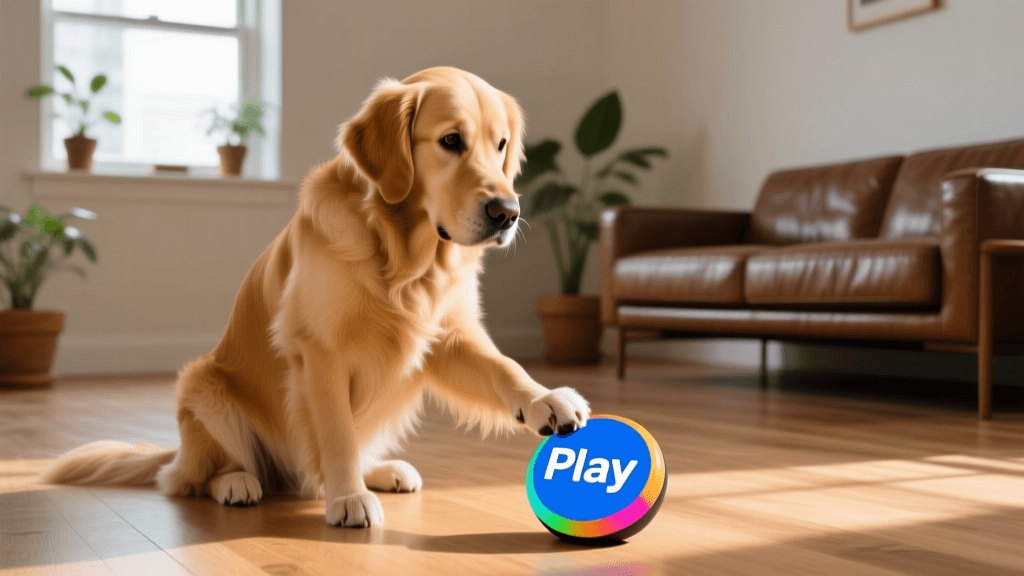
Record your first button. Start with a highly motivating, concrete noun or verb. 'Outside' or 'Walk' are the best starter buttons because the reward is immediate and highly valued. Record the word clearly in an upbeat tone. Place the button on the floor. Do not prompt your dog to press it. Instead, model the behavior. Say 'Outside,' press the button yourself, and immediately take your dog outside for a 5-minute play session. Repeat this modeling 10-15 times a day.
Phase 3: Shaping the Behavior (Days 15-30)
Once your dog understands that the button sound predicts an event, wait for them to interact with it. If they sniff it, mark and reward. If they paw it, mark and reward. The moment they press it and the sound plays, throw a massive 'jackpot' reward (5-6 treats at once) and fulfill the button's promise immediately. Timing is everything here; the reward must happen within 1.5 seconds of the button press to forge a strong neurological association.
Phase 4: Adding Context and Vocabulary (Month 2 and Beyond)
Once your dog is reliably pressing the first button, introduce a second button (e.g., 'Play' or 'Eat'). Place the new button at least 3 to 4 inches away from the first one to prevent accidental presses. Always model the new button in context before expecting your dog to use it. According to the American Kennel Club's guidelines on positive reinforcement, keeping training sessions short, upbeat, and heavily rewarded is the key to sustaining your dog's enthusiasm for learning new cues.
Curating Your Dog's Vocabulary
A common mistake viral chasers make is recording abstract concepts too early. Dogs live in a concrete, sensory world. Build your soundboard using these categories:
- Core Needs: Outside, Potty, Water, Eat, Bed.
- Activities: Walk, Play, Car, Cuddle, All Done.
- People/Pets: Mom, Dad, Cat, Dog (for the dog park).
- Modifiers (Advanced): Now, Later, More, Hurt, Where.
Avoid recording long phrases like 'Do you want to go outside?' The dog's brain processes the salient keyword ('Outside'). Keep recordings to a single, crisp word.
Common Mistakes and Troubleshooting
Even the most dedicated pet parents run into roadblocks. Here is how to troubleshoot the most common button-training issues:
Issue 1: Button Spamming
If your dog presses 'Outside' fifty times in a row, they are not broken; they are just testing the boundaries of the system, or they are bored. If you know they do not actually need to go out, do not open the door. Say 'All Done' and redirect them to a chew toy. If you open the door every time they spam, you have accidentally reinforced the spamming behavior.
Issue 2: Biting or Chewing the Buttons
If your dog treats the soundboard like a chew toy, they are under-stimulated or the buttons smell like your hands (and therefore smell like food). Wipe the buttons down with a pet-safe enzymatic cleaner. If they continue to bite them, swap to paw-targeting instead of nose-targeting, and reward heavily for any paw interaction.
Issue 3: The Dog Ignores the Buttons
If your dog stops using the buttons, evaluate your reward history. Are you still providing high-value reinforcement? Are you fulfilling the button's promise every single time? If your dog presses 'Play' and you are too busy on your phone to throw the ball, the button loses its value. You must honor the button press to maintain the behavior.
Final Thoughts on Canine Communication
Teaching your dog to use talking buttons is one of the most engaging, brain-stimulating enrichment activities you can introduce to your home. It goes far beyond a viral TikTok trend; it is a profound exercise in cooperative communication. By leveraging the science of operant conditioning, investing in the right spatial equipment, and maintaining strict consistency in your training sessions, you can unlock a fascinating new layer of your relationship with your dog. Remember to be patient, keep your sessions under 15 minutes, and celebrate every small victory. Your dog has a lot to say—you just need to give them the tools to say it.
beth-carrasco
All our authors care for dogs every day — read more of their work on the authors page.