Managing Nutrition and Feeding Routines in Multi-Dog Homes
Discover practical strategies for managing daily feeding routines, portion control, and diverse nutritional needs in a multi-dog household.
The Complex Reality of Multi-Dog Households
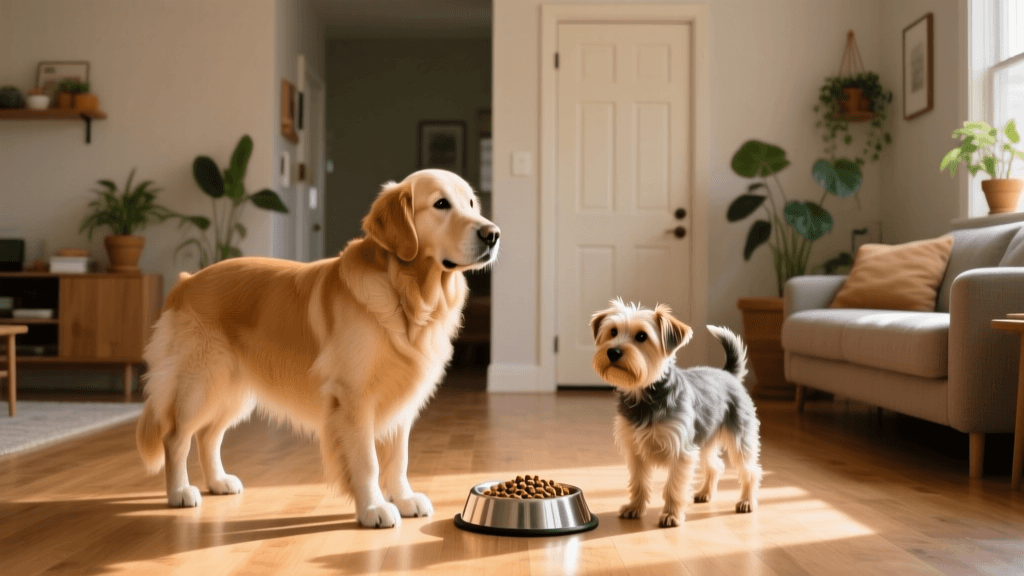
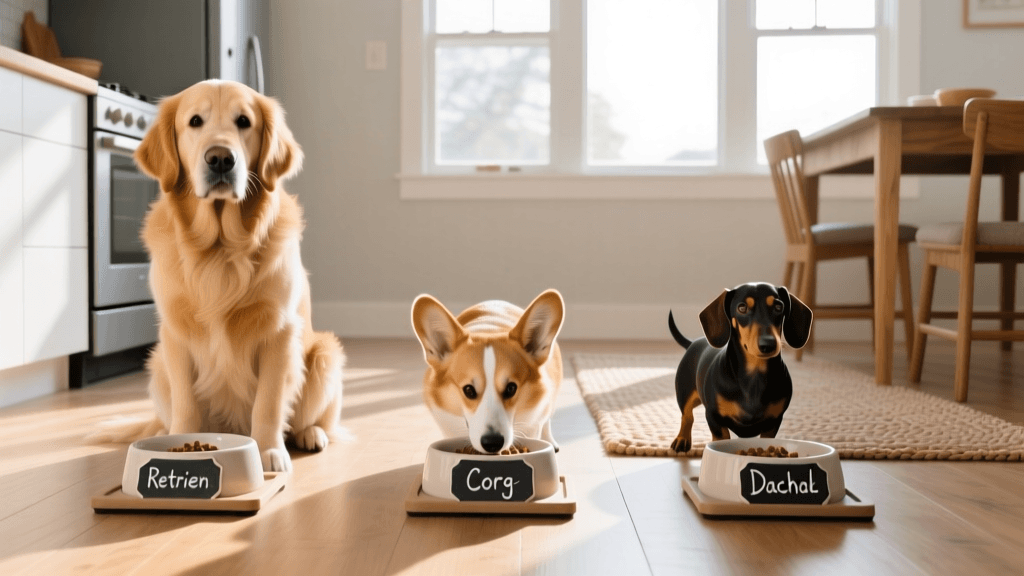
Living with multiple dogs brings immense joy, dynamic play sessions, and a vibrant home environment. However, it also introduces complex logistical challenges, particularly regarding daily routines and nutrition. When one dog is a high-energy working breed requiring a performance diet, and another is a senior with joint issues and a sensitive stomach, a one-size-fits-all feeding approach simply does not work. In multi-pet households, managing daily feeding routines is not just about filling bowls; it is about precision nutrition, behavioral management, and strict scheduling.
This deep dive explores how to structure your day, measure portions accurately, and utilize specific products to ensure every dog in your pack receives exactly what they need to thrive.
Step 1: Assessing Individual Nutritional Profiles
Before establishing a routine, you must understand the unique dietary requirements of each dog. According to the WSAVA Global Nutrition Committee, assessing the individual animal's life stage, body condition score (BCS), and health status is the critical first step in formulating a nutritional plan. A puppy requires calorie-dense food rich in calcium and phosphorus for bone development, while a senior dog may need a diet lower in calories but higher in omega-3 fatty acids to support cognitive and joint health.
Calculating Resting Energy Requirements (RER)
To avoid overfeeding or underfeeding, calculate the Resting Energy Requirement (RER) for each dog. The standard veterinary formula is:
RER = 70 x (body weight in kg)^0.75
For example, if you have a 20 kg (44 lb) active adult dog:
- RER = 70 x (20)^0.75
- RER = 70 x 9.45 = 661 kcal/day
- Multiply by an activity factor (e.g., 1.6 for a neutered, active adult) = 1,058 kcal/day.
Compare this to a 10 kg (22 lb) senior dog with low activity (factor 1.2):
- RER = 70 x (10)^0.75 = 393 kcal/day
- Multiply by 1.2 = 471 kcal/day.
By calculating the exact caloric needs, you can read the kcal/cup or kcal/kg information on your dog food bags and portion out the exact required grams.
Step 2: Ditching the Measuring Cup for Digital Scales
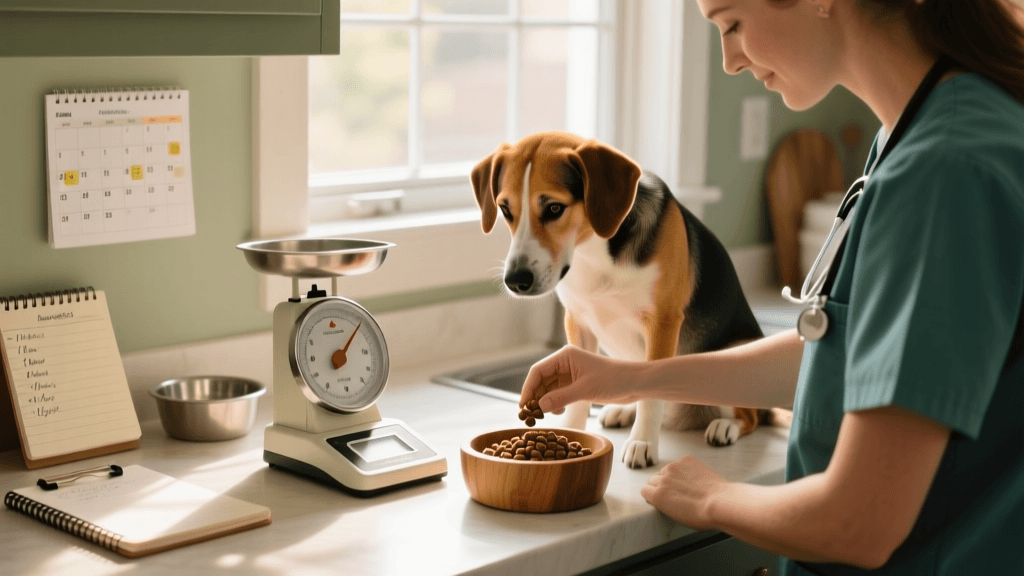
One of the most common mistakes in multi-dog homes is using a standard measuring cup. Experts at the Tufts University Cummings Veterinary Medical Center emphasize that measuring food by weight rather than volume is vastly superior. A single cup of kibble can vary in weight by up to 20% depending on the size of the kibble pieces and how much the bag is shaken before scooping. Over time, this discrepancy leads to obesity in less active dogs and malnutrition in highly active ones.
Actionable Advice: Purchase a digital kitchen scale, such as the OXO Good Grips 11-Pound Stainless Steel Kitchen Scale (approx. $30). Weigh your dogs' food in grams every morning. If Dog A needs 250 grams of kibble and Dog B needs 140 grams, weigh them out into separate containers or silicone prep bowls ahead of time. This eliminates morning guesswork and ensures strict caloric adherence.
Step 3: Establishing a Structured Daily Routine
Free-feeding (leaving food out all day) is highly discouraged in multi-dog households. It makes it impossible to monitor individual intake, quickly masks early signs of illness (like a sudden loss of appetite), and can trigger behavioral issues. Instead, implement a strict, timed feeding schedule.
Sample Daily Feeding Schedule
- 6:30 AM - Morning Walk: Bathroom break and light exercise before eating to prevent bloat (Gastric Dilatation-Volvulus), especially in deep-chested breeds.
- 7:00 AM - Breakfast Service: Dogs are fed in their designated, separated zones. Bowels are picked up after 15 minutes, regardless of whether they are finished.
- 12:00 PM - Mid-Day Enrichment: Instead of a meal, offer a frozen Kong or a snuffle mat with a portion of their daily caloric allowance in the form of treats.
- 5:30 PM - Evening Walk: Physical and mental stimulation.
- 6:00 PM - Dinner Service: Second measured meal, again served in separated zones for 15 minutes.
Step 4: Managing Resource Guarding and Food Aggression
When multiple dogs eat in the same room, competition naturally arises. The American Kennel Club (AKC) notes that resource guarding is a natural survival instinct but can become dangerous in a shared home. Signs of food aggression include stiffening, whale eye, lip licking, growling, or eating at an unnaturally rapid pace.
Pro Tip: Never punish a dog for growling over food, as this suppresses the warning signal and can lead to a bite without notice. Instead, manage the environment through physical separation.
Feed dogs in completely separate rooms, inside their crates, or on opposite sides of a sturdy baby gate. This lowers cortisol levels during mealtimes and allows slower eaters to finish without anxiety.
Essential Products and Cost Breakdown
Managing a multi-dog household requires an initial investment in the right tools. Below is a breakdown of highly recommended products to streamline your daily nutrition routine:
| Product Name | Purpose | Estimated Cost |
|---|---|---|
| SureFeed Microchip Pet Feeder | Reads a dog's microchip to open the lid; essential for dogs stealing prescription or weight-management food. | $169.00 |
| OXO Good Grips Digital Scale | Precise gram-level portioning to prevent obesity and ensure accurate caloric intake. | $30.00 |
| Outward Hound Fun Feeder Slo-Bowl | Slows down rapid eaters, reducing the risk of bloat and improving digestion. | $15.00 |
| Carlson Pet Products Walk-Thru Gate | Creates physical barriers for safe, separated feeding zones in open-concept homes. | $45.00 |
| Silicone Prep Bowls (4-Pack) | Used for pre-weighing daily kibble rations the night before to save morning time. | $12.00 |
Hydration and Supplement Integration
Nutrition is not just about kibble; it is also about hydration and targeted supplementation. Many dogs, especially those on dry kibble diets, exist in a state of mild chronic dehydration. In a multi-dog home, water bowls can easily become contaminated with food particles or saliva, deterring some dogs from drinking.
Hydration Strategy: Place multiple stainless steel or ceramic water bowls (avoid plastic, which harbors bacteria and causes canine acne) in different zones of the house. Refresh them twice daily. You can also add 2 to 4 ounces of warm, low-sodium bone broth (ensure it contains no onions or garlic) to your senior dog's kibble to increase moisture intake and palatability.
Supplementation: If your older dog requires a joint supplement like Dasuquin Advanced (approx. $65 for a 60-day supply), administer it during the evening meal when the dog is most relaxed. For a dog with a sensitive stomach, a daily probiotic like Purina FortiFlora ($30 for 30 packets) can be sprinkled over breakfast. Always factor the calories of treats, broths, and flavored supplements into the dog's daily RER to prevent unwanted weight gain.
Conclusion
Successfully managing nutrition and feeding routines in a multi-dog household requires shifting from a passive approach to an active, data-driven strategy. By calculating individual caloric needs, utilizing digital scales for precise portioning, enforcing a strict daily schedule, and investing in separation tools like microchip feeders and baby gates, you eliminate mealtime stress. Ultimately, a structured routine not only protects the physical health and ideal body condition of each dog but also fosters a peaceful, harmonious environment where every member of your pack feels secure and cared for.
priya-sutaria
All our authors care for dogs every day — read more of their work on the authors page.