Canine Calming Signals: Stop Leash Reactivity in 2026
Learn how to mirror canine calming signals to stop leash reactivity in 2026. Discover actionable body language techniques for a peaceful walk.
Understanding Canine Calming Signals in Modern Training
Leash reactivity remains one of the most frustrating challenges for dog owners, but the way we approach it has evolved dramatically. As we navigate dog training in 2026, the focus has shifted heavily toward interspecies communication. Rather than simply suppressing a dog's lunging or barking with corrective gear, modern certified behaviorists are teaching owners how to speak "dog." At the heart of this movement is the concept of "calming signals"—a vocabulary of subtle body language cues dogs use to de-escalate tension, soothe themselves, and communicate peaceful intentions. By learning to mirror these signals, you can actively lower your dog's arousal levels before a reactive outburst occurs.
The 2026 Science Behind Signal Mirroring
Originally popularized by Norwegian dog trainer Turid Rugaas, the concept of calming signals has been heavily validated by recent veterinary behavior studies. According to the American Kennel Club's guide on dog body language, dogs are highly attuned to the physical posture and facial expressions of their handlers. When a handler tenses up, pulls the leash tight, and stares directly at an approaching trigger (like another dog), they are inadvertently broadcasting "threat" and "conflict" signals. This triggers the dog's sympathetic nervous system, preparing them for a fight-or-flight response.
In 2026, force-free behaviorists utilize "signal mirroring" to hack this neurological loop. By consciously adopting the body language of a relaxed, non-threatening dog, you send a biofeedback cue to your dog that the environment is safe. This technique is especially vital for reactive dogs who have become desensitized to verbal cues like "leave it" or "look at me" when their cortisol levels spike.
Top 5 Calming Signals You Can Mirror
1. The Head Turn (Averting Gaze)
In the canine world, a direct, sustained stare is a challenge or a threat. When dogs pass each other peacefully, they often turn their heads slightly to the side to signal non-aggression. How to mirror: As you see a trigger approaching, do not stare at it. Turn your head slightly away from the trigger and soften your gaze. This subtle shift tells your dog that you are not engaging in a confrontation.
2. Curving Your Approach
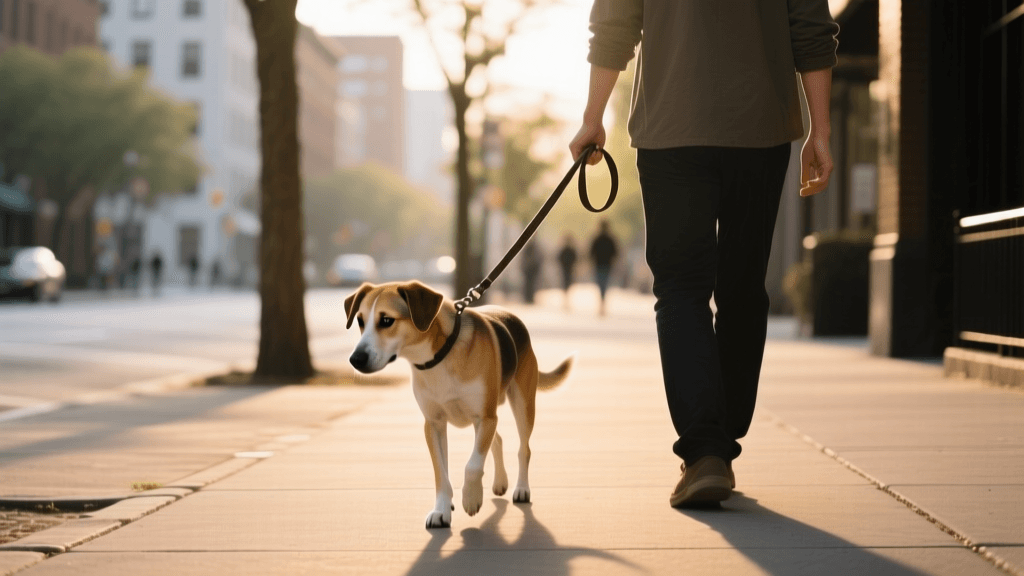
Dogs rarely walk in perfectly straight lines toward one another; doing so is considered rude and confrontational in dog culture. They naturally walk in arcs or curves. How to mirror: If you are walking down a narrow sidewalk and another dog is approaching, do not walk straight toward them. Step off the path slightly and walk in a wide, sweeping arc. This physical curve dramatically reduces the spatial pressure on your dog.
3. Slow Blinking
Hard, unblinking eyes indicate high arousal and predatory drift. Slow blinking is a universal mammalian signal for relaxation and trust. How to mirror: If your dog is locking onto a squirrel or another dog, do not widen your eyes in panic. Instead, blink slowly and deliberately, softening the muscles around your eyes and face.
4. The Exaggerated Yawn
Dogs yawn when they are stressed, tired, or trying to calm a tense situation. It is a self-soothing mechanism that releases endorphins. How to mirror: When waiting at a busy crosswalk or sitting in a vet lobby, perform a slow, exaggerated yawn. Do not vocalize it loudly; just stretch your jaw and close your eyes briefly. Many dogs will instinctively yawn back, resetting their own nervous system.
5. Sitting Sideways or Turning Your Back
Standing squarely facing a dog can be intimidating. Sitting sideways or turning your back is the ultimate sign of trust and non-aggression. How to mirror: If your dog is overstimulated during a training session, stop talking, sit on the ground, and turn your shoulder or back to them. Wait for them to offer a calm behavior, like sitting or sniffing the ground, before re-engaging.
The 2026 Engage-Disengage-Mirror Protocol
To integrate these signals into your daily walks, combine them with the modern Engage-Disengage protocol. This requires precise timing and the right equipment.
- Step 1: Find the Sub-Threshold Distance. Identify the distance at which your dog notices a trigger but does not react (e.g., 50 feet). In 2026, many trainers use smart-watches with haptic feedback to help owners track their heart rate and maintain calm breathing at this distance.
- Step 2: Mark the Engagement. The moment your dog looks at the trigger, use a quiet marker word like "yes" or a gentle click.
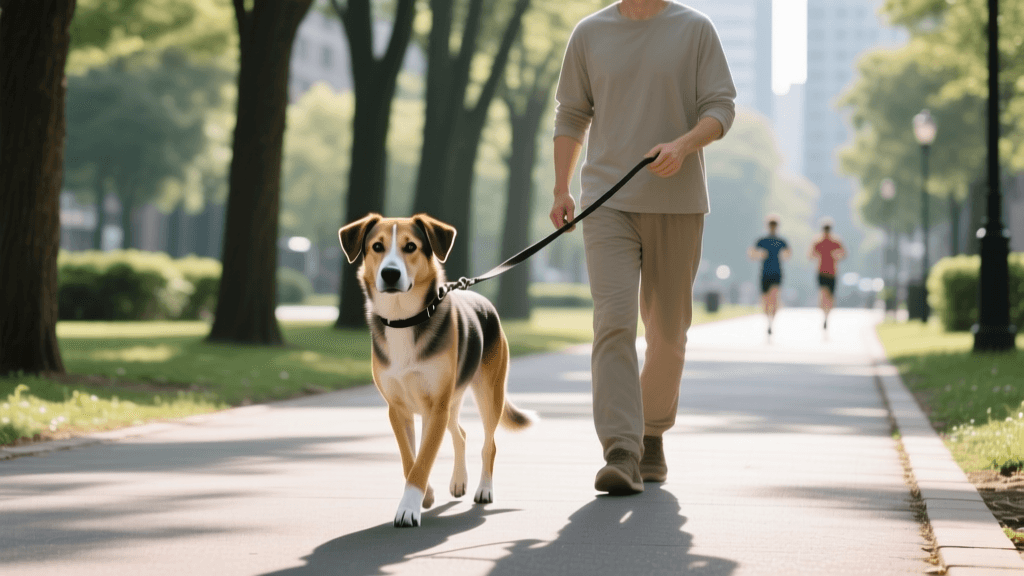
- Step 3: Mirror and Disengage. Immediately execute a calming signal, such as a head turn or a physical curve away from the trigger. Your dog will likely follow your body language and disengage.
- Step 4: Reward the Choice. The moment your dog turns back to you or sniffs the ground (a natural canine calming signal), deliver a high-value reward like freeze-dried beef liver or chicken.
Table: Signal Translation and Application Chart
| Canine Signal | Dog's Intent | Human Mirroring Technique | Best Used When |
|---|---|---|---|
| Head Turn | "I mean no threat" | Avert your face slightly away from the trigger | Another dog approaches head-on |
| Curving | De-escalating a direct approach | Walk in a wide arc rather than a straight line | Passing a reactive dog on a narrow sidewalk |
| Slow Blinking | Reducing visual pressure | Blink slowly and deliberately while looking away | Your dog is staring intensely at a trigger |
| Yawning | Self-soothing and stress release | Exaggerate a quiet, slow yawn without vocalizing | Waiting at a busy crosswalk or vet lobby |
| Sitting Sideways | Showing non-aggression | Sit on the ground with your side to the dog | Decompressing after a stressful encounter |
Essential Gear for Signal-Based Training in 2026
You cannot effectively mirror canine body language if your equipment is sending conflicting signals. Tight, restrictive gear creates physical tension that travels straight down the leash to your dog's neck or chest, mimicking the feeling of being restrained by a dominant pack member.
For 2026, the gold standard for signal-based training is the Ruffwear Front Range Harness (2026 Edition). Its updated bio-thane reflective webbing and dual-clip system allow for maximum freedom of movement, enabling your dog to naturally curve and sniff without feeling trapped. Pair this with a 15-foot to 30-foot biothane long line. A standard 6-foot nylon leash keeps the dog too close, forcing direct, head-on encounters with triggers. A long line allows you to physically step away and create the spatial arcs necessary for the "curving" calming signal to work effectively.
Common Mistakes Owners Make
"Dogs are masters of reading body language. If your mouth says 'relax' but your shoulders are tense and your leash is tight, your dog believes your body, not your words." — 2026 Veterinary Behaviorist Consensus
- Tensing the Leash: The moment you see a trigger, do not unconsciously shorten the leash. This creates a physical tether of anxiety. Keep your arm relaxed and let the long line drag or hold it loosely.
- Staring at the Trigger: Owners often stare at the approaching dog to "monitor" the situation. Your dog sees you staring and assumes a threat is imminent. Look at the ground, look at your dog, or look away.
- Moving Too Fast: Calming signals are inherently slow. If you try to mirror a yawn or a head turn but do it with frantic, jerky movements, it registers as excitement or panic, not calmness.
- Ignoring the Dog's Signals: Communication is a two-way street. If your dog is lip-licking, yawning, or scratching intensely, they are telling you they are overwhelmed. Respect their communication and increase your distance from the trigger immediately.
Conclusion: Building a Fluent Interspecies Bond
Mastering canine calming signals is not a quick fix; it is a fundamental shift in how you relate to your dog. By observing the subtle ways your dog communicates stress and actively mirroring those peaceful intentions, you become a trusted advocate rather than a source of added pressure. As highlighted by the RSPCA's comprehensive breakdown of canine communication, understanding these nuances is the bedrock of modern, empathetic dog ownership. Combine these physical signals with the AKC's training protocols for leash reactivity, and you will transform your daily walks from a stressful chore into a synchronized, peaceful partnership. In 2026, the best trainers do not just command their dogs; they converse with them.
tom-renshaw
All our authors care for dogs every day — read more of their work on the authors page.