Mastering Dog Recall: A Step-by-Step Progression Plan
Discover a proven, step-by-step recall training progression plan to take your dog's come command from the living room to the off-leash park safely.

The Lifeline Command: Why Recall Requires a Progression Plan
Teaching your dog a reliable recall—the 'come' command—is arguably the most critical skill you will ever instill in your canine companion. It is not merely a party trick; it is a lifeline that can prevent your dog from running into traffic, approaching aggressive wildlife, or getting lost. However, many dog owners make the critical mistake of expecting off-leash reliability in a high-distraction environment without first building a foundational understanding in low-distraction settings.
According to the American Kennel Club's training resources, recall should always be associated with positive outcomes, and dogs must be systematically proofed against distractions before being trusted off-leash. A structured training progression plan ensures that you are setting your dog up for success, gradually increasing difficulty only when the dog has mastered the current stage. This comprehensive 12-week progression plan will guide you from basic indoor engagement to reliable, real-world off-leash recall.
The Golden Rules of Recall Training
Before beginning the progression plan, you must commit to the fundamental rules of recall. The ASPCA's dog training guidelines emphasize that you should never call your dog to you for something they perceive as negative, such as a bath, nail trimming, or being put into a crate. Doing so will actively poison the cue.
Never Punish the Return: Even if your dog has ignored you for ten minutes and you are incredibly frustrated, you must reward them enthusiastically when they finally return. If you scold them upon arrival, they will associate coming to you with punishment, making future recalls even more difficult.
Phase 1: The Foundation (Weeks 1-2)
Environment: Indoors (Low Distraction)
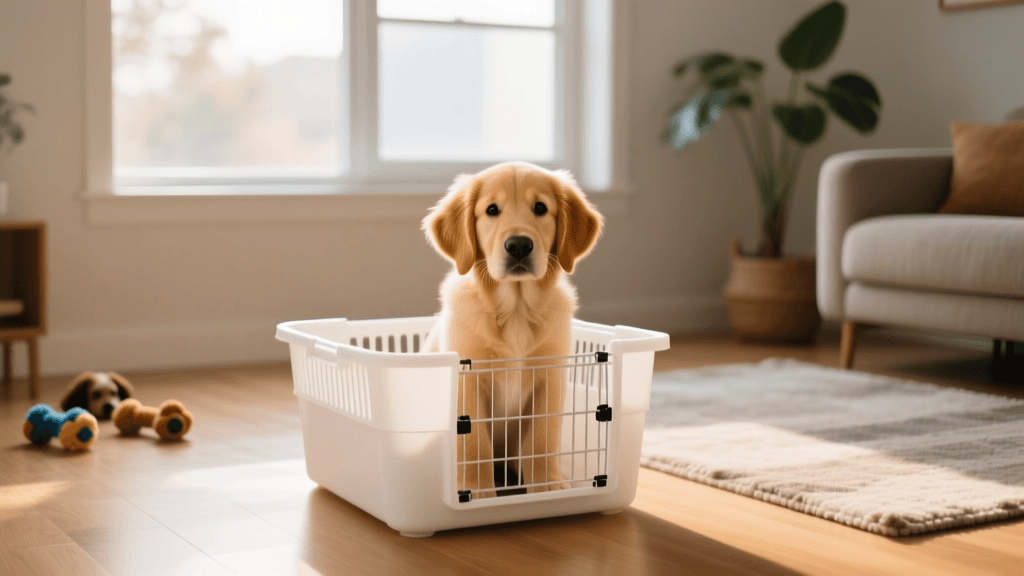
The first phase focuses on building a high-value association with the recall cue. You will work in a quiet room with minimal foot traffic and no other pets.
- Timing: 3 to 5 sessions per day, lasting no more than 3 to 5 minutes each.
- Reward: Ultra-high-value treats. Zuke's Mini Naturals (approx. $8 for a 16oz bag) or Stella & Chewy's freeze-dried raw bites (approx. $35) are excellent choices. The treats must be pea-sized to prevent the dog from getting full.
- The Exercise (Restrained Recall): Have a partner gently hold your dog's chest. Show your dog a high-value treat, then run backward a few feet while enthusiastically saying your recall cue ('Come!' or 'Here!'). The moment the dog reaches you, feed them 3 to 5 treats in rapid succession (a 'jackpot') and praise heavily.
Criteria for Advancement: Your dog should eagerly sprint toward you 9 out of 10 times in a distraction-free room before moving to Phase 2.
Phase 2: Adding Distance and Mild Distractions (Weeks 3-4)
Environment: Fenced Yard or Quiet Patio
Now we move the behavior outside, introducing mild environmental distractions like distant sounds, smells, and visual stimuli.
- Timing: 2 to 3 sessions per day, 5 to 10 minutes each.
- Gear: A standard 6-foot leather or nylon leash and a well-fitted back-clip harness, such as the Ruffwear Front Range Harness (approx. $40).
- The Exercise (The Premack Principle): Allow your dog to sniff a bush or engage in a preferred activity. After a few seconds, call them using your cue. When they come, reward them with a high-value treat, and then immediately release them back to the activity they were enjoying ('Go sniff!'). This teaches the dog that coming to you does not mean the fun ends.
Criteria for Advancement: Reliable response to the cue while the dog is actively sniffing or exploring the yard, with an 85% success rate over five consecutive days.
Phase 3: The Long Line Method (Weeks 5-8)
Environment: Quiet Parks or Open Fields
This is the most crucial phase for safety and proofing. You will introduce a long line, which gives the dog the illusion of freedom while maintaining your physical control.
- Gear: A 15-foot to 30-foot cotton or Biothane long line. The Mendota Pets 30ft Cotton Long Line (approx. $22) is a popular, durable choice. Biothane is more expensive (approx. $45) but is waterproof and doesn't tangle as easily in brush.
- Safety Warning: Never wrap a long line around your hands or wrists, as a sudden lunge by a large dog can cause severe friction burns or broken bones. Always step on the line or hold it in a loose loop.
- The Exercise (Proofing with Distractions): Visit a park during off-peak hours. Allow your dog to explore on the loose long line. Introduce mild distractions, such as a family member walking by at a distance of 20 feet. Call your dog. If they ignore you, do not repeat the cue. Instead, gently reel them in using the long line, reward them for arriving (even if assisted), and reset the distance to make it easier.
Criteria for Advancement: The dog responds to the recall cue while on a loose 30-foot line, even when mild distractions (distant people, other leashed dogs) are present.
Phase 4: Off-Leash Reliability and Emergency Recall (Weeks 9-12)
Environment: Secure Off-Leash Areas and Real-World Scenarios
Before dropping the leash entirely, ensure you are in a legally designated, securely fenced off-leash area. For open areas, you must utilize a GPS tracking collar for safety.
- Essential Tech: A GPS collar like the Fi Series 3 (approx. $149 plus a monthly subscription) or a Garmin Astro system for hunting dogs. This provides peace of mind and real-time tracking if a recall fails and the dog bolts.
- The Exercise (Emergency Recall): Introduce a secondary, 'emergency' cue that is reserved exclusively for life-saving situations. This could be a specific whistle (like the Acme 211.5 gundog whistle, approx. $15) or a unique word like 'Touch!' Pair this cue with the highest possible reward—such as a entire roasted chicken or a brand new toy—so the dog learns that this specific sound yields an unprecedented jackpot.
Recall Training Progression Chart
Use the following table to track your dog's progress and determine when they are ready to advance to the next stage.
| Phase | Environment | Primary Tool | Max Distance | Criteria for Advancement |
|---|---|---|---|---|
| Phase 1 | Indoors (Low Distraction) | Standard 6ft leash | 5-10 ft | 90% success rate over 3 consecutive days |
| Phase 2 | Fenced Yard (Mild Distraction) | Standard 6ft leash | 15-20 ft | 85% success rate while dog is sniffing/exploring |
| Phase 3 | Quiet Park (Moderate Distraction) | 30ft Long Line | 30+ ft | 80% success rate with distant dogs/people present |
| Phase 4 | Open Areas (High Distraction) | Off-Leash + GPS Collar | Unlimited | 95% reliability in real-world, high-stakes scenarios |
Troubleshooting Common Recall Failures
Even with a meticulous progression plan, you will encounter setbacks. Here is how to troubleshoot the most common issues:
The Dog Ignores the Cue
If your dog ignores your recall, you have likely moved to a higher distraction level too quickly. Solution: Decrease the distance, increase the value of your treats, and return to the previous phase for at least one week. Never repeat the cue ('Come, come, come!'); this teaches the dog that the first command is optional.
The Dog Comes but Stops Just Out of Reach
This often happens when owners reach out to grab the dog's collar, which the dog may perceive as the end of playtime. Solution: Practice the 'collar grab' game indoors. Reach for the collar, feed a high-value treat, and release. Teach the dog that a hand reaching for their neck predicts a reward, not a restriction.
Conclusion: Patience and Consistency
A bulletproof recall is not built in a weekend; it is the result of months of consistent, positive reinforcement and careful environmental management. By following this structured progression plan, utilizing the right gear, and respecting your dog's learning curve, you will build a level of trust and obedience that keeps your dog safe while granting them the freedom to explore the world by your side.
beth-carrasco
All our authors care for dogs every day — read more of their work on the authors page.