Training Dogs With Osteoarthritis: 2026 Safe Methods
Discover safe, low-impact training modifications for dogs with osteoarthritis in 2026. Keep your senior pup mentally sharp without joint strain.
The Intersection of Osteoarthritis Treatment and Dog Training in 2026
As we navigate the veterinary landscape of 2026, the treatment of canine osteoarthritis (OA) has evolved dramatically. Modern therapies, particularly the widespread use of anti-NGF monoclonal antibody injections, have revolutionized pain management for aging dogs. While these treatments are miraculous for restoring comfort and mobility, they introduce a unique challenge for dog owners and trainers: the 'pain-free trap.' Because dogs on modern OA protocols often feel significantly better, owners may mistakenly believe their dog's joints can handle the physical rigors of traditional obedience and agility training. However, pain relief does not equate to cartilage regeneration. According to the Cornell University College of Veterinary Medicine, osteoarthritis is a progressive, degenerative disease that requires lifelong management, meaning training protocols must permanently adapt to protect compromised joints.
For dogs undergoing OA treatment, physical exercise must be carefully restricted and monitored. This restriction often leads to boredom, frustration, and secondary behavioral issues. The solution lies in shifting the training focus from physical exertion to cognitive load. Mental stimulation burns as much energy as a long walk, keeping your dog fulfilled, obedient, and happy without accelerating joint degradation.
Why Mental Stimulation is Critical for OA Dogs
When physical exercise is limited, a dog's brain still craves engagement. The American Kennel Club emphasizes that senior dogs and those with mobility issues still require daily enrichment to prevent cognitive decline and anxiety. Obedience training and trick teaching are not just about compliance; they are vital tools for behavioral conditioning and mental fatigue. By teaching low-impact tricks and adapting standard obedience commands, you provide your dog with a 'job' that respects their physical limitations while satisfying their psychological needs.
High-Impact vs. Low-Impact Training Alternatives
Traditional obedience training relies heavily on repetitive movements that can exacerbate joint inflammation, particularly in the hips, knees, and spine. Below is a comparison chart detailing which common commands should be modified for a dog with osteoarthritis, alongside their safe, low-impact alternatives.
| Traditional Command | Why It Is Harmful for OA | 2026 Low-Impact Alternative |
|---|---|---|
| Sit / Sit-Stay | Requires deep hip flexion and puts pressure on the lumbosacral joint. | 'Stand' or 'Down' (on an orthopedic mat) |
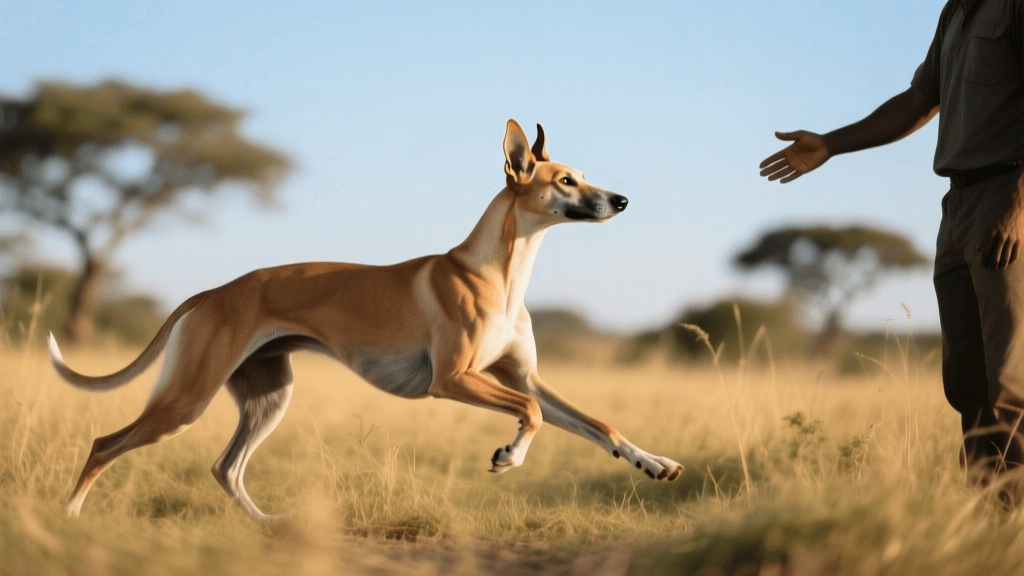
| Fetch / Retrieval | Involves sudden sprinting, hard stops, and sharp turns that tear at cartilage. | 'Find It' (Scent work and nose games) |
| Roll Over | Forces the spine into extreme torsion and requires awkward hip splaying. | 'Chin Rest' or 'Paw Target' |
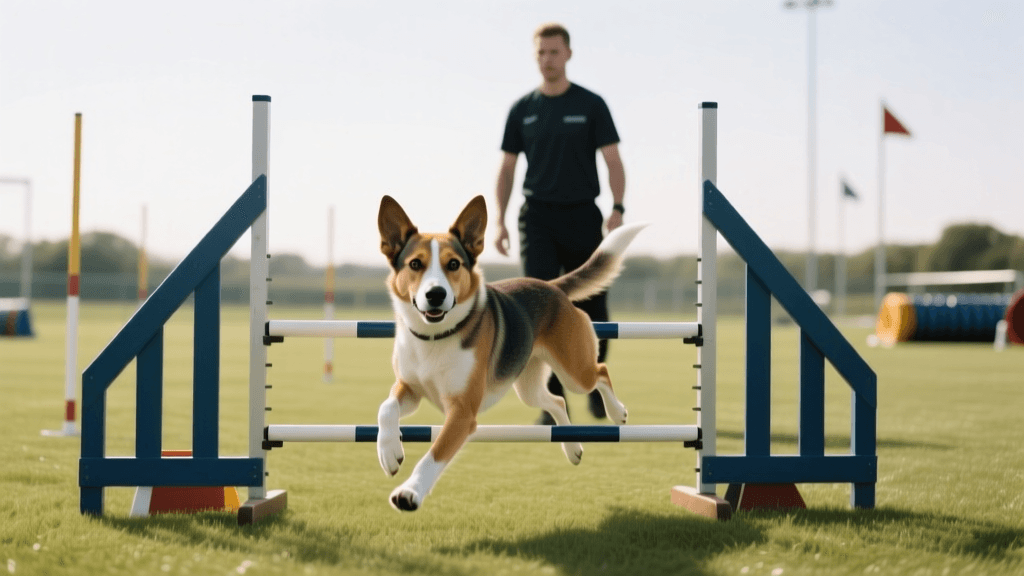
| Jump / Agility Weaves | High-impact landing forces and lateral spinal twisting. | 'Hand Target' (Touch) and 'Place' (Mat training) |
Step-by-Step Low-Impact Tricks to Teach
Transitioning to cognitive training requires patience and high-value, low-calorie treats. Here are three highly effective, joint-friendly training exercises you can start today.
1. Hand Targeting (The 'Touch' Command)
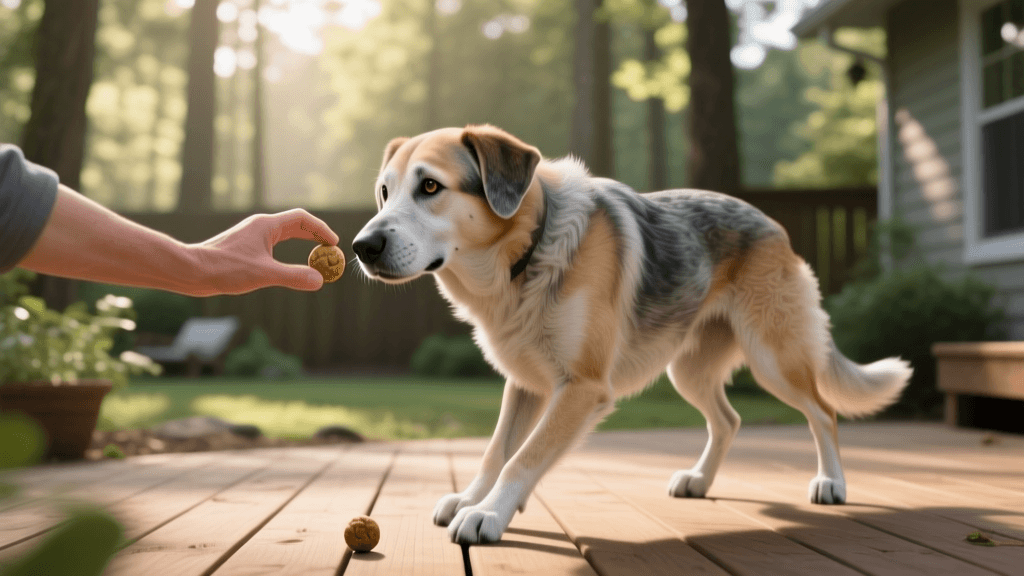
Hand targeting teaches your dog to touch their nose to your palm. This is an invaluable tool for OA dogs because it allows you to guide them through doorways, onto car ramps, or into position for grooming without ever needing to pull on a leash or physically manipulate their body.
- Step 1: Rub a treat on your palm so it smells enticing, then present your open hand a few inches from your dog's nose.
- Step 2: The moment your dog leans forward and their nose brushes your hand, mark the behavior with a clicker or a verbal 'Yes!' and reward them.
- Step 3: Gradually increase the distance, requiring your dog to take one or two steps toward your hand. Avoid making them jump or stretch their neck upward; keep your hand at their natural standing head height.
2. Scent Work and 'Find It' Games
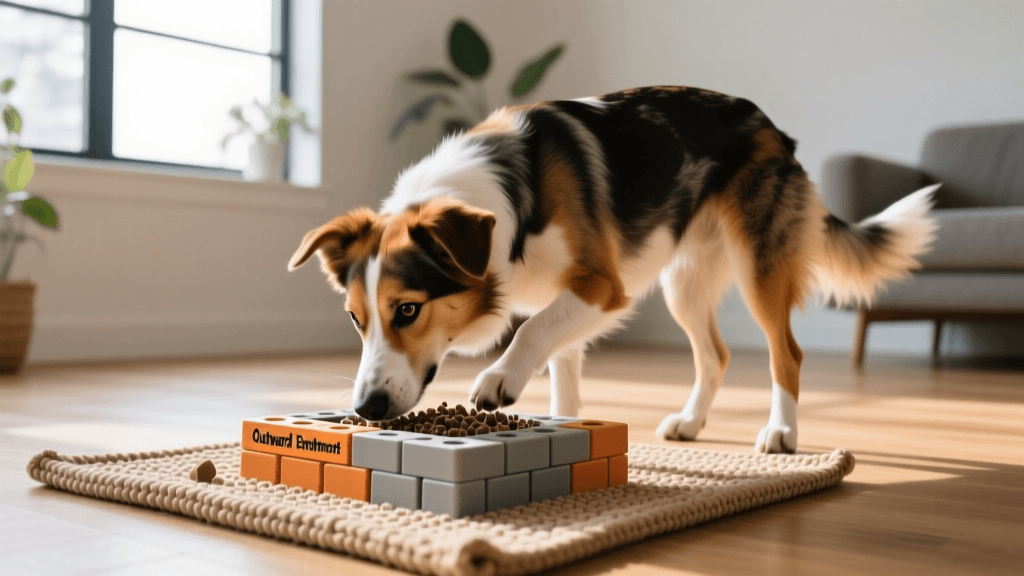
A dog's olfactory system is incredibly complex, and processing scents requires immense brainpower. Scent work is arguably the best low-impact training for dogs with severe osteoarthritis.
- Step 1: Start in a small, carpeted room (to provide non-slip footing). Show your dog a strong-smelling treat or a favorite toy, then place it on the floor a few feet away and say 'Find it.'
- Step 2: As they master the visual cue, begin hiding the item under a light towel, behind a table leg, or in a snuffle mat.
- Step 3: Introduce specific essential oil scents (like birch or anise) on cotton swabs hidden in cardboard boxes around the room. This turns a simple treat hunt into a structured, competitive-style nose work game that leaves your dog thoroughly exhausted after just 15 minutes.
3. The 'Chin Rest' for Cooperative Care
Dogs with OA often require frequent veterinary check-ups, physical therapy, and at-home massage. Teaching a 'chin rest' allows your dog to voluntarily participate in their own care without being forcibly restrained, which can cause them to tense up and injure sore joints.
- Step 1: Place a small, soft towel or a specialized grooming target on your lap or a low stool.
- Step 2: Lure your dog's head downward with a treat until their chin rests on the target. Mark and reward.
- Step 3: Fade the lure and add the verbal cue 'Chin.' Gradually increase the duration they must hold the position before receiving the reward. This stationary trick builds focus and impulse control without requiring any joint articulation.
Optimizing Your Training Environment
The physical space where you train is just as important as the commands you teach. Slippery hardwood or tile floors are the enemy of osteoarthritic dogs, as the micro-slips they endure while trying to maintain balance cause cumulative joint strain. The American Veterinary Medical Association (AVMA) strongly recommends modifying the home environment to support senior and mobility-impaired pets.
Always conduct your training sessions on high-density orthopedic foam mats, interlocking rubber gym tiles, or low-pile non-slip rugs. If you are teaching a 'Place' or 'Down-Stay' command, invest in an elevated, cot-style dog bed (such as a Kuranda or similar chew-proof cot) that allows your dog to lie down and stand up without having to push off from a hard, flat floor. Additionally, use elevated treat stations or snuffle balls to prevent your dog from having to crane their neck downward, which can aggravate cervical spine arthritis.
Recognizing Pain Signals During Training Sessions
Even with advanced 2026 pain management protocols, dogs can experience flare-ups. It is crucial to monitor your dog for subtle signs of discomfort during training. If you observe any of the following, end the session immediately and allow your dog to rest:
- Shifting Weight: Constantly lifting one paw or shifting weight away from a specific limb while standing.
- Facial Tension: Excessive lip licking, yawning, or a 'whale eye' (showing the whites of the eyes) when asked to hold a position.
- Reluctance to Engage: Turning the head away from the treat or taking food with unusual gentleness or hesitation.
- Vocalization: Grunting or sighing heavily when lying down or standing up from a training mat.
Conclusion
Canine osteoarthritis treatment in 2026 offers unprecedented pain relief, but it is up to the owner to enforce the boundaries that keep their dog's joints safe. By replacing high-impact obedience drills with cognitive challenges like scent work, hand targeting, and cooperative care tricks, you can maintain a deep, communicative bond with your dog. Training should never be a source of physical pain; instead, it should be a joyful mental puzzle that enriches your dog's golden years, proving that a slower body does not mean a slower mind.
priya-sutaria
All our authors care for dogs every day — read more of their work on the authors page.