2x2 Weave Pole Training for AKC Agility Novice Dogs in 2026
Master the AKC novice agility weave poles in 2026 with our step-by-step two-by-two training guide. Build speed, accuracy, and confidence for your first trial.
Welcome to the 2026 AKC Agility Season
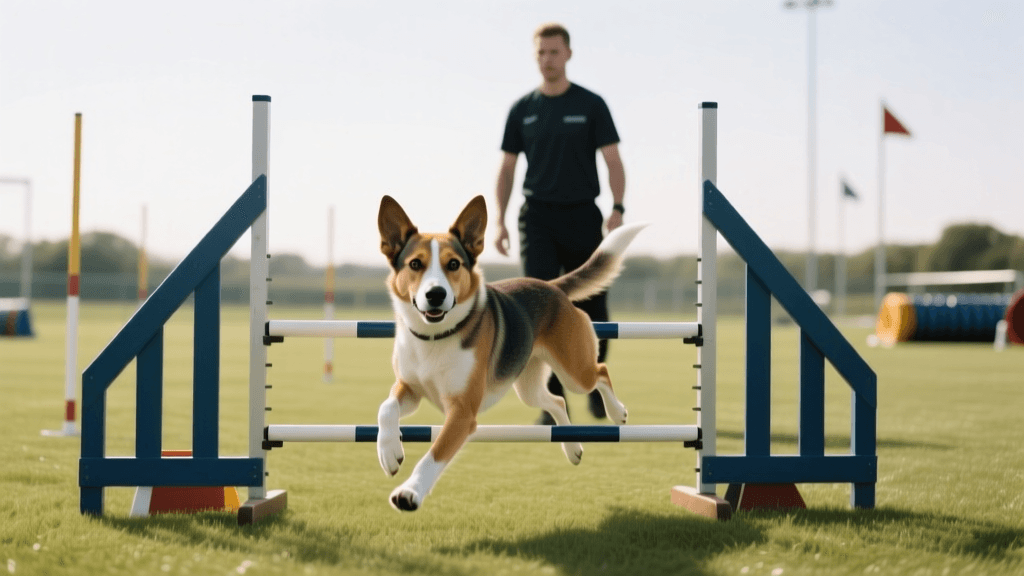
As we step into the 2026 competitive dog sports calendar, the landscape of AKC Agility continues to evolve, yet the fundamental challenges of the course remain the same. For novice handlers and their canine partners preparing for their first Novice Jumpers With Weaves (JWW) or Standard trials, the weave poles consistently present the most formidable obstacle. Unlike jumps or tunnels, which rely on natural canine athleticism and forward drive, the weave poles require a highly unnatural, biomechanically complex lateral flexion of the spine. In 2026, the gold standard for teaching this obstacle remains the two-by-two method, a revolutionary shaping protocol that builds independent speed and deep conceptual understanding in dogs of all breeds and sizes.
Why the Two-by-Two Method Dominates in 2026
Originally developed by canine behaviorist and agility world champion Susan Garrett, the two-by-two method has completely transformed modern agility training. Historically, handlers relied on wire guides or V-channels to physically force the dog into the correct weaving motion. While these methods produced dogs that could navigate the poles, they often resulted in slow, dependent performances that crumbled under the pressure of a real trial environment. According to the training philosophies championed by Dogs That, the two-by-two method approaches the weaves not as a physical maneuver, but as a cognitive puzzle. By breaking the twelve-pole sequence down into manageable, highly rewarded two-pole segments, the dog learns to actively seek the entry and drive through the poles with independent confidence. This cognitive approach aligns perfectly with the 2026 emphasis on force-free, science-based canine sports conditioning.
Essential Gear for Your 2026 Training Kit
Before you begin your weave pole journey, you need the right equipment. The 2026 market offers several excellent options specifically designed for modular training:
- Modular Weave Bases: You will need a set of at least six standalone weave pole bases. The Affordable Agility 2x2 Training Bases (2026 Pro Edition) or the Clean Run Stick-in-the-Ground 2x2 Sets are top choices this year, allowing you to easily space poles apart or push them together without heavy, fixed metal frames.
- High-Value Reward Delivery: Because timing is everything, treat delivery must be instantaneous. The Doggone Good Rapid Rewards Pro Pouch remains a favorite among elite handlers for its magnetic closure and rapid release mechanism.
- Tug Toys for Drive: For dogs that are toy-motivated, the Tug-It Agility Reward Toy allows you to reward the dog at the exact exit of the poles without fumbling with treats.
- Video Analysis Tools: In 2026, utilizing your smartphone to record training sessions is non-negotiable. Mount your phone on a tripod to review your dog's spinal flexion and your own treat-delivery mechanics.
Step-by-Step Guide to the Two-by-Two Method
The core philosophy of this method is to never let the dog fail. You are shaping a behavior through progressive approximation. Here is how to execute the protocol for your novice dog.
Phase 1: Value Building (Poles 1 and 2)
Start with just two poles placed in the ground, spaced the standard 24 inches apart. Stand directly in front of the poles, holding a high-value treat or toy. Toss the reward through the gap between the two poles so the dog must run straight through to get it. Do not ask for any lateral bending yet; you are simply building immense value for running between the upright sticks. Once the dog is blasting through the two poles with high drive, begin to stand slightly off to the side, requiring the dog to bend their neck slightly to enter the gap correctly. Reward heavily at the base of the second pole. The dog quickly learns that the space between the poles is the most rewarding place on earth.
Phase 2: The V-Formation (Adding Poles 3 and 4)
Once your dog is confidently and independently seeking the entry of the first two poles, add a second pair of poles (poles 3 and 4) about three feet away from the first pair. Angle the second pair slightly outward to create a wide, inviting "V" shape. Run your dog through the first pair, and as they exit, encourage them to drive toward the second pair. Because the second pair is angled, the dog can easily find the correct entry without having to execute a sharp, difficult bend. Reward immediately after they pass through the second pair. Gradually, over multiple sessions, inch the second pair closer to the first pair and reduce the angle of the "V" until all four poles are in a straight line.
Phase 3: Closing the Gap and Adding Poles 5 and 6
Now you have four poles in a straight line. The dog is learning the rhythmic left-right-left-right footwork required for weaving. Add a third pair of poles (poles 5 and 6), again starting them at a wide distance and a slight angle, then gradually closing the gap and straightening them out. At this stage, many novice dogs will experience their first "pop-out" (exiting the poles early). If your dog pops out, do not scold them. Simply stop the reward, reset the dog, and try again from a closer, easier distance. The goal is to keep the dog's success rate above 80%.
Phase 4: Expanding to 12 Poles
Continue adding pairs of poles until you reach the full 12-pole sequence required for AKC Agility trials. As you add more poles, the physical demand on your dog's core and spine increases exponentially. Keep training sessions incredibly short—no more than 3 to 5 minutes at a time—to prevent physical fatigue and mental burnout. Always end on a successful, highly rewarded repetition.
Method Comparison Chart
While the two-by-two method is the preferred choice for building independent speed in 2026, it is helpful to understand how it compares to legacy training methods you might encounter at local training clubs.
| Training Method | Pros | Cons | Best Suited For |
|---|---|---|---|
| Two-by-Two (Shaping) | Builds independent speed, high drive, and deep cognitive understanding. | Requires high handler skill in timing and setup; takes longer initially. | Competitive handlers aiming for Masters/Championship levels. |
| Channel Weaves | Easy for the dog to understand the footwork; fast initial results. | Dogs often become dependent on the channel; closing the channel causes massive pop-outs. | Handlers struggling with shaping mechanics; older dogs needing low-frustration learning. |
| Wire Guides | Physically prevents the dog from making mistakes. | Creates slow, cautious dogs; dogs often fail when wires are removed in the ring. | Rarely recommended in modern 2026 sports science; mostly phased out. |
Proofing for the 2026 Trial Environment
Training in your backyard is vastly different from running in a crowded, noisy trial environment. The 2026 AKC trial scene is bustling with new sounds, electronic timing systems, and high-energy dogs. To proof your dog's weave pole performance, you must introduce distractions systematically. Practice running the weaves while a friend drops a metal pan, tosses a toy nearby, or claps loudly. Furthermore, you must practice your own ring mechanics. In a trial, you cannot stop to feed a treat after every pole. You must transition from continuous rewarding to a variable reinforcement schedule, eventually rewarding only the completion of the entire 12-pole sequence with a massive "jackpot" reward outside the ring.
Canine Sports Medicine and Physical Prep
The biomechanics of weaving require extreme lateral flexion and core stabilization. According to modern canine sports medicine guidelines, a dog should not be asked to perform full-speed, 12-pole weaves until their growth plates are fully closed and their core musculature is developed. Incorporate canine fitness exercises into your 2026 routine, such as balance disc work, cavaletti poles, and core-strengthening routines like the "sit-to-stand" and "beg" positions. Regular consultations with a certified canine rehabilitation therapist can ensure your dog's spine and shoulders remain healthy throughout the rigors of the agility season.
"The weave poles are not just a physical obstacle; they are a test of the dog's confidence and the handler's training clarity. When you build value at the base of the poles, the dog will drive through them with the same enthusiasm they use to chase a squirrel."
Final Thoughts
Mastering the weave poles is a marathon, not a sprint. As you navigate the 2026 AKC agility season with your novice dog, remember that patience and precision in your training will yield spectacular results in the ring. The two-by-two method demands dedication from the handler, but the reward is a dog that attacks the weave poles with independent speed, joy, and unwavering confidence. Stay consistent, keep your sessions short and positive, and look forward to celebrating your first qualifying JWW run together.
anouk-beaumont
All our authors care for dogs every day — read more of their work on the authors page.