Low-Impact Training and Mental Enrichment for Senior Dogs
Discover low-impact training and mental enrichment techniques to keep your senior dog sharp, happy, and engaged while protecting their aging joints.

Why Training Matters for Aging Dogs
As our canine companions enter their golden years, their needs shift dramatically. The once boundless energy of puppyhood gives way to a slower, more deliberate pace. However, aging does not mean your dog's brain or desire to interact with you has retired. In fact, continuing to train and engage your senior dog is one of the most effective ways to maintain their physical health, preserve their cognitive function, and deepen the bond you share. Training a senior dog requires a paradigm shift. We must move away from high-impact, physically demanding obedience drills and pivot toward low-impact mental enrichment and gentle physical conditioning. This comprehensive guide will walk you through adapting your training routines for an aging dog, managing arthritis, combating cognitive decline, and selecting the right tools for their changing body.
Adapting Physical Commands for Arthritic Joints
Many owners mistakenly believe that senior dogs are incapable of learning new tricks or that training is only for the young. Neuroplasticity—the brain's ability to form new neural connections—persists throughout a dog's life. Engaging your older dog in regular, low-stress training sessions stimulates their brain, helping to stave off the effects of aging. Furthermore, gentle training maintains muscle tone, which is critical for supporting aging joints. When a dog stops moving and engaging, muscle atrophy accelerates, putting more strain on their skeletal system. By keeping training in your daily routine, you are actively contributing to your dog's longevity and quality of life.
According to veterinary orthopedic specialists, osteoarthritis affects a significant majority of dogs over the age of eight. This degenerative joint disease causes pain, stiffness, and a reduced range of motion. Traditional obedience commands like "sit," "down," and "roll over" can become agonizing for a dog with compromised hips, knees, or spinal health. As a responsible owner, you must observe your dog's body language closely. If your dog hesitates, licks their lips, pants excessively, or refuses to perform a previously known command, do not force them or apply corrective pressure. Instead, adapt the command to accommodate their physical limitations.
Replacing High-Impact Tricks
Below is a comparison chart detailing how to swap out high-impact traditional commands for senior-friendly, low-impact alternatives that still provide mental stimulation without the orthopedic strain.
| Traditional Command | Senior-Friendly Alternative | Joint Impact |
|---|---|---|
| Sit Pretty / Beg | Target Touch (Nose to Hand) | Low |
| Roll Over | Spin in a Slow Circle | Medium-Low |
| Jump / Fetch | Scent Mat Search | Zero |
| Down-Stay on Floor | Elevated Bed Stay | Low |
For example, instead of asking your arthritic dog to "sit pretty" or beg, which places immense strain on the lumbar spine and hips, teach a "target touch." Hold your hand a few inches from your dog's nose and reward them when they lean forward to touch their nose to your palm. This engages their mind and core slightly without requiring them to balance on their hindquarters. Similarly, instead of throwing a tennis ball for high-impact fetching and jumping, transition to a "Find It" game on a snuffle mat, allowing them to use their nose while standing comfortably.
Mental Enrichment to Combat Cognitive Decline
Canine Cognitive Dysfunction (CCD) is a progressive neurodegenerative condition similar to Alzheimer's disease in humans. Symptoms include disorientation, altered sleep-wake cycles, house soiling, and a decrease in social interactions. The Texas A&M Veterinary Medical Teaching Hospital notes that early intervention through environmental enrichment and mental stimulation can significantly slow the progression of CCD and improve the quality of life for affected dogs. Mental fatigue is just as exhausting for a dog as physical exercise, making brain games an excellent alternative to long walks for senior dogs with limited mobility.
Scent Work and Nose Games
Scent work is arguably the best low-impact activity for senior dogs. A dog's olfactory sense is their primary way of interpreting the world, and processing scents requires significant brainpower. You can start simple by hiding high-value, soft treats like Zuke's Mini Naturals (which cost around $6 per bag and are easy on aging teeth) in different rooms. Give the cue "Find it!" and let your dog sniff them out. As they improve, you can increase the difficulty by hiding treats inside cardboard boxes or under lightweight towels. This builds confidence and provides deep mental satisfaction without requiring them to run or jump.
Puzzle Toys and Slow Feeders
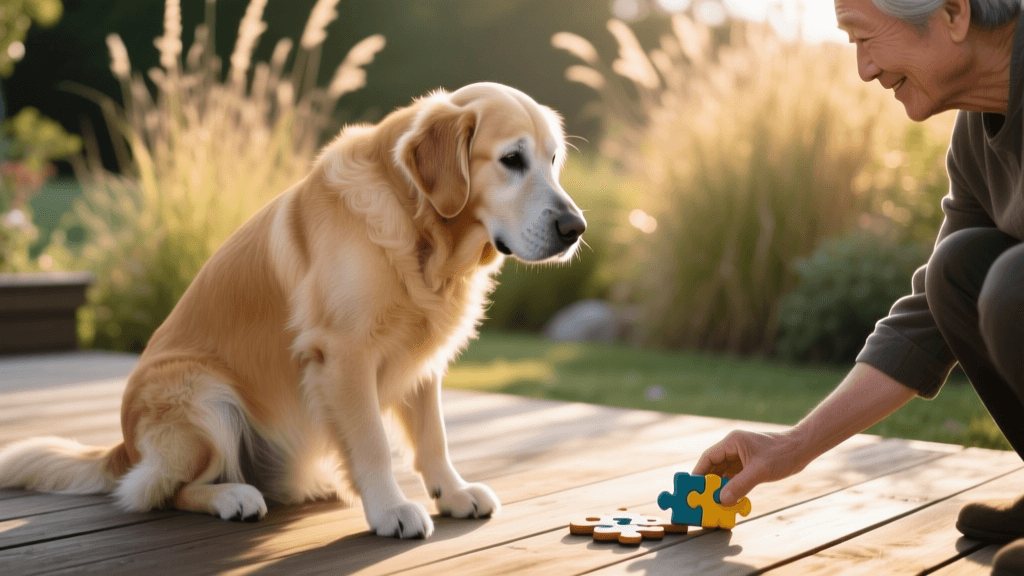
Interactive puzzle toys are another cornerstone of senior cognitive care. When selecting puzzles, opt for those that do not require aggressive pawing or heavy lifting, which can aggravate shoulder or wrist arthritis. The Outward Hound Nina Ottosson Dog Brick (approximately $30) is an excellent intermediate puzzle that requires the dog to slide compartments and flip lids using their nose or gentle paw swipes. For dogs with severe mobility issues or dental disease, a washable Snuffle Mat (around $25) is ideal. You can scatter their daily kibble or low-sodium chicken broth soaked into the fabric strips, turning mealtime into a 20-minute foraging session that tires them out mentally.
Accommodating Vision and Hearing Loss
Aging often brings a decline in vision and hearing. A dog that once responded instantly to verbal cues may now seem stubborn or confused. Before assuming cognitive decline or disobedience, have your dog's senses evaluated. If your dog is losing their hearing, transition entirely to hand signals. Use broad, clear gestures in their line of sight. If your dog is experiencing vision loss or cataracts, rely more heavily on scent-based games and verbal markers. Ensure your training environment is well-lit and free of slippery surfaces. Placing interlocking foam exercise mats or yoga mats over hardwood floors provides the necessary traction to prevent painful slips and falls during training sessions.
Adjusting Your Training Sessions for Senior Success
The structure of your training sessions must also evolve. Senior dogs have shorter attention spans and fatigue more quickly. Keep sessions brief—between 3 to 5 minutes, two or three times a day, is far more effective than a single 20-minute drill. Always train on an orthopedic bed or a padded mat to cushion their joints. Use high-value, easily digestible treats to maintain motivation without causing gastrointestinal upset or unwanted weight gain, which exacerbates joint pain. The ASPCA's Senior Dog Care guide emphasizes that maintaining a lean body condition is one of the most critical factors in managing senior dog health and mobility.
When to Consult a Veterinary Professional
Training a senior dog is an act of profound empathy and love. By adjusting your expectations, swapping out physically demanding tricks for mentally stimulating puzzles, and accommodating their sensory and orthopedic changes, you ensure that your dog's golden years are truly golden. Keep their mind sharp, their joints safe, and their heart happy through gentle, consistent, and low-impact engagement. Always consult with your veterinarian before starting a new training or enrichment regimen to ensure it aligns with your dog's specific medical needs and physical capabilities.
beth-carrasco
All our authors care for dogs every day — read more of their work on the authors page.