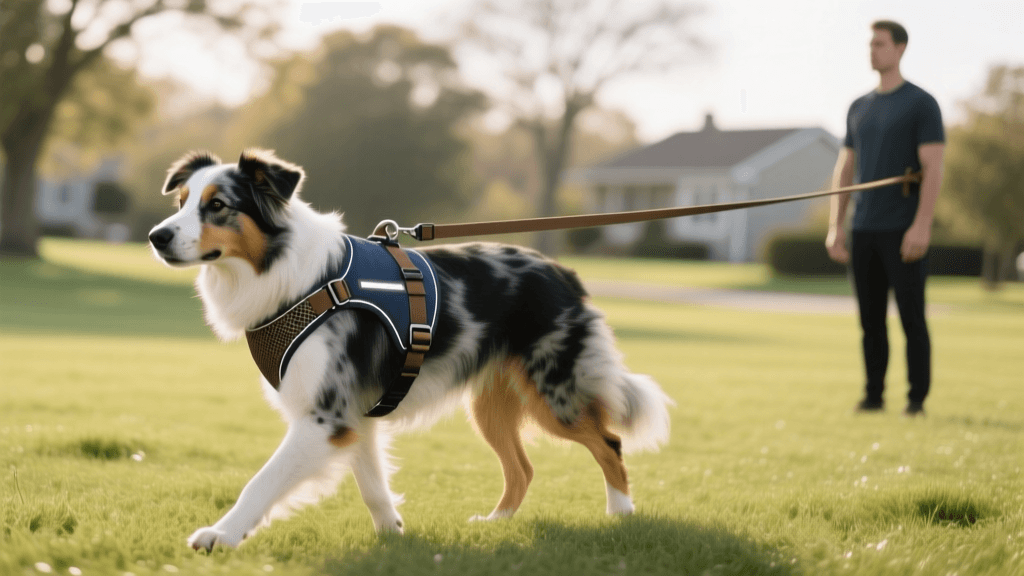
Expert Behavior Analysis for Canine Leash Reactivity
Discover how expert behavior analysis and functional assessments can cure canine leash reactivity. Learn actionable ABC training protocols today.

Understanding Leash Reactivity Through a Behavioral Lens
Canine leash reactivity is one of the most prevalent and frustrating behavioral challenges reported by dog owners. Characterized by barking, lunging, growling, or piloerection when encountering triggers on a leash, this behavior is often misunderstood as stubbornness or inherent aggression. However, through the lens of Applied Behavior Analysis (ABA), reactivity is simply a functional response to environmental stimuli. By shifting our perspective from labeling the dog as 'bad' to analyzing the environmental contingencies that maintain the behavior, we can implement highly effective, science-based modification protocols.
According to the ASPCA Common Dog Behavior Issues guidelines, reactivity is frequently rooted in fear, frustration, or over-arousal, exacerbated by the physical restriction of a leash. As expert behavior analysts, our goal is not merely to suppress the outward symptoms (the barking), but to address the underlying emotional and operant mechanisms driving the response. This requires a systematic approach rooted in data collection, threshold management, and differential reinforcement.
The ABCs of Canine Behavior Analysis
In behavior analysis, every behavior occurs within a specific context. To modify leash reactivity, we must break the event down into the three-term contingency, commonly known as the ABCs:
- Antecedent (A): The environmental trigger or event that occurs immediately before the behavior. For a reactive dog, this might be the sight of an unfamiliar dog at a distance of 40 feet, or the sound of a skateboard approaching.
- Behavior (B): The observable and measurable action the dog performs. Examples include stiffening, hard staring, barking, or lunging at the end of the leash.
- Consequence (C): What happens immediately after the behavior, which determines the future probability of the behavior occurring again. If a dog barks and lunges, and the approaching dog turns away, the reactive dog experiences negative reinforcement (the removal of an aversive stimulus). Alternatively, if the owner tightens the leash and yells, the dog may interpret this as an increase in environmental tension, further validating their reactive response.
By manipulating the Antecedent (managing distance) and the Consequence (changing the emotional association and reinforcement history), we can fundamentally alter the Behavior.
Conducting a Functional Behavior Assessment (FBA)
Before initiating a training protocol, a certified behavior consultant will conduct a Functional Behavior Assessment to determine the function of the reactivity. Is the behavior distance-increasing or distance-decreasing?
Distance-Increasing (Fear/Anxiety)
The dog perceives the trigger as a threat. The function of the barking and lunging is to create space and drive the trigger away. The American Veterinary Society of Animal Behavior (AVSAB) strongly advocates for humane, force-free methods for fear-based reactivity, noting that punitive measures (like prong collars or leash corrections) only suppress the warning signs while escalating the underlying anxiety, often leading to a dog that bites without warning.
Distance-Decreasing (Frustration/Barrier Reactivity)
The dog wants to approach the trigger to play or investigate, but the leash acts as a physical barrier. The resulting frustration manifests as barking and pulling. While the outward behavior looks identical to fear-based reactivity, the underlying emotion and the required behavioral modification protocol differ significantly. Frustrated dogs benefit from impulse control exercises and Differential Reinforcement of Alternative Behaviors (DRA).
Essential Gear for Behavioral Modification
Proper equipment is critical for safety and for preventing the accidental introduction of aversive stimuli (like neck pain) during a reactive episode. Here are the precise tools recommended for ABA-based reactivity protocols:
- Ruffwear Front Range No Pull Harness ($40): Features a front chest D-ring. When the dog lunges, the front clip gently redirects their momentum back toward the handler without applying pressure to the trachea, which can trigger a gag reflex and increase physiological arousal.
- 15-Foot Biothane Long Line ($25 - $35): A 1/2-inch width Biothane leash is waterproof, easy to clean, and doesn't tangle. It allows the handler to manage the dog's threshold distance precisely without the leash becoming taut, which acts as an antecedent trigger for barrier frustration.
- Doggone Good Rapid Rewards Pouch ($20): Features a magnetic closure for near-instantaneous access to treats. Timing is everything in classical conditioning; fumbling with zippers ruins the contingency.
- Zuke's Mini Naturals ($6 per 16oz bag): High-value, soft treats that are under 3 calories each. Soft treats are consumed faster than hard biscuits, allowing for rapid-fire reinforcement during counter-conditioning sessions.
Actionable Protocols: Desensitization and Counter-Conditioning (DS/CC)
For fear-based leash reactivity, the gold standard protocol is Desensitization and Counter-Conditioning (DS/CC). This process changes the dog's emotional response to the antecedent trigger. The Certification Council for Professional Dog Trainers (CCPDT) emphasizes that DS/CC must be performed below the dog's cognitive threshold—the exact distance at which the dog notices the trigger but is still capable of learning and eating treats.
Step-by-Step Implementation
1. Establish Baseline Threshold: Find the distance where your dog notices the trigger (e.g., a stranger) but does not react. This might be 60 feet. This is your working distance.
2. The 'Open Bar' Protocol: The moment the trigger appears in the dog's peripheral vision, begin feeding high-value treats continuously. The appearance of the trigger predicts a continuous stream of chicken or cheese.
3. Marker Timing: Use a marker word ('Yes!') or a clicker exactly 0.5 seconds after the dog looks at the trigger, but before the emotional cascade (stiffening, growling) begins. This precise timing bridges the gap between the antecedent and the primary reinforcer (food).
4. The 'Closed Bar': The second the trigger disappears from view, stop feeding. The dog must learn the specific contingency: Trigger Present = Good Things Happen; Trigger Absent = Good Things Stop.
5. Systematic Desensitization: Over weeks of successful data tracking, decrease the distance by increments of 5 to 10 feet, provided the dog remains under threshold. If the dog refuses a treat or displays hard staring, you have crossed the threshold. Immediately increase distance to recover.
Data Tracking: The ABC Behavior Chart
Expert behavior analysts do not rely on guesswork; they rely on data. Tracking your dog's reactive episodes allows you to identify patterns, hidden triggers, and environmental variables (like weather, time of day, or sleep deprivation) that lower the dog's threshold. Use the following structured chart to log your training sessions:
| Date/Time | Antecedent (Trigger & Distance) | Behavior (Intensity 1-5) | Consequence (Owner Action) | Functional Outcome & Notes |
|---|---|---|---|---|
| 10/12, 8:00 AM | Unfamiliar dog at 50 ft | 2 (Ears pinned, soft stare) | Marked 'Yes', fed chicken, created distance | Dog disengaged willingly. Threshold held. |
| 10/14, 2:30 PM | Skateboarder approaching rapidly at 30 ft | 4 (Barking, lunging, piloerection) | Handler froze, then performed emergency U-turn | Over threshold. Trigger moved too fast. Need to increase distance and work on stationary triggers first. |
| 10/16, 9:15 AM | Delivery truck idling at 40 ft | 1 (Alert posture, tail wag) | Continuous feeding (Open Bar) until truck left | Excellent session. Dog offered voluntary eye contact to handler while truck was present. |
Navigating Extinction Bursts and Spontaneous Recovery
When implementing behavioral modification, particularly when removing an inadvertently reinforced behavior (like pulling toward the dog park), owners must be prepared for an 'extinction burst.' This is a sudden, temporary increase in the frequency, duration, or intensity of the behavior when the expected reinforcement is withheld. If a dog used to lunge and successfully pull the owner toward a trigger, and the owner suddenly stops moving (removing the reinforcement of forward motion), the dog will likely lunge harder and bark louder in a final attempt to make the old contingency work.
Understanding this ABA principle prevents owners from abandoning the protocol prematurely. Consistency through the extinction burst is mandatory. Furthermore, handlers should be aware of 'spontaneous recovery,' where a previously extinguished behavior suddenly reappears in a novel environment or during periods of high stress. This is a normal part of the learning process and simply indicates the need to return to an earlier, easier step in the DS/CC hierarchy.
Conclusion
Canine leash reactivity is not a character flaw; it is a measurable, modifiable behavioral response to the environment. By utilizing expert behavior analysis, conducting functional assessments, and strictly adhering to the principles of classical and operant conditioning, handlers can systematically rewire their dog's emotional responses. Patience, precise timing, meticulous data tracking, and the use of force-free, humane methodologies are the cornerstones of lasting behavioral change.
beth-carrasco
All our authors care for dogs every day — read more of their work on the authors page.