Best Dog Breeds for Remote Workers in 2026: Top Picks
Discover the best low-barking, adaptable dog breeds for remote workers in 2026. Create a productive home office with these calm, affectionate companions.
The 2026 Remote Work Landscape: Why Your Dog's Temperament Matters
As we navigate the fully established hybrid and remote work models of 2026, the home office has transformed from a temporary desk in the corner to a permanent, highly optimized productivity hub. For millions of professionals, sharing this space with a canine companion is a major perk of working from home. However, not every dog is suited for the quiet focus required during deep work sessions or the professional decorum needed for daily video conferences. A high-energy herding breed might try to corral your delivery driver, while a vocal hound could interrupt your most important quarterly review.
When selecting a breed, it is crucial to review temperament standards outlined by organizations like the American Kennel Club to ensure the dog's natural instincts align with a sedentary, indoor work environment. The ideal remote work dog possesses a moderate energy level, a high threshold for boredom, and, most importantly, a low tendency to bark at everyday household noises. Below, we explore the best dog breeds for remote workers in 2026, focusing on quiet, adaptable companions who thrive in a home office setting.
Top 5 Low-Barking Dog Breeds for Home Offices
1. Cavalier King Charles Spaniel
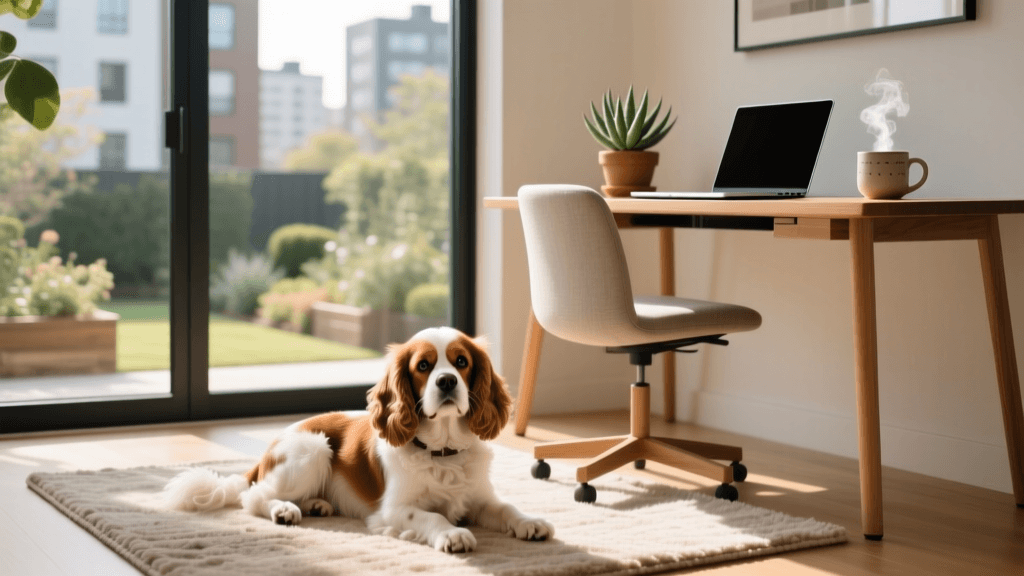
The Cavalier King Charles Spaniel is widely considered the ultimate home office companion. Weighing between 13 and 18 pounds, these affectionate dogs are famously known as "velcro dogs" because they prefer to be exactly where you are—often curled up directly on your lap or on a plush bed beneath your standing desk. Cavaliers are exceptionally quiet, rarely barking unless there is a genuine cause for alarm. Their moderate energy levels mean they are perfectly content with a 30-minute morning walk and a few short play sessions during your lunch break. Their gentle, eager-to-please nature also makes them highly trainable, allowing you to easily teach them to settle on a specific mat while you are on camera.
2. Greyhound
It might seem counterintuitive to recommend a racing breed for a sedentary home office, but Greyhounds are famously dubbed "45-mph couch potatoes." Despite their athletic build, Greyhounds are sprinters, not endurance runners. A quick 20-minute morning sprint in a fenced area or a brisk neighborhood walk is usually enough to satisfy their physical needs. For the remaining 20 hours of the day, they are notorious for sleeping. Greyhounds are incredibly quiet, rarely barking, and their large, lean bodies allow them to tuck neatly onto a large orthopedic floor mat out of the way of your rolling office chair. They are independent enough to entertain themselves with a chew toy while you focus on deep work.
3. Japanese Chin
If you have a smaller home office or live in an apartment, the Japanese Chin is an exquisite choice. Bred for centuries as royal companions, these small dogs (7 to 11 pounds) are cat-like in their demeanor. They are known for their quiet, observant nature and will happily perch on a window sill or a designated desk shelf, watching the world go by without feeling the need to vocalize. Japanese Chins are highly attuned to their owner's moods and will offer quiet comfort during stressful workdays. They require minimal exercise and are easily paper-trained or pad-trained, which is a massive convenience for remote workers who cannot always step away for a midday potty break.
4. Basset Hound
With their soulful eyes and low-slung bodies, Basset Hounds bring a calming, grounded energy to any home office. Originally bred for scent tracking, they are surprisingly low-energy indoors. A Basset Hound will happily claim a thick, supportive dog bed in the corner of your office and sleep through your loudest keyboard typing sessions. While they do have a distinctive, booming bark, they are generally not prone to nuisance barking without a very good reason. The primary challenge with a Basset Hound is their stubbornness; however, in a quiet home office environment, their laid-back attitude is a massive asset. They thrive on routine and will quickly adapt to your daily meeting schedule.
5. Bernese Mountain Dog
For remote workers with spacious home offices and a desire for a larger companion, the Bernese Mountain Dog is a gentle giant that excels in a calm environment. Despite their imposing size (70 to 115 pounds), Berners are remarkably quiet and docile indoors. They are deeply bonded to their families and prefer to be in the same room as you, often resting their heavy heads on your foot while you work. They do require a bit more space to stretch out and a heavy-duty orthopedic bed to support their joints. A 45-minute morning hike and an evening walk will keep them physically satisfied, allowing them to snooze peacefully through your afternoon Zoom calls.
Home Office Dog Breed Comparison Chart
| Breed | Avg Weight | Barking Level | Daily Exercise | Desk Compatibility |
|---|---|---|---|---|
| Cavalier King Charles Spaniel | 13-18 lbs | Low | 30-45 mins | Excellent (Fits on lap or under-desk bed) |
| Greyhound | 60-70 lbs | Very Low | 20-30 mins | Good (Needs large floor mat) |
| Japanese Chin | 7-11 lbs | Low | 20-30 mins | Excellent (Loves desk perches) |
| Basset Hound | 40-65 lbs | Low-Medium | 30 mins | Good (Requires sturdy floor bed) |
| Bernese Mountain Dog | 70-115 lbs | Low | 45-60 mins | Fair (Needs spacious home office) |
Designing a 2026 Dog-Friendly Home Office
Creating a productive environment in 2026 means seamlessly integrating your pet's needs into your smart home ecosystem. The modern home office should be designed to minimize distractions while maximizing your dog's comfort.
Ergonomic Under-Desk Bedding
For smaller breeds like the Cavalier or Japanese Chin, an under-desk hammock bed or a low-profile orthopedic mat allows them to stay close to you without tripping you when you stand up from your ergonomic chair. For larger breeds like the Greyhound or Bernese Mountain Dog, invest in a high-density memory foam bed with a waterproof, easily washable cover. Place it in a designated "quiet zone" just outside your immediate camera frame.
AI Pet Monitoring and Enrichment
The latest 2026 AI-driven pet cameras do more than just stream video; they can detect signs of anxiety or boredom and automatically dispense treats or initiate a laser game to keep your dog engaged during your longest meetings. Furthermore, the ASPCA emphasizes that mental enrichment is just as tiring as physical exercise. Utilizing smart puzzle feeders that sync with your calendar can ensure your dog receives a mentally stimulating activity exactly when you enter a two-hour deep work block.
Training Your Dog for "Meeting Mode"
Even the quietest breeds need to be taught the boundaries of the home office. "Meeting Mode" is a trained behavior that signals to your dog that you are unavailable for play and that they should settle on their designated mat. Start by introducing a specific visual cue, such as turning on a small LED desk light or placing a specific "settle" mat on the floor. When the cue is active, reward your dog heavily for lying quietly on the mat. Practice this during mock video calls, gradually increasing the duration. If your dog whines or paces, calmly redirect them to the mat without making eye contact or offering verbal reprimands, which can inadvertently reinforce the attention-seeking behavior.
Structuring the Perfect Work-From-Home Daily Routine
Dogs thrive on predictability. Establishing a rigid daily routine helps your dog understand when it is time to be active and when it is time to sleep. Here is a highly effective 2026 remote work schedule for you and your dog:
- 7:00 AM - The Morning Decompression: A 30 to 45-minute sniff-heavy walk. Allowing your dog to sniff tires their brain out, promoting longer morning naps.
- 8:30 AM - Breakfast and Enrichment: Feed breakfast using a snuffle mat or a frozen lick mat to provide 15 minutes of quiet mental stimulation while you review your morning emails.
- 9:00 AM - Deep Work Block: Cue "Meeting Mode." Your dog should be settled on their mat or bed. Use an automated treat dispenser at 10:30 AM to reward prolonged quiet behavior.
- 12:00 PM - Midday Reset: A 15-minute interactive play session (tug or fetch in the yard) followed by a potty break. This burns off midday energy and prevents afternoon restlessness.
- 1:00 PM - The Afternoon Slump: Dogs naturally sleep during the early afternoon. This is your best time for collaborative work, casual calls, and administrative tasks.
- 5:00 PM - End of Day Transition: Close the laptop and immediately take your dog for an evening walk. This physical boundary clearly separates your work life from your personal life, benefiting both your mental health and your dog's routine.
Final Thoughts
Sharing your home office with a dog is one of the greatest joys of the modern remote work lifestyle. By selecting a breed with a naturally calm, low-barking temperament—such as the Cavalier King Charles Spaniel, Greyhound, or Japanese Chin—you can ensure that your productivity remains high and your stress levels remain low. Remember that even the most laid-back breeds require intentional mental enrichment, structured routines, and a thoughtfully designed workspace. With the right breed and the right preparation, your canine companion will become your most loyal and supportive coworker in 2026 and beyond.
priya-sutaria
All our authors care for dogs every day — read more of their work on the authors page.