Dog Emergency Kit: Natural Disaster Evacuation Guide
Learn how to build a comprehensive dog emergency kit and evacuation plan for natural disasters. Includes supply checklists, costs, and safety tips.
The Hidden Dangers of Disasters for Dogs
When a natural disaster strikes, the chaos of the moment often overshadows the meticulous planning required to keep our pets safe. Whether you are facing a rapidly spreading wildfire, a sudden flash flood, or a multi-day hurricane warning, your dog relies entirely on you for survival. According to the Federal Emergency Management Agency (FEMA), thousands of pets are separated from their owners every year during natural disasters, and many are never reunited due to a lack of proper identification and emergency preparedness.
As a responsible dog owner, integrating your pet into your household emergency action plan is not optional; it is a critical component of your family's safety strategy. Evacuating with a dog requires specialized gear, precise measurements for sustenance, and a pre-mapped route that accounts for pet-friendly accommodations. In this comprehensive guide, we will break down exactly how to build a canine emergency go-bag, establish an evacuation protocol, and manage acute stress or injury during a crisis.
Building Your Dog's Emergency Go-Bag
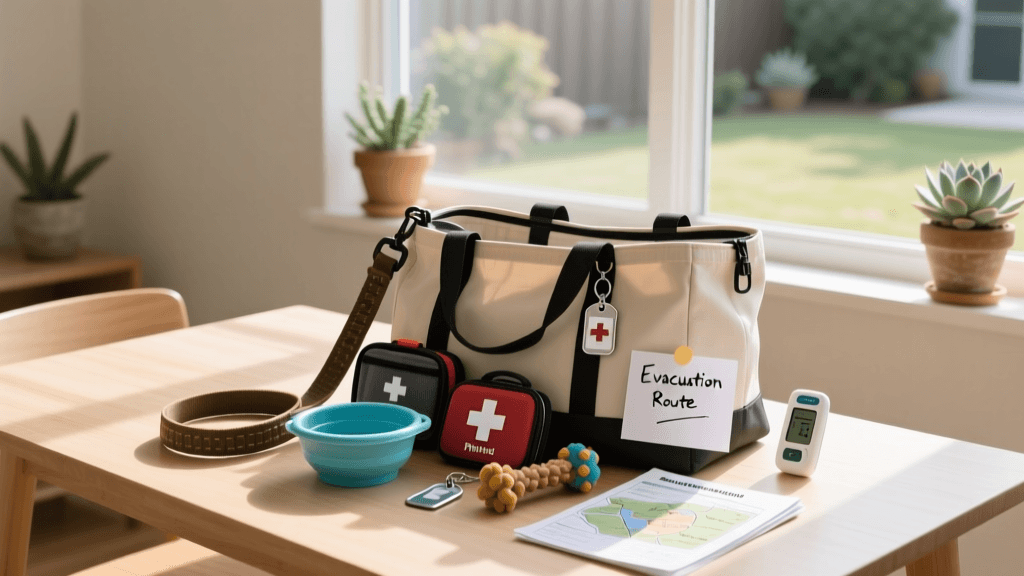
An emergency kit for your dog should be stored in a waterproof, easily accessible duffel bag or tactical backpack near your primary exit door. The goal is to be able to grab the bag and secure your dog within five minutes of an evacuation order. The American Society for the Prevention of Cruelty to Animals (ASPCA) recommends preparing enough supplies to last a minimum of three to seven days, as supply chains and emergency shelters are often overwhelmed in the immediate aftermath of a disaster.
Hydration and Nutrition Specifics
Water is your most critical resource. The general veterinary rule of thumb is that a dog needs approximately one ounce of water per pound of body weight per day. For a 60-pound Golden Retriever, this means packing a minimum of 60 ounces (about 1.8 liters) of water daily. For a three-day evacuation, you must pack at least 5.4 liters of water specifically for your dog. To save space, pack water purification tablets and a portable filter like the LifeStraw Family, alongside a collapsible silicone bowl.
For food, abandon bulky kibble bags. Opt for vacuum-sealed, high-calorie emergency rations or canned wet food, which provides both nutrition and additional moisture. Pack a manual can opener if you are using cans, and include a 14-day supply of any essential medications, such as heartworm preventatives, thyroid supplements, or anxiety medications like Trazodone.
Essential vs. Optional Emergency Supplies
To help you budget and prioritize your packing, refer to the structured checklist below. Costs are estimated based on standard retail prices for durable, reliable gear.
| Category | Specific Item Recommendation | Estimated Cost | Priority Level |
|---|---|---|---|
| Containment | Petmate Sky Kennel (Airline-approved hard plastic) | $85 - $130 | Essential |
| Restraint | Ruffwear Web Master Escape-Proof Harness | $90 | Essential |
| Identification | Engraved stainless steel tags + Waterproof document pouch | $15 | Essential |
| Sanitation | Heavy-duty waste bags + Enzyme cleaner (Nature's Miracle) | $20 | Essential |
| First-Aid | QuikClot Vet Gauze + Styptic powder + Self-adhering wrap | $35 | Essential |
| Comfort | Familiar-scented blanket + Kong toy stuffed with peanut butter | $25 | Optional |
| Footwear | Musher's Secret Paw Wax or Ruffwear Grip Trex Boots | $20 - $90 | Situational |
Crafting Your Evacuation Action Plan
Having a bag packed is only half the battle. You must know exactly where you are going and how you will get there. During regional emergencies, primary highways often become gridlocked, and standard emergency shelters frequently prohibit animals due to health and safety regulations.
Mapping Pet-Friendly Shelters and Hotels
Do not wait until the hurricane siren sounds to find a pet-friendly hotel. Create a physical, laminated list of at least five pet-friendly hotels or motels located 50, 100, and 150 miles outside your immediate evacuation zone. Websites like BringFido or PetFriendly are excellent resources for this, but always call ahead to verify their emergency pet policies, as weight limits and breed restrictions are sometimes waived during declared states of emergency. Additionally, contact your local county emergency management office to ask if they have designated co-located pet shelters (shelters that house humans and their pets in the same facility).
The Buddy System and Microchip Verification
If you are not home when a mandatory evacuation order is issued, your dog could be left behind. Establish a 'buddy system' with a trusted neighbor who has a key to your home and explicit instructions on how to access your dog's go-bag and evacuate your pet if you cannot return. Furthermore, ensure your dog's microchip registration is updated with your current cell phone number and an out-of-state emergency contact. The American Veterinary Medical Association (AVMA) stresses that a microchip is useless if the registry database contains outdated contact information.
Canine First-Aid: Managing Acute Stress and Injury
Natural disasters introduce severe environmental hazards: shattered glass, downed power lines, toxic floodwaters, and extreme heat. Even the most well-trained, docile dog can become unpredictable and aggressive when experiencing acute trauma or panic. Your emergency kit must include a soft nylon muzzle. Muzzling an injured dog is not an act of cruelty; it is a vital safety measure that protects both the dog and the humans trying to administer life-saving first aid.
For lacerations caused by debris, apply direct pressure using QuikClot Vet Gauze, which contains a kaolin-based hemostatic agent to accelerate clotting. If your dog is forced to walk through floodwaters, their paw pads are highly susceptible to bacterial infections and chemical burns. Rinse their paws with clean, potable water as soon as you reach safety, and apply a protective barrier like Musher's Secret paw wax to prevent cracking and irritation.
Seasonal Considerations for Disaster Prep
Your emergency kit should be audited and adjusted based on the season. In the summer months, heatstroke is a paramount concern. Pack a cooling vest, such as the Ruffwear Swamp Cooler, and a digital rectal thermometer to monitor your dog's core temperature (normal canine temperature is 101°F to 102.5°F). In the winter, hypothermia and frostbite become the primary threats. Swap the cooling vest for an insulated dog jacket and pack portable, battery-operated heating pads designed specifically for pets.
'Your pet's survival is directly tied to your preparedness. A well-rehearsed evacuation plan and a fully stocked go-bag can mean the difference between a stressful inconvenience and a tragic loss.' — ASPCA Disaster Preparedness Guidelines
Conclusion: Practice Makes Perfect
Building a dog emergency kit and drafting an evacuation plan requires time, financial investment, and foresight. However, the true test of your preparedness lies in practice. Conduct a mock evacuation drill with your dog twice a year. Practice loading them into their hard carrier, walking them with their escape-proof harness, and familiarizing them with the sounds and sensations of your emergency gear. By taking these proactive steps, you ensure that when disaster strikes, you and your loyal companion will face it together, safely and securely.
anouk-beaumont
All our authors care for dogs every day — read more of their work on the authors page.