2026 AKC Scent Work Guide: Beginner Backyard Setup
Discover how to start AKC Scent Work with your dog in 2026. Learn essential gear, target odors, and step-by-step backyard training setups for beginners.
The Rise of AKC Scent Work in 2026
The world of canine sports has evolved dramatically over the last decade, but few disciplines have seen the explosive growth of scent work. As of 2026, nosework has cemented itself as one of the most accessible, mentally stimulating, and rewarding dog sports available. Unlike agility or obedience, which require significant physical exertion and precise handler control, scent work taps into your dog's most primal and powerful sense: their olfactory system. Whether you have a high-drive working breed, a senior dog with limited mobility, or a reactive rescue who struggles in crowded environments, scent work offers a unique outlet for mental enrichment.
According to the AKC Scent Work official guidelines, the sport is modeled after the work of professional detection dogs. However, the competitive framework is designed to be achievable for everyday pet owners. In 2026, the American Kennel Club has streamlined the titling process, making it easier than ever for beginners to transition from backyard hide-and-seek games to official competition rings. This comprehensive guide will walk you through the exact gear, training methodologies, and competition structures you need to launch your dog's scent work career this year.
Why Choose Nosework for Your Dog?
Before diving into the technical setup, it is vital to understand why scent work is uniquely beneficial for the modern dog. A dog's brain dedicates roughly 40 times more space to analyzing scents than a human brain does. When a dog sniffs, their heart rate actually lowers, and they enter a state of focused, calming concentration. For dogs suffering from anxiety, reactivity, or hyperactivity, fifteen minutes of intense scent work can be as physically and mentally exhausting as a three-mile run. Furthermore, because the dog is the one leading the search and making the decisions, it builds profound confidence and strengthens the bond of trust between handler and canine.
Essential Gear for Your 2026 Beginner Scent Kit
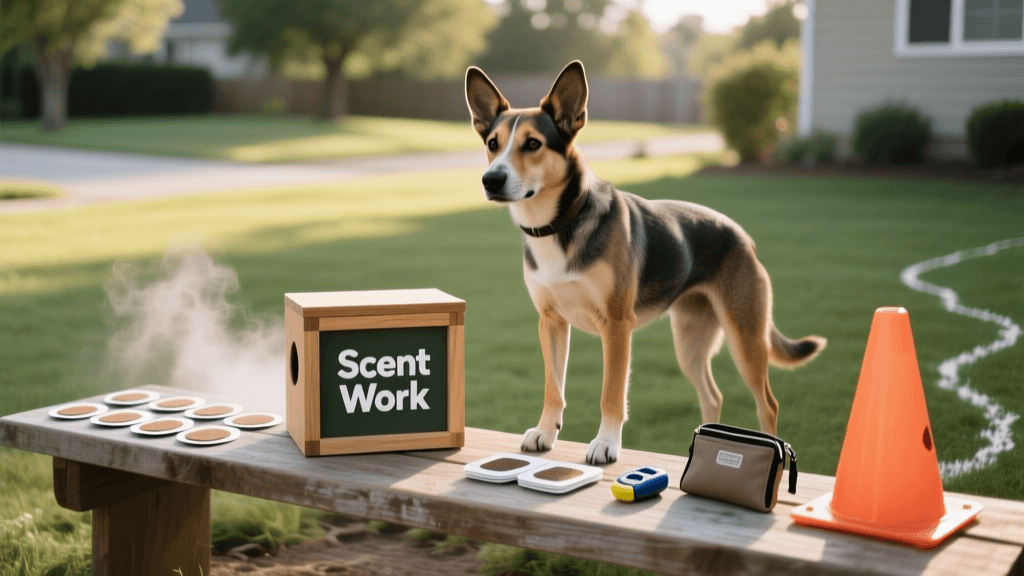
You do not need to spend a fortune to get started in scent work, but you do need the correct tools to ensure safety and proper odor containment. Here is the essential starter kit for 2026:
- Essential Oil Starter Kit: Birch, Anise, and Clove are the three primary target odors used in AKC competitions. You can purchase pre-diluted training kits from specialized canine sport retailers for approximately $25 to $35.
- Q-Tips and Tweezers: Cotton swabs are cut in half and used to hold the scent. Tweezers are mandatory for handling the Q-tips so you do not transfer your own human scent or the essential oil onto your skin.
- Hide Vessels (Tins and Straws): You will need small metal tins with magnetic backs and ventilation holes, or specialized plastic scent tubes. These protect the Q-tip from being ingested by the dog while allowing the odor to escape.
- High-Value Reward Paste: Scent work requires immediate, high-value reinforcement at the source. Many top competitors in 2026 use squeeze tubes filled with liver paste, salmon cream, or goat milk to reward the dog directly at the hide location without dropping treats on the floor.
- Long Line Harness: A comfortable, non-restrictive Y-front harness paired with a 10-to-15-foot lightweight biothane long line is standard for allowing the dog freedom of movement while maintaining safety.
Understanding the Scent Cone and Airflow
To train effectively, you must understand how odor moves. When essential oil is placed in a hide, it does not form a perfect circle around the object. Instead, air currents catch the scent molecules and carry them outward, forming a teardrop or 'cone' shape. The wide end of the cone is downwind, and the narrow point is at the source. When your dog enters the wide end of the scent cone, they will exhibit a 'change of behavior'—they might snap their head, close their mouth, or increase their breathing rate. As a handler, your job is to recognize this change and let the dog work their way up the cone to the narrow point. Wind, temperature, and humidity all affect the size and shape of the scent cone, which is why outdoor searches are inherently more complex than indoor ones.
Step-by-Step Backyard Training Progression
Phase 1: Scent Imprinting and Pairing
Imprinting is the process of teaching your dog that a specific smell predicts a reward. In 2026, the most widely accepted method for beginners is 'pairing.' Place a drop of Birch essential oil on a Q-tip, put it inside a ventilated tin, and place a high-value treat directly on top of or right next to the tin. Present the tin to your dog. When they sniff the tin to get the treat, mark the behavior with a 'Yes!' and let them eat the reward. Repeat this until the dog actively seeks out the smell of Birch, understanding that the odor is the key to unlocking the food.
Phase 2: Introduction to the Search
Once your dog is confidently targeting the paired odor, it is time to introduce the search cue. Place three identical cardboard boxes in a row. Put the paired odor tin inside one box, and leave the others empty. Give your search cue, such as 'Find it!' When the dog investigates the correct box and finds the odor, mark and reward heavily at the source. Gradually increase the distance between the boxes and introduce new environments, such as your living room, your backyard, or the trunk of your car.
Phase 3: Adding Environmental Complexity
As your dog masters basic hides, you must introduce the four elements of AKC competition: Interior, Exterior, Vehicle, and Container searches. Start hiding your scent vessels in elevated locations (on chair backs, behind picture frames) and buried locations (under a layer of mulch or inside a pile of bricks). This teaches the dog to follow the scent cone vertically and through physical barriers.
2026 AKC Scent Work Competition Tiers and Costs
When you and your dog are ready to test your skills, the AKC offers a structured titling pathway. Below is an overview of the competitive levels and estimated 2026 entry fees. For the most up-to-date rulebooks and premium lists, always refer to the About AKC Scent Work portal.
| Title Level | Target Odors | Search Elements | Est. 2026 Entry Fee |
|---|---|---|---|
| Novice (SWN) | Birch only | Interior, Exterior, Vehicle, Container | $25 - $35 per element |
| Advanced (SWA) | Birch, Anise | Adds Buried Hides, Elevation | $30 - $40 per element |
| Excellent (SWE) | Birch, Anise, Clove | Adds Distractions (food, toys) | $30 - $40 per element |
| Master (SWM) | All Three Odors | Complex, Multi-Hide Environments | $35 - $45 per element |
Trial Day Handling and Leash Mechanics
One of the most common reasons beginner teams fail in competition is poor leash handling. In scent work, the dog must have the freedom to move their head independently of their body to track the scent cone. If you keep a tight leash, you will inadvertently pull your dog's nose away from the odor source or prevent them from checking an elevated hide. Practice 'loose-leash following' in your backyard. Imagine your leash is a piece of cooked spaghetti; it should remain soft and draped. Only apply gentle pressure if the dog is about to cross a boundary line or enter an unsafe area. Trust your dog's nose, watch for their subtle changes in breathing and ear position, and let them guide you to the source.
Final Thoughts on Your Scent Work Journey
Starting AKC Scent Work in 2026 is an incredibly rewarding endeavor that requires minimal space and equipment but yields massive behavioral and emotional benefits for your dog. By focusing on clean imprinting, understanding the mechanics of the scent cone, and maintaining a supportive, pressure-free handling style, you will set your dog up for a lifetime of competitive success. Grab your Q-tips, load up your reward paste, and start hiding odor in your backyard today. The search is on!
anouk-beaumont
All our authors care for dogs every day — read more of their work on the authors page.