Best Dog Breeds for Remote Workers in 2026: Top 5
Discover the best dog breeds for remote workers in 2026. Find low-barking, moderate-energy companions perfect for your home office and Zoom calls.
The Rise of the Home Office Hound in 2026
As remote and hybrid work models have firmly cemented themselves as the professional standard in 2026, the dynamics of the home office have evolved. For millions of professionals, the ultimate coworker isn't found on a Slack channel or a virtual meeting—it is sleeping quietly at their feet. However, sharing your workspace with a canine companion requires careful consideration. Not every breed is suited for the quiet hum of a home office, and choosing a high-energy or highly vocal dog can turn a productive workday into a chaotic struggle of interrupted Zoom calls and chewed router cables.
Finding the perfect work-from-home (WFH) dog means looking for specific traits: low vocalization, moderate energy levels, and an independent yet affectionate nature. In this comprehensive guide, we explore the best dog breeds for remote workers in 2026, complete with actionable daily routines, essential home-office dog gear, and expert training tips to keep your furry colleague happy while you meet your deadlines.
What Makes a Good Work-From-Home Dog?
Before diving into specific breeds, it is crucial to understand the criteria that make a dog a good fit for a remote work environment. The ideal WFH dog possesses the following characteristics:
- Low Barking Tendency: You need a dog that won't sound the alarm every time a delivery driver drops off a package or a neighbor walks past your window. Vocal dogs can cause major disruptions during virtual meetings.
- Moderate Energy Levels: While all dogs need exercise, a WFH dog shouldn't require hours of intense running during your lunch break. Breeds that are content with a solid morning walk and an evening play session are ideal.
- Independence: Clingy breeds that suffer from severe separation anxiety when you step away to the kitchen or run a quick errand can develop destructive behaviors. A good WFH dog can entertain themselves with a puzzle toy while you are in deep focus mode.
- Adaptability: Dogs that can easily transition from an active morning walk to a sedentary afternoon under your desk are the ultimate home office champions.
Top 5 Dog Breeds for Remote Workers
1. The Greyhound
Often jokingly referred to as '45-mph couch potatoes,' retired racing Greyhounds are arguably the best WFH companions available. Despite their athletic background, adult Greyhounds are notoriously lazy indoors. They are perfectly content to sleep on a plush dog bed under your desk for eight hours while you code or write reports. They rarely bark, are incredibly gentle, and their short coats require minimal grooming. In 2026, adopting a retired racer typically costs between $350 and $500 through specialized rescue organizations, making them an affordable and noble choice.
2. The Basset Hound
If you want a dog that looks like a sad clown but acts like a Zen master, the Basset Hound is your breed. Known for their incredibly low energy levels and stubborn but lovable nature, Bassets are more likely to snore through your quarterly review than interrupt it. They do require some grooming and are prone to drooling, so keeping a towel near your desk is recommended. They are deeply affectionate but not overly demanding of your attention. Expect to pay between $1,500 and $2,500 for a well-bred Basset Hound puppy from a reputable breeder in 2026.
3. The Whippet
The Whippet is the Greyhound's smaller, equally relaxed cousin. Perfect for remote workers living in apartments or smaller homes, Whippets are quiet, clean, and intensely devoted to their owners without being overly needy. They love to burrow under blankets, making them excellent foot-warmers during cold winter workdays. Because they have very little body fat, they do require a sweater for outdoor winter potty breaks. A Whippet puppy in 2026 will generally cost between $2,000 and $3,000.
4. The Cavalier King Charles Spaniel
For those who want a true lap dog that thrives on physical proximity, the Cavalier King Charles Spaniel is unmatched. They are the ultimate 'Velcro dogs' but in the gentlest way possible. A Cavalier will happily rest their chin on your ankle while you work, providing a constant, calming presence. They are highly adaptable and generally quiet, though they do require regular brushing to prevent matting. Due to the breed's susceptibility to mitral valve disease, it is critical to buy only from breeders who perform rigorous cardiac testing. Expect 2026 prices to range from $3,000 to $4,500 for a health-tested puppy.
5. The Shiba Inu
If you prefer a dog that acts more like an independent roommate than a needy toddler, the Shiba Inu is a fantastic choice. Shibas are famously clean, quiet, and cat-like in their demeanor. They will keep you company in the home office but are perfectly fine entertaining themselves in the next room. They are highly intelligent but can be stubborn, so early positive reinforcement training is a must. A Shiba Inu puppy from a preservation breeder in 2026 typically costs between $2,500 and $4,000.
WFH Dog Breed Comparison Chart
| Breed | Barking Level | Energy Level | Grooming Needs | 2026 Avg. Cost |
|---|---|---|---|---|
| Greyhound | Very Low | Low (Indoors) | Low | $350 - $500 (Adoption) |
| Basset Hound | Low | Very Low | Moderate | $1,500 - $2,500 |
| Whippet | Very Low | Moderate | Low | $2,000 - $3,000 |
| Cavalier King Charles | Low | Moderate | High | $3,000 - $4,500 |
| Shiba Inu | Low | Moderate | Moderate | $2,500 - $4,000 |
Essential 2026 Home Office Dog Gear
To maintain a productive environment, investing in the right technology and enrichment tools is just as important as choosing the right breed. Here are the top WFH dog essentials for 2026:
- Furbo 360 Pet Camera (2026 Edition): With its rotating lens and AI-driven bark alerts, this camera allows you to monitor your dog and toss treats via your smartphone when you step away to the kitchen for lunch.
- Outward Hound Nina Ottosson Dog Brick Puzzle: Mental stimulation is vital for preventing boredom-induced barking. This intermediate-level puzzle toy keeps your dog's brain engaged for up to 45 minutes, buying you uninterrupted focus time.
- Snuffle Mat for Foraging: Scatter your dog's kibble or training treats in a dense snuffle mat during your morning stand-up meeting. It mimics natural foraging behaviors and tires them out mentally.
- Ergonomic Elevated Dog Bed: Brands like Big Barker now offer orthopedic beds designed to fit seamlessly under standing desks, providing joint support for your dog while keeping them out of your foot traffic zone.
Structuring Your 2026 Remote Workday With Your Dog
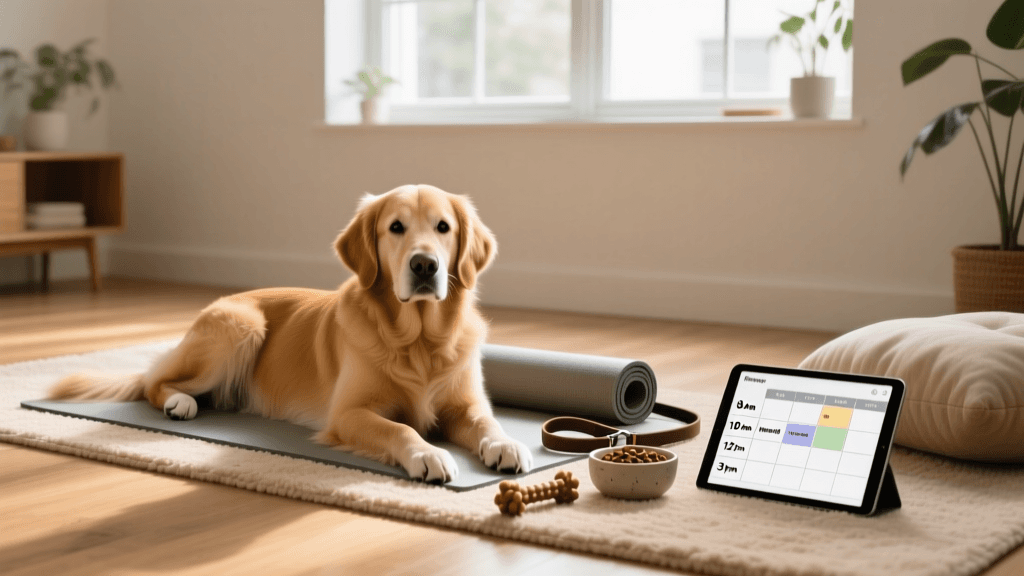
A predictable routine is the secret to a harmonious home office. Dogs thrive on schedule, and aligning their needs with your work blocks prevents behavioral issues. Here is a proven daily schedule for remote workers:
- 7:00 AM - The Decompression Walk: Before opening your laptop, take your dog for a 30-minute 'sniffari' walk. Letting them sniff extensively lowers their heart rate and provides mental fatigue, ensuring they are ready to sleep when you start working.
- 8:30 AM - Breakfast and Enrichment: Feed your dog their breakfast inside a puzzle toy or a frozen Kong Classic rather than a standard bowl. This extends mealtime and provides immediate mental stimulation as you log into your morning meetings.
- 12:00 PM - The Midday Reset: Use your lunch break for a 15-minute potty break and a quick game of indoor fetch or tug-of-war. This breaks up the sedentary day for both you and your dog.
- 3:00 PM - The Quiet Time Protocol: This is typically when dogs wake up from their afternoon nap and look for trouble. Preemptively provide a long-lasting chew, like a bully stick or a yak cheese chew, to keep them occupied while you tackle deep-work tasks.
- 5:30 PM - The End-of-Day Transition: When you close your laptop, signal the end of the workday with a longer neighborhood walk or a trip to a local dog park. This helps your dog transition from 'office mode' to 'evening relaxation mode.'
Managing Zoom Call Barking
Even the quietest breeds can occasionally vocalize when a doorbell rings or a stranger walks past the window. Managing this behavior is critical for remote professionals. According to the American Kennel Club, managing vocalization requires addressing the root cause, whether it is alarm barking, boredom, or attention-seeking. For alarm barkers, utilizing white noise machines in your home office can successfully mask outdoor triggers like traffic or pedestrians. Furthermore, teaching a 'quiet' command using high-value treats like freeze-dried liver can help you quickly de-escalate a barking episode before your colleagues notice.
For more general guidelines on integrating pets into your daily life and managing their environment, the Humane Society of the United States offers excellent resources on creating safe, pet-friendly workspaces that minimize stress for both you and your animal companion.
Final Thoughts on Health and Harmony
Ultimately, a well-behaved home office dog is a healthy dog. Ensuring your dog's baseline physical and mental well-being is the foundation of a productive remote work setup. The ASPCA's general dog care guidelines emphasize that routine veterinary check-ups, a balanced diet tailored to a sedentary indoor lifestyle, and consistent daily exercise are non-negotiable for preventing anxiety and destructive behaviors. By selecting a breed that naturally aligns with the quiet, structured environment of a home office, and by utilizing modern enrichment tools and smart scheduling, you can enjoy the immense mental health benefits of canine companionship without sacrificing your professional productivity in 2026 and beyond.
jonas-cole
All our authors care for dogs every day — read more of their work on the authors page.