Force-Free Dog Nail Care: Cooperative Training 2026
Learn force-free dog nail trimming using cooperative care and scratch boards. Discover 2026 positive reinforcement routines for stress-free grooming.
The End of Restraint: Embracing Cooperative Care in 2026
For decades, the standard approach to canine nail trimming involved physical restraint, towels, and muzzles. Owners and groomers were often taught to pin the dog down and 'get it over with.' However, as we move through 2026, the veterinary and professional grooming communities have overwhelmingly rejected these force-based methods. Today, the gold standard is cooperative care—a force-free, positive reinforcement philosophy that gives dogs agency and choice in their own grooming routines.
According to the American Veterinary Society of Animal Behavior (AVSAB), the use of physical restraint and punishment for behavior modification can lead to increased anxiety, fear, and aggression. By shifting to positive reinforcement, we not only protect the human-dog bond but also ensure that routine maintenance like nail care becomes a stress-free, even enjoyable, part of your daily life with your dog.
Cooperative care is not just about avoiding stress; it is about actively building trust and giving the animal a 'voice' and a 'start button' in their own healthcare routines.
In this comprehensive guide, we will explore how to implement force-free nail care using a nail scratch board and quiet grinders, utilizing the latest positive reinforcement techniques and 2026-recommended tools.
What is Cooperative Care and the 'Start Button'?
Cooperative care is a training framework where the dog is an active, willing participant rather than a passive recipient. The core concept revolves around the 'start button'. A start button is a specific behavior the dog performs to signal that they are ready to begin the procedure. If the dog stops performing the behavior, or moves away, the handler immediately stops the procedure. This opt-in method drastically reduces fear and builds profound trust.
For nail care, common start buttons include:
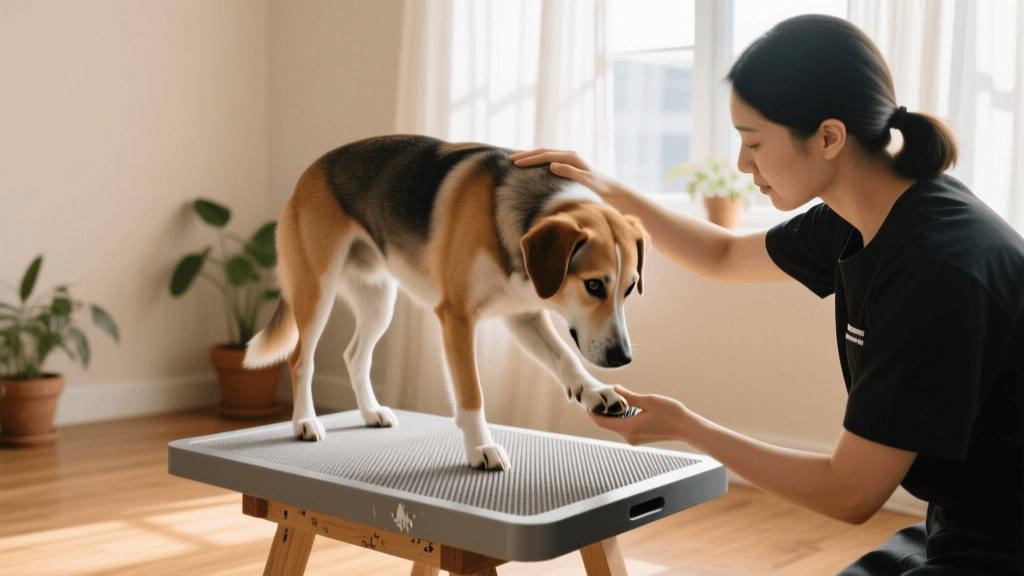
- The Chin Rest: The dog rests their chin on a designated stool or your lap.
- The Paw Target: The dog places their paw on a specific mat or your hand.
- The Scratch Board: The dog voluntarily approaches and begins scratching the sandpaper board.
Organizations like Fear Free Pets emphasize that giving animals control over their environment reduces the physiological markers of stress, making them healthier and more resilient companions.
Essential Force-Free Toolkit for 2026
To set up a successful force-free nail care routine, you need the right equipment. Avoid cheap, loud tools that can trigger noise phobias. Here are the top-rated, force-free tools for 2026:
1. The Nail Scratch Board
A scratch board allows the dog to file their own front nails by scratching at a sandpaper-covered surface. The ScratchPaws Pro Board (retailing around $45 in 2026) features replaceable, heavy-duty grit pads and a non-slip base. Alternatively, you can build a DIY version using a 2x10 piece of wood and 60-grit adhesive sandpaper.
2. Quiet Electric Grinders
For hind nails or dogs who do not take to the scratch board, a quiet grinder is essential. The CASFUY Whisper-Quiet Dog Nail Grinder (2026 Edition) is a top pick, priced at approximately $28. It operates at under 40 decibels, features a built-in LED light to help avoid the quick, and uses a diamond drum bit that files smoothly without catching.
3. Lick Mats and High-Value Pastes
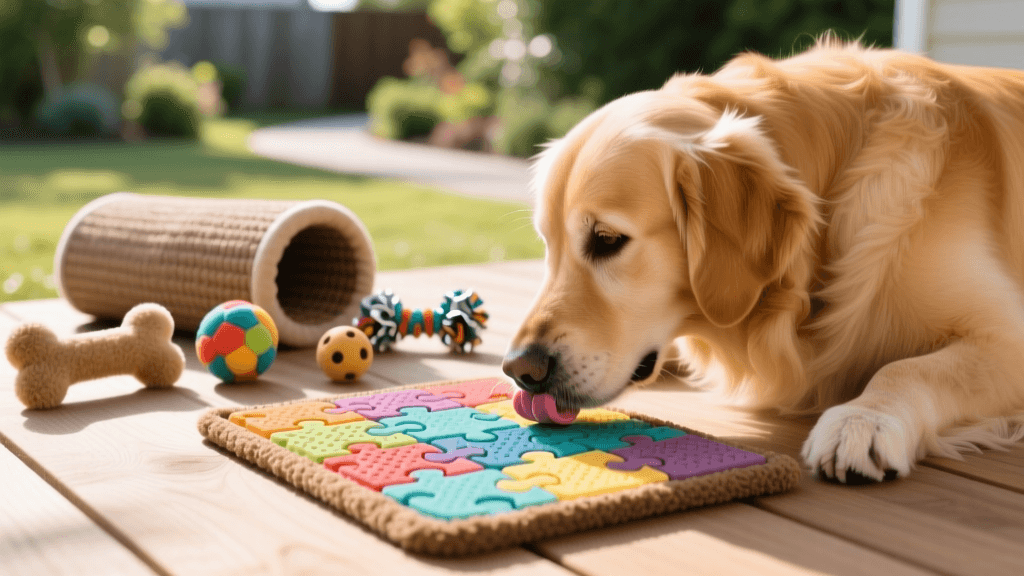
Licking releases endorphins in a dog's brain, acting as a natural soothing mechanism. The Hyper Pet IQ Treat Mat ($12) is perfect for spreading high-value treats. Pro-Tip Recipe: Blend plain Greek yogurt, xylitol-free unsalted peanut butter, and a dash of low-sodium bone broth. Freeze on the lick mat for 20 minutes before your session to create a long-lasting, soothing distraction.
4. Target Sticks and Clickers
A standard target stick with a magnetic tip and a soft foam ball helps guide the dog into position without physical manipulation. Pair this with a mechanical box clicker or a verbal marker word like 'Yes!' to mark desired behaviors.
Step-by-Step Scratch Board Training Protocol
Teaching your dog to use a scratch board is a fun, enriching activity that doubles as a grooming routine. Follow this force-free progression, keeping sessions under 3 to 5 minutes to prevent frustration or physical paw pad fatigue.
Phase 1: Introduction and Shaping
Place the scratch board flat on the ground. Have your clicker and high-value treats (like boiled chicken or freeze-dried liver) ready. Wait for your dog to investigate. The moment they look at or sniff the board, click and toss a treat away from the board to reset them. Next, wait for a paw touch. Click and treat for any paw interaction with the board.
Phase 2: Adding the Scratching Motion
Once your dog is confidently placing their paw on the board, hold a treat near the board to encourage a digging or scratching motion. The second their nails make a scratching sound against the sandpaper, mark the behavior with a 'Yes!' and reward heavily. You can also model the behavior by scratching the board with your own fingernails to pique their curiosity.
Phase 3: Duration and the 'Start Button'
Begin to delay the reward, requiring three or four consecutive scratches before marking and treating. Introduce your start button cue, such as the word 'File!' or 'Get your nails!' Only reward when the dog voluntarily approaches and initiates the scratching after the cue.
Cooperative Nail Care Progression Timeline
Every dog learns at their own pace, but this structured table provides a general roadmap for implementing a force-free scratch board routine in a multi-pet or single-dog household.
| Week | Focus Area | Training Goal | Reward Strategy |
|---|---|---|---|
| Week 1 | Board Familiarity | Dog voluntarily steps on or touches the board with one paw. | Continuous reinforcement (treat for every touch). |
| Week 2 | Motion Shaping | Dog performs a forward scratching motion on the sandpaper. | Jackpot rewards (3-5 treats) for first successful scratches. |
| Week 3 | Duration Building | Dog scratches continuously for 5-10 seconds. | Variable reinforcement (treat after 3 scratches, then 5, then 2). |
| Week 4 | Cue Association | Dog responds to the verbal cue 'File' or 'Scratch'. | Lick mat paired with scratching for endorphin release. |
| Week 5 | Angle Adjustment | Dog learns to scratch at an angle to target specific nails. | Target stick used to guide paw placement and angle. |
| Week 6 | Maintenance | Weekly 2-minute voluntary filing sessions. | Life rewards (access to a favorite toy or outdoor walk). |
Desensitizing to the Grinder: A Force-Free Approach
While scratch boards are excellent for front nails, hind nails usually require a grinder. Introducing a grinder must be done systematically to avoid triggering noise sensitivity. The Humane Society of the United States advocates for gradual desensitization and counter-conditioning for all grooming tools.
The 5-Step Grinder Desensitization Plan
- Sight: Place the turned-off grinder on the floor next to a bowl of high-value treats. Let the dog eat the treats and walk away. Repeat until the dog shows excitement when the grinder appears.
- Sound at a Distance: Turn the grinder on in another room while you play a fun game of tug or feed treats. Gradually move closer to the sound over several days, ensuring the dog remains relaxed.
- Sound Nearby: Turn the grinder on while holding it in one hand, and feed treats with the other. The sound predicts chicken, not pain.
- Vibration Touch: With the grinder on, gently touch the side of the grinder (not the spinning bit) to the dog's shoulder or back, then treat. This acclimates them to the vibration.
- The Nail Touch: Gently touch the spinning diamond bit to the very tip of one nail for exactly one second. Mark, treat, and turn the grinder off. End the session on a success.
Troubleshooting Common Challenges
My dog is terrified of the sound of the scratch board.
Some dogs are startled by the loud 'riiiip' sound of nails on sandpaper. To mitigate this, start with a finer grit sandpaper (like 120-grit) which produces a softer sound, and gradually work your way down to 60-grit as the dog's confidence grows.
How do I handle this in a multi-dog household?
In multi-pet homes, resource guarding or frustration can occur during high-value training. Train each dog in separate rooms initially. For the waiting dog, use 'pattern games' like the '1-2-3 Treat' game or provide a frozen Kong to keep them engaged and relaxed without feeling left out.
My dog walks away during the session.
Celebrate this! Walking away is your dog utilizing their agency to say 'I need a break.' Respect the opt-out. Do not coax, lure, or physically guide them back. Wait a few minutes, or try again the next day. Respecting the 'no' makes the 'yes' much more meaningful.
Conclusion: A Lifetime of Trust
Transitioning to force-free nail care is not just about maintaining your dog's physical health; it is a profound investment in your relationship. By utilizing cooperative care, scratch boards, and positive reinforcement, you transform a historically stressful chore into an engaging, trust-building game. As the AVSAB's position statements continually remind us, reward-based methods are not only more humane but significantly more effective for long-term behavioral health. Embrace the 2026 standard of care, give your dog a voice, and watch your bond flourish with every successful, stress-free scratch.
tom-renshaw
All our authors care for dogs every day — read more of their work on the authors page.