Top 5 Best Puppy Breeds for Remote Workers in 2026
Discover the best puppy breeds for remote workers in 2026. Learn which low-anxiety, adaptable dogs thrive in a home-office environment for optimal wellbeing.
The Evolution of the Home Office in 2026
As we navigate the professional landscape of 2026, remote and hybrid work models have permanently reshaped our daily routines. For dog owners, this shift presents a unique set of challenges and opportunities regarding canine health and wellbeing. While being home with your puppy sounds like a dream, it fundamentally alters their socialization, exercise patterns, and mental health development. Choosing the right breed is no longer just about matching your physical activity level; it is about finding a companion whose psychological needs align with the quiet, structured rhythms of a modern home office.
According to the Centers for Disease Control and Prevention (CDC), the mental and emotional wellbeing of pets is deeply intertwined with their daily environment and routine. For remote workers, the home office becomes a shared sanctuary. However, the constant presence of an owner can inadvertently lead to severe separation anxiety when the owner eventually leaves for hybrid office days, coffee runs, or social engagements. Therefore, selecting a breed with a naturally independent yet affectionate disposition is critical for long-term canine mental health.
Why Breed Selection Impacts Canine Mental Health
Not all dogs are wired to sit quietly under a desk while you attend back-to-back virtual meetings. High-drive working breeds, such as Border Collies or Belgian Malinois, often develop destructive behaviors and stress-induced conditions when confined to a home office without hours of rigorous daily stimulation. Conversely, breeds that have been historically selected for companionship, moderate energy, and emotional stability thrive in the WFH (Work From Home) ecosystem.
When evaluating the best puppy breeds for remote workers, veterinary behaviorists look for three key traits:
- Low Vocalization: Breeds that do not excessively bark at delivery drones, doorbell rings, or neighborhood noises.
- Adaptable Energy Levels: Dogs that are content with structured morning and evening walks, coupled with long periods of resting.
- Emotional Resilience: Breeds that can tolerate being in the same room without demanding constant physical interaction, reducing the risk of 'velcro-dog' syndrome.
Top 5 Best Puppy Breeds for Remote Workers
1. Cavalier King Charles Spaniel
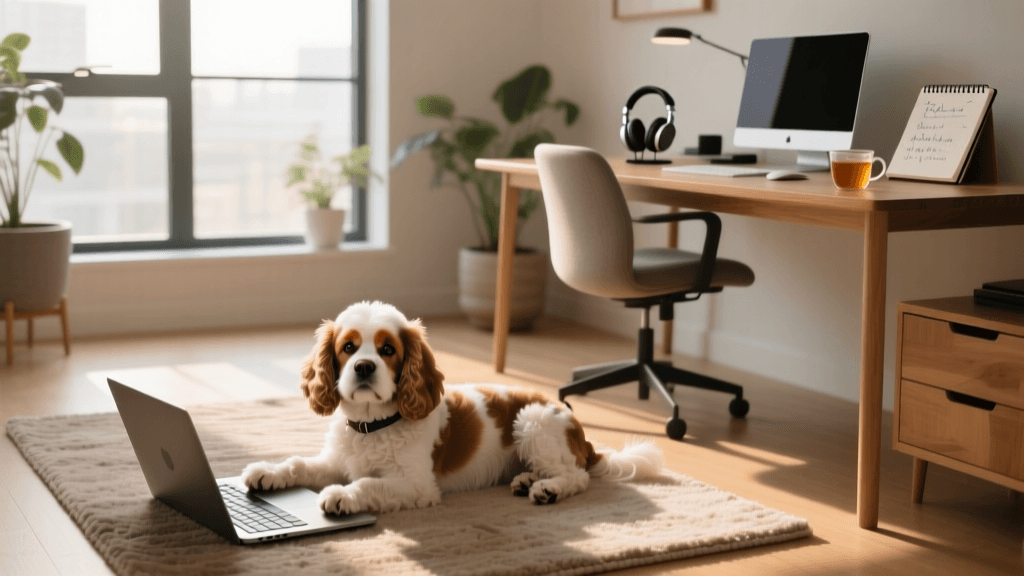
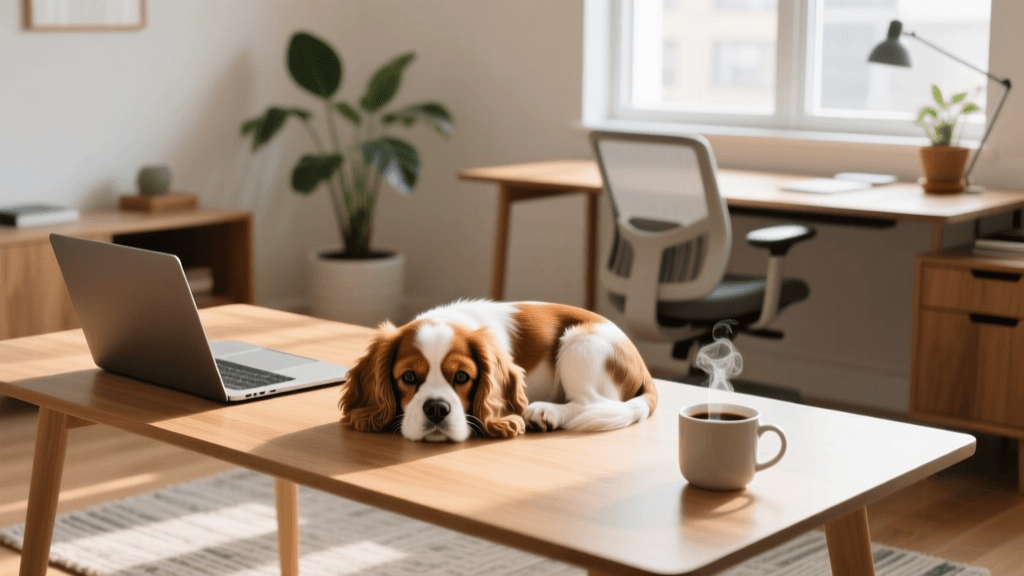
The Cavalier King Charles Spaniel remains a top-tier choice for remote workers in 2026. Known for their profound empathy and gentle nature, Cavaliers are the ultimate 'lap warmers.' They possess a moderate energy level that requires only a 30-minute morning walk and an evening stroll, leaving them perfectly content to sleep on a designated orthopedic bed beneath your standing desk. Their low tendency to bark makes them ideal for professionals who frequently host Zoom calls or virtual client meetings.
2. Greyhound
While often misunderstood as high-energy racing dogs, retired Greyhounds and well-bred pet Greyhounds are famously known as '45-mph couch potatoes.' They are sprinters, not marathon runners. A quick 20-minute sprint in a fenced area or a brisk neighborhood walk is usually enough to satisfy their physical needs. For the remaining 18 hours of the day, they are exceptionally quiet, low-shedding, and deeply appreciative of a soft bed in a climate-controlled home office.
3. Bichon Frise
For remote workers operating in smaller apartments or shared living spaces, the Bichon Frise is a phenomenal choice. Their hypoallergenic, low-shedding coats are ideal for closed-off home offices where air circulation might be limited. Bichons are cheerful and adaptable, but they also possess an independent streak that allows them to entertain themselves with puzzle toys while you focus on deep-work sessions. Regular grooming is required, which can be easily scheduled during your mid-day lunch breaks using 2026's advanced mobile pet-grooming services.
4. Pug
Pugs are expressive, deeply affectionate, and inherently low-energy. They thrive on proximity rather than intense physical activity. A Pug will happily snore softly in the background of your home office, providing a comforting presence without demanding rigorous exercise. Because they are brachycephalic (flat-faced), they are sensitive to heat and overexertion, making the climate-controlled environment of a modern home office the safest and most comfortable place for them to spend their days.
5. Japanese Chin
The Japanese Chin is a cat-like companion dog that is exceptionally quiet and observant. They do not demand constant attention and are perfectly happy to watch you work from a nearby sofa. Their small size and low exercise requirements make them ideal for urban remote workers. Furthermore, their generally quiet demeanor ensures that unexpected notifications or smart-home alerts won't trigger a barking fit during your important presentations.
2026 Home-Office Compatibility Chart
| Breed | Energy Level | Barking Tendency | Separation Anxiety Risk | Ideal WFH Setup |
|---|---|---|---|---|
| Cavalier King Charles | Low-Moderate | Low | Moderate | Orthopedic bed under desk |
| Greyhound | Low (Sprinter) | Very Low | Low | Large plush mat in corner |
| Bichon Frise | Moderate | Moderate | Moderate | Interactive puzzle toys nearby |
| Pug | Low | Low-Moderate | High | Climate-controlled cozy nook |
| Japanese Chin | Low | Very Low | Low | Elevated cat-tree or sofa perch |
Preventing 'Velcro-Dog' Syndrome and Separation Anxiety
One of the most significant mental health risks for puppies raised by remote workers is separation anxiety. Because you are home 90% of the time, the puppy learns to expect your constant presence. When you eventually leave the house, the sudden absence can trigger severe psychological distress, leading to destructive chewing, excessive vocalization, and inappropriate elimination.
The ASPCA emphasizes that prevention through structured independence is crucial. To safeguard your puppy's mental wellbeing in 2026, implement the following protocols:
- Enforced Alone Time: Even when you are working from home, use baby gates to separate yourself from your puppy for 1-2 hours a day. This teaches them that your physical absence is normal and temporary.
- Departure Desensitization: Practice putting on your shoes, grabbing your keys, and leaving the house for 5 minutes, then returning. Do not make a big fuss when leaving or arriving.
- Smart Enrichment: Utilize modern tech like the Furbo 4K Pro or automated treat-dispensing cameras. These devices allow you to monitor your dog's stress levels and dispense treats remotely when you step out for a coffee run.
Essential 2026 WFH Dog Gear for Mental Wellbeing
To keep your puppy mentally stimulated while you are in deep focus mode, invest in high-quality enrichment tools. The Outward Hound Nina Ottosson Dog Brick remains a staple for cognitive stimulation, requiring the dog to use their nose and paws to uncover hidden treats. For prolonged chewing sessions that release endorphins and reduce stress, the KONG Classic stuffed with frozen, dog-safe bone broth and peanut butter is unparalleled.
Additionally, 2026 has seen a massive rise in veterinary telehealth platforms. If your puppy exhibits signs of stress, gastrointestinal upset from anxiety, or minor injuries, you can instantly connect with a licensed veterinarian via your smart home hub without disrupting your entire workday.
A Sample Daily Routine for the Remote Worker
Structure is the foundation of canine mental health. Here is an optimized daily schedule for a remote worker and their home-office puppy:
- 7:00 AM: Wake up, bathroom break, and a 20-minute 'Sniffari' walk (allowing the dog to dictate the pace and sniff for mental enrichment).
- 8:00 AM: Breakfast served inside a slow-feeder bowl or puzzle toy to engage their brain while you prepare for work.
- 9:00 AM - 12:00 PM: Deep work block. Puppy is on their designated mat with a long-lasting chew toy. Enforced quiet time.
- 12:30 PM: Mid-day bathroom break and a 15-minute game of indoor tug-of-war or fetch to burn off midday energy.
- 1:00 PM - 4:30 PM: Afternoon work block. Puppy naps. You practice 30 minutes of 'alone time' by working in a closed room.
- 5:00 PM: Laptop closes. Evening walk, training session (5-10 minutes of positive reinforcement), and dinner.
Conclusion
Working from home with a dog is one of the greatest perks of the modern era, but it requires intentional breed selection and proactive mental health management. By choosing a low-anxiety, adaptable breed like the Cavalier King Charles Spaniel, Greyhound, or Japanese Chin, and by enforcing healthy boundaries to prevent separation anxiety, you create a harmonious environment. Prioritizing your puppy's psychological wellbeing ensures that your home office remains a place of productivity, peace, and mutual companionship for years to come.
anouk-beaumont
All our authors care for dogs every day — read more of their work on the authors page.