Top 5 Dog Breeds for Remote Workers' Wellbeing in 2026
Discover the best low-anxiety, quiet dog breeds for remote workers in 2026. Boost your mental health and daily routine with these ideal canine companions.
The Intersection of Remote Work and Canine Wellbeing in 2026
As the global workforce continues to embrace remote and hybrid models in 2026, the boundaries between our professional responsibilities and personal lives have never been more blurred. For millions of remote workers, the home office is a permanent fixture, bringing unique challenges to our physical ergonomics, mental health, and daily routines. One of the most effective, scientifically backed interventions for combating remote work burnout and sedentary lifestyles is canine companionship. However, not every dog breed is suited for the quiet, structured, and sometimes high-stress environment of a home office.
Choosing the right dog is not just about finding a cute face; it is a critical health and wellbeing decision for both you and the animal. A dog that suffers from severe separation anxiety or requires excessive physical exertion can actually increase a remote worker's stress levels, disrupt important virtual meetings, and lead to behavioral health issues for the pet. Conversely, the right breed can serve as a grounding presence, enforce healthy screen-time breaks, and provide profound emotional support.
According to the Centers for Disease Control and Prevention (CDC), pet ownership is linked to lowered blood pressure, reduced cholesterol levels, and decreased feelings of loneliness and depression. For the modern remote worker, integrating a low-anxiety, moderate-energy dog into your daily routine can be the ultimate wellness hack.
Criteria for the Ideal Remote Work Companion
When evaluating breeds through the lens of health and wellbeing for a home-office environment, we prioritize three main factors:
- Low Vocalization: Frequent barking at delivery drivers or neighborhood noises can spike your cortisol levels during deep work sessions and cause immense embarrassment on video calls.
- Moderate Energy Levels: While daily exercise is non-negotiable for canine health, a remote worker needs a dog that is content to snooze under a standing desk for a few hours, rather than one that demands a 10-mile run in the middle of the workday.
- Emotional Resilience: Breeds prone to severe separation anxiety can develop destructive behaviors and chronic stress if you need to step out for a co-working session, a coffee shop meeting, or a quick grocery run.
Top 5 Dog Breeds for Remote Worker Wellbeing
1. Cavalier King Charles Spaniel
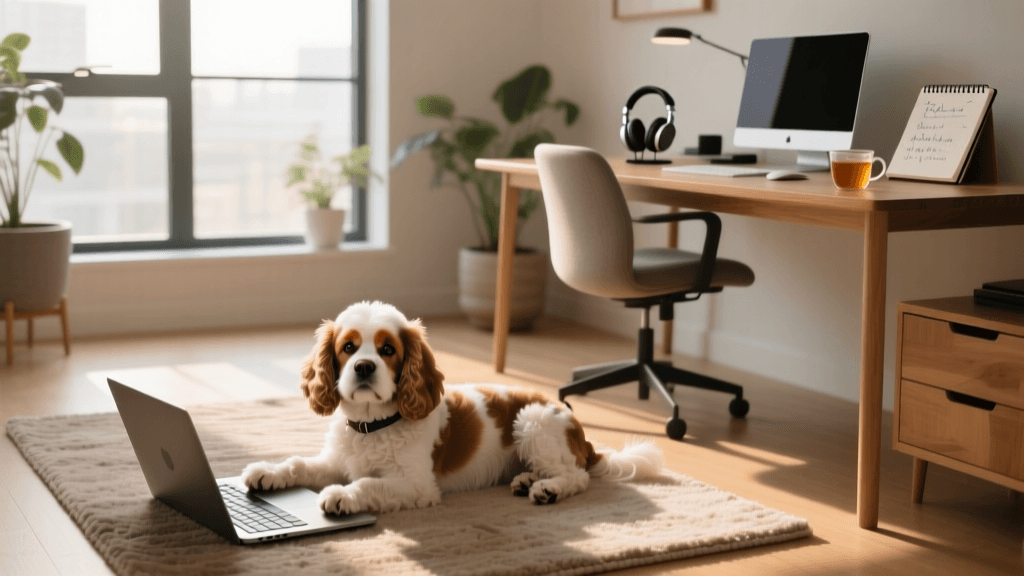
The Cavalier King Charles Spaniel is widely considered the ultimate lap dog, making them a perfect fit for remote workers who want a constant, affectionate presence nearby. They are exceptionally quiet and deeply attuned to their owner's emotional state, often providing intuitive comfort during stressful project deadlines.
Health & Wellbeing Focus: Cavaliers are prone to Mitral Valve Disease (MVD), a progressive heart condition. Responsible remote workers must commit to annual veterinary cardiology screenings. Their moderate energy requires a 30-to-45-minute daily walk, which perfectly aligns with a morning or lunchtime mental health break away from your monitors. Regular ear cleaning is also vital to prevent infections in their long, floppy ears.
2. Greyhound
Despite their reputation as racing dogs, retired Greyhounds are famously known as "45-mph couch potatoes." They are incredibly quiet, rarely bark, and spend up to 18 hours a day sleeping. For a remote worker in a smaller apartment or home office, a Greyhound will happily curl up on an orthopedic bed in the corner of the room without demanding constant attention.
Health & Wellbeing Focus: Greyhounds have very low body fat and thin coats, making them highly sensitive to cold temperatures and hard surfaces. Investing in a high-quality, supportive orthopedic dog bed is crucial to prevent joint pain and pressure sores. Additionally, they are uniquely sensitive to certain anesthetics, so it is vital to work with a veterinarian experienced in sighthound care for any surgical procedures.
3. Basset Hound
If your remote work lifestyle leaves you feeling rushed and perpetually anxious, the Basset Hound is the antidote. Their slow, methodical pace and incredibly calm demeanor force you to slow down. A walk with a Basset Hound is less about cardiovascular exercise and more about a mindful, grounding "sniffari" that benefits both the dog's mental enrichment and your own nervous system regulation.
Health & Wellbeing Focus: Bassets are highly food-motivated and prone to obesity, which exacerbates their susceptibility to intervertebral disc disease (IVDD) due to their long spines. Strict portion control using a slow-feeder bowl and regular weight monitoring are essential. Their heavy, droopy ears also require weekly cleaning to prevent chronic yeast and bacterial infections.
4. Shih Tzu
Bred specifically for companionship, the Shih Tzu thrives on being near their human. They are generally quiet, adaptable, and require minimal outdoor exercise, making them ideal for remote workers living in urban environments or high-rise apartments where frequent trips to a dog park are inconvenient.
Health & Wellbeing Focus: As a brachycephalic (flat-faced) breed, Shih Tzus are prone to Brachycephalic Obstructive Airway Syndrome (BOAS). It is critical to keep them in climate-controlled environments—especially important if your home office gets warm. They also require rigorous daily eye care, as their prominent eyes are susceptible to scratches, dry eye, and corneal ulcers. Daily brushing is necessary to prevent painful skin matting.
5. Whippet
The Whippet is a gentle, sensitive, and profoundly quiet breed. They are sprinters rather than endurance runners, meaning a quick 20-minute burst of play or a short jog in the morning will completely satisfy their physical needs. The rest of the day, they are content to burrow under a blanket near your desk. Their sensitive nature makes them excellent emotional support companions for individuals managing anxiety or depression.
Health & Wellbeing Focus: Whippets have a naturally slender build, but it is important to distinguish between a healthy, lean Whippet and an underweight one; their ribs should be easily felt but not prominently seen. Like Greyhounds, they require soft bedding to protect their joints and warm coats during winter walks. Routine dental care is also paramount, as small-to-medium breeds are highly susceptible to periodontal disease.
Comparative Wellness Chart for Home Office Breeds
| Breed | Energy Level | Barking Tendency | Daily Exercise Need | Primary Health Watchlist |
|---|---|---|---|---|
| Cavalier King Charles | Moderate | Low | 30-45 mins | Heart (MVD), Ears, Joints |
| Greyhound | Low (Indoor) | Very Low | 30-40 mins | Pressure sores, Dental, Anesthesia sensitivity |
| Basset Hound | Low | Moderate (Bay) | 30 mins (Slow) | Obesity, Spine (IVDD), Ear infections |
| Shih Tzu | Low | Low to Moderate | 20-30 mins | Respiratory (BOAS), Eyes, Dental |
| Whippet | Moderate (Sprint) | Very Low | 30-45 mins | Temperature sensitivity, Joint care |
Structuring a Healthy Remote Work Routine with Your Dog
Bringing a dog into your home office requires a structured routine that promotes the physical and mental wellbeing of both you and your pet. The American Veterinary Medical Association (AVMA) emphasizes that predictable routines significantly reduce canine stress and behavioral issues.
Here is an optimized 2026 daily schedule for the remote worker and their low-anxiety companion:
- 7:00 AM - The Morning Sniffari: Before opening your laptop, take your dog for a 30-minute walk. Allow them to dictate the pace and sniff extensively. This mental enrichment tires them out faster than physical exercise alone and gives you morning sunlight exposure to regulate your circadian rhythm.
- 8:30 AM - Deep Work Block: Settle into your home office. Provide your dog with a long-lasting chew or a frozen enrichment toy (like a Kong stuffed with dog-safe peanut butter and yogurt). Chewing releases endorphins in dogs, promoting a calm, sleepy state while you tackle complex tasks.
- 12:00 PM - The Ergonomic Break: Use your lunch break to engage in 10 minutes of gentle indoor play or training. This breaks up your sedentary screen time, prevents lower back pain, and reinforces your dog's cognitive health through positive reinforcement training.
- 3:00 PM - The Afternoon Reset: Take a 15-minute walk together. This combats the mid-afternoon energy slump, reducing your reliance on caffeine and giving your dog a necessary bathroom break and change of scenery.
- 5:30 PM - Boundary Setting: Close the laptop. Transition from "work mode" to "home mode" by taking your dog on a second, slightly longer walk. This physical boundary helps prevent remote work burnout and signals to your brain that the workday is complete.
Creating an Ergonomic and Safe Home Office Environment
Your home office setup must accommodate your canine companion safely. Cable management is a critical, often overlooked health hazard. Dogs, particularly puppies or anxious chewers, can easily ingest or become entangled in power cords. Use cord concealers, cable sleeves, or under-desk cable trays to keep all wires completely out of reach.
Furthermore, consider the acoustic environment. While the breeds listed above are naturally quiet, sudden loud noises from your computer speakers or virtual meetings can startle them. Using a high-quality headset not only improves your professional audio presence but also protects your dog's sensitive hearing from sudden audio spikes.
Final Thoughts on Canine Companionship
Integrating a dog into your remote work life in 2026 is a profound commitment to your holistic wellbeing. By selecting a breed that aligns with your professional demands and dedicating time to their specific preventive healthcare needs, you create a symbiotic relationship. Your dog provides unparalleled emotional support and enforces healthy physical boundaries, while you provide a safe, structured, and loving environment. For more insights on creating a pet-friendly lifestyle, consult resources from the American Kennel Club (AKC) and always partner with a trusted local veterinarian to tailor a wellness plan for your specific companion.
tom-renshaw
All our authors care for dogs every day — read more of their work on the authors page.