2026 Canine OA Treatments: Librela, Adequan & Joint Care
Compare top 2026 canine OA treatments including Librela, Adequan, and joint supplements. Discover costs, efficacy, and vet-recommended care plans.
The Evolution of Canine Osteoarthritis Treatment in 2026
Canine osteoarthritis (OA) is a progressive, degenerative joint disease that affects an estimated 20% to 25% of all dogs, with prevalence climbing significantly in senior and large-breed populations. As we navigate veterinary care in 2026, the paradigm of OA management has shifted dramatically. Veterinarians are moving away from relying solely on traditional non-steroidal anti-inflammatory drugs (NSAIDs) due to long-term hepatic and renal risks. Instead, the modern standard of care emphasizes multimodal therapy, prioritizing targeted biologic medications, disease-modifying osteoarthritis drugs (DMOADs), and specialized nutraceuticals.
Understanding the distinct mechanisms, costs, and protocols of leading treatments like Librela and Adequan is essential for pet parents looking to optimize their dog's mobility and quality of life. According to the WSAVA Global Pain Council, effective OA management requires a tailored, multimodal approach that addresses both pain signaling and joint structural integrity.
Librela (Bedinvetmab): The Biologic Game-Changer
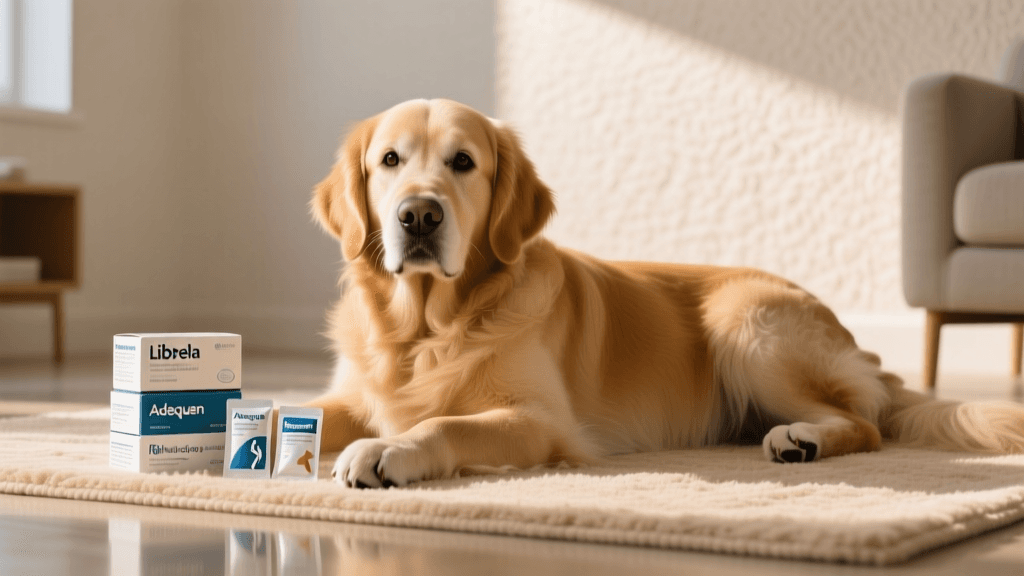
Librela has revolutionized canine pain management since its introduction, and by 2026, it has become a cornerstone therapy for moderate to severe canine OA. Unlike traditional pain medications that are metabolized by the liver or kidneys, Librela is a fully caninized monoclonal antibody (mAb) that specifically targets and neutralizes Nerve Growth Factor (NGF).
How It Works
NGF is a key protein involved in the transmission of pain signals. In arthritic joints, NGF levels are significantly elevated, leading to chronic pain and hypersensitivity. By binding to NGF, Librela prevents it from interacting with pain receptors, effectively 'turning down the volume' on OA pain without impacting organ function. As noted by Zoetis Petcare, this targeted mechanism makes it exceptionally safe for dogs with pre-existing kidney or liver conditions, which are common in the senior demographic.
2026 Protocol and Pricing
- Administration: A once-monthly subcutaneous injection administered by your veterinarian.
- Dosage: Weight-based (e.g., 0.45 mg/lb or 1.0 mg/kg).
- Estimated 2026 Cost: $90 to $140 per monthly injection, depending on the dog's weight and regional veterinary pricing.
- Onset of Action: Some dogs show improvement within 7 days, but peak efficacy is typically observed after the second or third monthly dose.
Adequan Canine: The Gold Standard DMOAD
While Librela excels at pain modulation, Adequan Canine (polysulfated glycosaminoglycan, or PSGAG) remains the premier Disease-Modifying Osteoarthritis Drug (DMOAD) for preserving joint structure. In 2026, Adequan is heavily utilized not just as a treatment for existing OA, but as a preventive measure for highly active working dogs and breeds predisposed to dysplasia.
How It Works
Adequan works directly within the joint space. It inhibits the enzymes that break down articular cartilage, stimulates the production of healthy synovial fluid (improving joint lubrication), and promotes the synthesis of collagen and proteoglycans. Essentially, it helps halt the physical degradation of the joint while improving the joint's mechanical environment.
2026 Protocol and Pricing
- Administration: Intramuscular (IM) injections.
- Loading Dose: Twice weekly for 4 weeks (8 total injections).
- Maintenance: Once every 7 to 28 days, depending on the dog's response and veterinary recommendation.
- Estimated 2026 Cost: $45 to $75 per vial. The initial 8-dose loading phase typically costs between $350 and $600, including veterinary administration fees.
2026 Canine OA Treatment Comparison Chart
Choosing the right medication depends on your dog's specific health profile, age, and the severity of their osteoarthritis. Below is a comprehensive comparison of the leading veterinary OA therapies available in 2026.
| Treatment | Category | Mechanism of Action | Administration | Best For | Est. Monthly Cost (2026) |
|---|---|---|---|---|---|
| Librela | Biologic (Anti-NGF mAb) | Neutralizes Nerve Growth Factor to block pain signals | Monthly SubQ injection (Vet) | Senior dogs, dogs with liver/kidney disease | $90 - $140 |
| Adequan | DMOAD (PSGAG) | Inhibits cartilage degradation, boosts synovial fluid | IM injection (Loading + Maintenance) | Active dogs, early-stage OA, joint preservation | $50 - $100 (Maintenance) |
| Galliprant | Piprant (EP4 Antagonist) | Blocks PGE2 at the EP4 receptor to reduce pain/inflammation | Daily oral flavored tablet | Dogs needing daily oral pain relief with fewer GI risks | $80 - $130 |
| Carprofen | Traditional NSAID | Inhibits COX enzymes to reduce systemic inflammation | Daily oral tablet/chew | Acute flare-ups, short-term post-op pain | $30 - $60 |
| Dasuquin Advanced | Nutraceutical | Provides ASU, Glucosamine, Chondroitin, and ESM | Daily oral chew | Mild OA, baseline joint support alongside meds | $40 - $70 |
Building a Multimodal OA Management Plan
According to the American Kennel Club (AKC), no single medication is a silver bullet for canine osteoarthritis. The most successful outcomes in 2026 are achieved through a multimodal approach that combines pharmaceuticals with targeted nutrition, weight management, and physical rehabilitation.
1. Targeted Omega-3 Fatty Acids
Not all fish oils are created equal. For canine OA, the therapeutic benefit comes specifically from EPA (eicosapentaenoic acid) and DHA (docosahexaenoic acid), which naturally down-regulate inflammatory pathways in the joint. In 2026, veterinary nutritionists recommend a therapeutic dose of 300 mg of combined EPA/DHA per 10 pounds of body weight. Products like Nutramax Welactin 3X Canine or Vetmedica Omega-3 are highly concentrated to meet these therapeutic thresholds without adding excessive caloric fat to the dog's diet.
2. Advanced Joint Nutraceuticals
Supplements containing Avocado/Soybean Unsaponifiables (ASU) and Eggshell Membrane (ESM) have shown superior efficacy in preserving cartilage matrix compared to older glucosamine-only formulas. Dasuquin Advanced with ESM remains a top-tier recommendation for its synergistic blend of ingredients that support extracellular matrix integrity.
3. Weight Management and Body Condition Scoring
Mechanical stress is the primary driver of cartilage wear. Maintaining an ideal Body Condition Score (BCS) of 4/9 or 5/9 is non-negotiable for arthritic dogs. Even a 5% reduction in body weight can result in a clinically significant improvement in lameness scores. In 2026, many veterinary clinics utilize AI-assisted 3D body scanning to precisely track a dog's fat-to-muscle ratio, ensuring weight loss comes from adipose tissue rather than lean muscle mass.
4. Physical Rehabilitation
Underwater treadmill therapy, therapeutic laser (Class IV cold laser), and targeted hydrotherapy are now standard offerings at specialized veterinary rehabilitation centers. These modalities help maintain muscle mass—which acts as a shock absorber for degenerating joints—without placing high-impact concussive forces on the skeletal system.
Veterinary Insight: "The goal of OA treatment in 2026 is not just to mask pain, but to alter the disease trajectory. Combining a biologic like Librela for comfort with a DMOAD like Adequan for joint health, alongside strict weight control, gives our canine patients the best chance at a vibrant, active life."
Conclusion: Partnering with Your Veterinarian
Canine osteoarthritis is a complex, multifaceted disease that requires a dynamic treatment strategy. Whether you opt for the targeted pain relief of Librela, the structural support of Adequan, or a combination of both alongside advanced nutraceuticals, the key to success is consistent veterinary monitoring. Schedule a comprehensive OA assessment with your veterinarian to develop a customized, multimodal care plan tailored to your dog's unique physiology and lifestyle in 2026.
beth-carrasco
All our authors care for dogs every day — read more of their work on the authors page.