7 Common Loose Leash Walking Mistakes Dog Owners Make
Avoid these 7 common loose leash walking mistakes. Learn expert tips on harness selection, treat timing, and leash tension to stop your dog from pulling.
The Hidden Costs of Leash Pulling
Walking your dog should be a relaxing bonding experience, a time to explore the neighborhood and enjoy the fresh air. However, for millions of dog owners, daily walks devolve into a frustrating game of tug-of-war. Leash pulling is not just an annoyance; it is a behavioral issue that can lead to physical injury for both you and your dog. Chronic pulling can cause tracheal collapse, spinal issues, and chronic joint pain in dogs, while owners frequently suffer from shoulder strain, back pain, and even falls.
According to the American Kennel Club (AKC), leash pulling is one of the most common reasons owners seek professional behavioral help. The good news is that loose leash walking is a highly trainable skill. The bad news is that many well-meaning owners inadvertently reinforce the very behaviors they are trying to extinguish. By identifying and correcting these common errors, you can transform your daily walks from a stressful chore into an enjoyable routine.
7 Common Mistakes to Avoid in Loose Leash Training
Mistake 1: Using the Wrong Walking Equipment
Many owners attempt to train loose leash walking using a standard flat collar or a back-clip harness. While these are fine for dogs that already walk politely, they are counterproductive for pullers. A back-clip harness taps into a dog's natural oppositional reflex—the instinct to push against pressure. When a dog feels pressure on their back, they instinctively lean forward and pull harder, much like a sled dog. Furthermore, flat collars place all the tension directly on the dog's delicate trachea.
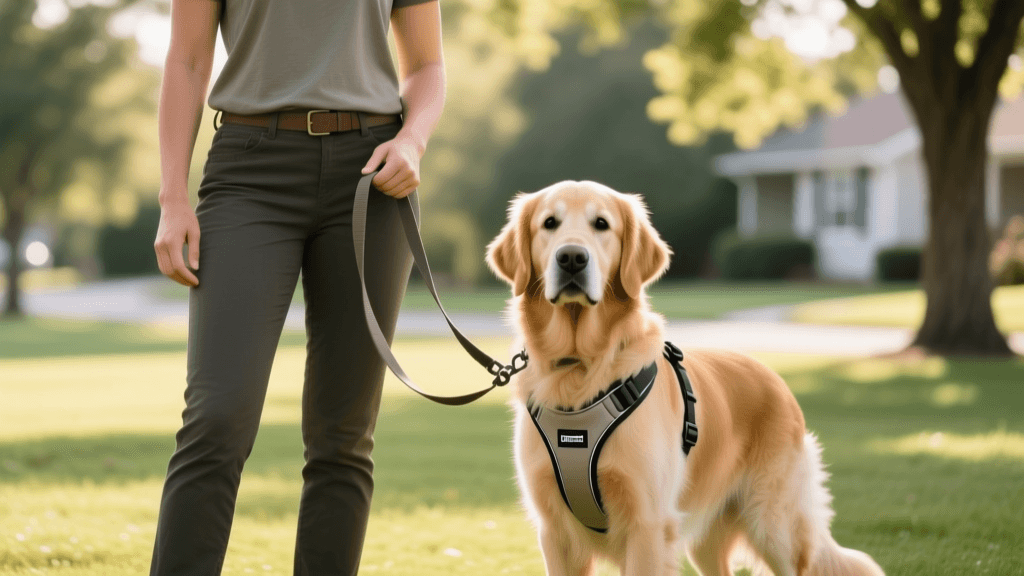
The Fix: Switch to a front-clip harness, such as the Ruffwear Front Range (typically costing around $35-$40). A front-clip harness redirects the dog's momentum back toward you when they pull, naturally discouraging forward lunging without causing pain or relying on aversive choking mechanisms.
Mistake 2: Inconsistent Leash Tension Rules
Dogs learn through immediate consequences. If the leash is tight, and the dog is allowed to move forward to sniff a bush or greet another dog, the dog learns a very clear lesson: Pulling makes the forward motion happen. Many owners enforce the "no pulling" rule for 90% of the walk, but give in and follow the dog when they pull toward something highly stimulating. This intermittent reinforcement actually makes the pulling behavior stronger and more resistant to extinction.
The Fix: Adopt a zero-tolerance policy for leash tension during training phases. Implement the "Be a Tree" method: the moment the leash goes tight, stop walking completely. Do not yank the dog back; simply freeze. Wait until the dog voluntarily turns back to look at you or takes a step back to create slack in the leash. Only then do you resume walking. Alternatively, use the "Penalty Yards" method: when the leash goes tight, immediately turn 180 degrees and walk the other way.
Mistake 3: Rewarding at the Wrong Height
When rewarding your dog for walking with a loose leash or checking in with you, the placement of the treat is just as important as the treat itself. Many owners hold the treat up near their dog's face or chest level. This inadvertently encourages the dog to jump up, break their walking stride, and focus upward rather than maintaining a calm, grounded walking posture.
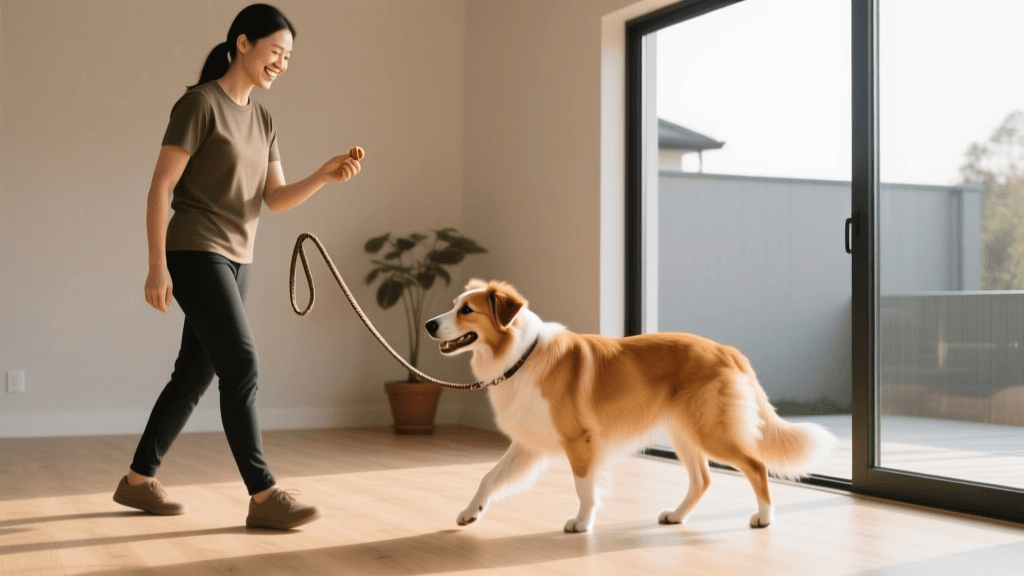
The Fix: Deliver treats at the "seam of your pants" or directly at your dog's knee height. This keeps the dog's head in a neutral, forward-facing position and encourages all four paws to stay on the ground. Use high-value, low-calorie treats like Zuke's Mini Naturals (under 2 calories each, roughly $8 per bag) or boiled chicken breast cut into precise 1/4-inch cubes to maintain your dog's health while allowing for high-frequency rewarding.
Mistake 4: Moving Forward When the Leash is Tight
This is an extension of inconsistency but relates specifically to the owner's body mechanics. Often, an owner will stop when the dog pulls, but the moment the dog leans forward just an inch—while the leash is still completely taut—the owner begins walking again. The dog has not learned to yield to the pressure; they have simply learned to lean into the harness.
The Fix: Require a distinct physical release of tension. The leash must form a visible "J" or "U" shape. If you are using a 6-foot leash, you should have at least 2 to 3 feet of visible slack before you take your next step. Timing is critical here: reward the dog within 0.5 seconds of the leash going slack to forge a strong neurological connection between the loose leash and the positive outcome.
Mistake 5: Using a Retractable Leash for Training
Retractable leashes (those that extend up to 26 feet) are notoriously problematic for obedience training. First, they teach the dog that pulling is required to get more leash. Second, the thin nylon cords can cause severe rope burn or even amputations if they wrap around human fingers or dog legs. Finally, they offer virtually zero steering control in emergency situations.
The Fix: Invest in a standard 4-to-6-foot fixed-length leash. Biothane leashes (costing between $20-$30) are excellent choices because they are waterproof, easy to clean, and provide a secure, non-slip grip. A fixed-length leash provides consistent boundaries and clear communication about the spatial limits of the walk.
Mistake 6: Skipping the "Decompression" Sniff
Owners often view walks purely as physical exercise, marching their dogs at a brisk pace and reprimanding them for stopping to smell the environment. However, a dog's primary sense is olfactory. Sniffing lowers a dog's heart rate, provides immense mental stimulation, and tires them out faster than physical exercise alone. Denying sniff time leads to a frustrated, pent-up dog that is more likely to pull and react to triggers.
The Fix: Incorporate "Sniffaris" or decompression walks into your routine. The ASPCA emphasizes the importance of allowing dogs to explore their environment safely. Use the Premack Principle: ask your dog to walk politely on a loose leash for two blocks, and then release them with a cue like "Go Sniff" to explore a safe patch of grass on a longer lead.
Mistake 7: Training in High-Distraction Environments Too Soon
Expecting a dog to walk perfectly on a loose leash past a squirrel, a garbage truck, and three other dogs on their first day of training is setting them up for failure. Dogs struggle to generalize behaviors. Just because they walk nicely in your living room does not mean they understand the rules on a busy city sidewalk.
The Fix: Follow the 3 D's of dog training: Distance, Duration, and Distraction. Start indoors with zero distractions. Once mastered, move to the backyard. Then, move to the quietest street in your neighborhood at a low-traffic time (like 6:00 AM). Gradually increase the environmental difficulty only when the dog is succeeding at the current level. The Humane Society of the United States recommends keeping initial training sessions short—no more than 5 to 10 minutes—to prevent frustration for both the handler and the dog.
Equipment Comparison Chart: Choosing the Right Gear
Selecting the correct equipment is the foundational step in curing leash pulling. Below is a comparison of common walking tools to help you make an informed, humane choice.
| Equipment Type | Average Cost | Best For | Pros | Cons |
|---|---|---|---|---|
| Flat Buckle Collar | $10 - $15 | ID tags; dogs that already walk perfectly. | Lightweight; easy to leave on 24/7 for tags. | High risk of tracheal damage if the dog pulls. |
| Back-Clip Harness | $20 - $30 | Small breeds; brachycephalic (flat-faced) dogs. | Protects the neck and airway completely. | Encourages pulling via the oppositional reflex. |
| Front-Clip Harness | $25 - $45 | Active pullers; dogs in active leash training. | Redirects forward momentum; humane and effective. | Can cause chafing if poorly fitted; dogs may outgrow them. |
| Head Halter | $15 - $25 | Severe pullers; large/giant breeds; reactive dogs. | Offers maximum steering control with minimal force. | Requires extensive desensitization; risk of neck injury if dog lunges. |
Summary: Patience and Precision
"A dog that pulls on the leash is a dog that is practicing the behavior of pulling. Every step forward with a tight leash reinforces the tension. You must be the anchor that teaches them slack is the only key to forward motion."
Loose leash walking is not an innate behavior for dogs; it is a highly unnatural constraint that we ask them to accept. By avoiding these seven common mistakes, you shift the training paradigm from a battle of wills to a cooperative game. Remember to invest in a front-clip harness and a 6-foot Biothane leash, keep your treats small and delivered at knee-height, and remain fiercely consistent with your leash tension rules. With time, patience, and the right technique, your dog will learn that walking by your side is the most rewarding place to be.
jonas-cole
All our authors care for dogs every day — read more of their work on the authors page.