Living With a Greyhound: Daily Routines, Travel, and Care
Discover the reality of living with a Greyhound. Learn about daily routines, travel tips, unique health needs, and the famous couch potato lifestyle.
The 45-MPH Couch Potato: Myth vs. Reality
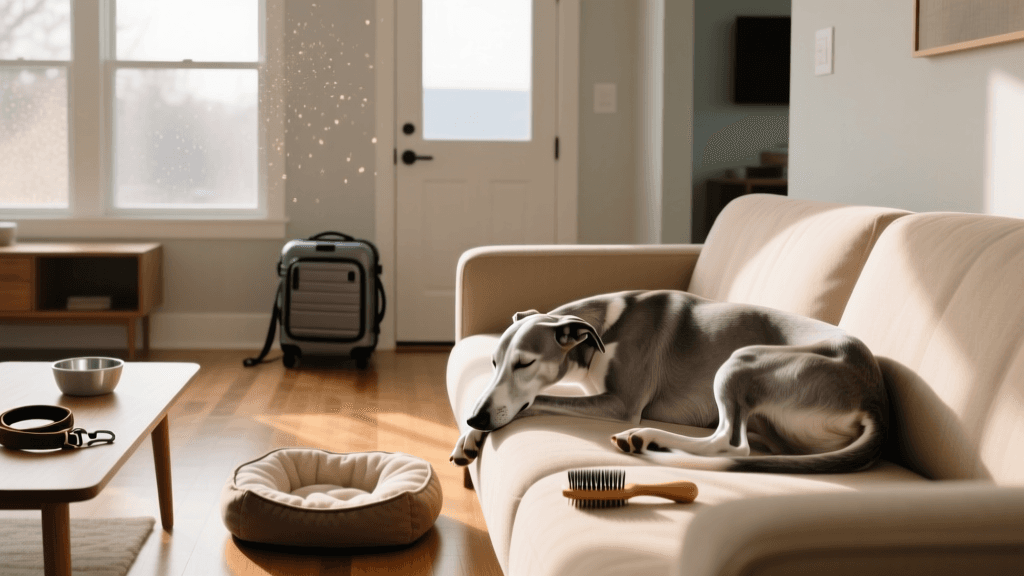
When most people hear the word "Greyhound," they immediately picture the racetrack, assuming these sleek canines require miles of rigorous daily running. In reality, retired racing Greyhounds and even those bred for the show ring are famously known in the rescue community as "45-MPH couch potatoes." They possess incredible bursts of speed but lack the endurance of breeds like Huskies or Pointers, meaning they are perfectly content spending up to 18 hours a day sleeping on your sofa.
According to the American Kennel Club (AKC), Greyhounds are affectionate, playful, and surprisingly docile companions. However, sharing your home with a sighthound comes with a unique set of practical considerations. From their lack of body fat to their intense prey drive, integrating a Greyhound into your daily life requires specific routines, specialized gear, and an understanding of their unique physiology.
Daily Routines: Exercise and Mental Stimulation
Exercise Requirements
Contrary to popular belief, a Greyhound does not need a massive fenced yard to thrive. They adapt remarkably well to apartment living provided their basic exercise needs are met. A standard daily routine involves two 20-to-30-minute leash walks. Because they are sprinters, not marathon runners, a brisk walk around the neighborhood is usually sufficient to keep them physically fit and mentally satisfied.
Crucial Safety Note: Greyhounds should never be allowed off-leash in an unenclosed area. Their prey drive is hardwired, and they can reach speeds of 45 miles per hour in just a few strides. If they spot a squirrel or a small dog, their recall training will instantly vanish. Always use a secure, martingale-style collar or a well-fitted harness for walks, as standard buckle collars can easily slip off a Greyhound's narrow head.
Feeding, Nutrition, and Bloat Prevention
Deep-chested breeds like the Greyhound are at a higher risk for Gastric Dilatation-Volvulus (GDV), commonly known as bloat. This is a life-threatening emergency where the stomach fills with gas and twists on itself. To mitigate this risk, your daily feeding routine must be structured carefully:
- Elevated Bowls: Invest in an elevated ceramic or stainless steel bowl stand (typically 12 to 16 inches high for an adult Greyhound, costing around $40 to $60) to promote better digestion and reduce air swallowing.
- Meal Timing: Feed two smaller meals a day rather than one large meal. Never allow your Greyhound to engage in vigorous exercise or drink massive amounts of water immediately before or after eating. Wait at least 45 to 60 minutes after a meal before heading out for a walk.
- Dietary Costs: An adult Greyhound typically eats 3 to 4 cups of high-quality kibble daily. Expect to spend between $60 and $90 per month on premium dog food that lists a named animal protein as the first ingredient.
The Importance of Orthopedic Rest
Greyhounds have very little body fat and lack the natural padding that other breeds have over their bony prominences. If forced to sleep on a hard floor or a thin, cheap dog bed, they will quickly develop painful pressure sores on their elbows, hocks, and hips. Providing a high-quality orthopedic bed is not a luxury; it is a medical necessity.
Products like the Big Barker 7-inch Orthopedic Dog Bed (ranging from $250 to $300) are highly recommended for large, thin-skinned breeds. While the upfront cost is steep, the high-density foam prevents the bed from flattening out over time, ensuring your Greyhound's joints remain supported for years. Place beds in multiple rooms so your dog can follow you from the living room to the bedroom without having to lie on hard surfaces.
A Day in the Life: Sample Greyhound Schedule
Establishing a predictable routine helps a retired racer or a newly adopted Greyhound feel secure in a home environment. Below is a practical daily schedule optimized for a working pet parent.
| Time | Activity | Details & Gear Required |
|---|---|---|
| 6:30 AM | Morning Potty & Light Walk | 15-minute leash walk using a martingale collar. Keep it slow to allow for sniffing and mental enrichment. |
| 7:00 AM | Breakfast | 2 cups of kibble mixed with warm water or bone broth in an elevated bowl. 45 minutes of rest afterward. |
| 8:00 AM | Departure & Crate Time | Greyhounds are used to crates from the track. Use a large wire crate (48-inch) with a thick fleece blanket. |
| 5:30 PM | Evening Potty & Walk | 20-to-30-minute walk. Practice loose-leash walking and basic obedience commands like "leave it." Written by marcus-aldridge All our authors care for dogs every day — read more of their work on the authors page. Related stories |