DIY Dog Enrichment: Homemade Puzzle Toys and Feeders
Discover budget-friendly DIY dog puzzle toys and homemade enrichment feeders. Keep your pup mentally stimulated with these easy, safe household hacks.
The Importance of Canine Mental Enrichment
Sharing your life with a dog goes far beyond daily walks and basic obedience training. Modern canine behavioral science emphasizes that mental enrichment is just as critical as physical exercise. In fact, many veterinary behaviorists note that 15 minutes of intensive sniffing and problem-solving can tire a dog out just as much as an hour of vigorous walking. When dogs lack mental stimulation, they often develop undesirable behaviors such as excessive barking, digging, or destructive chewing. According to the American Kennel Club (AKC), providing regular mental challenges helps build a dog's confidence, reduces anxiety, and strengthens the bond between pet and owner.
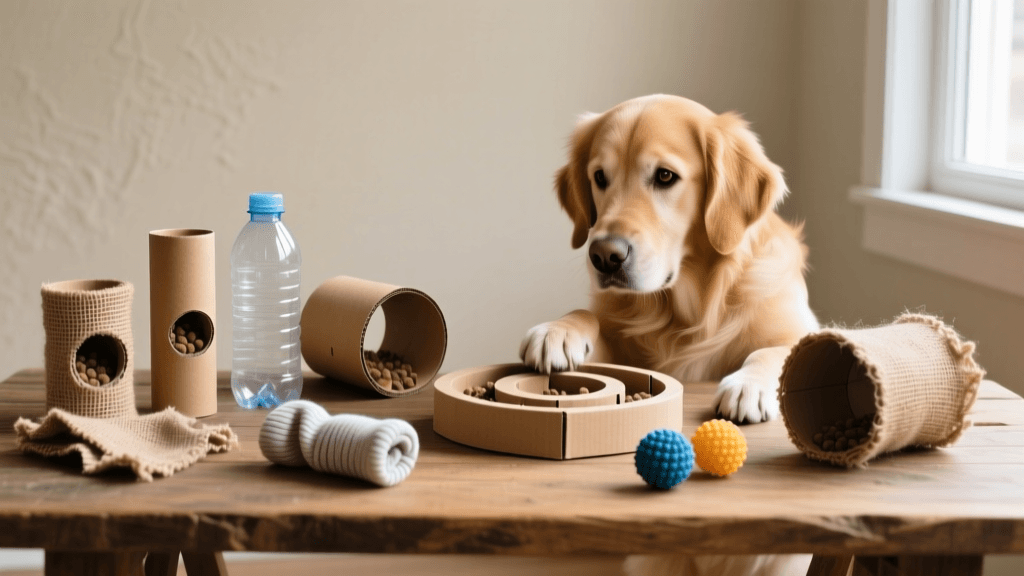
However, commercial puzzle toys and interactive feeders can be prohibitively expensive, often costing between $20 and $50 per item. Furthermore, intelligent dogs can figure out commercial puzzles in a matter of days, rendering them useless. This is where DIY and homemade solutions shine. By repurposing common household items, you can create an endless, rotating supply of enrichment activities that cater to your dog's natural foraging, shredding, and problem-solving instincts.
Safety First: Rules for DIY Dog Toys
Before diving into household hacks, it is vital to establish a safety baseline. The ASPCA warns that dogs left unsupervised with inappropriate items can suffer from gastrointestinal blockages or choking. Always follow these golden rules for homemade enrichment:
- Supervision is Mandatory: Never leave your dog alone with a DIY puzzle, especially those involving cardboard, plastic, or fabric, until you are 100% certain they will not ingest the non-food materials.
- Avoid Toxic Materials: Do not use boxes with heavy chemical residues, painted woods, or items held together by toxic glues or staples.
- Size Matters: Ensure that any treat-dispensing holes are large enough to prevent your dog's tongue or jaw from getting stuck, but small enough to require effort.
- Caloric Awareness: Account for the kibble or treats used in puzzles toward your dog's daily caloric intake to prevent obesity. Use your dog's regular kibble for easier puzzles and reserve high-value treats for advanced challenges.
5 Easy Homemade Dog Puzzle Toys and Feeders
1. The Classic Muffin Tin Shell Game
Best for: Beginners and scent hounds.
Cost: $0 (using existing kitchenware) or $12 for a new tin.
Prep Time: 2 minutes.
This DIY puzzle leverages a standard 12-hole muffin tin and a handful of tennis balls. Scatter a few pieces of high-value kibble or small training treats into several of the muffin cups. Next, place a tennis ball over every single hole, effectively hiding the treats. Your dog must use their nose to locate the treats and their paws or snout to knock the tennis balls off to access the reward.
Pro-Tip: To increase the difficulty, use smaller balls (like golf balls for large dogs or ping-pong balls for small dogs) which require more precise paw-eye coordination to remove. You can also smear a tiny amount of dog-safe peanut butter on the bottom of the cups to encourage licking and prolonged engagement.
2. DIY Snuffle Mat from Upcycled Fleece
Best for: Fast eaters, anxious dogs, and natural foragers.
Cost: $8 - $15.
Prep Time: 45 minutes.
Snuffle mats mimic the experience of foraging for food in tall grass, engaging a dog's primary sense: smell. While commercial mats cost upwards of $40, you can easily make one at home. Purchase a cheap, rubber sink mat with holes (often found at dollar stores) and a yard of anti-pill fleece fabric.
- Cut the fleece into strips measuring approximately 2 inches wide and 8 inches long. You will need about 150-200 strips depending on the mat size.
- Thread a strip through two adjacent holes in the rubber mat.
- Tie the strip into a secure double knot.
- Repeat this process until the entire rubber base is covered in a dense, shaggy layer of fleece knots.
Sprinkle dry kibble deep into the fleece strands. The dog must sniff and root through the fabric to find every last piece. As a bonus, the entire mat can be tossed into the washing machine on a gentle cycle for easy cleaning.
3. The Frozen Kong Alternative (Yogurt Cup Pops)
Best for: Teething puppies, hot summer days, and crate training.
Cost: $5 - $8 per batch.
Prep Time: 10 minutes (plus 4-6 hours freezing time).
If you do not own a commercial rubber stuffing toy, you can create soothing, edible puzzle pops using silicone muffin liners or ice cube trays. This recipe provides both mental stimulation and a cooling effect.
The Recipe:
- 1 cup plain, unsweetened Greek yogurt (ensure it contains NO xylitol/birch sugar, which is highly toxic to dogs).
- 1/2 cup low-sodium chicken or beef broth.
- 1/4 cup pureed pumpkin (not pie filling) or mashed banana.
- A handful of your dog's favorite dry treats.
Mix the yogurt, broth, and puree together. Drop a few dry treats into the bottom of each silicone mold, then pour the liquid mixture over the top. Freeze for 4 to 6 hours until solid. Pop them out and serve them on a towel or in a bowl. The dog must lick and gnaw to melt the frozen barrier and reach the treats inside.
4. Cardboard Box Foraging Destroyer
Best for: Heavy chewers, terriers, and dogs that love to shred.
Cost: $0.
Prep Time: 5 minutes.
Many dogs have a natural instinct to dissect and shred, which often gets redirected toward shoes or furniture. You can safely channel this instinct using your recycling bin. Take a medium-sized cardboard delivery box (remove all plastic tape, staples, and shipping labels). Place a few handfuls of kibble and some crumpled, dog-safe packing paper or old, clean t-shirts inside the box. Close the flaps.
For an advanced challenge, place smaller treat-filled cardboard boxes (like clean cereal or shoe boxes) inside the larger box. Your dog will have to tear through the outer layers and dig through the paper to find the hidden treasures. Always supervise this activity and sweep up the cardboard scraps once the game is over to prevent accidental ingestion of the paper.
5. The PVC Pipe Treat Dispenser
Best for: Highly intelligent dogs and persistent problem solvers.
Cost: $10 - $15.
Prep Time: 20 minutes (requires basic tools).
This DIY rolling dispenser mimics high-end commercial wobble toys. You will need a 12-inch length of 2-inch diameter PVC pipe, two PVC end caps, and a drill with a 1/2-inch or 3/4-inch drill bit (depending on the size of your dog's kibble).
- Drill 4 to 5 holes randomly along the length of the PVC pipe.
- Crucial Safety Step: Use sandpaper or a metal file to thoroughly smooth the inside and outside edges of every drilled hole. Any sharp plastic burrs can severely cut your dog's gums or tongue.
- Cap one end of the pipe securely using PVC glue.
- Fill the pipe with kibble and cap the other end. (You can leave the second end unglued so you can easily refill it, but ensure it is twisted on tightly enough that your dog cannot pop it off with their paws).
As your dog nudges, paws, and rolls the pipe across the floor, kibble will randomly fall out of the drilled holes, rewarding their physical interaction.
Cost Comparison: Store-Bought vs. DIY Enrichment
When evaluating how to spend your pet care budget, it is helpful to compare the long-term value of commercial products against homemade alternatives. Below is a breakdown of how DIY solutions stack up against store-bought puzzles.
| Feature | Store-Bought Puzzles | DIY Homemade Puzzles |
|---|---|---|
| Average Cost | $15 - $50+ per toy | $0 - $15 per toy |
| Durability | High (Hard plastics/rubbers) | Low to Medium (Meant to be consumed or recycled) |
| Customization | Limited to preset difficulty levels | Infinitely adjustable based on dog's skill |
| Hygiene | Requires scrubbing small crevices | Often disposable or machine washable |
| Novelty Factor | Dogs habituate quickly to static puzzles | Constant variety keeps dogs engaged |
Expert Tips for Rotating Enrichment Activities
Dogs are incredibly adaptable learners. If you leave the same puzzle toy on the floor every day, your dog will quickly memorize the solution, turning a stimulating brain game into a mundane chore. Veterinary behaviorists recommend the "rotation method" to maintain the novelty factor. Keep a stash of 5 to 7 different DIY and commercial puzzles in a closet. Offer your dog only one or two at a time, and swap them out every few days.
Furthermore, always set your dog up for success. If a DIY puzzle is too difficult, your dog may become frustrated and abandon the task, or resort to destructive chewing to force the treat out. Start with easy setups—like leaving the cardboard box open or using fewer tennis balls on the muffin tin—and gradually increase the difficulty as your dog's confidence and skills grow. As noted by experts at the The Kennel Club, enrichment should be a rewarding experience that builds a dog's confidence, not a test that causes stress.
Conclusion
Integrating DIY and homemade solutions into your daily routine is one of the most effective, budget-friendly ways to elevate your dog's quality of life. By looking at your recycling bin, kitchen cabinets, and local hardware store through the lens of canine enrichment, you can provide endless mental stimulation. Not only will these homemade puzzle toys and feeders save you money, but they will also result in a calmer, happier, and more fulfilled companion at the end of every day.
marcus-aldridge
All our authors care for dogs every day — read more of their work on the authors page.