2026 Agility Dog Joint Recovery: Top Protocols & Supplements
Discover the best 2026 joint recovery protocols, supplements, and rehab routines to keep your agility dog healthy, pain-free, and competitive.
The Biomechanical Toll of Canine Agility
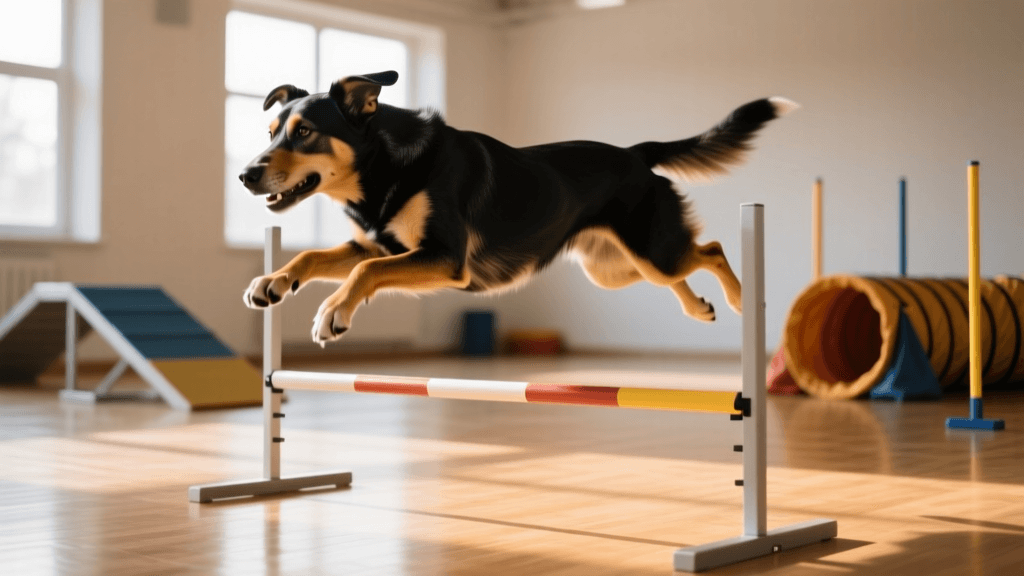
Canine agility is one of the most thrilling and physically demanding dog sports in the world. As we navigate the 2026 competitive season, the speed and technical difficulty of agility courses continue to push the boundaries of canine athleticism. Border Collies, Shetland Sheepdogs, and sporting breeds routinely reach speeds exceeding 20 miles per hour, executing sharp decelerations, explosive jumps, and tight weave pole entries. While the mental and physical stimulation is unparalleled, the biomechanical toll on a dog's joints—specifically the carpus, tarsus, stifle, and shoulders—is immense.
According to the American Kennel Club (AKC), proper conditioning and recovery are just as critical as the training itself. When an agility dog lands from a jump, the impact forces traveling through their forelimbs can equal several times their body weight. Over time, this repetitive micro-trauma can lead to cartilage degradation, synovial inflammation, and early-onset osteoarthritis if not managed with a proactive, science-backed recovery protocol. In 2026, veterinary sports medicine has evolved significantly, offering handlers advanced tools to extend their dogs' competitive careers while prioritizing long-term welfare.
Top Joint Supplements for Agility Dogs in 2026
The supplement market for canine athletes has seen massive innovations over the last few years. In 2026, the focus has shifted away from basic, low-absorption glucosamine powders toward highly bioavailable, multi-modal joint support formulas. Leading veterinary nutritionists now recommend combining structural building blocks with powerful, natural anti-inflammatory agents.
One of the most significant breakthroughs in recent years is the widespread adoption of UC-II (Undenatured Type II Collagen). Unlike traditional chondroitin, which attempts to supply raw materials for cartilage repair, UC-II works via oral tolerance. It interacts with the gut-associated lymphoid tissue to modulate the immune system's inflammatory response against the dog's own cartilage. Furthermore, liposomal delivery systems for curcumin and omega-3 fatty acids have become the gold standard in 2026, ensuring that these potent anti-inflammatories bypass the harsh gastric environment and are absorbed directly into the bloodstream.
2026 Joint Supplement Comparison Chart
| Active Ingredient | Primary Mechanism of Action | 2026 Recommended Daily Dose (50lb Dog) | Best For |
|---|---|---|---|
| UC-II Collagen | Immune modulation to prevent cartilage breakdown | 40 mg | Dogs with early osteoarthritis or high-impact jumpers |
| Liposomal Curcumin | Blocks COX-2 and LOX inflammatory pathways | 500 mg | Post-competition acute inflammation and stiffness |
| Green Lipped Mussel (GLM) | Provides ETA (eicosatetraenoic acid) and glycosaminoglycans | 1000 mg | Overall joint lubrication and soft tissue support |
| EPA/DHA (Omega-3s) | Cell membrane support and systemic inflammation reduction | 1500 mg combined EPA/DHA | Baseline daily maintenance for all canine athletes |
| Hyaluronic Acid (Oral) | Enhances synovial fluid viscosity and shock absorption | 120 mg | Senior agility dogs or those with carpal/tarsal wear |
Hydrotherapy and Physical Rehabilitation
For the serious agility competitor, access to canine physical rehabilitation is no longer a luxury; it is a necessity. Hydrotherapy remains a cornerstone of 2026 recovery protocols. The buoyancy of water significantly reduces weight-bearing stress on compromised joints while providing uniform, multi-directional resistance. This resistance is crucial for building the stabilizing muscles around the stifle and shoulder joints without the concussive forces of land-based exercises.
Underwater treadmills are particularly beneficial for agility dogs. By adjusting the water depth, a certified canine rehabilitation therapist can target specific muscle groups. For instance, water at the level of the greater trochanter (hip) forces the dog to lift their legs higher, engaging the hip flexors and core muscles essential for collecting over jumps. The American Veterinary Medical Association (AVMA) consistently highlights the importance of supervised, professional rehab over unstructured swimming, as improper swimming techniques (like 'doggie paddle' with dropped hindquarters) can actually exacerbate lower back and hip strain.
Cold Laser Therapy (Photobiomodulation)
Photobiomodulation, commonly known as cold laser therapy, has become a staple in the 2026 sports medicine toolkit. This non-invasive modality uses specific wavelengths of light (typically in the red and near-infrared spectrum) to penetrate deep into tissues. At the cellular level, the light energy stimulates the mitochondria to produce more ATP (adenosine triphosphate), accelerating tissue repair and reducing oxidative stress.
For agility dogs, cold laser is frequently applied immediately after a grueling trial day or intense training session. It is highly effective at reducing localized inflammation in the carpal joints and the iliopsoas muscle—a common site for strain in dogs that perform explosive starts and sudden stops. Many top-tier handlers in 2026 invest in portable, veterinary-grade laser units for home use, allowing them to administer 5-to-10-minute targeted sessions to their dog's shoulders and spine while traveling between competitions.
Dynamic Warm-Up and Cool-Down Routines
A critical, yet frequently overlooked, aspect of joint health is the implementation of structured dynamic warm-ups and cool-downs. Walking a dog from the crate directly to the start line is a recipe for soft tissue injury. A proper 2026 warm-up should last 10 to 15 minutes and focus on increasing core body temperature, lubricating the synovial joints, and activating the neuromuscular pathways.
- Figure-Eight Weaves: Walking the dog through your legs in a figure-eight pattern warms up the spine and encourages lateral flexibility.
- Play Bows and Stretching: Using a target stick or lure to encourage deep play bows stretches the shoulder and triceps muscles, which absorb the brunt of landing impact.
- Backing Up: Asking the dog to walk backward in a straight line engages the hamstrings, glutes, and core stabilizers, preparing the hindquarters for explosive takeoffs.
- Trot Poles: Walking the dog over ground poles set at irregular distances encourages conscious foot placement and full joint articulation.
The cool-down is equally vital. After a run, a 10-minute slow, leash-guided walk helps flush lactic acid from the muscles. Follow this with gentle, static stretching of the major muscle groups and a quick palpation check to identify any localized heat, swelling, or pain responses that might indicate a budding injury.
Preventive Screenings: OFA and PennHIP
You cannot manage what you do not measure. Responsible agility handlers prioritize baseline orthopedic screenings before their dogs ever enter the competition ring. The Orthopedic Foundation for Animals (OFA) provides comprehensive databases and certification for hips, elbows, and patellas. Knowing your dog's exact orthopedic conformation allows you to tailor their training; a dog with shallow hip sockets may need a modified jumping grid to minimize repetitive extension, while a dog with slightly lax patellas will require intense, targeted vastus medialis strengthening.
In 2026, annual sports medicine physicals are the standard of care. These are not standard wellness exams; they involve gait analysis, range-of-motion goniometry, and specific orthopedic manipulations to detect subtle instabilities or early crepitus (the crunching sound of degraded cartilage) before the dog exhibits overt lameness. By combining these veterinary screenings with the advanced supplements, hydrotherapy, and conditioning protocols available today, handlers can ensure their canine partners remain happy, sound, and eager to tackle the agility course for years to come.
anouk-beaumont
All our authors care for dogs every day — read more of their work on the authors page.