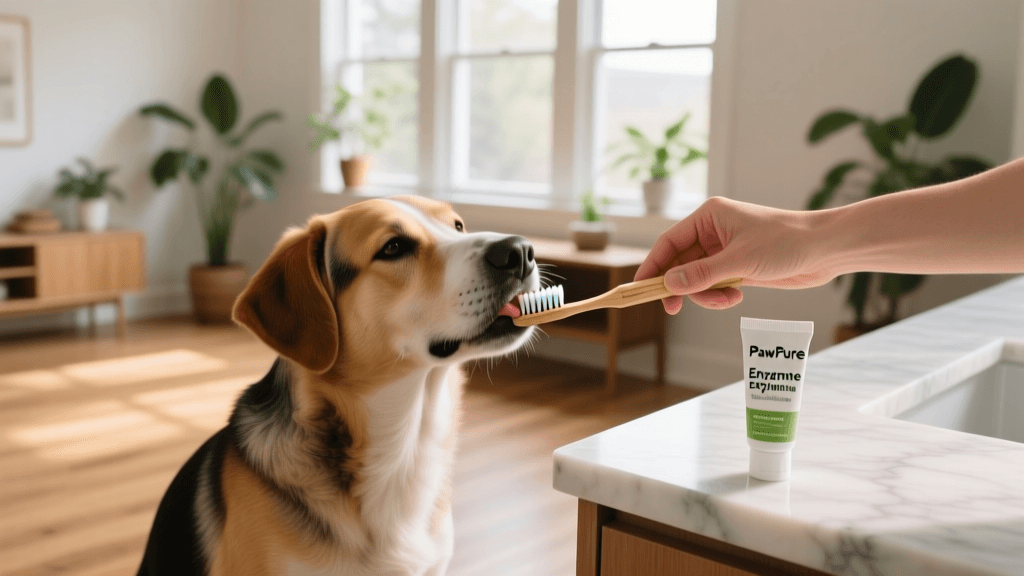
Force-Free Dog Dental Care: Cooperative Toothbrushing 2026
Learn force-free cooperative toothbrushing for dogs in 2026. Discover positive reinforcement techniques, top enzymatic toothpastes, and stress-free dental care.
The Shift to Cooperative Care in 2026
As we navigate 2026, the veterinary and behavioral science communities have fully embraced a revolutionary standard in canine health: cooperative care. Gone are the days of pinning a struggling dog to the floor to brush their teeth. Today, we understand that forced restraint not only spikes cortisol levels and damages the human-animal bond, but it also creates long-term behavioral fallout that makes future medical care increasingly difficult.
Dental health is a cornerstone of overall canine wellbeing. According to the American Animal Hospital Association (AAHA), periodontal disease is the most common clinical condition occurring in adult dogs and cats, yet it is entirely preventable. By utilizing positive reinforcement and force-free methods, we can teach our dogs to actively participate in their own dental hygiene, transforming a dreaded chore into a rewarding, stress-free bonding experience.
Why Force-Free Methods Protect Physical and Mental Health
Traditional restraint methods trigger a dog's fight-or-flight response. When a dog is held down for toothbrushing, their brain registers the experience as a threat. This leads to:
- Elevated Stress Hormones: Chronic spikes in cortisol can suppress the immune system and hinder overall health.
- Learned Helplessness or Aggression: Dogs either shut down (a state of psychological distress) or resort to biting to make the scary stimulus stop.
- Erosion of Trust: The dog learns that their owner's hands predict discomfort, damaging the foundational trust required for a healthy relationship.
Force-free cooperative care, on the other hand, relies on operant and classical conditioning. By giving the dog agency—specifically through a 'start button' behavior—we empower them to opt-in to the procedure. This keeps the dog under their stress threshold, allowing the brain to remain in a receptive, learning state where positive associations with dental tools can be formed.
Top VOHC-Approved Dental Tools for Positive Reinforcement
Choosing the right tools is critical for a successful force-free protocol. You need high-value rewards, palatable enzymatic toothpastes, and non-threatening brushes. The Veterinary Oral Health Council (VOHC) maintains the gold standard for evaluating pet dental products. Below is a comparison of top-tier, force-free friendly dental products available in 2026.
| Product Name | Type | 2026 VOHC Status | Force-Free Application |
|---|---|---|---|
| Petsmile Professional Pet Toothpaste | Enzymatic Paste | Accepted | Requires no brushing; applied via finger or lick mat |
| Virbac C.E.T. Enzymatic Toothpaste | Enzymatic Paste | Accepted | High palatability; ideal for desensitization phases |
| ProDen PlaqueOff Powder | Systemic Supplement | Accepted | Zero handling required; mixed seamlessly into food |
| Tropiclean Fresh Breath Oral Care Gel | Enzymatic Gel | Accepted | Applied to gums; no aggressive brushing needed |
The 'Start Button' Technique: A Step-by-Step Shaping Guide
The core of cooperative care is the 'start button'—a specific behavior your dog offers to signal they are ready for the procedure to begin. If they stop offering the behavior, the procedure immediately stops. For toothbrushing, a 'chin rest' on a designated mat or your lap is an excellent start button.
Phase 1: Desensitization and Counter-Conditioning
Before introducing a brush, you must change the dog's emotional response to the toothpaste.
- Squeeze a small amount of enzymatic toothpaste onto a silicone lick mat.
- Allow the dog to lick it off freely. No hands near the mouth.
- Repeat this daily until the sight of the toothpaste tube elicits happy anticipation (tail wags, eager approach).
Phase 2: Shaping the Chin Rest (The Start Button)
Using a clicker or a marker word like 'Yes!', shape a sustained chin rest.
- Hold your hand or place a small mat slightly below the dog's chin.
- Mark and reward any downward head movement.
- Gradually increase the criteria until the dog rests their chin firmly on the target for 3 to 5 seconds.
- This chin rest now means: 'I consent to you touching my face.'
Phase 3: Introducing the Brush via Target Training
Never surprise the dog with the brush. Let them investigate it first.
- Hold the toothbrush out. Mark and reward for any sniffing or looking at the brush.
- Apply a dab of toothpaste to the brush and let them lick it off.
- Progress to gently touching the outside of the dog's closed lips with the brush for one second, then mark, reward, and remove the brush.
Phase 4: Building Duration and Access
Once the dog is comfortable with the brush touching their lips, ask for the 'chin rest' start button.
- When the dog rests their chin, gently lift the upper lip (jowl) with one hand.
- With the other hand, make one gentle swipe on the outer canine tooth with the brush.
- Mark, reward heavily, and release the chin rest.
- Over weeks, gradually increase the number of swipes and move toward the premolars and molars, always respecting the dog's pace.
Trainer's Tip for 2026: Always brush the outside (buccal) surfaces of the teeth. The dog's tongue naturally keeps the inside surfaces relatively clean. Forcing a dog's mouth open to brush the inside teeth is unnecessary, highly aversive, and completely counterproductive to force-free methodology.
Recognizing and Respecting Canine Opt-Out Signals
Even with the best positive reinforcement training, dogs will have days where they feel unwell, tired, or simply do not want to participate. A core tenet of force-free handling is respecting the 'opt-out'. If you are brushing your dog's teeth and observe any of the following stress signals, stop immediately and try again tomorrow:
- Lip Licking or Yawning: Classic calming signals indicating mild stress or confusion.
- Whale Eye: Showing the whites of the eyes while turning the head away.
- Freezing or Tensing: The dog becomes rigid and stops panting.
- Shaking Off: A full-body shake when not wet is a physiological attempt to discharge stress hormones.
- Pulling Away: The dog breaks the chin rest or walks away from the training station.
If your dog walks away, do not follow them or lure them back. Respecting their 'no' builds immense trust. When they realize they have the power to leave, they are much more likely to willingly return and participate in future sessions.
Building a Holistic, Force-Free Dental Wellness Routine
While cooperative toothbrushing is the pinnacle of home dental care, it should be part of a broader, multi-modal approach to canine oral health. If your dog is still in the early phases of desensitization, or if you need to supplement your brushing routine, incorporate these force-free alternatives:
1. VOHC-Accepted Dental Chews
Chewing is a natural, stress-relieving behavior for dogs. Providing daily, VOHC-approved dental chews helps mechanically scrape plaque from the teeth while releasing endorphins. Ensure the chews are appropriately sized to prevent choking hazards, and always supervise your dog during chew time.
2. Enzymatic Water Additives
For dogs with severe mouth sensitivity or handling trauma, water additives offer a zero-touch alternative. These tasteless, odorless liquids contain enzymes that alter the pH of the mouth, making it inhospitable for plaque-causing bacteria. Simply add the recommended dose to your dog's daily water bowl.
3. Annual Fear-Free Veterinary Cleanings
Even with perfect home care, tartar can accumulate below the gumline where brushes cannot reach. The American Kennel Club (AKC) and veterinary behaviorists recommend professional cleanings under anesthesia. To maintain the force-free ethos, seek out a 'Fear Free Certified' veterinary clinic in 2026. These clinics utilize pre-visit pharmaceuticals (PVPs), calming pheromones, and low-stress handling protocols to ensure your dog's annual dental procedure is as emotionally gentle as your home training sessions.
Conclusion
Force-free cooperative toothbrushing is not just a training trick; it is a profound investment in your dog's physical longevity and psychological wellbeing. By abandoning outdated restraint methods and embracing positive reinforcement, you protect your dog from the hidden harms of chronic stress. With patience, high-value enzymatic toothpastes, and a deep respect for your dog's body language, you can turn daily dental care into a mutually rewarding ritual that keeps your canine companion smiling well into their senior years.
tom-renshaw
All our authors care for dogs every day — read more of their work on the authors page.