Mapping Leash Reactivity Thresholds: Engage-Disengage Guide 2026
Learn to map your reactive dog's threshold distance and apply the engage-disengage protocol for calmer walks in 2026. Expert behavioral tips inside.
The Neurology of Leash Reactivity: Understanding the Canine 'Bubble'
Leash reactivity is one of the most common, yet deeply misunderstood, behavioral challenges faced by dog owners in 2026. When a dog lunges, barks, or growls at the end of the leash, it is rarely an act of unprovoked malice. Instead, it is typically a manifestation of fear, frustration, or severe over-arousal. To successfully manage and modify this behavior, we must first understand the neurology of the canine nervous system and the concept of the 'threshold distance.'
When a dog spots a trigger—such as an unfamiliar dog, a skateboarder, or a loud vehicle—their amygdala processes the threat. If the dog feels trapped (which is inherently caused by the physical restriction of a leash), the sympathetic nervous system initiates a fight-or-flight response. Cortisol and adrenaline flood the bloodstream, effectively hijacking the brain's prefrontal cortex, which is responsible for learning and rational decision-making. Once a dog crosses their 'threshold' into this over-aroused state, no amount of training or high-value treats will be processed. The dog is physically incapable of learning in that moment.
Recognizing the subtle signs of stress before this chemical hijack occurs is critical. The Humane Society of the United States provides excellent visual guides on canine body language, emphasizing that early stress signals like lip licking, yawning, whale eye, and stiffening often precede explosive reactivity by several seconds. By learning to read these micro-expressions, you can intervene before your dog crosses their threshold.
Mapping the Threshold: How to Measure Your Dog's Trigger Distance
Your dog's threshold is the invisible 'bubble' or radius around them. Inside this bubble, they notice a trigger but can still process information, take treats gently, and respond to cues (sub-threshold). Outside this bubble, or when the trigger breaches the perimeter, the dog loses the ability to focus and reacts explosively (over-threshold).
Mapping this distance is the foundational step of modern reactive dog management. In 2026, owners have access to incredible tools to assist with this. While a simple 30-foot tape measure works well in open parks, many handlers now utilize the geofencing and proximity logging features found in the latest GPS smart collars, such as the Fi Series 4 or Whistle Go 3. These devices allow you to drop a digital pin where your dog first noticed a trigger and another pin where they reacted, giving you an exact metric of their current threshold distance.
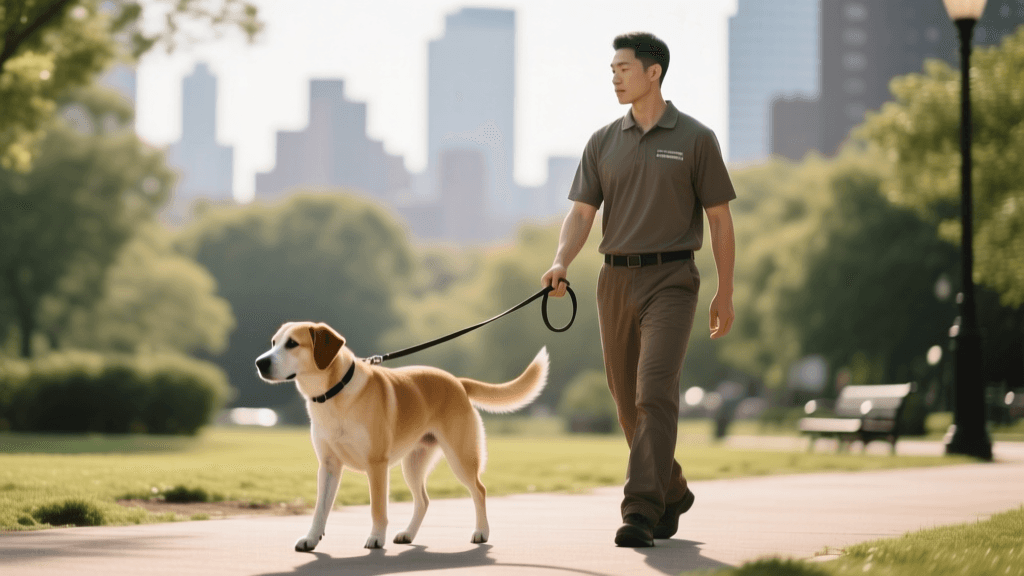
To manually map your dog's threshold, you need a controlled environment and a willing 'decoy' (a calm, neutral dog or person). Start at a distance where your dog notices the decoy but remains relaxed. Slowly decrease the distance in 5-foot increments. The exact moment your dog's ears pin back, their body stiffens, or they refuse a high-value treat, you have found the edge of their threshold. Immediately retreat to a comfortable distance. This specific measurement is your starting line for behavioral modification.
The Engage-Disengage Protocol: Step-by-Step Implementation
Once you have mapped your dog's sub-threshold distance, you can implement the Engage-Disengage protocol, a cornerstone of the 'Control Unleashed' methodology developed by certified dog behavior consultant Leslie McDevitt. This game rewires the dog's emotional response to triggers by changing the predictor of good things happening.
Phase 1: Engage (Marking the Look)
Stand with your dog at a safe, sub-threshold distance from the trigger. The moment your dog looks at the trigger, use a marker word like 'Yes!' or click a clicker. The marker must occur the exact second they look. Immediately follow the marker by delivering a high-value treat. In this phase, you are simply teaching the dog: 'Looking at the scary thing makes the treat dispenser open.' Repeat this 10 to 15 times per session, keeping sessions under 5 minutes to prevent trigger stacking.
Phase 2: Disengage (The Voluntary Turn-Away)
After several successful sessions of Phase 1, your dog will begin to anticipate the treat after looking at the trigger. Now, when your dog looks at the trigger, wait for one full second without marking. If your dog voluntarily turns their head away from the trigger to look back at you, mark that disengagement with your 'Yes!' and reward heavily. If they do not turn away within three seconds, they are likely too close to the threshold; calmly increase your distance and try again. The ultimate goal of Phase 2 is for the dog to see a trigger and immediately offer eye contact with you, effectively using the trigger as a cue to check in with their handler.
Threshold Tracking Chart: Monitoring Progress Over Time
Consistency and data tracking are vital for managing reactivity. Below is an example of a threshold tracking log that you can replicate in a notebook or a digital spreadsheet to monitor your dog's progress throughout 2026.
| Date | Trigger Type | Starting Distance | Dog's Reaction | Action Taken |
|---|---|---|---|---|
| Oct 12 | Unfamiliar Dog (on-leash) | 40 feet | Stiffened, low growl, refused chicken | Increased distance to 60 feet; dog accepted treats. |
| Oct 14 | Unfamiliar Dog (on-leash) | 50 feet | Alert stare, ears forward, took treats gently | Engage-Disengage Phase 1 for 3 minutes. Success. |
| Oct 18 | Jogger passing by | 20 feet | Whale eye, tucked tail, looked at handler | Marked voluntary disengagement (Phase 2). Heavy reward. |
| Oct 22 | Unfamiliar Dog (on-leash) | 45 feet | Looked at dog, immediately turned to handler | Marked and rewarded. Threshold is expanding safely. |
Essential Gear and High-Value Rewards for 2026
Managing a reactive dog requires the right equipment to ensure safety and the right motivation to facilitate neuroplasticity. The ASPCA's dog behavior resources continually emphasize that punishment-based tools like prong collars or e-collars only suppress the outward symptoms of reactivity while increasing internal anxiety, often leading to more severe behavioral fallout. Instead, modern behaviorists advocate for force-free, supportive gear.
Safety Harnesses for Lunging Dogs
For dogs that lunge, a standard collar can cause severe tracheal damage. In 2026, the gold standard for reactive dog walking remains dual-clip, custom-fitted H-harnesses. Brands like the Perfect Fit Harness and Haqihana offer modular designs that prevent the dog from slipping out while providing a front-chest attachment point. When the dog pulls, the front clip gently redirects their momentum back toward the handler without causing pain. Expect to invest between $85 and $130 for a properly fitted, escape-proof harness this year.
High-Value Treats for Brain Rewiring
Dry kibble or standard biscuits will not cut through the adrenaline of a reactive episode. You need 'brain food'—treats high in protein and fat that trigger a strong dopamine release, aiding in the counter-conditioning process. Top recommendations for 2026 include:
- Freeze-Dried Beef Liver or Minnow: Single-ingredient, highly aromatic, and easily broken into pea-sized pieces. (Average cost: $18-$24 per bag).
- Ziwi Peak Air-Dried Venison or Mackerel: Excellent for dogs with poultry or beef allergies, offering a novel protein that spikes interest. (Average cost: $30-$40 per pound).
- Real Meat Baby Food (No Onion/Garlic): Served on a wooden spoon or lick mat attached to a long target stick, allowing you to deliver high-value rewards at a distance without putting your fingers near a stressed dog's mouth.
Final Thoughts on Patience and Professional Support
Rewiring a reactive dog's brain is not a linear process. There will be days when progress seems incredible, followed by days where a sudden environmental change causes a setback. This is a normal part of trigger stacking and nervous system regulation. Celebrate the micro-victories: a softer gaze, a relaxed tail carriage, or a voluntary check-in from 30 feet away.
If you find yourself overwhelmed, or if your dog's reactivity involves redirected bites or severe panic, it is imperative to seek help from a certified professional. Look for consultants accredited by the International Association of Animal Behavior Consultants (IAABC) or the Certification Council for Professional Dog Trainers (CCPDT) who specialize in force-free, fear-free methodologies. With consistent threshold mapping, the engage-disengage protocol, and a deep understanding of your dog's emotional landscape, you can transform your stressful walks into peaceful, connected experiences.
marcus-aldridge
All our authors care for dogs every day — read more of their work on the authors page.