Leash Reactivity Training 2026: The Engage-Disengage Protocol
Master urban leash reactivity in 2026 with the Engage-Disengage protocol. Learn threshold management, gear setups, and counter-conditioning steps.
Navigating Urban Leash Reactivity in 2026
Living with a reactive dog in the densely populated urban environments of 2026 presents unique challenges. With the widespread adoption of silent electric scooters, automated sidewalk delivery robots, and high-density pedestrian traffic, the modern cityscape is a minefield of triggers for sensitive dogs. According to the American Kennel Club (AKC), leash reactivity is overwhelmingly rooted in fear, anxiety, or barrier frustration rather than true malice or aggression. Understanding this vital distinction is the first step toward meaningful rehabilitation.
The most effective, scientifically backed method for managing and modifying this behavior is the Engage-Disengage protocol. This counter-conditioning technique changes your dog's emotional response to triggers from a panicked 'fight or flight' reaction to a calm 'look at that, then look at my human for a treat' response. In this comprehensive guide, we will break down exactly how to implement this protocol, manage thresholds, and utilize the best modern gear available this year.
Understanding the Threshold Bubble
Before you can train, you must understand thresholds. A threshold is the invisible boundary between your dog feeling safe and your dog reacting. The ASPCA notes that punishing reactive behavior can suppress warning signs and drastically increase underlying anxiety, which is why keeping your dog 'under threshold' is non-negotiable for success.
Think of your dog's comfort zone as a bubble. When a trigger (another dog, a loud e-scooter, a stranger) enters the outer edge of the bubble, your dog notices it but can still think and learn. When the trigger breaches the inner bubble, the thinking brain shuts off, and the survival brain takes over.
| Zone | Distance to Trigger | Dog's Body Language | Training Action |
|---|---|---|---|
| Green (Under Threshold) | 50+ feet | Relaxed posture, loose wag, taking treats softly | Active Engage-Disengage training |
| Yellow (Approaching Threshold) | 30-50 feet | Stiffening, whale eye, harder treat grabs, panting | Increase distance immediately, lower criteria |
| Red (Over Threshold) | Under 30 feet | Lunging, barking, refusing high-value treats | Emergency U-turn, abort training, create space |
Essential Gear for Reactive Dog Management in 2026
Success in reactivity training relies heavily on having the right equipment to ensure safety and clear communication. Here is the optimal setup for urban environments this year:
- Front-Clip Harness: The Ruffwear Front Range Harness (approx. $90) remains a top choice. The front chest leash attachment gently redirects your dog's momentum toward you if they lunge, preventing them from practicing the pulling behavior associated with reactivity.
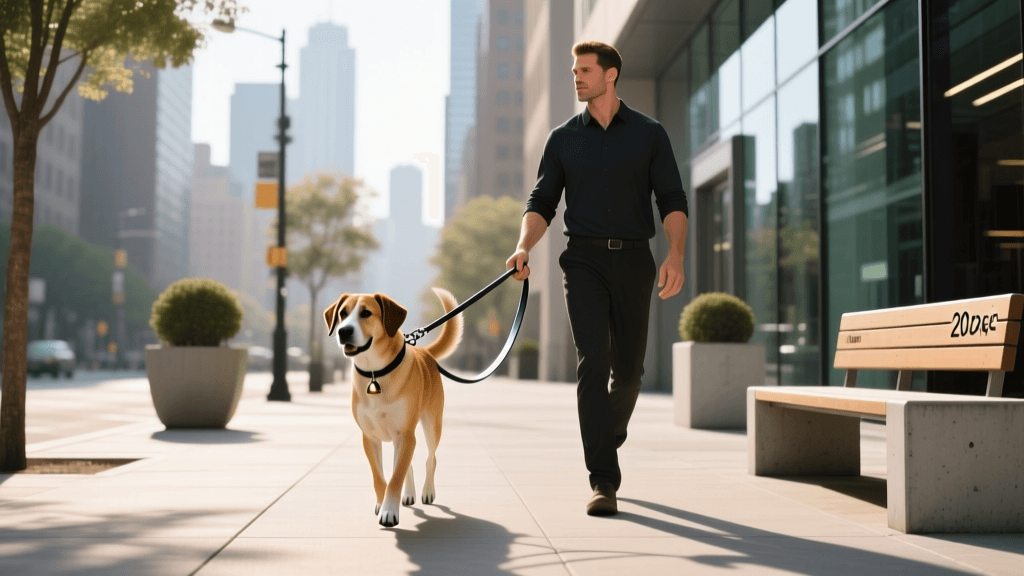
- Long Line Leash: Ditch the standard 6-foot nylon leash. Use a 15-foot Biothane long line (approx. $45). Biothane is waterproof, easy to clean, and doesn't burn your hands if your dog suddenly pulls. The extra length allows you to manage distance and give your dog the illusion of freedom while maintaining control.
- High-Value Treats: Kibble will not cut it when a dog's adrenaline is spiking. Use freeze-dried beef liver, real boiled chicken, or low-sodium hot dogs. Keep them in a magnetic-closure treat pouch worn on your hip for instant access.
- Smart GPS Tracking: The Fi Series 4 GPS Collar (approx. $150 plus subscription) is invaluable for reactive dogs. Not only does it provide escape-proof tracking if a harness fails, but its 2026 updated biometric algorithms can track your dog's resting heart rate and stress-induced activity spikes, helping you identify which walking routes cause the most cumulative anxiety.
The Engage-Disengage Protocol: Step-by-Step
This game requires patience, a clicker (or a consistent verbal marker like 'Yes!'), and an abundance of high-value treats. Find a quiet park or an empty parking lot where you can control the distance to triggers.
Phase 1: The Engage (Marking the Look)
Stand with your dog at a distance where they can see a trigger (e.g., another dog walking) but remain in the 'Green Zone' (50+ feet away). The moment your dog looks at the trigger, mark the behavior with your clicker or the word 'Yes!' before they have a chance to react. Immediately follow the mark with a high-value treat. You are teaching your dog that looking at a trigger predicts a wonderful reward.
Phase 2: The Disengage (Rewarding the Choice)
Once your dog reliably looks at the trigger and then immediately snaps their head back to you expecting a treat, you can move to Phase 2. Now, when your dog looks at the trigger, do not mark it. Wait silently. Your dog will eventually look away from the trigger and look back at you, as if to say, 'Hey, where is my treat?' The exact second they voluntarily disengage and look at you, mark with 'Yes!' and deliver the treat. This builds a powerful habit: seeing a trigger automatically triggers the behavior of looking at the handler.
Phase 3: Decreasing Distance
Only when your dog is consistently and calmly disengaging at 50 feet should you take three steps closer. If your dog shows any yellow-zone body language (stiffening, hard staring), you have moved too fast. Retreat to the previous distance and continue practicing.
Managing Modern 2026 Urban Triggers
Urban landscapes have evolved, and so have the triggers our dogs face. Silent electric scooters and delivery drones present a unique challenge because dogs rely heavily on auditory cues to predict approaching threats. A silent scooter approaching from behind can push a dog instantly into the 'Red Zone' before the handler even knows it is there.
Pro-Tip for Silent Triggers: When walking in bike lanes or shared paths in 2026, utilize a rear-view mirror attachment for your leash or practice 'perimeter scanning' yourself. If you hear or see a silent e-scooter approaching, proactively use an 'Emergency U-Turn' cue, tossing a handful of treats in the opposite direction to magnetize your dog away from the path before the trigger breaches their threshold bubble.
Troubleshooting Common Setbacks
My dog won't eat the treats: If your dog refuses high-value food, they are over threshold. Their digestive system has literally shut down in favor of the sympathetic nervous system's survival response. Do not force the training. Calmly increase your distance from the trigger by 30 to 50 feet until your dog's appetite returns.
The trigger moved closer unexpectedly: If an off-leash dog approaches or a delivery robot suddenly cuts across your path, abandon the Engage-Disengage game immediately. Use a happy, upbeat voice to say 'Let's Go!', pivot 180 degrees, and jog away while tossing treats behind you. Your priority is no longer training; it is advocacy and escape.
Progress feels slow: Neuroplasticity takes time. Rewiring a dog's emotional response to a trigger that has caused them fear for years is a marathon, not a sprint. Celebrate micro-victories, like your dog noticing a trigger from 60 feet away and offering a voluntary sit without being asked.
Conclusion
Managing leash reactivity in the busy, unpredictable environments of 2026 requires a blend of modern management tools, deep empathy, and structured counter-conditioning. By strictly respecting your dog's threshold bubble, utilizing front-clip harnesses and long lines, and faithfully playing the Engage-Disengage game, you can transform your walks from stressful ordeals into enjoyable bonding experiences. Remember, you are your dog's advocate and safe space; protecting their emotional well-being is the foundation of all successful training.
priya-sutaria
All our authors care for dogs every day — read more of their work on the authors page.