Master the 2x2 Weave Pole Method for Dog Agility in 2026
Master the 2x2 weave pole method for dog agility in 2026. Learn step-by-step handling drills, equipment specs, and AKC competition tips.
The Evolution of Weave Pole Training in 2026
Welcome to the 2026 dog agility season. If you are stepping into the ring this year, you already know that the weave poles remain the most notoriously difficult obstacle to master. Unlike jumps or tunnels, which rely on natural canine instincts to leap or explore, weaving requires a dog to perform a highly unnatural, rhythmic spinal flexion while maintaining forward momentum. For decades, handlers relied on channel wires or physical luring, which often resulted in slow, hesitant dogs that popped out of the poles when under trial pressure.
Today, the gold standard for competitive agility is the Two-by-Two (2x2) method. Pioneered by legendary canine behaviorist Susan Garrett of Dogs That Can, this shaping-based approach teaches the dog to view the poles as a high-value target rather than a physical constraint. As of 2026, the 2x2 method is utilized by world team finalists across both AKC Agility and UK Agility International (UKI) because it builds profound independent obstacle commitment and lightning-fast entry recognition.
Essential 2026 Agility Equipment for the 2x2 Method
Before you begin your training journey, you need the correct equipment. The 2x2 method requires isolated pole pairs that can be adjusted independently. Here is a breakdown of the essential gear and estimated 2026 pricing for a backyard setup:
- Adjustable 2x2 Weave Pole Sets: The 'Affordable Agility 2x2 Training Set' remains a top choice for home practice in 2026, retailing around $95. These feature adjustable bases that allow you to open the poles into a 'V' shape.
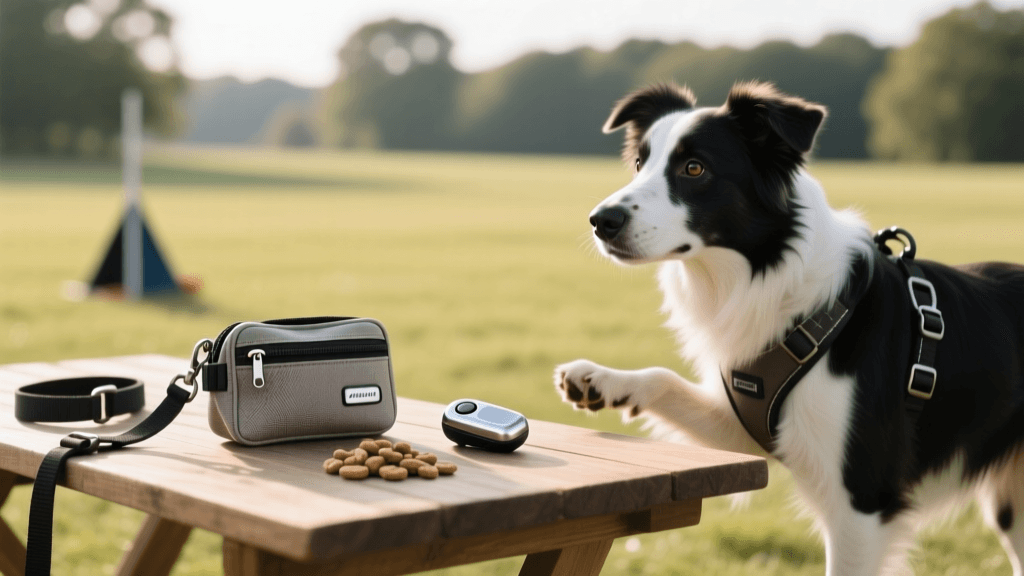
- High-Value Reward Delivery System: You need to deliver treats or toys rapidly at the exact exit point of the poles. The 'Kurgo Go Play Training Pouch' ($28) features a magnetic quick-release clasp that is perfect for rapid reward delivery without fumbling.
- Target Mats: A small, high-contrast silicone target mat (approx. $12) placed at the exit of the poles helps the dog understand exactly where the reinforcement zone is.
- Video Analysis Gear: A simple smartphone tripod ($25) is non-negotiable. Recording your handling footwork and your dog's spinal alignment is critical for identifying micro-mistakes in your reward timing.
Step-by-Step Guide to the Two-by-Two Method
The core philosophy of the 2x2 method is shaping. You are not showing the dog how to weave; you are setting up an environment where the dog discovers that driving through the center of the poles yields a massive reward. Here is how to progress through the phases in 2026.
Phase 1: The Open V (Building the Drive)
Start with just one pair of poles (two poles total). Open them into a wide 'V' shape, approximately 45 degrees apart. Stand directly in front of the opening, holding your dog by the collar or harness. Release your dog and toss a high-value toy or treat directly through the center of the 'V' onto your target mat. The dog will naturally run through the gap to get the reward. Click or use your marker word ('Yes!') the exact moment the dog's nose crosses the plane between the two poles. Repeat this until the dog is offering to drive through the gap with intense speed and focus, ignoring distractions.
Phase 2: Narrowing the Channel
Once your dog is blasting through the 45-degree 'V' with confidence, begin closing the gap in small increments. Move the poles to 30 degrees, then 15 degrees, and finally to a nearly parallel position. If your dog hesitates or refuses to enter, you have closed the gap too quickly. Open the poles back up to the last successful angle and do ten more successful repetitions before trying to narrow it again. The goal is to maintain the dog's forward drive while introducing the physical sensation of the poles brushing against their shoulders.
Phase 3: Adding the Second Pair
Once the first pair is completely straight and the dog is weaving through them independently, introduce the second pair of poles. Place them exactly 24 inches behind the first pair (the standard competition spacing). Keep the second pair in a wide 'V' shape. Send the dog through the straight first pair, and toss the reward through the open second pair. The dog will naturally perform a single flexion to navigate the transition from the straight poles to the open 'V'.
Phase 4: Closing the Gap and Linking
Gradually narrow the second pair using the same incremental process as Phase 2. Once both pairs are straight, you have a four-pole weave. To add more poles, simply repeat the process, adding a new 'V' pair at the end of your current straight line. The magic of the 2x2 method is that the dog learns to seek the 'channel' between the poles, making the addition of 6, 9, or 12 poles a simple matter of linking straight pairs together.
2026 Competition Specifications: AKC vs. UKI
When setting up your backyard course, it is vital to train to the exact specifications of the organization you plan to compete in. While the fundamental spacing is similar, base types and pole heights can vary. Below is the 2026 regulation comparison for standard weave poles:
| Specification | AKC Standard (Novice/Excellent) | UKI Standard |
|---|---|---|
| Number of Poles | 6 (Novice), 9 (Open), 12 (Excellent) | 12 Poles (Standard Classes) |
| Pole Spacing (Center to Center) | 24 inches | 60 cm (approx. 23.6 inches) |
| Pole Height | 40 inches minimum | 100 cm to 120 cm |
| Base Type | Ground-level or slightly raised (no guide wires) | Ground-level, flexible bases preferred |
| Entry Requirement | Dog must enter with first pole on left shoulder | Dog must enter with first pole on left shoulder |
Advanced Handling: Footwork and Reward Placement
A common mistake handlers make in 2026 is inadvertently cueing the dog to pop out of the weaves by moving their shoulders away from the obstacle line too early. Your dog reads your chest and foot placement more than your hand signals. When sending your dog to the weaves, your deceleration arm and shoulder should remain parallel to the weave line until the dog has committed to the second or third pole.
Reward placement is equally critical. Never reward the dog while they are inside the poles, as this encourages them to stop and break their rhythm. Always throw the reward past the exit of the poles, encouraging forward drive. If you are using a tug toy, engage the dog immediately upon exiting the final pole, pulling them forward and away from the obstacle to build a strong 'exit drive'.
Physical Conditioning and Injury Prevention
Weaving places significant asymmetric torque on a dog's lumbar spine and sacroiliac joint. In 2026, canine sports medicine is more advanced than ever, and responsible handlers must incorporate physical conditioning into their training regimen. Before any weave pole session, ensure your dog has completed a dynamic warm-up, including figure-eight weaving through your legs, spinal stretches, and light trotting.
Limit repetitive weave pole training to no more than 3 to 5 minutes per session. It is far better to do three short, high-drive sessions a week than one grueling 20-minute session that leads to muscle fatigue and sloppy footwork. If your dog begins skipping poles or popping out at pole 10 or 11, this is rarely a behavioral issue; it is almost always a sign of core fatigue or a minor chiropractic misalignment. Stop the session immediately, reward the dog for their effort, and consult a certified canine rehabilitation therapist.
Troubleshooting Common Weave Pole Issues
Even with the 2x2 method, you may encounter hurdles. Here is how to troubleshoot the most common issues seen in the 2026 agility circuit:
- Skipping the Last Two Poles: This usually happens because the handler is sprinting toward the next obstacle before the dog has finished. Practice your 'rear cross' timing, ensuring you stay behind the dog's plane of motion until the final pole is cleared.
- Refusing the Entry: If the dog runs past the first pole, your approach angle is too steep. Widen your approach, giving the dog a clearer visual line to the first gap, and reward heavily for independent entry recognition.
- Slow, Hesitant Weaving: You have likely relied too much on luring or physical pressure. Return to Phase 1 with the wide 'V' shape and rebuild the dog's confidence and drive using high-value toys and rapid reward delivery.
Mastering the weave poles is a marathon, not a sprint. By utilizing the 2x2 method, respecting your dog's physical limits, and adhering to the precise 2026 regulations of your chosen organization, you will build a fast, confident, and joyful agility partner ready to conquer the competition ring.
jonas-cole
All our authors care for dogs every day — read more of their work on the authors page.