Leash Reactivity in Dogs: Diagnosing Triggers and Solutions
Discover why your dog exhibits leash reactivity, learn to diagnose specific triggers, and apply proven desensitization solutions for calmer walks.

Understanding Leash Reactivity: It is Not Just "Aggression"
Leash reactivity is one of the most pervasive and stressful behavioral challenges faced by dog owners. When your dog lunges, barks, or growls at the end of the leash, it is easy to feel embarrassed or assume your dog is inherently aggressive. However, from a canine psychology perspective, reactivity is a symptom of an underlying emotional state—most commonly fear, anxiety, or barrier frustration—rather than a personality flaw. To effectively solve this problem, we must first accurately diagnose the root cause before applying targeted desensitization solutions.
Step 1: Diagnosing the Root Cause of Reactivity
Before implementing a training protocol, you must determine whether your dog is reacting out of fear or frustration. The ASPCA notes that fear-based behaviors are often misinterpreted as unprovoked aggression. Conversely, barrier frustration occurs when a highly social dog is prevented from approaching a trigger by the physical restriction of the leash.
| Behavioral Metric | Fear-Based Reactivity | Frustration-Based Reactivity |
|---|---|---|
| Body Language | Weight shifted backward, tucked tail, pinned ears, whale eye. | Weight shifted forward, stiff wagging tail, forward ears, pulling hard. |
| Off-Leash Behavior | Avoidant, submissive, or fearful when meeting strangers/dogs. | Highly social, playful, and appropriate when off-leash. |
| Vocalization | High-pitched barking, growling, snarling, often accompanied by retreating. | Deep, rhythmic barking, whining, and vocalizing out of excitement. |
| Primary Emotion | Insecurity, anxiety, desire to increase distance. | Excitement, impatience, desire to decrease distance. |
Breed Instincts: How Genetics Influence Reactivity
While any dog can develop leash reactivity, certain breed groups are genetically predisposed to specific types of reactive behaviors due to their historical working roles. Understanding these instincts is crucial for accurate diagnosis.
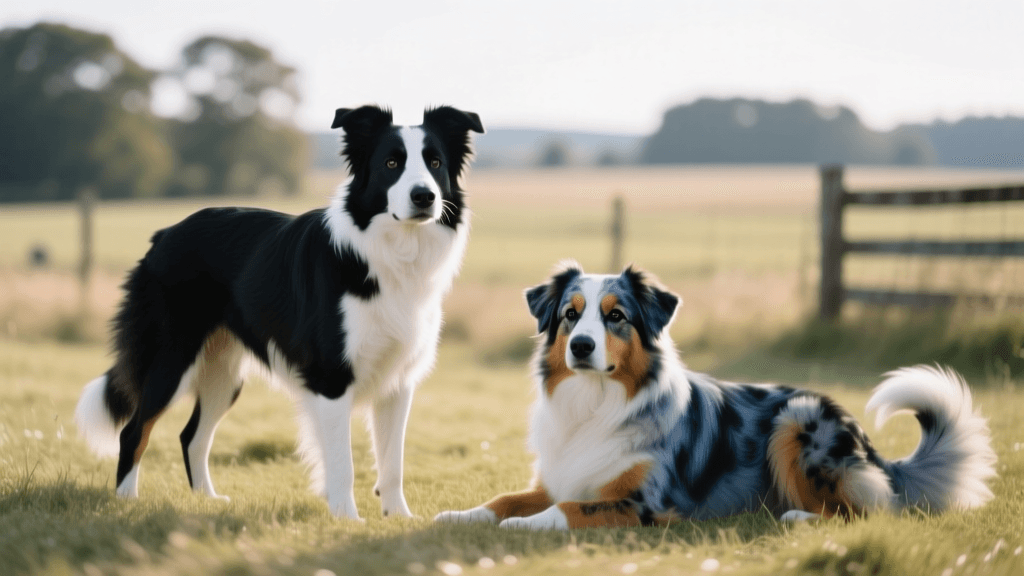
- Herding Breeds (e.g., Border Collies, Australian Shepherds): Bred to control the movement of livestock, these dogs are highly sensitive to motion. Their reactivity is often triggered by fast-moving objects like joggers, cyclists, or skateboards. The solution involves fulfilling their herding drive through structured games like Treibball or flirt-pole exercises in a controlled environment.
- Terriers (e.g., Jack Russell, Bull Terriers): Bred to independently hunt and dispatch vermin, terriers often exhibit high prey drive and same-sex reactivity. Their threshold distances can drop instantly when a small animal darts across the path. Management requires high-impulse control training and avoiding off-leash dog parks where small, fast-moving dogs trigger their predatory drift.
- Guardian Breeds (e.g., Livestock Guardian Dogs, Mastiffs): Bred to independently assess and neutralize threats, these dogs may display territorial reactivity when on-leash in their perceived "home" neighborhood. Their body language is often subtle until it escalates rapidly. Early, extensive socialization and desensitization to strangers approaching the handler are vital.
The Psychology of Trigger Stacking
Reactivity is rarely about a single event; it is governed by a psychological phenomenon known as "trigger stacking." Imagine your dog's stress tolerance as a cup of water. A distant dog walking by adds a few drops. A loud garbage truck adds more. When a third trigger appears—perhaps a person in a hat—the cup overflows, resulting in an explosive reaction. According to the American Veterinary Society of Animal Behavior (AVSAB), punishing a dog during an overflow state only compounds their anxiety and suppresses warning signals without addressing the underlying emotional response. Recognizing your dog's "threshold distance"—the exact point at which they notice a trigger but can still process treats and commands—is the foundational metric for all behavioral modification.
Problem Solution Phase 1: Optimizing Your Gear
Equipment will not train your dog, but the wrong equipment will guarantee failure. Retractable leashes teach dogs that pulling creates forward momentum, reinforcing the exact behavior you want to eliminate.
- The Leash: Use a standard 6-foot leather or biothane leash. Cost: $15–$30. This provides enough slack for relaxation but allows instant control.
- The Harness: Avoid neck collars or back-clip harnesses, which trigger the "opposition reflex" (where a dog instinctively pulls against pressure). Invest in a front-clip no-pull harness, such as the Ruffwear Front Range or Rabbitgoo No-Pull. Cost: $25–$40. The front clip gently redirects the dog's center of gravity toward you when they lunge.
- The Treat Pouch: Timing is everything. A waist-banded treat pouch keeps your hands free. Fill it with high-value, pea-sized rewards (e.g., boiled chicken breast, Zuke's Mini Naturals). Cost: $12–$20.
Problem Solution Phase 2: The Engage-Disengage Game
Developed by canine behaviorists, this counter-conditioning protocol rewires your dog's emotional response to triggers. It requires a clicker or a consistent marker word like "Yes!"
Step 1: Find the Threshold Distance
Begin in a controlled environment where triggers are predictable. Find the distance at which your dog notices a trigger (e.g., another dog) but does not react explosively. For some dogs, this is 50 feet; for others, it is 15 feet.
Step 2: Engage (Mark and Reward)
The moment your dog looks at the trigger, mark the behavior with a click or "Yes!" and immediately deliver a high-value treat. You are teaching the dog: "Seeing a trigger means chicken appears."
Step 3: Disengage (Mark and Reward)
Once your dog reliably looks at the trigger and then back at you in anticipation of the treat, change the criteria. Now, you only mark and reward when the dog voluntarily disengages from the trigger and makes eye contact with you. This builds a default behavior of checking in with the handler when stressed.
Pro Tip: If your dog refuses the treat, you are over their threshold. The stress hormones have overridden their digestive system. Calmly increase your distance by 10 feet and try again.
Emergency Management: The Scatter Feed and U-Turn
Real-world walks are unpredictable. When a trigger suddenly appears inside your dog's threshold distance (e.g., a dog rounds a corner), do not attempt the Engage-Disengage game. Instead, use the Emergency U-Turn. Say a cheerful cue like "Let's go!", pivot 180 degrees, and jog away. Once you are back under the threshold, perform a Scatter Feed by tossing a handful of treats into the grass. Sniffing is a naturally calming, parasympathetic nervous system activity for dogs that lowers their heart rate and helps them decompress from a cortisol spike.
Expected Timelines and Professional Help
Behavioral modification is a marathon, not a sprint. According to expert training guidelines from the American Kennel Club (AKC), consistency over several months is required to permanently alter a dog's emotional associations. Expect to spend 2 to 4 weeks strictly managing your dog's environment (avoiding triggers entirely) before beginning active desensitization. If your dog exhibits severe aggression, bites, or if you feel unsafe, immediately consult a certified veterinary behaviorist or a Certified Professional Dog Trainer (CPDT-KA).
By shifting your perspective from "my dog is being bad" to "my dog is struggling to cope," you can transform leash reactivity from a source of daily frustration into an opportunity for profound trust and communication.
jonas-cole
All our authors care for dogs every day — read more of their work on the authors page.