How to Stop Resource Guarding: Step-by-Step Dog Training Guide
Understand the psychology of resource guarding and follow our step-by-step training guide to safely modify your dog's behavior with positive reinforcement.
Understanding the Psychology of Resource Guarding
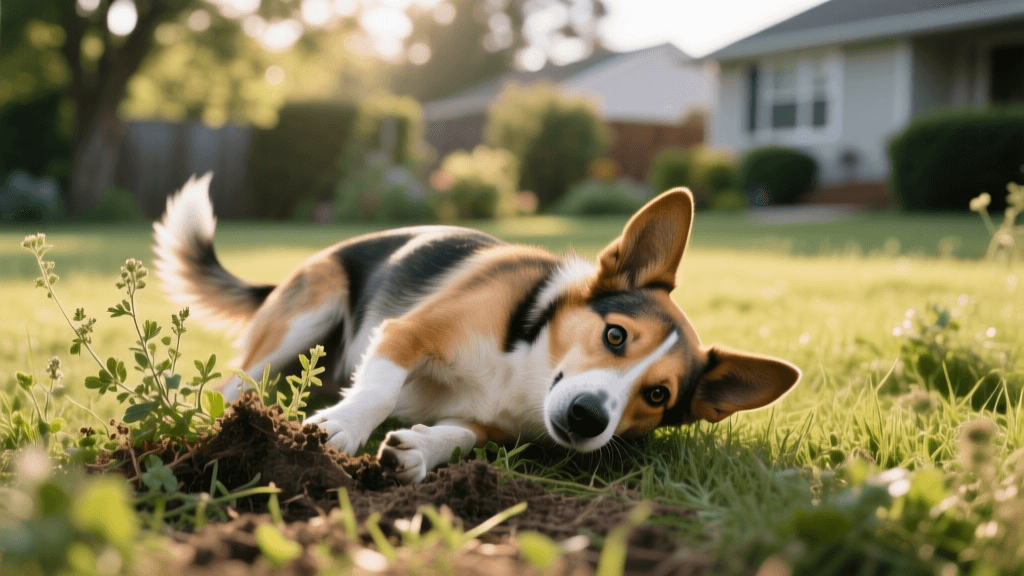
Resource guarding is one of the most common, yet deeply misunderstood, behavioral issues in canine psychology. At its core, resource guarding is a natural survival instinct. In the wild, canines must protect their food, mates, and shelter to survive. While our domestic dogs do not face the same life-or-death scarcity, the genetic hardwiring remains. When a dog growls over a bone, snaps when you approach their food bowl, or stiffens when you try to take a toy from their mouth, they are not attempting to assert 'dominance' or show spite. Instead, they are communicating a deep-seated anxiety that a valuable resource is about to be stolen.
According to the ASPCA, resource guarding can be directed toward humans, other dogs, or even cats, and can involve items as varied as high-value chews, stolen socks, or even a favorite sleeping spot on the couch. Punishing a dog for guarding is not only ineffective; it is incredibly dangerous. Punishment suppresses the warning signs (like growling) without changing the underlying emotional state, which can lead to a dog that bites without warning. To truly resolve this issue, we must change the dog's emotional response from 'this human is a threat to my resources' to 'this human is the bringer of better resources.'
Recognizing the Subtle Body Language of Guarding
Dogs rarely bite without warning. Long before a snap or a bite occurs, a dog will display a series of subtle body language signals. Understanding this 'escalation ladder' is critical for any dog owner. If you miss the subtle signs, the dog will feel forced to escalate to more overt, dangerous behaviors. As noted by Fear Free Pets, recognizing early stress signals allows you to intervene before the dog crosses its behavioral threshold.
The Canine Escalation Ladder
| Escalation Level | Behavioral Signs | Human Action Required |
|---|---|---|
| Level 1: Subtle Anxiety | Whale eye (showing whites of eyes), lip licking, yawning, freezing, turning head away. | Stop approaching. Give the dog space. Do not force interaction. |
| Level 2: Overt Warnings | Hard stare, low rumbling growl, snarling (lifting lips), stiffening of the body, hovering over the item. | Immediately back away. Do not punish the growl. Assess the environment. |
| Level 3: Defensive Action | Air snapping, lunging, quick inhibited bite (no puncture), or full bite with puncture. | Seek immediate professional help from a certified behaviorist. Implement strict management. |
Never punish a growl. A growl is your dog's way of saying 'I am uncomfortable, please back up.' If you punish the growl, you remove the warning system, leaving you with a dog that bites without notice.
Essential Tools for Modification Training
Before beginning your step-by-step training protocol, you must gather the right tools. Success in behavior modification relies heavily on timing, management, and the value of your reinforcers.
- High-Value Treats: Dry kibble will not work for counter-conditioning. You need items that your dog considers 'jackpot' level. Boiled, unseasoned chicken breast (costing roughly $3 per pound) or Zuke's Mini Naturals (approx. $6 for a 6oz bag) are excellent choices. Cut treats into pea-sized pieces to keep caloric intake manageable.
- Treat Pouch: A dedicated treat pouch, such as the Doggone Good Training Pouch ($25), keeps your hands free and treats accessible for rapid reinforcement.
- 6-Foot Leather or Biothane Leash: Avoid retractable leashes entirely. A sturdy 6-foot leash ($30-$45) gives you precise control over your dog's distance from triggers without creating tension.
- Management Tools: Baby gates ($40-$80) and exercise pens are vital for separating your dog from high-risk areas, like children's playrooms or the kitchen during meal prep.
- Interactive Feeders: A Kong Classic ($15-$20) or a Snuffle Mat ($25) can be used to feed meals in a safe, confined space, reducing the dog's need to patrol and guard loose food.
Step-by-Step Training Guide: The Trading Game
The following protocol is designed to systematically desensitize your dog to human proximity while they possess valued items. This process requires patience. Do not rush the steps. Each step should be practiced in 10 to 15-minute sessions, 2 to 3 times per day.
Step 1: Environmental Management and Baseline Assessment
Management is not a failure; it is a critical component of behavior modification. Every time your dog successfully guards an item and keeps you away, the behavior is reinforced. You must prevent rehearsal of the unwanted behavior.
- Pick up all high-value toys, bones, and chews. Only give them to your dog when they are in a secure, confined area like a crate or a gated pen.
- Feed meals behind a closed door or inside a crate. Do not allow free-feeding (leaving a bowl of kibble out all day), as this creates constant, low-level anxiety about resource defense.
- Identify your dog's 'safe distance.' If your dog freezes when you are 5 feet away from their bowl, your starting training distance is 7 feet. Never push the dog over their threshold during early training.
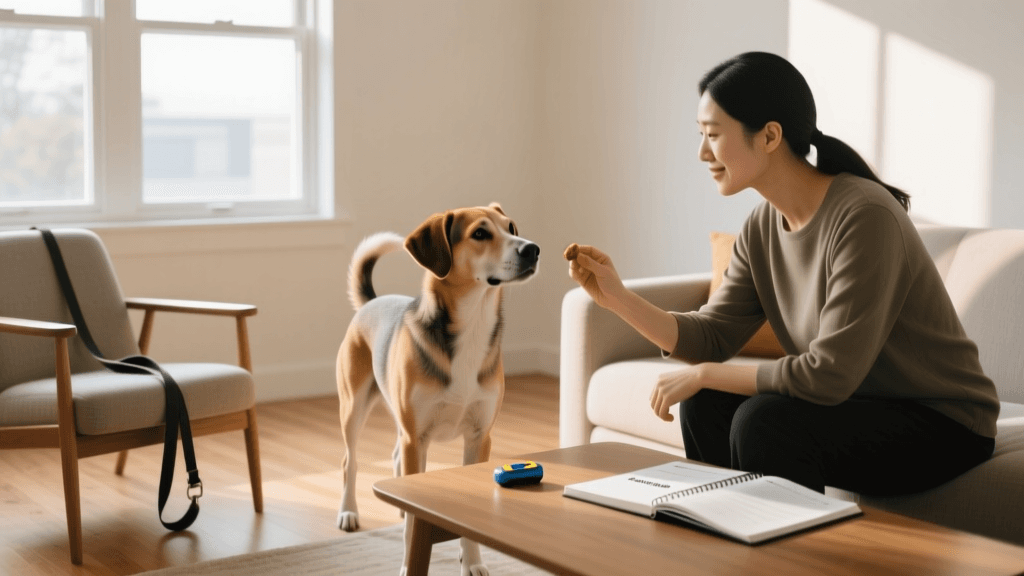
Step 2: Teaching the 'Drop It' Cue via Trading
We must teach the dog that releasing an item results in something even better. This is known as the 'Trading Game.'
- Start with a low-value item, such as a boring plush toy or a cardboard tube, when the dog is not intensely focused on it.
- Present a piece of high-value boiled chicken right to the dog's nose. The smell should be irresistible.
- The moment the dog drops the toy to eat the chicken, say 'Yes!' and toss the chicken a few feet away.
- While the dog is eating the chicken, pick up the toy and hide it behind your back.
- Once the dog finishes the chicken, give the toy back. This teaches the dog that giving up an item is not a permanent loss; it is a temporary trade that often results in getting the item back, plus a bonus treat.
Gradually increase the value of the items you are trading for, moving from cardboard tubes to medium-value chew toys, and eventually to high-value bones. If the dog refuses to drop the item, the treat you are offering is not valuable enough, or the item they have is too high-value for their current training level.
Step 3: Desensitizing the Food Bowl Approach
If your dog guards their food bowl, you must change their emotional response to your approach. According to the Association of Professional Dog Trainers (APDT), classical counter-conditioning is the gold standard for food bowl guarding.
- Place your dog's empty bowl on the floor. Stand at your dog's safe baseline distance (e.g., 8 feet away).
- Toss a piece of high-value chicken into the bowl. Do not look at the dog; look at the bowl. Toss the treat and walk away.
- Repeat this 10 times per session. The dog should begin to look at the bowl, then look at you, anticipating the treat.
- After 3 to 5 successful days, decrease your distance by 1 foot. Toss the treat from 7 feet away.
- Continue decreasing the distance by 1 foot every few days, only moving closer if the dog remains completely relaxed (loose body posture, soft eyes, wagging tail).
- Once you can stand directly next to the bowl and toss treats without the dog stiffening, begin dropping treats directly into the bowl while they are eating their regular kibble. You are now 'adding' to their bowl, rather than 'taking' from it.
Step 4: Generalizing to People and Locations
Dogs are highly contextual learners. A dog may learn that it is safe to trade a toy with their primary caretaker in the living room, but may still guard it when a child approaches in the kitchen. You must generalize the behavior.
- Have different family members practice the Trading Game, starting with low-value items and high-value treats.
- Practice in different rooms, in the backyard, and on walks.
- If you have children, they must be strictly managed. Children should never participate in resource guarding training without the direct, hands-on supervision of a professional behaviorist, as their unpredictable movements can easily trigger a defensive bite.
When to Hire a Professional Behaviorist
While mild to moderate resource guarding can often be managed and modified by dedicated owners using the steps above, severe cases require professional intervention. You should immediately hire a certified professional if:
- Your dog has ever broken the skin with a bite.
- Your dog guards multiple categories of items (food, spaces, people, and toys) simultaneously.
- There are young children or elderly individuals in the home who cannot reliably follow management protocols.
- The dog's body language is highly unpredictable, or you feel unsafe in your own home.
Look for a professional certified by the International Association of Animal Behavior Consultants (IAABC) or the Certification Council for Professional Dog Trainers (CCPDT). Expect to pay between $150 and $250 per hour for a private behavior consultation. While this is a significant financial investment (often totaling $1,000 to $2,000 for a full modification package), it is vastly cheaper than the medical and legal liabilities associated with a severe dog bite.
By understanding the evolutionary psychology behind resource guarding, respecting your dog's body language, and utilizing positive reinforcement protocols like the Trading Game, you can transform your dog's anxiety into trust. Remember, the goal is not to 'win' a confrontation over a bone, but to build a relationship where your dog willingly offers you their most prized possessions because they know you always bring something better.
robin-maitland
All our authors care for dogs every day — read more of their work on the authors page.