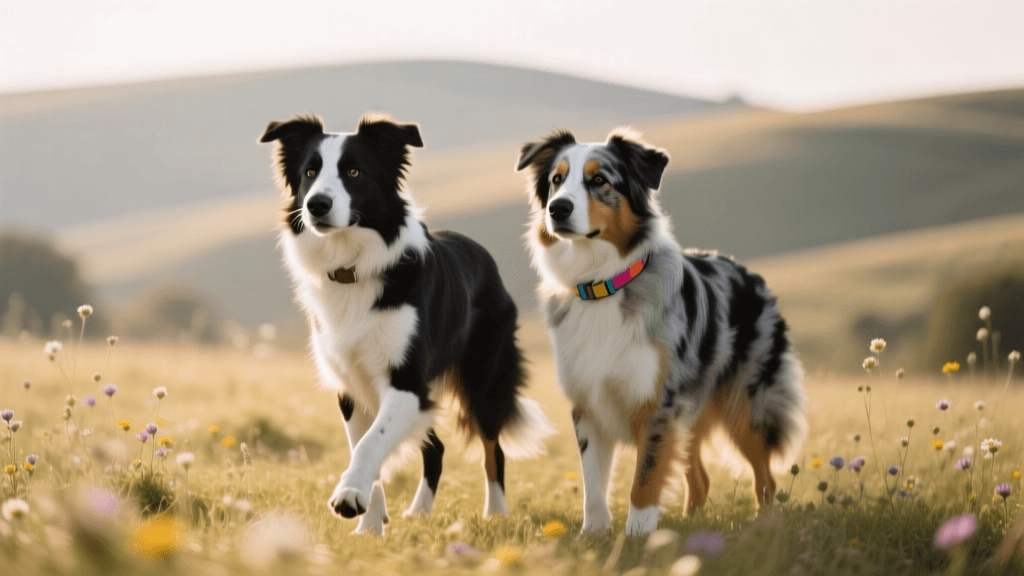
Border Collie vs Australian Shepherd: Which Herding Breed Fits You?
Compare the Border Collie and Australian Shepherd. Discover their unique instincts, energy needs, and psychology to choose the perfect herding dog.
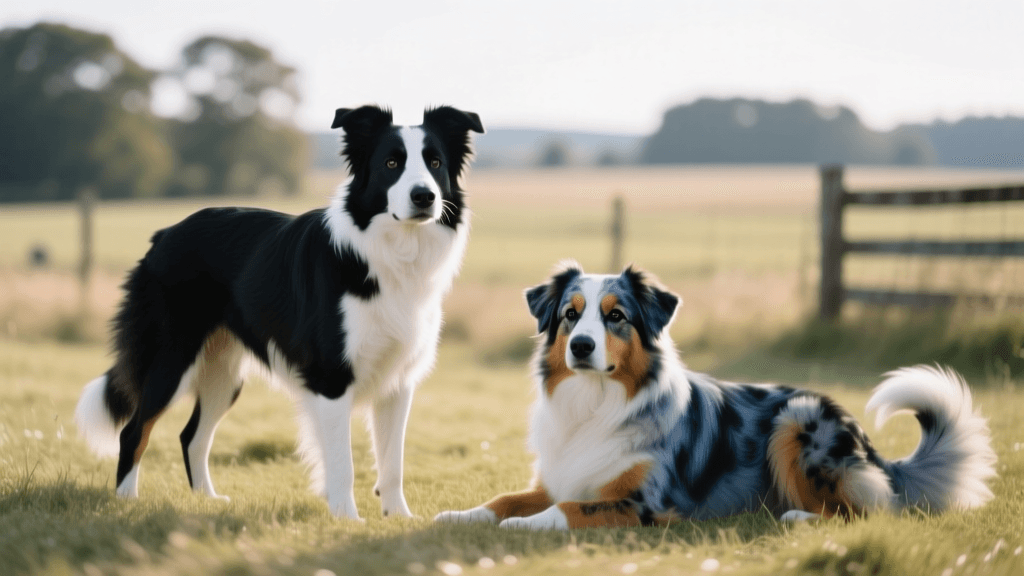
The Psychology of the Herding Instinct
When selecting a dog, many prospective owners focus on aesthetics or size, often overlooking the deep-seated psychological drives that dictate a dog's daily behavior. Nowhere is this more apparent than in herding breeds. To truly understand the Border Collie and the Australian Shepherd, you must first understand the predatory motor sequence: search, eye, stalk, chase, grab-bite, kill-bite, dissect, and consume.
Herding breeds have been selectively bred for centuries to exaggerate the early phases of this sequence—specifically the 'eye,' 'stalk,' and 'chase'—while heavily inhibiting the 'grab-bite' and 'kill-bite.' This genetic modification allows them to control the movement of livestock without harming the animals. However, this instinct does not simply turn off when the dog enters your living room. According to the American Kennel Club (AKC), these breeds possess an intense, hardwired need to control their environment, which manifests as extraordinary intelligence, boundless energy, and a profound sensitivity to motion.
Border Collie: The Intense, Sensitive Workaholic
The Border Collie is widely considered the most intelligent dog breed in the world, but this intelligence comes with a complex psychological profile. They are notorious for their 'strong eye'—a hypnotic, unblinking stare used to intimidate and control sheep. In a domestic setting, this translates to a dog that is hyper-vigilant and highly sensitive to visual stimuli.
Border Collies are deeply sensitive to their handler's emotions and tone of voice. They do not respond well to harsh corrections; instead, they thrive on positive reinforcement and clear, consistent boundaries. Their primary drive is mental. While they require immense physical exercise, a Border Collie will become neurotic and destructive if not given complex mental puzzles to solve. They are the quintessential workaholics, constantly seeking a job, whether that is learning a new trick, navigating an agility course, or, unfortunately, herding your toddlers.
Australian Shepherd: The Bouncy, Protective All-Rounder
Despite their name, the Australian Shepherd was perfected in the American West. Bred to work rugged terrain and manage stubborn cattle, the 'Aussie' possesses a slightly different psychological makeup than the Border Collie. According to the Australian Shepherd Club of America (ASCA), this breed is characterized by a strong guarding instinct and a more physical, 'loose-eyed' herding style.
Aussies are often described as 'velcro dogs' due to their intense desire to be near their owners. They are generally more aloof with strangers than the Border Collie, making them excellent watchdogs. Psychologically, they require a balance of physical exertion and mental engagement, but they tend to have a slightly higher tolerance for chaotic environments and physical roughhousing. They are resilient, bouncy, and possess a natural protective streak that requires early and extensive socialization to prevent reactivity.
Head-to-Head Breed Comparison
Understanding the nuanced differences between these two breeds is critical for long-term behavioral harmony. Below is a structured comparison of their core traits:
| Trait | Border Collie | Australian Shepherd |
|---|---|---|
| Herding Style | Strong eye, stalking, gathering | Loose eye, physical, driving, nipping |
| Energy Level | Extremely High (Endurance) | Very High (Bursts and Endurance) |
| Mental Needs | Extreme (Requires daily complex tasks) | High (Enjoys puzzles and training) |
| Stranger Reaction | Indifferent or politely aloof | Suspicious, protective, aloof |
| Sensitivity | Extremely sensitive to tone/environment | Moderately sensitive, more resilient |
| Guarding Instinct | Low to Moderate | Moderate to High |
Actionable Selection Guide: Costs, Time, and Environment
Choosing between these breeds requires an honest assessment of your resources. Herding dogs are not casual pets; they are lifestyle commitments. Here is a practical breakdown of what you need to prepare.
1. Financial Investment
- Initial Acquisition: Expect to pay $1,500 to $2,500 for a well-bred puppy from health-tested parents, or $300 to $500 for a breed-specific rescue.
- Secure Fencing: Both breeds are athletic jumpers and climbers. You need a minimum 6-foot privacy fence (wood or vinyl) to prevent visual triggering and escape. Installation costs average $25 to $45 per linear foot. For a standard 150-foot perimeter, budget between $3,750 and $6,750.
- Mental Enrichment Tools: Budget $150 to $300 for high-quality puzzle toys. Essential items include the Nina Ottosson Dog Brick ($30), the Kong Wobbler ($25), and snuffle mats for decompression.
- Professional Training: Herding breeds require structured obedience. Budget $200 to $400 for group classes, and potentially $150 to $250 per hour for a private certified applied animal behaviorist if reactivity issues arise.
2. Time Commitment
A tired herding dog is a good dog, but a mentally fulfilled herding dog is a great dog. Physical exhaustion without mental engagement will only create a fitter, faster neurotic dog.
- Puppyhood (8-16 weeks): 2 to 3 hours daily of active socialization, environmental exposure, and short 5-minute training sessions.
- Adulthood (18+ months): A minimum of 90 to 120 minutes of vigorous physical exercise (running, hiking, agility) combined with 45 to 60 minutes of focused mental work (scent work, trick training, obedience) every single day.
3. Environmental Needs
Neither breed is suited for apartment living unless the owner is an elite athlete and professional dog trainer. They require a securely fenced yard. If you live in a suburban or urban environment, you must commit to using a 30-foot Biothane long line ($45) for safe, off-leash-style decompression walks in open fields, allowing them to sniff and process their environment without the risk of chasing wildlife.
Behavioral Red Flags: When Instincts Go Unmet
When a herding dog's psychological needs are ignored, their instincts will manifest in maladaptive behaviors. Watch for these red flags, which indicate your dog is attempting to self-employ to satisfy their genetic drives:
- Shadow and Light Chasing: Often seen in Border Collies, this obsessive-compulsive behavior can lead to severe anxiety and requires immediate behavioral intervention.
- Car and Bike Chasing: Driven by the 'chase' phase of the predatory sequence. This is highly dangerous and requires rigorous impulse control training using high-value rewards like freeze-dried liver.
- Children and Nipping: Aussies, in particular, may try to herd running children by nipping at their heels. This is not aggression; it is misplaced instinct. Management (using baby gates) and redirecting the dog to a flirt pole toy is essential.
Final Verdict: Making Your Choice
If you are a meticulous, quiet individual who enjoys structured activities like competitive obedience, agility, or trick training, and you want a dog that is deeply attuned to your every micro-expression, the Border Collie is your ideal match. You must be prepared to manage their environmental sensitivities and provide endless mental stimulation.
If you are an active, outdoorsy family who enjoys hiking, camping, and casual adventures, and you want a resilient, protective companion who can handle a bit more chaos and physical roughhousing, the Australian Shepherd is the superior choice. You must be committed to early socialization to manage their natural wariness of strangers.
Ultimately, both breeds require an owner who views dog training not as a chore, but as a lifelong, rewarding partnership. For more insights on managing high-drive breeds, consult the AKC's Australian Shepherd breed guide and connect with local herding or agility clubs to see these magnificent dogs in their element before making your final decision.
anouk-beaumont
All our authors care for dogs every day — read more of their work on the authors page.