Veterinarian Guide To No-Pull Harness Joint Health 2026
Discover how front-clip no-pull harnesses protect your dog's trachea and shoulder joints in 2026. Expert veterinary fitting tips and top model reviews.
The Hidden Dangers of Traditional Collars in 2026
As veterinary biomechanics and canine physical therapy continue to advance in 2026, the consensus among veterinary orthopedic specialists is clearer than ever: traditional neck collars pose significant risks to a dog's musculoskeletal and respiratory systems. When a dog pulls on a standard flat collar or a slip lead, the immense pressure is concentrated directly on the cervical spine and the trachea. For strong pullers, this localized force can lead to severe health complications over time, including cervical disc disease, tracheal collapse, and chronic neck pain.
According to the American Kennel Club (AKC), tracheal collapse is a progressive disease where the cartilage rings of the windpipe weaken and flatten, making it difficult for the dog to breathe. Breeds such as Pomeranians, Chihuahuas, and Poodles are particularly susceptible, but any dog that routinely pulls on a collar is at an elevated risk of accelerating tracheal degradation. Transitioning to a well-designed, front-clip no-pull harness is no longer just a behavioral training recommendation; it is a critical preventative health measure.
The Biomechanics of Front-Clip No-Pull Harnesses
To understand why veterinarians and certified professional dog trainers (CPDTs) overwhelmingly recommend front-clip harnesses, we must look at the physics of canine locomotion. A dog's center of gravity is located just behind the front limbs. When a dog pulls forward on a back-clip harness, the pressure is distributed across the chest and shoulders, effectively allowing the dog to use its powerful hindquarters to lean into the harness—much like a sled dog. This encourages more pulling and places sustained strain on the shoulder joints.
A front-clip no-pull harness, however, features a D-ring located on the sternum. When the dog pulls and the leash becomes taut, the front clip gently redirects the dog's momentum sideways, turning their chest back toward the handler. This biomechanical redirection disrupts the dog's forward leverage without applying painful pressure or choking the animal. It protects the cervical vertebrae and allows the handler to guide the dog using natural physical redirection rather than brute force.
Y-Strap vs. T-Strap: Protecting the Canine Shoulder Joint
Not all no-pull harnesses are created equal, especially when it comes to long-term joint health. The most critical design factor in 2026 is the shape of the chest strap. Harnesses generally fall into two categories: T-strap (horizontal chest band) and Y-strap (V-neck design). The structural difference between these two designs has profound implications for the canine shoulder joint, specifically the biceps brachii tendon and the supraspinatus muscle.
T-strap harnesses feature a horizontal band that cuts directly across the front of the dog's shoulders. While they may prevent pulling, this horizontal band restricts the natural forward extension of the front limbs. Over time, this restricted gait can lead to altered biomechanics, muscle atrophy in the shoulders, and an increased risk of bicipital tenosynovitis (inflammation of the biceps tendon sheath).
| Design Feature | Y-Strap Harness (V-Neck) | T-Strap Harness (Horizontal) |
|---|---|---|
| Shoulder Extension | Unrestricted, allows full natural stride | Restricted, limits forward reach |
| Gait Alteration | Minimal to none | Significant, causes shortened stride |
| Joint Stress | Low, evenly distributed | High, concentrated on biceps tendon |
| Veterinary Recommendation | Highly Recommended for daily use | Not recommended for active dogs |
2026 Case Study: The Kurgo Tru-Fit Smart Harness
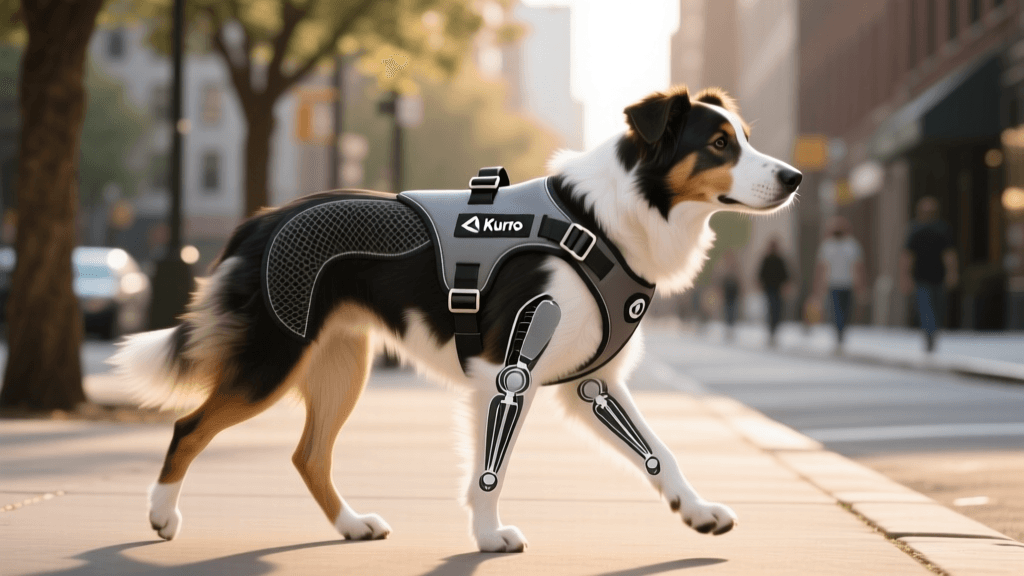
When evaluating harnesses that prioritize both anti-pull mechanics and orthopedic health, the Kurgo Tru-Fit Smart Harness remains a benchmark in the veterinary community. Unlike restrictive T-strap models, the Kurgo Tru-Fit utilizes a V-neck (Y-strap) design that completely clears the dog's shoulder joints. This ensures that the supraspinatus and infraspinatus muscles can contract and extend fully during a brisk walk or hike.
In its 2026 iteration, the Kurgo Tru-Fit features an updated, ultra-breathable ripstop mesh that reduces thermal buildup during summer months, addressing a common complaint regarding older padded harnesses. Furthermore, the chest plate is contoured to match the natural shape of the canine sternum, preventing the harness from shifting into the axillary region (the armpit) during sudden movements. The front D-ring is reinforced with a steel nesting buckle system, ensuring that even the most powerful breeds, such as Rottweilers or Malamutes, cannot snap the hardware under extreme tension.
The Veterinary Fitting Protocol: Avoiding Bursitis and Chafing
Even the most anatomically correct Y-strap harness can cause severe health issues if fitted improperly. A harness that is too loose will shift laterally, causing friction burns and potentially leading to axillary bursitis (inflammation of the fluid-filled sacs that cushion the shoulder joints). Conversely, a harness that is too tight will restrict ribcage expansion, compromising the dog's respiratory efficiency during exercise.
The ASPCA emphasizes the importance of proper gear fitting for safe dog walking. To ensure optimal musculoskeletal safety, follow this veterinary-approved fitting protocol:
- The Two-Finger Rule: You should be able to comfortably slide two fingers flat under any strap on the harness. If you cannot, it is too tight and may restrict blood flow or lymphatic drainage.
- Axillary Clearance: Check the area behind the front legs. The straps should sit high enough on the ribcage so they do not rub against the delicate skin of the armpit when the dog takes a full forward stride.
- Sternum Alignment: The front D-ring must sit exactly on the lower third of the sternum. If it sits too high (near the throat), it mimics the choking hazard of a collar. If it sits too low, it will catch on the dog's front paws during movement.
- The Shake Test: Allow your dog to shake their body vigorously. A properly fitted harness will shift slightly but will not slide over the dog's head or twist completely to one side.
Veterinary Tip: Always inspect your dog's skin under the harness after the first few walks. Look for signs of erythema (redness) or hair loss around the sternum and axillary regions. If redness persists, reassess the fit or consider a harness with neoprene-padded edges.
Integrating the Harness into Physical Rehabilitation
For dogs recovering from orthopedic surgeries, such as a Tibial Plateau Leveling Osteotomy (TPLO) for a torn cranial cruciate ligament (CCL), or those managing chronic osteoarthritis, a front-clip Y-strap harness is an indispensable rehabilitation tool. Physical therapists utilize the front clip to provide gentle, supportive steering without placing any load on the dog's hindquarters or compromised joints.
During hydrotherapy or controlled leash walks, the front clip allows the handler to keep the dog perfectly aligned, preventing sudden, jerky movements that could re-injure healing tissues. Additionally, the broad chest plate of models like the Kurgo Tru-Fit can be used as a supportive lifting aid. By grasping the sturdy top handle (a feature included on many premium 2026 models), owners can safely support their dog's weight while navigating stairs or assisting them into vehicles, thereby preserving the owner's back health while protecting the dog's joints.
Conclusion: Prioritizing Long-Term Wellness
The shift away from traditional collars and restrictive T-strap harnesses represents a major victory for canine preventative healthcare. By understanding the biomechanics of pulling and the anatomical vulnerabilities of the canine shoulder and trachea, owners can make informed decisions that significantly improve their dog's quality of life. Investing in a veterinary-approved, Y-strap front-clip no-pull harness is not merely a purchase for better leash manners; it is a long-term investment in your dog's respiratory, orthopedic, and overall physical well-being for years to come.
marcus-aldridge
All our authors care for dogs every day — read more of their work on the authors page.