Dog Noise Phobia 2026: Adaptil vs Zesty Paws Calming Chews
Compare Adaptil pheromone diffusers and Zesty Paws calming chews for dog noise phobia in 2026. Learn which anxiety management solution works best.
Understanding Canine Noise Phobia and Reactivity in 2026
Noise phobia in dogs is a severe, irrational fear response triggered by specific sounds such as thunderstorms, fireworks, construction equipment, or even the hum of heavy appliances. For reactive and anxious dogs, these auditory triggers do not just cause mild stress; they initiate a profound sympathetic nervous system response. This 'fight or flight' reaction can lead to destructive behavior, self-mutilation, escape attempts, and long-term behavioral deterioration if left unmanaged. According to veterinary behaviorists, noise aversion is one of the most common reasons owners seek professional help for their dogs. As we navigate the best therapeutic options in 2026, two over-the-counter solutions consistently dominate the market: the Adaptil Optimum Diffuser and Zesty Paws Advanced Calming Bites. But which one is right for your dog's specific neurochemical needs?
Adaptil Optimum Diffuser: The Science of Pheromone Therapy
The Adaptil Optimum Diffuser represents the latest evolution in synthetic pheromone therapy. Unlike older models that solely replicated the basic Dog Appeasing Pheromone (DAP) produced by nursing mother dogs, the Optimum formula utilizes a newly identified complex of pheromones that specifically target the canine brain's olfactory receptors to promote a deeper sense of security. When inhaled, these synthetic chemical signals bypass the conscious brain and directly stimulate the limbic system, the emotional center responsible for processing fear and anxiety.
How to Use Adaptil Optimum Effectively
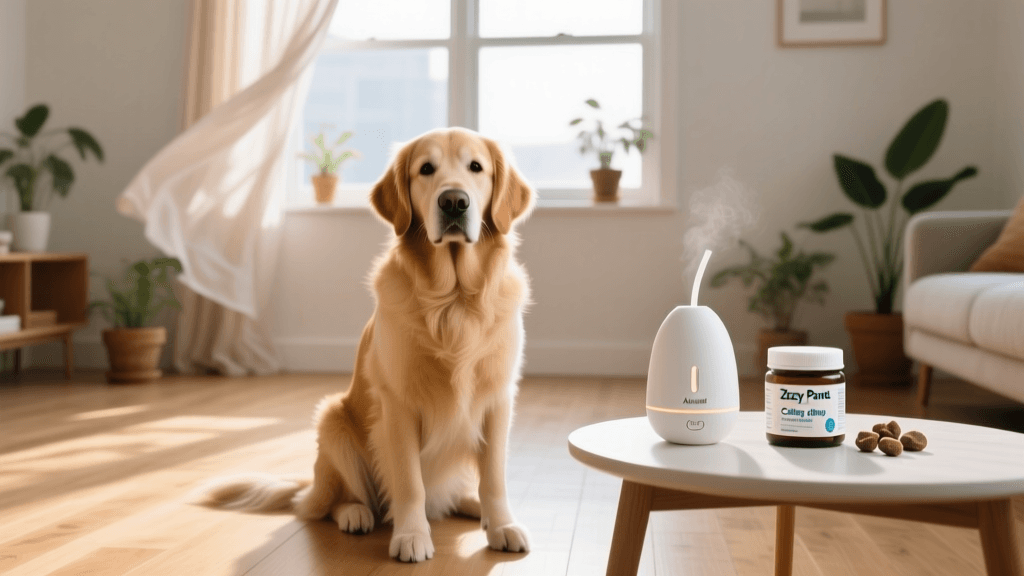
For noise phobia management, timing and placement are critical. The diffuser must be plugged into a wall outlet in the room where your dog spends the most time or seeks refuge during a storm. It covers up to 700 square feet and takes approximately 24 to 48 hours to reach optimal saturation in the environment. Therefore, if you know a fireworks holiday or storm season is approaching, plug the device in well before the first anticipated trigger. Never plug the diffuser behind furniture, under shelves, or near open windows, as this disrupts the convective heat current required to disperse the pheromones. In 2026, a starter kit retails for around $34.99, with monthly refills costing approximately $21.00.
Zesty Paws Advanced Calming Bites: Nutritional Support for Anxiety
While pheromones work environmentally, Zesty Paws Advanced Calming Bites work internally through targeted nutritional biochemistry. These soft chews are formulated with a synergistic blend of L-Theanine, Ashwagandha root extract, Chamomile, and Hemp seed powder. L-Theanine, an amino acid commonly found in green tea, is clinically proven to promote the generation of alpha brain waves in canines, inducing a state of 'wakeful relaxation' without causing drowsiness. Ashwagandha acts as a powerful adaptogen, helping to regulate the adrenal glands and blunt the spike in cortisol that occurs when a reactive dog hears a thunderclap.
Dosing and Administration Protocols
Unlike daily pharmaceutical medications, Zesty Paws calming chews are designed for situational use, making them ideal for predictable noise events like neighborhood fireworks or scheduled construction. The manufacturer recommends administering the chews 30 to 45 minutes before the anticipated stressor. For a medium-sized dog (26-50 lbs), the standard 2026 dosing guideline is two chews per day. Because they are flavored with natural chicken and peanut butter, most dogs readily accept them as high-value treats. A 90-count bag currently costs around $27.50, making it a highly cost-effective intervention for episodic anxiety.
Head-to-Head Comparison: Adaptil vs. Zesty Paws
Choosing between an environmental modifier and an ingestible supplement depends heavily on your dog's specific triggers, metabolism, and the predictability of the noise events. Below is a detailed comparison to help you decide.
| Feature | Adaptil Optimum Diffuser | Zesty Paws Advanced Calming Bites |
|---|---|---|
| Intervention Type | Environmental (Olfactory) | Ingestible (Nutritional) |
| Active Mechanism | Synthetic Dog Appeasing Pheromones | L-Theanine, Ashwagandha, Chamomile |
| Onset of Action | 24 to 48 hours for room saturation | 30 to 45 minutes post-ingestion |
| Best Suited For | Unpredictable triggers (spontaneous storms, general baseline anxiety) | Predictable triggers (July 4th, New Year's Eve, scheduled vet visits) |
| 2026 Estimated Cost | $34.99 (Kit) / $21.00 (Monthly Refill) | $27.50 (90-count bag) |
| Pros | Zero effort after setup; no ingestion required for picky eaters | Fast-acting; portable for travel; doubles as a training treat |
| Cons | Ineffective in large, open-concept homes or drafty areas | Requires advance timing; may cause mild GI upset in sensitive dogs |
Building a 2026 Desensitization and Counterconditioning Protocol
Neither pheromones nor calming chews will 'cure' noise phobia on their own. They are best utilized as chemical and environmental scaffolding to lower your dog's threshold enough to allow active behavioral modification to take place. The gold standard for treating noise reactivity is systematic desensitization and counterconditioning (DS/CC). As noted by the American Kennel Club, gradually exposing your dog to recorded sounds at a volume so low it does not elicit a fear response, while simultaneously feeding high-value rewards, can fundamentally rewire the brain's association with the noise.
Step-by-Step DS/CC Implementation
- Establish a Baseline: Use a high-fidelity audio app to play thunderstorm sounds at volume level 1. If your dog shows no signs of stress (panting, pacing, ear pinning), you have found your starting threshold.
- Pair with High-Value Rewards: Every time the audio plays, offer a lick mat smeared with frozen bone broth or a piece of boiled chicken. When the audio stops, the food disappears.
- Incremental Increases: Over several weeks, increase the volume by a single decibel. If your dog reacts, you have pushed too far too fast. Drop the volume back down and proceed more slowly.
- Integrate Calming Aids: Use the Zesty Paws chews 30 minutes before your training session to ensure your dog's nervous system is primed for learning rather than reacting.
Environmental Modifications for the Reactive Dog
Managing a noise-phobic dog requires more than just biological interventions; it requires architectural modifications to your home environment. Creating a 'sensory bunker' can drastically reduce the intensity of the trigger. Choose an interior room with no exterior walls or windows, such as a large walk-in closet or a basement bathroom. Cover your dog's crate with a heavy, sound-dampening moving blanket to muffle high-frequency acoustic spikes.
Additionally, invest in a high-fidelity white noise machine, such as the LectroFan Evo. Unlike standard fans, these machines generate non-repeating digital soundscapes that effectively mask the sharp, percussive transients of fireworks and thunder. Place the white noise machine near the door of the bunker room, not directly next to the dog's ears, to create a sound barrier that intercepts the noise before it reaches the crate. For further guidance on creating safe spaces, the Humane Society of the United States offers excellent blueprints for storm-proofing your home.
When to Consult a Board-Certified Veterinary Behaviorist
While Adaptil and Zesty Paws are excellent tools for mild to moderate noise aversion, severe phobias require professional medical intervention. If your dog exhibits extreme panic behaviors—such as breaking teeth on crate bars, jumping through glass windows, or refusing to eat for 24 hours following a storm—over-the-counter supplements will not be sufficient. In these cases, the amygdala is so overwhelmed that the dog is physically incapable of processing treats or pheromones.
In 2026, the veterinary standard of care for severe noise phobia involves a combination of fast-acting situational anxiolytics (such as Trazodone or Gabapentin) and long-term daily SSRIs (like Fluoxetine) to raise the baseline serotonin levels in the brain. A board-certified veterinary behaviorist can prescribe these medications and tailor a DS/CC protocol that ensures your dog's safety and psychological well-being. Remember, managing a reactive dog is a marathon, not a sprint. By combining the environmental stability of Adaptil, the neurochemical support of Zesty Paws, and dedicated behavioral training, you can help your dog navigate a loud world with confidence and calm.
hannah-wickes
All our authors care for dogs every day — read more of their work on the authors page.