Preventing Heat Stress in Working Dogs: 2026 Cooling Guide
Discover 2026 protocols for preventing heat stress in working and detection dogs, featuring top cooling vests, hydration guides, and veterinary thresholds.
The Hidden Danger of Canine Drive in Rising Temperatures
Working dogs, including detection K9s, search and rescue (SAR) teams, and mobility service dogs, possess an unparalleled drive to perform their duties. However, this intense focus often overrides their natural instinct to rest when overheated. As we navigate the increasingly volatile and record-breaking summer climates of 2026, heat stress remains one of the most critical occupational hazards for working canines. Unlike humans, dogs cannot regulate their core temperature through widespread sweating. Instead, they rely primarily on panting and vasodilation in their ear flaps and paw pads to dissipate heat. When a working dog is tracking a scent or performing a physical task, their metabolic heat production skyrockets, quickly outpacing their ability to cool down.
For handlers and owners of working and service dogs, understanding the intersection of environmental conditions, canine physiology, and modern cooling technology is not just a matter of comfort—it is a matter of life and death. This comprehensive 2026 guide outlines the latest veterinary protocols, field-tested cooling gear, and hydration strategies to keep your working dog safe, focused, and healthy during high-temperature deployments.
Recognizing Heat Exhaustion vs. Heat Stroke
Before deploying any cooling gear, handlers must be able to identify the early physiological markers of thermal distress. According to the Cornell University College of Veterinary Medicine, heat stroke is a severe, life-threatening condition that occurs when a dog's core body temperature exceeds 104°F (40°C). Working dogs often bypass the mild stages of heat exhaustion due to their training and drive, making early detection critical.
- Stage 1: Heat Stress (Early Warning) Excessive panting with a wide, flattened tongue; dark red or tacky gums; increased heart rate; and a slight delay in response to commands.
- Stage 2: Heat Exhaustion Unsteady gait, muscle tremors, vomiting, diarrhea, and seeking shade or attempting to lie down mid-task.
- Stage 3: Heat Stroke (Medical Emergency) Collapse, seizures, pale or blue mucous membranes, and potentially a cessation of panting as the dog's thermoregulatory system completely fails.
Handlers should implement the "two-pant rule": if your dog's panting does not return to a normal, rhythmic pace within two minutes of resting in the shade, immediate active cooling and veterinary intervention are required.
2026 Temperature and Humidity Risk Matrix
Ambient temperature alone is a poor indicator of heat stress risk. Humidity severely impairs a dog's ability to cool itself through panting, as the evaporation of moisture from the respiratory tract is hindered. The following matrix should be used by K9 units and service dog handlers to determine operational limits in 2026.
| Temperature (°F) | Humidity Level | Risk Category | Recommended Action for Working Dogs |
|---|---|---|---|
| 70°F - 80°F | Low (<40%) | Moderate | Standard 20-min work cycles; water breaks every 15 mins. |
| 81°F - 89°F | Medium (40-60%) | High | Deploy evaporative cooling vests; reduce work to 10-min intervals. |
| 90°F - 95°F | High (>60%) | Extreme | Limit outdoor deployment to critical emergencies only; continuous monitoring. |
| 96°F+ | Any | Severe | Suspend outdoor detection work. High risk of fatal heat stroke. |
Top Evaporative Cooling Vests for Working Dogs in 2026
The market for canine cooling gear has advanced significantly, moving away from simple wet bandanas to engineered, multi-layered evaporative systems. For working dogs that require full range of motion and compatibility with tactical harnesses, the following vests represent the gold standard in 2026.
1. Ruffwear Swamp Cooler Evo Vest
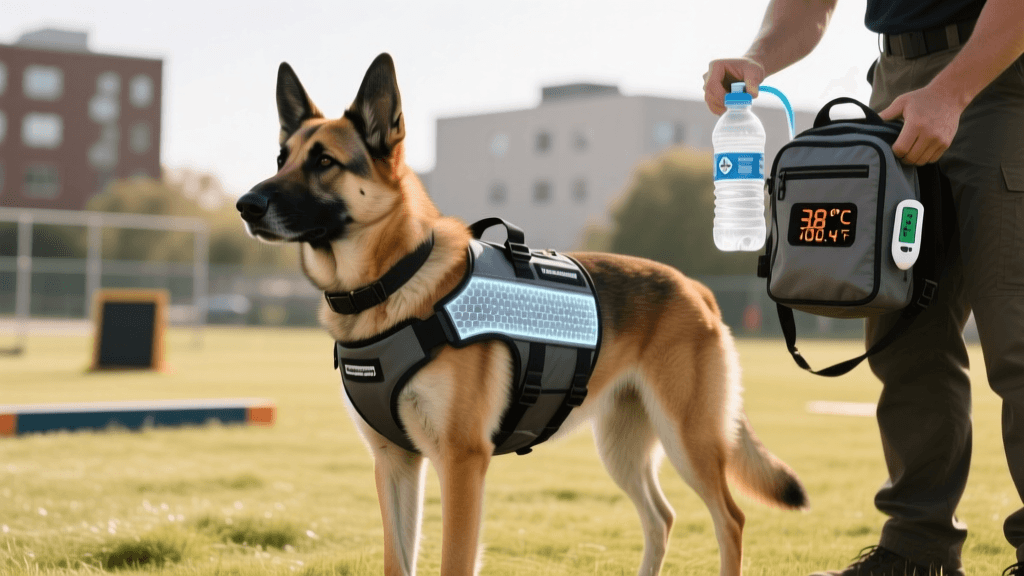
The Ruffwear Swamp Cooler Evo remains a top choice for SAR and detection dogs due to its lightweight, three-layer construction. The outer layer is a highly reflective polyester that deflects solar radiation, while the middle absorbent layer stores water for gradual evaporative cooling. The inner mesh lining allows air to circulate against the dog's coat. In 2026 field tests, the Swamp Cooler Evo demonstrated a core temperature reduction of up to 2.5°F over a 45-minute tracking exercise compared to dogs without cooling gear. Its side-release buckles allow for rapid deployment and removal without interfering with standard working dog harnesses.
2. Hurtta Cooling Vest
Designed with input from European working dog organizations, the Hurtta Cooling Vest offers superior coverage of the chest and major muscle groups. It utilizes a specialized terry-cloth inner layer that holds a massive volume of water without dripping, ensuring the dog remains comfortable during long deployments. The vest also features a built-in UV-reflective surface. For K9 units operating in urban environments where asphalt radiates intense upward heat, the Hurtta's extended belly coverage provides crucial protection.
Field Hydration and Electrolyte Protocols
Water alone is often insufficient for working dogs sweating out essential minerals through their paw pads and losing electrolytes via heavy panting and salivation. Dehydration thickens the blood, reducing cardiovascular efficiency and accelerating heat exhaustion.
The American Kennel Club (AKC) emphasizes the importance of proactive hydration rather than reactive drinking. Working dogs should be offered water every 15 to 20 minutes during active deployment. In 2026, the recommended protocol for high-drive dogs includes the use of canine-specific electrolyte supplements, such as K9 Power Show Stopper or Bullyade, mixed into their morning water bowls to pre-load their systems before deployment.
For field use, portable hydration systems like the Gulpy by Kyjen or tactical hydration bladders integrated into K9 saddlebags allow handlers to dispense precise 4-ounce water rations without wasting water or requiring the dog to break focus.
Paw Pad Protection on Superheated Surfaces
In the summer of 2026, urban and suburban asphalt surfaces routinely exceed 135°F when ambient temperatures reach just 85°F. At this temperature, canine paw pads can suffer severe thermal burns within 60 seconds, leading to blistering, sloughing of the epithelium, and permanent scarring that can end a working dog's career.
Handlers must utilize the "seven-second test" before deploying a dog onto paved surfaces: press the back of your bare hand firmly against the asphalt. If you cannot hold it there for seven full seconds, the surface is too hot for unprotected paw pads. For necessary deployments on hot surfaces, tactical canine booties such as the Rex Specs Dog Booties or Kurgo Blaze Cross Dog Shoes provide essential thermal barriers while maintaining the traction required for agile movement and scent-work stances. Additionally, applying a heavy coat of Musher's Secret Dog Paw Wax the night before a deployment can provide a secondary layer of lipid-based thermal protection.
Emergency Cool-Down Procedures: What to Avoid
A dangerous myth that still circulates among novice handlers is the idea that plunging an overheated working dog into an ice bath is the fastest way to save them. Veterinary sports medicine specialists strongly advise against this. Ice water causes rapid peripheral vasoconstriction—the blood vessels near the skin clamp down, trapping the superheated blood in the dog's core organs and actually accelerating internal thermal damage.
The Correct 2026 Protocol:
- Move the dog immediately to a shaded, well-ventilated area or an air-conditioned vehicle.
- Apply tepid or cool (not cold) water to the dog's paw pads, ear flaps, and belly, where blood vessels are closest to the skin.
- Use a portable battery-operated fan to blow air across the wet areas, maximizing evaporative cooling.
- Offer small, frequent sips of cool water, but do not allow the dog to gulp large amounts, which can lead to gastric dilatation-volvulus (bloat).
- Transport the dog to the nearest emergency veterinary clinic immediately, even if they appear to recover, as delayed neurological and renal complications from heat stroke can manifest hours later.
Conclusion: Prioritizing Longevity in the Field
The health and wellbeing of working and service dogs depend entirely on the vigilance and preparation of their handlers. By respecting the environmental risk matrices, investing in high-quality evaporative cooling gear like the Ruffwear Swamp Cooler Evo, and adhering to strict hydration protocols, you ensure that your canine partner can perform their vital duties safely. As climate conditions continue to challenge traditional deployment strategies in 2026, adapting your heat stress prevention protocols is the ultimate demonstration of care for the dogs who dedicate their lives to serving us.
aaron-whyte
All our authors care for dogs every day — read more of their work on the authors page.