Best No-Pull Puppy Harness 2026: Kurgo Tru-Fit Review
Discover how to fit and use the Kurgo Tru-Fit no-pull puppy harness in 2026. Expert leash training tips, sizing charts, and milestone advice for growing pups.
The Importance of Early Leash Training in 2026
Welcoming a new puppy into your home is one of the most exciting milestones in dog ownership, but it also comes with a critical responsibility: early leash training. As veterinary and behavioral standards continue to evolve in 2026, experts universally agree that introducing proper walking gear and techniques during the first few months of a puppy's life is essential for long-term joint health and behavioral development. Puppies are naturally curious and easily distracted, which often results in erratic movements, sudden lunges, and persistent pulling. Without the right equipment, these innocent behaviors can quickly develop into lifelong bad habits or, worse, cause physical injury to your growing dog.
The first year of a puppy's life is marked by rapid skeletal and muscular development. During this vulnerable window, the tools you choose for daily walks play a massive role in their physical well-being. This is where a high-quality, adjustable no-pull harness becomes an indispensable part of your puppy care toolkit. In this comprehensive guide, we will explore why the Kurgo Tru-Fit Smart Harness remains a top-tier choice for puppies in 2026, how to properly fit it to a rapidly growing frame, and the exact training milestones you should aim for during your pup's first few months.
Why Choose a Front-Clip No-Pull Harness Over a Collar?
Many first-time dog owners default to traditional flat collars, assuming they are the standard for walking. However, modern veterinary consensus strongly advises against using collars for leash training puppies. A puppy's trachea and cervical spine are incredibly delicate. When a young dog pulls on a collar, the concentrated pressure on their neck can lead to tracheal collapse, thyroid damage, and restricted blood flow to the brain.
According to the American Kennel Club (AKC), harnesses are significantly safer for puppies because they distribute the force of a pull across the chest and shoulders rather than the neck. Furthermore, a front-clip no-pull harness offers a distinct mechanical advantage. When the leash is attached to the D-ring on the puppy's chest, any forward pulling naturally redirects the dog's momentum back toward the handler. This gentle redirection discourages pulling without causing pain or requiring harsh corrections, aligning perfectly with the positive reinforcement training methodologies that dominate 2026 puppy care standards.
Product Spotlight: Kurgo Tru-Fit Smart Harness
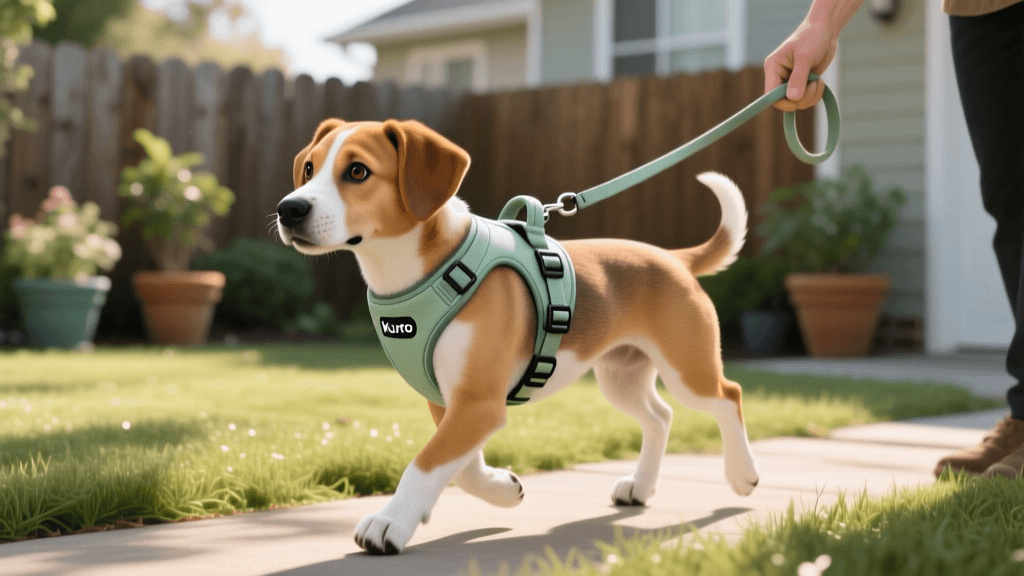
While the market is flooded with walking gear, the Kurgo Tru-Fit Smart Harness consistently ranks at the top for growing puppies. Originally designed with automotive safety in mind, its crash-tested chest plate provides unparalleled protection, making it a dual-purpose tool for both daily walks and safe car travel.
Key Features for Puppies
- Dual Leash Attachment Points: Features a front D-ring for no-pull training and a back D-ring for casual walks or car seatbelt tethers.
- Padded Chest Plate: The wide, padded chest piece distributes pressure evenly, protecting your puppy's developing sternum and ribs.
- Adjustable Fit: With four distinct adjustment points, it accommodates the rapid growth spurts typical of puppies between 8 and 24 weeks of age.
- Durable 2026 Materials: The latest iterations utilize ripstop nylon and breathable mesh lining, preventing the chafing and overheating that plagued older harness designs.
In 2026, the extra-small and small sizes of the Kurgo Tru-Fit retail for approximately $38 to $42, making it an affordable investment that bridges the gap between early puppyhood and adolescent growth phases.
Developmental Milestones: Introducing the Harness
You cannot simply strap a harness onto an 8-week-old puppy and expect them to walk perfectly. Desensitization is key. Here is a timeline for introducing the Kurgo Tru-Fit during your puppy's first critical months.
8 to 10 Weeks: Indoor Desensitization
At this age, your puppy is still completing their initial vaccination series and should not be walking in public areas. Use this time to introduce the harness indoors. Place the harness on the floor with high-value treats. Let them sniff it, then gently slip it over their head for just 10 to 15 seconds while feeding them treats. Do not attach the leash yet. The goal is to build a positive emotional association with the gear.
10 to 12 Weeks: Adding the Leash
Once your puppy is comfortable wearing the harness for short indoor play sessions, clip on a lightweight, 4-to-6-foot nylon leash. Let them drag it around the house under strict supervision. This teaches them that the slight weight and drag of the leash are normal. Practice calling them to you using treats, rewarding them when they voluntarily follow you without the leash going taut.
12 to 16 Weeks: Outdoor Exploration
After your veterinarian clears your puppy for outdoor walks, transition to the front-clip D-ring. Keep walks short (10-15 minutes) and focus heavily on engagement rather than distance. The world is overwhelming, and the front-clip will help you gently guide their attention back to you when they become fixated on a passing squirrel or neighbor.
How to Measure and Fit Your Growing Puppy
An improperly fitted harness can cause severe chafing under the armpits or allow the puppy to slip out and bolt into traffic. Because puppies grow unpredictably, you must re-measure them every two weeks. According to AKC training guidelines, a proper fit ensures safety and comfort, which are prerequisites for effective learning.
The Two-Finger Rule
- Measure the Neck: Use a soft measuring tape around the thickest part of the neck where the collar normally sits. The Kurgo Tru-Fit's neck strap should sit slightly lower than a traditional collar.
- Measure the Girth: Measure the widest part of the ribcage, right behind the front legs. This is the most crucial measurement for the Kurgo Tru-Fit.
- Check the Fit: Once adjusted, you should be able to slide exactly two fingers flat between the harness straps and your puppy's body. If you can fit more, it is too loose and poses an escape risk. If you cannot fit two fingers, it is too tight and will restrict breathing or cause friction sores.
Step-by-Step No-Pull Training Technique
The front-clip D-ring is a management tool, not a magic cure. You must pair the equipment with consistent behavioral training. When your puppy pulls, follow these steps:
- Stop Immediately: The moment the leash goes tight, stop walking. Become a tree. Do not yank the puppy back; simply stand still.
- Wait for Slack: Your puppy will eventually look back at you or take a step backward to figure out why forward motion has ceased. The moment the leash has slack, mark the behavior with a cheerful 'Yes!'
- Redirect and Reward: Call the puppy to your side and reward them with a treat positioned right at your hip seam. This reinforces the 'heel' position.
- Change Direction: If the puppy persistently pulls toward a specific distraction, cheerfully say 'Let's go!' and turn 180 degrees, walking the opposite way. The front-clip will naturally pivot the puppy's body toward you, rewarding them with forward motion only when they are by your side.
2026 Puppy Walking Gear Comparison
To understand why the front-clip harness is the gold standard for early puppy care, it helps to compare it against other common walking tools available on the market today.
| Gear Type | Best For | Pros | Cons for Puppies |
|---|---|---|---|
| Front-Clip Harness | Leash training & pull prevention | Redistributes pressure, redirects momentum, safe for neck. | Requires proper fitting and adjustment as pup grows. |
| Back-Clip Harness | Car travel & casual walks | Easy to put on, great for seatbelt tethers. | Encourages pulling (dogs naturally lean into chest pressure). |
| Flat Nylon Collar | Holding ID tags only | Cheap, lightweight, stays on 24/7. | High risk of tracheal damage if puppy pulls. |
| Head Halter | Severe pulling in adult dogs | Offers maximum control over the head. | NOT recommended for puppies; risks neck whiplash and fear. |
Common Fitting and Training Mistakes to Avoid
Even with the best gear, owners often make unintentional errors that hinder their puppy's progress. Avoid these common pitfalls:
- Leaving the Harness On 24/7: Harnesses are for supervised walks and car rides only. Leaving them on a puppy in a crate or during free play poses a severe choking hazard if the straps catch on furniture or crate wires. Furthermore, constant wear will cause painful matting and skin infections.
- Using Retractable Leashes: Retractable leashes teach puppies that pulling = more freedom. They also maintain constant, light tension on the front clip, which confuses the no-pull mechanism. Always use a standard 4-to-6-foot static leash during the training phase.
- Ignoring Chafing Signs: Check your puppy's armpits and chest after every walk. If you notice redness or missing fur, the girth straps are likely too tight, or the harness needs a wash to remove accumulated dirt and sweat that acts like sandpaper against the skin.
Final Thoughts on Puppy Walking Milestones
Investing in a high-quality, front-clip no-pull harness like the Kurgo Tru-Fit is one of the most proactive decisions you can make during your puppy's first year. By prioritizing their physical safety and utilizing positive, redirection-based training methods, you are laying the groundwork for a lifetime of enjoyable, stress-free walks. Remember that puppy training is a marathon, not a sprint. Celebrate the small victories, keep your training sessions short and positive, and watch your energetic puppy transform into a polite, confident walking companion.
jonas-cole
All our authors care for dogs every day — read more of their work on the authors page.