Top No-Pull Harnesses For New Rescue Dogs In 2026
Discover the best front-clip no-pull harnesses for bringing home a new rescue in 2026. Learn proper fitting, first-day walking tips, and top gear picks.
Bringing Home a Rescue: The First-Day Harness Rule
Bringing a new dog home is one of the most exciting milestones in a pet parent's life, but the transition from a shelter environment to a living room can be incredibly overwhelming for the dog. As we navigate the adoption landscape in 2026, animal behaviorists and rescue organizations are placing a heavier emphasis on 'decompression' and physical safety during the critical first 48 hours. When preparing your first-day essentials, skipping a traditional flat collar in favor of a high-quality, front-clip no-pull dog harness is widely considered a non-negotiable rule for new rescues, adolescent dogs, and strong breeds.
Shelter dogs often arrive with unknown leash histories, heightened anxiety, and a tendency to pull or bolt when startled by unfamiliar neighborhood noises. A standard collar puts immense pressure on the trachea and cervical spine during these sudden lunges, which can lead to long-term medical issues or cause the dog to slip out and escape. A well-fitted no-pull harness distributes the force across the dog's chest and shoulders, providing you with maximum control while keeping your new companion safe and comfortable. In this guide, we will explore the best no-pull harness models available in 2026, how to properly measure and fit them, and how to execute a stress-free first walk.
The Biomechanics of Front-Clip vs. Back-Clip Harnesses
Before investing in gear, it is vital to understand why the attachment point of the leash matters. Many standard harnesses feature a back-clip ring located between the dog's shoulder blades. While these are excellent for hiking or dogs that already walk politely, they actually engage a dog's natural 'opposition reflex.' When a dog feels pressure pulling them backward from their spine, their instinct is to lean forward and pull harder—much like a sled dog.
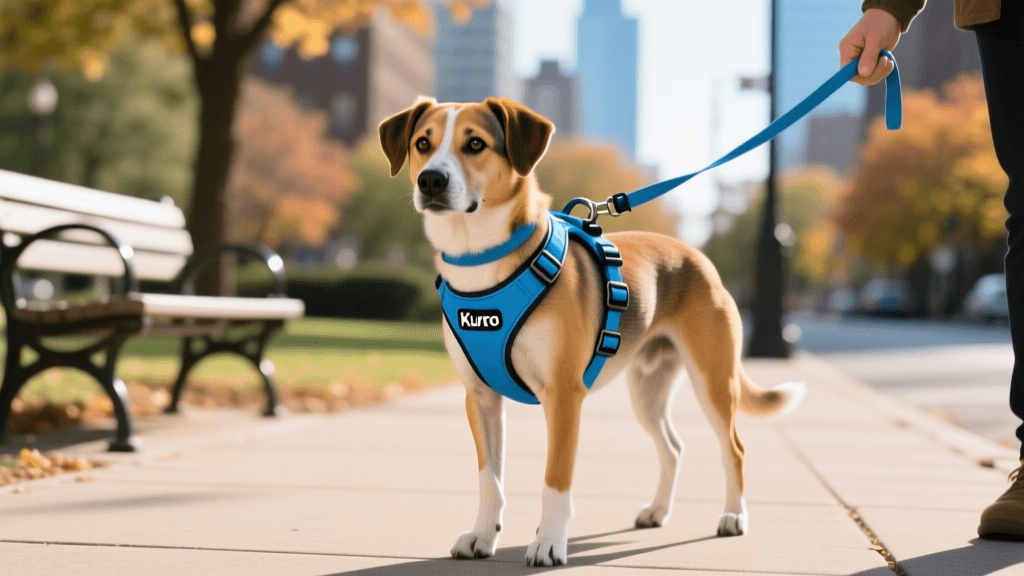
For a new rescue dog learning the ropes of your neighborhood, a front-clip no-pull harness is the superior choice. The leash attaches to a reinforced ring located on the chest strap. When the dog pulls forward, the front attachment gently pivots their body back toward the handler. This biomechanical redirection naturally discourages pulling without causing pain or requiring harsh corrections. It allows you to steer the dog's momentum, making it an invaluable tool for building loose-leash walking habits from day one.
Top 3 No-Pull Harnesses for New Dogs in 2026
The pet gear industry has seen significant innovations in 2026, particularly regarding sustainable materials, escape-proof buckling systems, and ergonomic padding. Here are the top-rated no-pull harnesses for bringing home a new dog this year.
1. Kurgo Tru-Fit Smart Harness (2026 Eco-Weave Edition)
The Kurgo Tru-Fit has long been a staple in the rescue community, and its 2026 Eco-Weave update makes it a standout. Constructed from recycled ocean-bound plastics, the new exterior is highly durable yet breathable. The Tru-Fit features a unique nesting steel buckle system that is virtually escape-proof, a critical feature for 'Houdini' dogs who back out of standard gear. It includes both front and back leash rings and comes with a 10-inch seatbelt loop for safe car travel on the ride home from the shelter.
2. Ruffwear Front Range (2026 Recycled Series)
If you are adopting an active, athletic breed or a young adolescent dog with boundless energy, the Ruffwear Front Range is a premium choice. The 2026 model features updated, ultra-soft fleece lining around the belly and chest straps to prevent chafing on dogs with sensitive skin or short coats. The front chest ring is reinforced with a webbing loop that withstands heavy lunging, while the back ring is ideal for once your dog has mastered loose-leash walking. It also features a hidden pocket for storing ID tags, reducing the jingling noise that can startle anxious rescues.
3. 2 Hounds Design Freedom No-Pull Harness
For dogs with unusual body shapes, such as Greyhounds, Whippets, or deep-chested shelter mixes, the 2 Hounds Design Freedom harness is unparalleled. It features a patented Swiss velvet lining on the chest strap that prevents the harness from rubbing the armpits raw. The dual-connection leash (included) allows you to clip to both the front and back rings simultaneously, giving you steering-wheel-like control over strong pullers while gently discouraging forward momentum.
2026 No-Pull Harness Comparison Chart
| Brand & Model | Best For | 2026 Price Range | Key Feature |
|---|---|---|---|
| Kurgo Tru-Fit (Eco-Weave) | Escape artists & car travel | $38 - $45 | Steel nesting buckles & crash-tested |
| Ruffwear Front Range | Athletic breeds & hiking | $45 - $52 | Alpine fleece lining & hidden ID pocket |
| 2 Hounds Freedom Harness | Deep-chested & strong pullers | $34 - $40 | Swiss velvet anti-chafe & dual-clip leash |
How to Measure and Fit Your New Dog's Harness
Purchasing the right brand is only half the battle; improper fit is the leading cause of chafing and escaped dogs. According to training guidelines published by the American Kennel Club, a poorly fitted harness can restrict a dog's shoulder extension, altering their natural gait and causing joint pain over time. To ensure a safe fit for your new arrival, follow these steps:
- Measure the Girth: Use a soft tailor's tape measure to find the widest part of your dog's ribcage, usually just behind the front elbows. This is the most critical measurement for any harness.
- Measure the Neck: For overhead harness styles, measure the base of the neck where a collar would naturally sit to ensure the head opening is wide enough to pass over comfortably.
- The Two-Finger Rule: Once the harness is on, you should be able to comfortably slide two fingers under any strap. If you can fit your whole hand, it is too loose and poses an escape risk. If you cannot fit two fingers, it will cause chafing and restrict breathing.
- Check the Shoulders: Ensure the chest plate does not press against the dog's shoulder joints (the point where the front legs meet the body). The dog should have a full, unrestricted range of motion when walking or trotting.
Common Fitting Mistakes to Avoid on Day One
Many new owners make the mistake of leaving the harness on 24/7 during the first week to 'help the dog get used to it.' Never leave a harness on an unsupervised dog. The straps can easily catch on crate wires, door handles, or the dog's own jaw if they scratch, leading to severe panic or strangulation. Only put the harness on right before a walk or training session, and remove it immediately upon returning indoors.
The First-Walk Protocol for Shelter Dogs
The first walk with a new rescue dog is not about exercise or obedience; it is about decompression and information gathering. The Humane Society of the United States recommends keeping initial outings short, positive, and highly controlled to prevent sensory overload. When you clip your leash to the front ring of your new no-pull harness, employ the following protocol:
- Let Them Sniff: A dog's sense of smell is their primary way of processing the world. Allow your dog to sniff the grass, trees, and hydrants. Sniffing naturally lowers a dog's heart rate and reduces cortisol levels.
- Use the 'Penalty Yards' Method: If the dog pulls to the end of the leash, simply stop walking or take three steps backward. Because you are using a front-clip harness, stepping backward will naturally turn the dog to face you. The moment the leash is slack, praise them and resume walking forward.
- Keep it Brief: Limit the first few walks to 10–15 minutes. A shelter dog's nervous system is easily fried by new sights, sounds, and smells. It is better to do three short, successful walks a day than one long, stressful march.
Transitioning from Management to Training
It is important to remember that a no-pull harness is a management tool, not a magic cure. While the front-clip design prevents the dog from successfully dragging you down the street, it does not teach them how to walk on a loose leash. As you settle into your new routine over the first few weeks, pair your harness with high-value treats (like boiled chicken or freeze-dried liver). Reward your dog heavily every time they choose to look at you or walk with a slack leash by your side.
By 2026, positive reinforcement methodologies have entirely replaced outdated, aversive leash-popping techniques. By combining a well-fitted, ergonomic front-clip harness with patience and reward-based training, you are setting your new rescue dog up for a lifetime of safe, enjoyable adventures by your side. Take a deep breath, double-check those buckles, and enjoy the beautiful journey of getting to know your new best friend.
hannah-wickes
All our authors care for dogs every day — read more of their work on the authors page.