Getting a Dog in Winter: Breed Selection and Home Prep
Discover how to choose the right cold-weather breed, winterize your home, and gather first-day essentials when getting a dog in winter.
Bringing a new dog into your life is an exhilarating milestone, but the season in which you make this transition plays a massive role in your early routines, gear requirements, and even breed selection. While spring and summer are traditionally viewed as the easiest seasons to get a puppy or adopt a rescue, millions of families welcome their new canine companions right in the middle of winter. Getting a dog during the colder months presents unique challenges, from freezing potty-training sessions to navigating icy sidewalks, but it also offers distinct advantages, such as built-in bonding time spent cuddling indoors. If you are planning to adopt or purchase a dog as the temperature drops, strategic preparation is your best ally. This comprehensive guide will walk you through selecting a cold-tolerant breed, winter-proofing your living space, and assembling a specialized first-day winter survival kit to ensure your new furry friend thrives from the moment they cross your threshold.
Why Seasonality Dictates Your Preparation Strategy
When you get a dog in winter, your immediate environment dictates your daily schedule. Unlike summer puppies who can spend hours exploring a fenced backyard, winter dogs require structured, shorter outdoor excursions to prevent hypothermia and frostbite. According to the American Society for the Prevention of Cruelty to Animals (ASPCA), pets are susceptible to frostbite and hypothermia just like humans, and should be kept inside during extreme cold snaps. This means your home must serve as both a sanctuary and an enrichment center. Furthermore, the chemicals used to maintain winter roads and sidewalks—such as rock salt and chemical de-icers—pose severe toxicity risks to curious puppies who lick their paws. Understanding these seasonal hazards is the first step in creating a safe haven for your new pet.
Choosing the Right Breed for Cold Climates
If you are currently in the breed selection phase and live in a region that experiences harsh winters, aligning your lifestyle with a cold-weather breed can save you immense stress. While all dogs need winter protection to some degree, breeds originally developed for snow and ice possess physiological advantages like double coats, insulated paw pads, and robust barrel chests that protect their vital organs. The American Kennel Club (AKC) notes that northern breeds and heavy-coated working dogs are genetically wired to not only withstand but actively enjoy freezing temperatures.
| Breed | Coat Type | Cold Tolerance | Indoor Enrichment Needs |
|---|---|---|---|
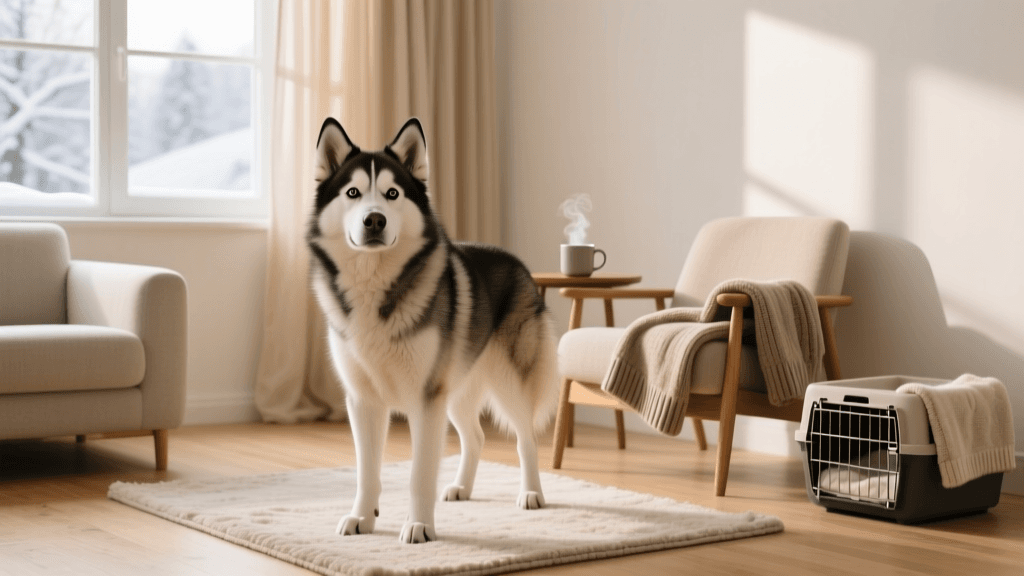
| Siberian Husky | Dense Double Coat | Excellent (down to -50°F) | High (Puzzle toys, tug-of-war) |
| Bernese Mountain Dog | Long, Thick Double | Very High (down to -20°F) | Moderate (Chew toys, scent work) |
| Alaskan Malamute | Coarse Double Coat | Excellent (down to -50°F) | High (Heavy-duty Kongs, digging boxes) |
| Newfoundland | Heavy, Water-Resistant | Very High (Loves snow/water) | Moderate (Indoor fetch, training games) |
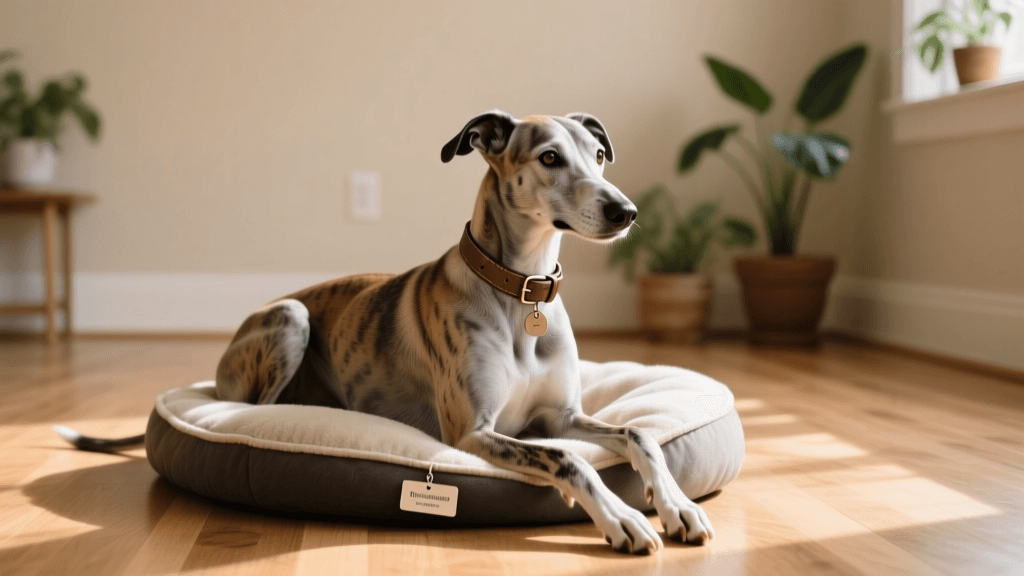
Conversely, if you are adopting a short-coated rescue like a Greyhound, Pit Bull, or Chihuahua, you must factor in the cost and time required to outfit them for the cold. These breeds cannot tolerate temperatures below freezing for more than a few minutes and will require comprehensive indoor potty solutions and high-end thermal wear.
Winterizing Your Home Before Arrival
Preparing your home for a winter dog goes beyond the standard puppy-proofing of electrical cords and toxic houseplants. You must audit your home for winter-specific hazards and comfort factors. First, evaluate your flooring. Snow, slush, and mud will inevitably be tracked inside. Lay down heavy-duty, washable runner rugs or interlocking foam mats in your entryway to provide traction and protect your floors. Second, audit your heating setup. Space heaters and fireplaces are major burn risks for curious puppies. Install sturdy, metal hearth gates and ensure space heaters have automatic tip-over shutoffs.
Next, secure all winter chemicals. Antifreeze is notoriously sweet-tasting and highly lethal to dogs, even in microscopic amounts. Store all automotive fluids in locked cabinets. Similarly, switch from traditional sodium chloride rock salt to pet-safe ice melts (like those made from magnesium chloride or urea) for your own walkways, and coordinate with your neighbors or building management to ensure common areas are treated safely. The American Veterinary Medical Association (AVMA) strongly recommends wiping down your dog's paws with a damp towel immediately upon returning indoors to remove any residual toxic de-icers they may have stepped on outside.
First-Day Winter Essentials and Gear
Your first-day shopping list must be tailored to the elements. Skip the lightweight summer harnesses and invest in winter-specific gear that ensures safety and warmth. Here is a curated list of essential winter gear, including specific product recommendations and estimated costs:
- Insulated Dog Jacket: The Ruffwear Overcoat Fuse ($80-$90) is a waterproof, fleece-lined jacket that provides core warmth and includes a built-in harness, reducing the fumbling of clipping a leash over bulky coats in freezing winds.
- Paw Protection Wax: Musher’s Secret Dog Paw Wax ($15-$20) is a dense, semi-permeable shield made of natural waxes. Apply it before walks to prevent ice balls from forming between your dog's toes and to protect against chemical burns from salted sidewalks.
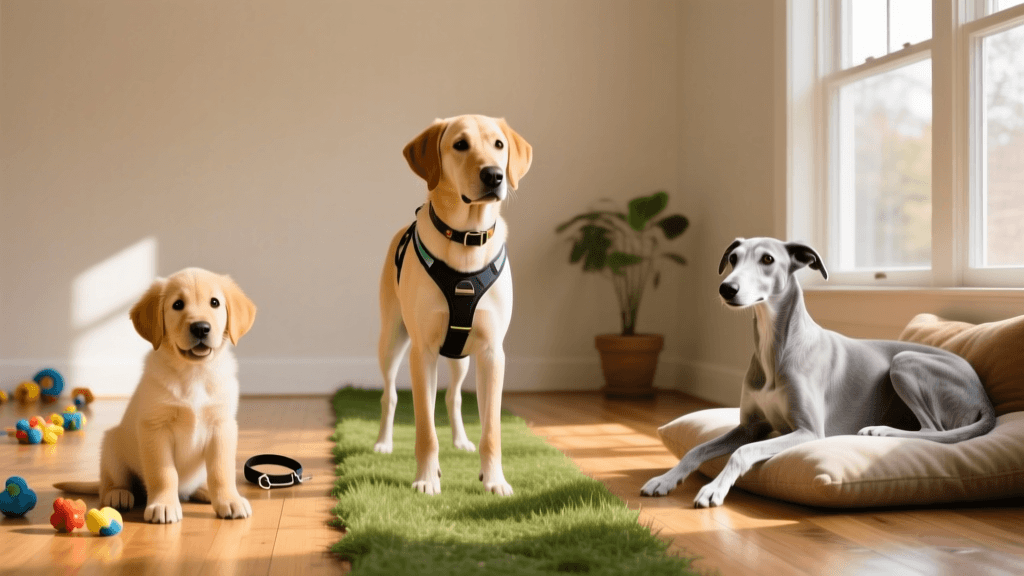
- Indoor Potty System: For extreme blizzard days or high-rise apartment dwellers, an indoor grass patch like Fresh Patch ($30-$40 per month) or a grated plastic system like UgoDog ($50) is a lifesaver. It bridges the gap between outdoor training and winter necessity.
- LED Safety Collar: Winter means shorter days and early sunsets. An LED collar or clip-on light (like the Nite Ize SpotLit, $15) is crucial for visibility during 4:30 PM potty breaks in the snow.
- Enrichment Feeders: Since outdoor exercise will be limited, mental stimulation is vital. The Kong Classic ($15) stuffed with frozen peanut butter and kibble can burn off puppy energy indoors while you stay warm.
Navigating Winter Potty Training
Potty training in the snow is arguably the most frustrating hurdle for new winter dog owners. Puppies despise the feeling of cold snow on their bare bellies and will often hold it until they are back inside your warm house, leading to immediate accidents. To combat this, create a 'potty sanctuary' outdoors. Use a snow shovel to clear a specific 4x4 foot patch of grass or gravel down to the dirt. Sprinkle a bit of their used indoor pee pad or a commercial potty attractant spray in this cleared zone. When you take them out, use a long 15-foot training leash to allow them to pace and sniff without you hovering directly over them in the cold. Keep your outdoor potty trips strictly to 3–5 minutes; if they do not eliminate, bring them inside, confine them to a crate or small pen for 10 minutes, and try again. This prevents them from associating the outdoors with playtime when they are supposed to be doing their business.
Safe Winter Activities for Bonding
Just because the weather is frightful doesn't mean your new dog's physical and mental needs pause. In fact, the 'getting to know you' phase requires heavy bonding and activity. Substitute long neighborhood walks with indoor canine sports and games. Set up a DIY agility course in your living room using broomsticks, couch cushions, and cardboard boxes to teach them basic commands like 'over,' 'under,' and 'through.' Engage in hide-and-seek with high-value treats to build their recall and scent-tracking abilities. If your dog is of appropriate age and health, look into indoor dog daycare facilities or climate-controlled training centers where they can socialize safely away from the ice and slush.
Conclusion
Getting a dog in winter demands foresight, specialized gear, and a willingness to adapt your routine to the elements. By selecting a suitable breed, rigorously winterizing your home, and investing in high-quality cold-weather essentials, you set the stage for a successful transition. Embrace the cozy indoor bonding time, stay vigilant about outdoor hazards, and remember that the snow will eventually melt, leaving you with a deeply bonded, well-adjusted companion for all the seasons to come.
hannah-wickes
All our authors care for dogs every day — read more of their work on the authors page.