Juvenile Puppy Osteoarthritis: 2026 Treatment Guide
Discover the latest 2026 veterinary guidelines for managing early-onset osteoarthritis and hip dysplasia in puppies, from joint supplements to surgical options.
Understanding Juvenile Osteoarthritis in the First Year
When most dog owners hear the word osteoarthritis (OA), they immediately picture a senior dog struggling to stand up from a nap. However, juvenile osteoarthritis is a significant and increasingly recognized issue in puppy care. In puppies under 12 months of age, osteoarthritis is almost never a primary disease of aging; instead, it is a secondary condition triggered by Developmental Orthopedic Diseases (DOD). Conditions such as hip dysplasia, elbow dysplasia, and osteochondritis dissecans (OCD) cause joint instability or cartilage defects, leading to premature wear, inflammation, and the early onset of osteoarthritis during a puppy's critical growth phases.
According to the American College of Veterinary Surgeons (ACVS), early intervention during the first year of life is the most critical factor in altering the long-term trajectory of canine joint disease. As of 2026, veterinary consensus heavily emphasizes a multimodal approach to managing juvenile OA, focusing on preserving cartilage, managing pain, and optimizing the puppy's environment while their growth plates are still open.
Early Warning Signs of Joint Pain in Puppies
Puppies are notoriously stoic and eager to please, meaning they will often mask pain until it becomes severe. Recognizing the subtle signs of early-onset osteoarthritis is vital for prompt treatment. Watch for the following indicators during your puppy's first year:
- The 'Bunny Hop': Running with both hind legs moving together rather than in an alternating stride.
- Reluctance to Jump: Hesitation before jumping into the car, onto the couch, or up the stairs.
- Stiffness After Rest: Limping or stiffness that is most pronounced after waking up from a nap but improves with mild movement.
- Exercise Intolerance: Lagging behind on walks or sitting down frequently during play sessions.
- Asymmetrical Muscle Development: Noticeable thinning of the thigh muscles on one or both hind legs compared to the front end.
The 2026 Multimodal Treatment Protocol
Managing juvenile osteoarthritis requires a comprehensive strategy that addresses inflammation, joint mechanics, and overall body condition. The 2026 veterinary guidelines outline four primary pillars of conservative management for growing dogs.
1. Strict Weight Management and Growth Curves
Excess weight is the single most destructive force on a puppy's developing, compromised joints. In 2026, veterinarians utilize breed-specific growth curves to ensure large-breed puppies grow at a controlled, steady rate rather than maximizing their genetic size potential. Your puppy should maintain a Body Condition Score (BCS) of 4 out of 9. You should be able to easily feel their ribs without pressing hard, and they should have a visible abdominal tuck. Overfeeding a puppy with early OA accelerates cartilage degradation and exacerbates pain.
2. Puppy-Safe Joint Supplements
Nutraceuticals play a foundational role in supporting joint health before severe cartilage loss occurs. The most evidence-backed supplements for juvenile OA include:
- Omega-3 Fatty Acids (EPA/DHA): Sourced from wild-caught fish oil or green-lipped mussel extract. The 2026 recommended therapeutic dose for joint inflammation is approximately 300 mg of combined EPA/DHA per 10 kg of body weight daily.
- Glucosamine Hydrochloride and Chondroitin Sulfate: These building blocks help support the synovial fluid and cartilage matrix. Look for veterinary-formulated chews that include avocado/soybean unsaponifiables (ASU) for enhanced efficacy.
- Undenatured Type II Collagen (UC-II): A newer, highly effective supplement that modulates the immune system's inflammatory response to damaged cartilage.
3. Exercise Modification and Physical Therapy
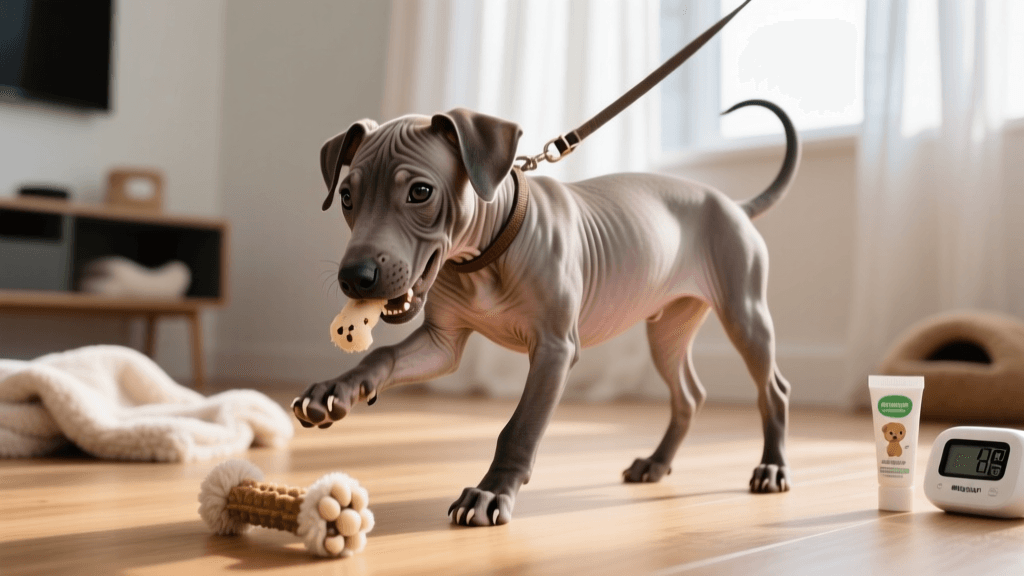
Puppies with early OA need movement to lubricate their joints, but high-impact activities can cause micro-fractures and worsen dysplasia. The golden rule for puppy exercise remains the '5-Minute Rule': 5 minutes of structured, leashed walking per month of age, up to twice a day. For a 4-month-old puppy, this means a maximum of 20 minutes of walking per session. Avoid fetch on hard surfaces, frisbee, and agility training until growth plates close (typically between 14 to 18 months). Canine hydrotherapy (underwater treadmill) is highly recommended in 2026 as it builds supporting muscle mass without placing concussive forces on the joints.
4. Medical Pain Management
While Non-Steroidal Anti-Inflammatory Drugs (NSAIDs) like Meloxicam are standard for adult OA, their long-term daily use in growing puppies is approached with caution due to potential gastrointestinal and renal impacts, as well as theoretical concerns regarding cartilage healing. Instead, veterinarians in 2026 frequently utilize Adequan (polysulfated glycosaminoglycan) injections. Adequan is a disease-modifying osteoarthritis drug (DMOAD) that inhibits cartilage-degrading enzymes and is exceptionally safe for juvenile dogs. For breakthrough pain, Gabapentin may be prescribed to manage neuropathic pain components without affecting the puppy's growth.
Early Surgical Interventions vs. Conservative Care
If your puppy is diagnosed with severe hip dysplasia leading to early OA, surgical intervention during the first year of life can dramatically alter their prognosis. The timing of these procedures is incredibly strict, as they rely on the puppy's active growth plates to reshape the joint. Below is a comparison of the primary early-intervention options.
| Procedure | Ideal Age Window | Mechanism of Action | 2026 Estimated Cost |
|---|---|---|---|
| Juvenile Pubic Symphysiodesis (JPS) | 15 to 20 weeks | Fuses the lower pelvis early, forcing the hip sockets to rotate and cover the femoral head as the puppy grows. | $1,500 - $2,500 |
| Triple Pelvic Osteotomy (TPO) | 5 to 8 months | Cuts and rotates the pelvic bone to improve the angle of the hip socket, secured with a specialized bone plate. | $3,500 - $5,000 |
| Conservative Management | Ongoing | Relies on weight control, supplements, physical therapy, and pain meds. Does not correct the underlying joint laxity. | $100 - $300 / month |
According to the American Kennel Club (AKC), screening for hip and elbow dysplasia via PennHIP or OFA radiographs should be considered for high-risk breeds as early as 16 weeks to determine if a puppy is a candidate for JPS. Once a puppy passes 8 to 10 months of age, these preventative surgeries are no longer viable, and owners must wait until the dog is fully mature for a Total Hip Replacement (THR) or rely on lifelong medical management.
Home Environment Modifications for 2026
Your home environment plays a massive role in managing juvenile osteoarthritis. Slipping and sliding on hardwood or tile floors forces a puppy's compromised joints to overcompensate, leading to micro-traumas. In 2026, veterinary physical therapists strongly recommend the following home modifications:
- Interlocking Foam Mats or Area Rugs: Cover high-traffic areas and play zones with non-slip surfaces to provide traction.
- Orthopedic Puppy Beds: Invest in a bed featuring high-density, human-grade memory foam (at least 4 inches thick) that does not flatten under the puppy's weight. This prevents pressure sores and supports joint alignment during sleep.
- Pet Ramps and Stairs: Train your puppy to use a ramp for getting into the car or onto elevated furniture. Jumping down from a couch generates a concussive force equal to several times the puppy's body weight on their front elbows and shoulders.
Conclusion
A diagnosis of early-onset osteoarthritis in a puppy can be overwhelming, but it is not a hopeless situation. By leveraging the latest 2026 veterinary protocols—combining strict weight management, targeted nutraceuticals, controlled physical therapy, and timely surgical evaluations—you can significantly improve your puppy's quality of life. Work closely with your veterinarian or a board-certified veterinary orthopedic specialist to tailor a care plan that ensures your puppy grows into a happy, active, and comfortable adult dog.
aaron-whyte
All our authors care for dogs every day — read more of their work on the authors page.