Xoloitzcuintli Puppy Care 2026: Skin, Diet & Milestones
Discover essential 2026 care tips for Xoloitzcuintli puppies, covering hairless skincare, teething, temperature control, and early socialization milestones.
Welcoming the Ancient Azcan: Xoloitzcuintli Puppy Care in 2026
The Xoloitzcuintli, affectionately known as the Xolo or Mexican Hairless, has seen a massive surge in popularity throughout 2026. Prized for their hypoallergenic coats, striking silhouettes, and profound loyalty, these ancient dogs are a joy to own. However, raising a Xolo puppy during its first year requires a highly specialized approach. Unlike heavily coated breeds, the hairless Xolo is uniquely vulnerable to environmental stressors, skin conditions, and temperature fluctuations. Whether you have welcomed a toy, miniature, or standard Xolo into your home, understanding their distinct developmental needs is crucial for a healthy transition into adulthood.
This comprehensive guide covers everything you need to know about raising a Xoloitzcuintli puppy in 2026, from advanced hairless skincare routines and temperature regulation to tailored nutrition and critical socialization windows.
Temperature Regulation: Protecting Your Hairless Puppy
One of the most immediate challenges of raising a hairless Xolo puppy is thermoregulation. Puppies of all breeds struggle to maintain their core body temperature, but hairless Xolos lack the insulating undercoat that protects other breeds from ambient temperature shifts. According to the American Kennel Club, the Xoloitzcuintli is a naturally occurring breed that thrives in warm climates, making them highly susceptible to hypothermia in cooler environments.
During the first six months of life, your home's ambient temperature should be strictly maintained between 75°F and 80°F (24°C - 27°C). When your puppy is sleeping, utilize a veterinary-approved heating pad designed specifically for pets. In 2026, the K&H Pet Products Thermo-Snuggly Sleeper remains the gold standard, offering a dual-thermostat system that heats only to the puppy's natural body temperature, preventing accidental burns.
Actionable Tips for Climate Control:
- Apparel is Mandatory: Invest in a high-quality, breathable fleece sweater for indoor wear during winter months, and a waterproof, insulated coat for outdoor potty breaks.
- Sun Protection: Conversely, hairless puppies can suffer from severe sunburn and heatstroke. Limit direct sun exposure during peak hours (10 AM to 4 PM) and always apply a pet-safe sunscreen to their ears, snout, and back.
- Draft Elimination: Keep the puppy's crate away from HVAC vents, drafty windows, and exterior doors.
The Hairless Skincare Routine: Preventing Acne and Dryness
Without fur to absorb natural sebum, hairless Xolo puppies are notorious for developing canine acne, blackheads, and dry, flaky skin. Establishing a proactive dermatological routine in the first year will prevent chronic skin infections later in life.
Bathing and Cleansing
Over-bathing is a common mistake that strips the Xolo's skin of essential moisture. In 2026, veterinary dermatologists recommend bathing a Xolo puppy no more than once every two to three weeks using a pH-balanced, oatmeal-based canine shampoo. Between baths, use unscented, veterinary-grade chlorhexidine wipes to gently clean the skin folds around the neck, armpits, and groin, where bacteria and yeast tend to accumulate.
Managing Puppy Acne
If you notice small red bumps or blackheads on your puppy's chin or abdomen, they are likely experiencing puppy acne. This is common in hairless breeds between 3 and 6 months of age. Never squeeze or pop these blemishes, as this can lead to deep staphylococcal infections. Instead, apply a warm compress to the area twice daily and consult your veterinarian, who may prescribe a topical mupirocin ointment or a benzoyl peroxide gel formulated specifically for dogs.
Moisturizing
To combat dry skin, massage a thin layer of organic, cold-pressed coconut oil or a specialized canine dermal balm (such as Warren London Hydrating Butter) into the skin after a bath. Ensure the product is free of zinc oxide, which is highly toxic to dogs if ingested during grooming.
Teething and Dental Anomalies in the Xolo
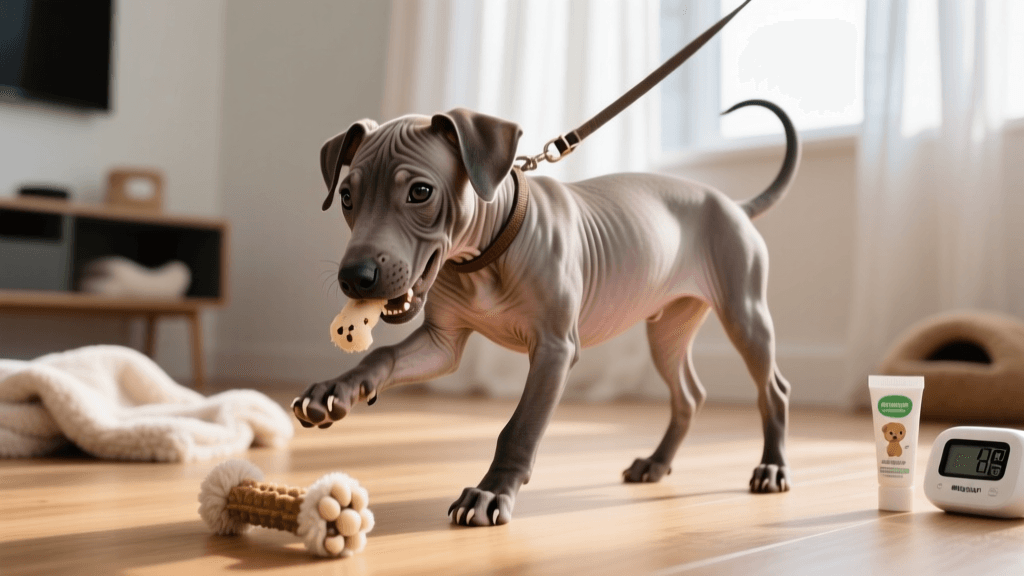
The Xoloitzcuintli carries a unique genetic trait linked to their hairlessness: the FOXI3 gene mutation. This same gene that inhibits hair growth also affects dental development. It is entirely normal and expected for hairless Xolos to be missing several premolars. While this does not affect their ability to eat or live a healthy life, it does mean their teething phase requires careful monitoring.
As noted in the AKC's expert guidelines on puppy teething, puppies begin losing their deciduous (baby) teeth around 12 to 16 weeks of age. Because Xolos may have irregular jaw structures or missing adult teeth, retained baby teeth are a significant risk. If a baby tooth does not fall out by the time the adult tooth erupts, it must be surgically extracted by a veterinarian to prevent severe crowding and periodontal disease.
Safe Teething Relief:
- Avoid hard items like antlers, hooves, or ice cubes, which can fracture the fragile teeth of a growing Xolo.
- Provide soft, textured rubber toys that can be chilled in the refrigerator (not the freezer) to soothe inflamed gums.
- Begin brushing your puppy's teeth daily with a poultry-flavored enzymatic dog toothpaste by week 10 to establish a lifelong habit and monitor dental eruption.
First-Year Feeding Schedule and Nutrition
Xolo puppies are highly active, intelligent, and possess a fast metabolism. They require a high-quality, protein-rich diet to support lean muscle development and joint health, particularly for the miniature and standard varieties which are prone to patellar luxation. Look for a 2026-formulated puppy kibble that lists a named meat (like deboned chicken or salmon) as the first ingredient and includes DHA for cognitive development.
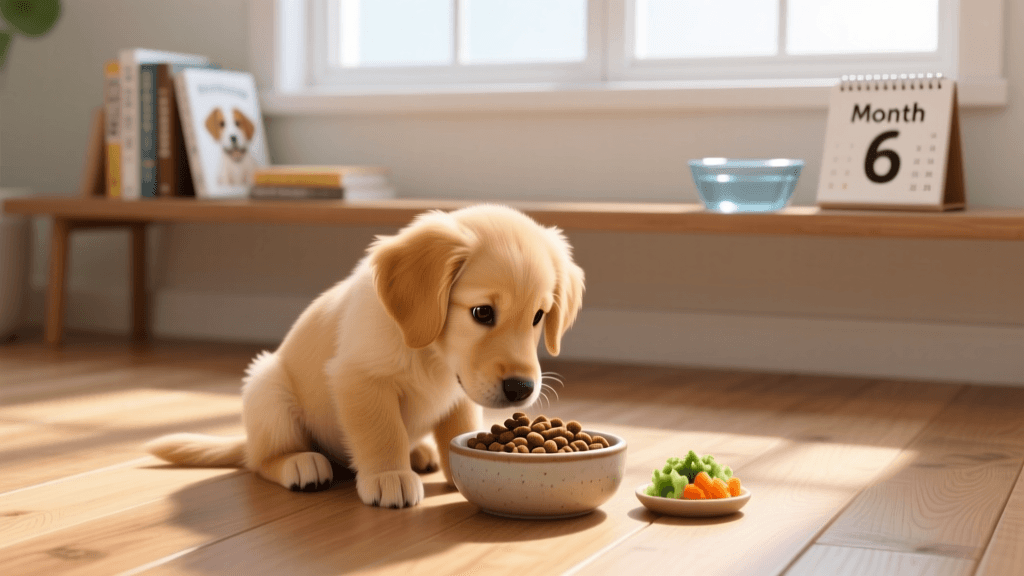
Below is a structured feeding chart for a standard-sized Xolo puppy. Always adjust portions based on your individual puppy's body condition score and your veterinarian's recommendations.
| Puppy Age | Daily Meals | Food Type | Portion Guide (Cups/Day) |
|---|---|---|---|
| 8 - 12 Weeks | 4 | Softened Kibble / Wet Food | 3/4 to 1 Cup |
| 3 - 6 Months | 3 | Dry Kibble (Puppy Formula) | 1 to 1.5 Cups |
| 6 - 9 Months | 2 | Dry Kibble (Puppy Formula) | 1.5 to 2 Cups |
| 9 - 12 Months | 2 | Transition to Adult Formula | 1.5 to 2 Cups |
Joint Support: Discuss adding a glucosamine and chondroitin supplement with your vet around the 6-month mark to support healthy cartilage development as your Xolo's growth plates begin to close.
Early Socialization: Overcoming the 'Velcro Dog' Syndrome
Xolos are famously devoted to their families, often earning the moniker 'Velcro dogs' due to their desire to be in constant physical contact with their owners. However, this intense loyalty can quickly morph into aloofness toward strangers, separation anxiety, or resource guarding if the puppy is not properly socialized during the critical 8 to 16-week window.
According to VCA Hospitals' behavioral guidelines, early socialization is the single most important factor in preventing fear-based aggression and anxiety in adult dogs. For a Xolo, this means exposing them to a wide variety of stimuli in a positive, controlled manner.
The 2026 Socialization Checklist for Xolos:
- Handling Exercises: Daily touch their paws, ears, mouth, and tail. Hairless dogs can become highly sensitive to being touched by strangers if not desensitized early.
- Environmental Exposure: Introduce them to different floor textures (grass, gravel, metal grates), household noises (vacuums, blenders), and varying weather conditions.
- Stranger Interaction: Invite friends of different ages, heights, and appearances into your home. Have them offer high-value treats (like freeze-dried liver) to build positive associations.
- Puppy Kindergarten: Enroll in a force-free, positive-reinforcement puppy class by 10 weeks of age (after their second round of vaccinations) to teach bite inhibition and off-leash play etiquette.
Month-by-Month Developmental Milestones
Tracking your Xolo's development ensures they are hitting crucial physical and behavioral benchmarks. Here is what to expect during the first year:
- Month 2 (8 Weeks): Transition to your home. High sleep requirements (18-20 hours). Begin potty training using a strict schedule (take outside every 2 hours).
- Month 3 (12 Weeks): Fear imprint period begins. Keep experiences positive and avoid overwhelming environments. Teething starts.
- Month 4-5 (16-20 Weeks): Rapid physical growth. Baby teeth fall out. Independence increases; recall training becomes essential.
- Month 6 (24 Weeks): Sexual maturity approaches. Discuss spay/neuter timing with your veterinarian. Transition from 3 to 2 meals a day.
- Month 8-10: The 'teenage' rebellion phase. Expect selective hearing and testing of boundaries. Maintain consistent, patient training routines.
- Month 12: Physical maturity is mostly reached (though standard Xolos may continue filling out until 18 months). Transition to adult food and establish an adult veterinary wellness schedule.
Conclusion
Raising a Xoloitzcuintli puppy in 2026 is a deeply rewarding experience that requires a commitment to specialized skincare, environmental management, and proactive socialization. By understanding the unique physiological and behavioral traits of this ancient breed, you can ensure your hairless companion grows into a healthy, confident, and deeply bonded adult dog. Always partner closely with a veterinarian experienced in hairless breeds to tailor your puppy's care plan to their specific needs.
marcus-aldridge
All our authors care for dogs every day — read more of their work on the authors page.