How To Teach A Dog To Leave It
Learn about how to teach a dog to leave it with expert tips and data-backed advice.
The Science Behind "Leave It"
Teaching a dog to leave something alone on cue is one of the most practical skills in any training programme. Whether your dog lunges at dropped food, fixates on squirrels, or tries to investigate hazardous objects on a walk, a reliable "leave it" cue can prevent injury, reduce conflict, and strengthen the bond between dog and handler. The command works by teaching the dog that disengaging from a target and redirecting attention to you produces a better outcome than pursuing the original item.
The behavioural mechanism at work is operant conditioning, specifically the differential reinforcement of an incompatible behaviour (DRI). When a dog turns away from a forbidden object and looks at the handler, that behaviour is incompatible with grabbing the object. Reinforcing the incompatible behaviour consistently causes it to increase in frequency and reliability. The Association of Professional Dog Trainers (APDT, 2022) recommends force-free, reward-based methods for teaching impulse control cues precisely because they produce faster acquisition and better long-term retention than aversive techniques.
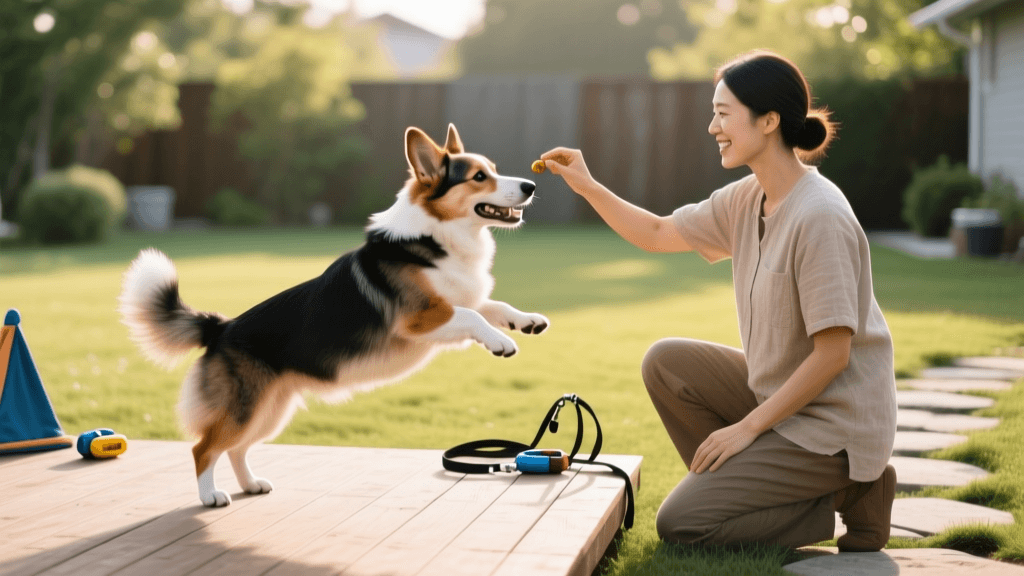
Before beginning, gather high-value treats your dog does not receive at other times — small pieces of cooked chicken, cheese, or commercial training treats work well. Keep them in a treat pouch on your hip so delivery is fast. Timing matters enormously: reinforcement delivered within 1 to 2 seconds of the desired behaviour is significantly more effective than delayed reward, according to research cited by the Certification Council for Professional Dog Trainers (CCPDT, 2021).
Setting Up Your Training Environment
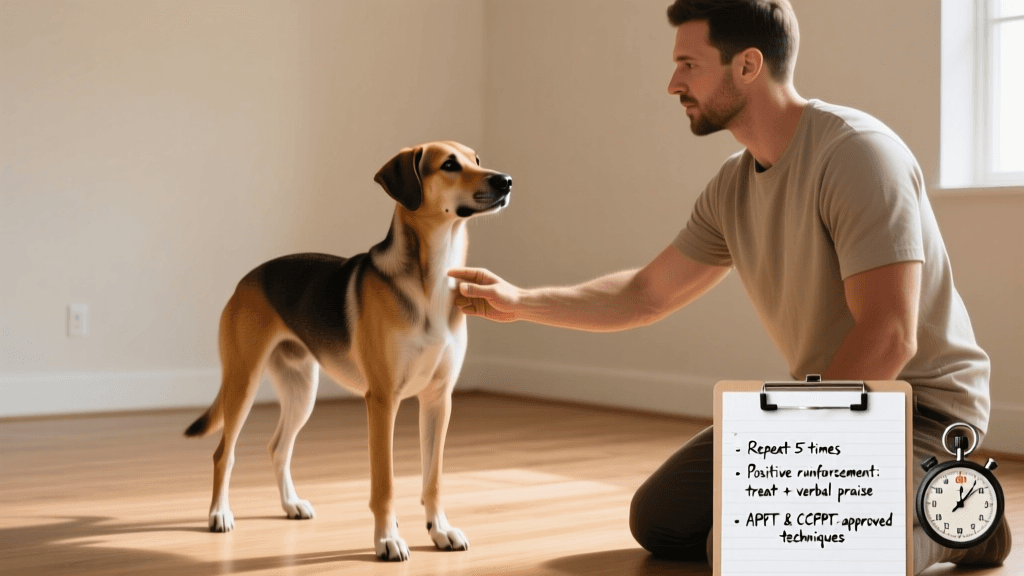
Start every new skill in a low-distraction environment. A quiet room inside your home is ideal for the first 5 to 7 sessions. External distractions — other pets, street noise, children playing — compete for your dog's attention and make it harder for them to succeed early on. Success in training is not accidental; it is engineered by controlling the environment until the behaviour is fluent.
Keep initial sessions short. Research from the University of Veterinary Medicine Vienna suggests that dogs show diminishing engagement after approximately 10 to 15 minutes of active training. Aim for 3 to 5 minute sessions, repeated 2 to 3 times per day. This distributed practice schedule produces faster learning than a single long session.
What You Will Need
- High-value treats cut into pea-sized pieces (roughly 1 cm cubes)
- Low-value treats or kibble to use as the "leave it" target item
- A treat pouch or easily accessible pocket
- A flat collar or well-fitted harness — no choke chains or prong collars
- A quiet, enclosed space for early sessions
- A clicker (optional but useful for precise timing)
Choosing the Right Reward
Not all treats are equal in a dog's eyes. A reward hierarchy helps you match reinforcement value to task difficulty. Easy behaviours in low-distraction settings can be rewarded with kibble or a standard training treat. As difficulty increases — moving outdoors, adding distance, or working around other dogs — you need to increase reward value proportionally. Cooked chicken breast, small pieces of hot dog, or freeze-dried liver typically sit at the top of most dogs' preference lists.
If your dog is not food motivated, a brief game of tug with a favourite toy can serve as the reinforcer. The principle remains the same: the reward must be something the dog genuinely wants in that moment, not something you assume they should want.
Phase One: Teaching the Foundation Behaviour
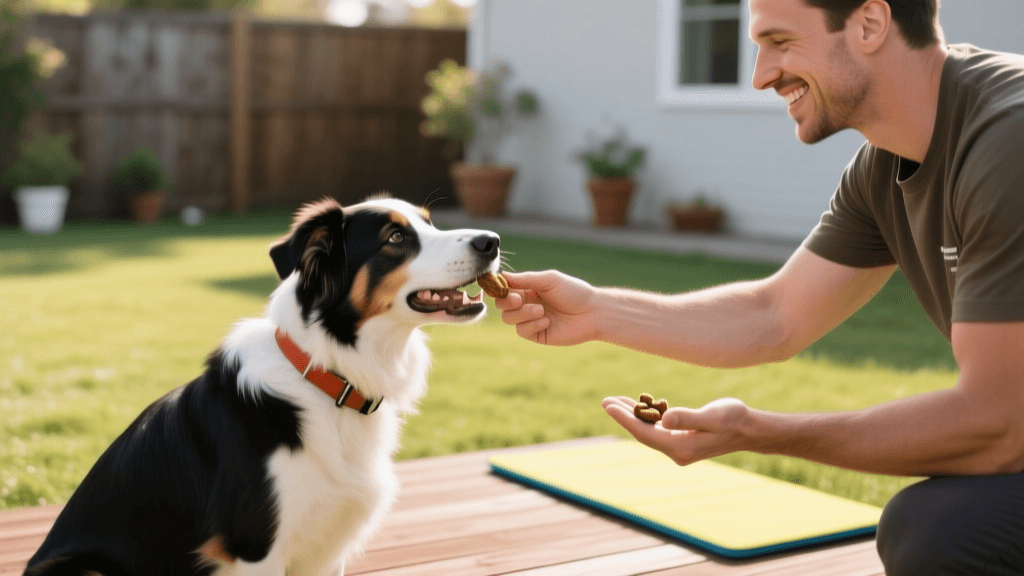
Begin with what trainers call the "closed fist" method. Place a low-value treat in your closed fist and hold it at your dog's nose level. Your dog will likely sniff, lick, paw, and nudge your hand. Do not say anything yet — no cue, no "no," no corrections. Simply wait. The moment your dog pulls their nose away from your fist, even for a fraction of a second, mark the behaviour with a clicker click or a verbal marker like "yes," then immediately deliver a high-value treat from your other hand or your treat pouch. Never give the treat from the closed fist.
Repeat this sequence 10 times per session. Most dogs begin to pull away from the fist within 3 to 5 repetitions once they understand that disengaging produces the better reward. After 2 to 3 sessions where your dog is consistently pulling away within 2 seconds of presentation, you are ready to add the verbal cue.
To add the cue, say "leave it" in a calm, neutral tone immediately before presenting your closed fist. The sequence becomes: say "leave it," present fist, dog disengages, mark, reward. Practice this 10 times per session for 3 to 4 sessions before moving to the next phase.
Common Mistakes at This Stage
The most frequent error is repeating the cue multiple times. Saying "leave it, leave it, LEAVE IT" teaches the dog that the first repetition carries no meaning. Say the cue once, then wait. If your dog does not disengage within 5 seconds, simply close the session, take a short break, and try again. Reducing the value of the target item or increasing the value of the reward often resolves the problem.
A second common mistake is delivering the reward too slowly. If more than 2 seconds pass between the dog disengaging and receiving the treat, the dog may not connect the reward to the disengagement behaviour. Practice your treat delivery mechanics separately if needed — reach for the treat pouch, pinch a treat, and deliver it smoothly in one motion.
Phase Two: Open Hand and Floor Work
Once your dog reliably disengages from a closed fist on the first cue, open your hand flat with the treat visible on your palm. Say "leave it" and present your open palm. If your dog moves toward the treat, close your fist immediately — do not let them self-reward. When they pull back, mark and reward from the other hand. This phase typically takes 4 to 6 sessions of 10 repetitions each before the dog is consistently successful.
The next step is placing the treat on the floor. Put your foot over it immediately after placing it, say "leave it," and wait for disengagement. Mark and reward from your treat pouch. Gradually reduce how quickly you cover the treat until you can place it on the floor uncovered, say "leave it," and your dog looks away without you needing to block access.
"Impulse control is not about suppressing a dog's natural drives — it is about teaching the dog that self-regulation is the most rewarding strategy available to them." — Karen Overall, MA, VMD, PhD, DACVB, in Manual of Clinical Behavioral Medicine for Dogs and Cats (Elsevier, 2013)
Phase Three: Generalising to Real-World Scenarios
A behaviour trained only in your living room is not a trained behaviour — it is a behaviour that works in your living room. Generalisation requires deliberately practising the cue across different locations, with different objects, and at varying distances. The CCPDT's Handbook of Behavior Adjustment Training (2021) recommends a minimum of 5 different environments before considering a cue reliably generalised.
Begin outdoor work in a low-traffic area such as a quiet park or a fenced backyard. Use a long line (4 to 6 metres) for safety during this phase so your dog cannot self-reward by reaching the target before you can intervene. Practice with objects your dog commonly encounters: food wrappers, other dogs' toys, dropped items on the pavement. Each new object and location is essentially a new training challenge at first.
Distance is a separate variable to train. Start with the target item 30 cm from your dog and gradually increase distance over multiple sessions. At 1 metre, then 2 metres, the dog must learn to disengage from something further away and orient back to you. This is significantly harder and requires returning to high-value rewards even if your dog has been working well with lower-value treats at close range.
Building Duration and Reliability
A "leave it" that only works for 2 seconds is limited in practical value. Once your dog is reliably disengaging on cue, begin adding a brief duration before marking and rewarding. After the dog disengages, count silently to 2, then mark and reward. Over the following sessions, extend this to 5 seconds, then 10, then 15. Do not increase duration by more than 20 to 30 percent per session to avoid frustrating the dog.
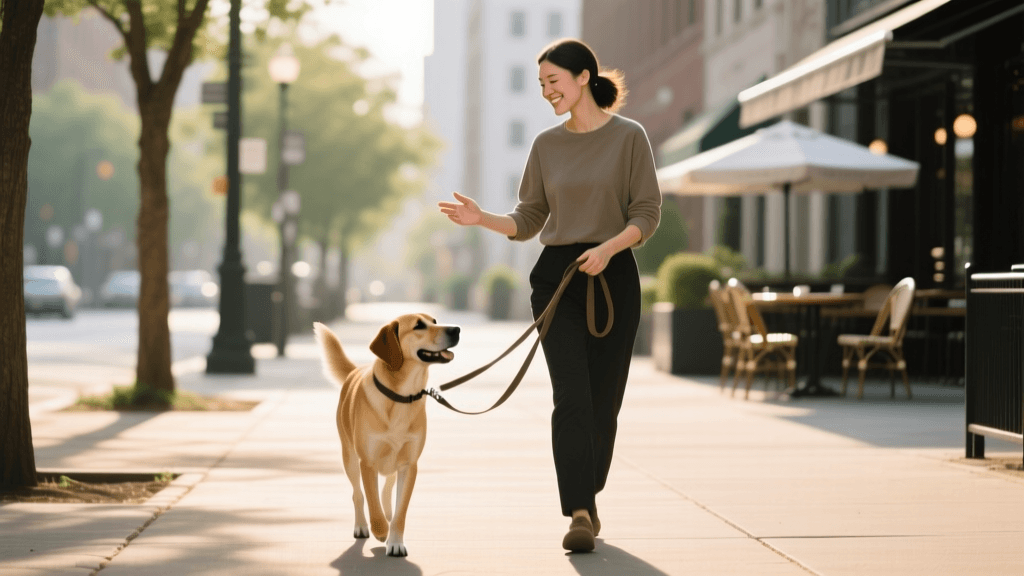
Combine duration with movement. Ask your dog to leave an item on the floor, then walk past it together on a loose lead. This mirrors real-world scenarios where you need the dog to ignore something while continuing to move. Practise this on your regular walking routes, using the same high-value treats you used in early training until the behaviour is solid.
| Training Phase | Target Success Rate | Sessions to Advance | Reward Value |
|---|---|---|---|
| Closed fist foundation | 90% on first cue | 3–4 sessions | High |
| Open hand / palm | 90% on first cue | 4–6 sessions | High |
| Floor work (covered) | 90% on first cue | 3–5 sessions | High |
| Floor work (uncovered) | 85% on first cue | 5–7 sessions | High to medium |
| Outdoor generalisation | 80% on first cue | Ongoing | High |
| Duration and movement | 80% on first cue | Ongoing | Variable |
Troubleshooting Persistent Challenges
If your dog consistently fails to disengage, the most likely cause is that the target item is more rewarding than what you are offering. This is not a stubbornness problem — it is a maths problem. Increase the value of your reward, decrease the value of the target item, or both. A dog that ignores chicken for a piece of cheese on the floor needs a higher-value reward, not a firmer correction.
Dogs with a strong predatory chase response — terriers, sighthounds, and many herding breeds — may find moving targets (squirrels, cyclists, other dogs) extremely difficult to leave. For these dogs, the Grisha Stewart Behaviour Adjustment Training (BAT) protocol, developed and taught through the Ahimsa Dog Training school in Seattle, Washington, offers a complementary approach that addresses the emotional arousal underlying the behaviour rather than just the surface response.
If your dog has already grabbed an item before you can cue "leave it," do not chase them or attempt to pry the item from their mouth — this can trigger resource guarding. Instead, use a trade: offer a high-value treat in exchange for the item. Over time, practise the trade game deliberately so your dog learns that giving things up leads to good outcomes. The Victoria Stilwell Academy for Dog Training and Behavior, based in Atlanta, Georgia, includes trade protocols as a core component of impulse control curricula for exactly this reason.
- Identify the specific scenario where "leave it" is failing (indoors, outdoors, specific objects, moving targets).
- Return to the last phase where your dog was 90% successful and rebuild from there.
- Increase reward value for the specific challenging scenario.
- Reduce the intensity of the distraction — use a stationary version of the trigger before working with a moving one.
- Add management tools (long line, head halter) to prevent self-rewarding while training continues.
Consistency across all household members is essential. If one person enforces "leave it" and another allows the dog to take items freely, the cue will not generalise reliably. Hold a brief household meeting, demonstrate the technique, and agree on a single consistent cue word. Some families use "leave it" for stationary objects and "off" for jumping or contact — whatever system you choose, apply it uniformly.
Progress is rarely linear. Expect regression when you change environments, increase distraction, or when your dog is tired, unwell, or over-threshold. Regression is not failure — it is information. It tells you that the behaviour is not yet fluent enough to hold under those specific conditions, and that you need more practice at a lower difficulty level before raising the criteria again. Patience, consistency, and a well-stocked treat pouch will get you there.
Dr. Hannah Wickes
All our authors care for dogs every day — read more of their work on the authors page.