How To Stop A Dog Jumping Up On People
Learn about how to stop a dog jumping up on people with expert tips and data-backed advice.
Understanding the Jumping Behavior
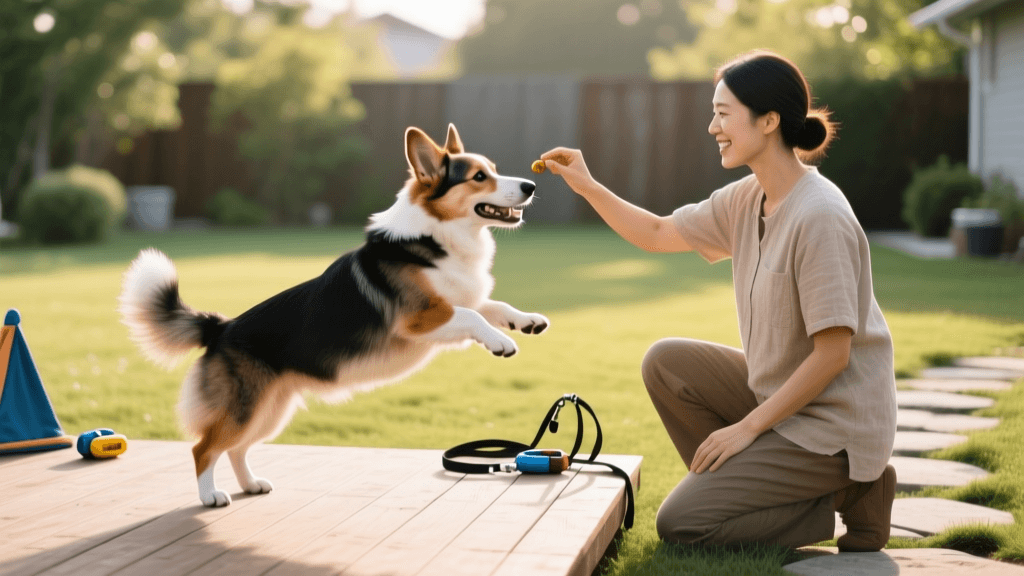
Dogs jump up on people for one simple reason: it works. From the moment a puppy first leaps toward a human face and receives eye contact, laughter, or even a gentle push away, the behavior gets reinforced. The dog learns that jumping produces a reaction, and any reaction — positive or negative — is more rewarding than being ignored. This is the core principle that makes jumping so persistent and, once understood, so trainable.
Research published by the Association of Pet Dog Trainers (APDT, 2019) found that jumping is among the top three most-reported problem behaviors in pet dogs, cited by 67% of owners surveyed. Yet the same study noted that with consistent positive reinforcement protocols, 89% of dogs showed measurable improvement within 4 weeks of structured training. The gap between those numbers tells you everything: jumping is common, but it is also highly responsive to the right approach.
Before starting any training program, it helps to understand what your dog is actually seeking. In most cases, jumping is an attention-seeking behavior rooted in social excitement. Dogs are contact-oriented animals. Young dogs in particular have not yet learned that keeping four paws on the floor is the more effective strategy for getting what they want. Your job as a trainer is to teach them exactly that.
The Foundation: Positive Reinforcement Over Punishment
Punishment-based methods — kneeing the dog in the chest, stepping on their back paws, or grabbing their front legs — are still recommended in some older training manuals. Current behavioral science does not support these approaches. A 2020 study from the University of Bristol's School of Veterinary Sciences found that dogs trained with aversive methods were 2.2 times more likely to display anxiety-related behaviors compared to dogs trained with reward-based methods. Punishment may suppress jumping temporarily, but it does not teach the dog what to do instead.
Karen Pryor, whose foundational work on operant conditioning and clicker training has shaped modern dog training since the 1980s, describes the principle clearly: "You get what you reinforce." If you want a dog that sits calmly when greeting people, you must reinforce calm sitting — not simply punish jumping. The dog needs a replacement behavior, and that behavior needs to pay off consistently.
Positive reinforcement training works by marking and rewarding the behavior you want. The marker — a clicker, a verbal "yes," or a specific word — tells the dog precisely which action earned the reward. Timing matters enormously. Research from the Companion Animal Sciences Institute (CASI, 2021) shows that a reward delivered within 1.3 seconds of the target behavior produces significantly faster learning than rewards delayed by 3 or more seconds. Get your timing sharp before you start.
What Counts as Reinforcement
Reinforcement is anything the dog finds rewarding, and this varies by individual. For most dogs, small, soft, high-value food treats — chicken, cheese, or commercial training treats — work best in early training because they are fast to deliver and easy to consume. A treat that takes 30 seconds to chew interrupts the training flow. Aim for pieces no larger than a pea.
Praise and play can also serve as reinforcers once the behavior is established, but food tends to produce faster initial learning. As the behavior becomes reliable, you can shift to a variable reinforcement schedule — rewarding every third or fourth correct response — which actually strengthens the behavior over time, a phenomenon well-documented in B.F. Skinner's original operant conditioning research.
Step-by-Step: Teaching Four Paws on the Floor
The most effective approach to stopping jumping is not to train "don't jump" but to train "keep four paws on the floor." These are not the same thing. The first is an absence of behavior; the second is a specific, trainable action that you can mark and reward.
- Set up a controlled greeting scenario. Ask a helper to approach your dog on leash. Your dog should be on a 6-foot leash attached to a flat collar or harness — not a retractable lead.
- Wait for four paws on the floor. The moment all four paws are on the ground, mark immediately with your clicker or verbal marker and deliver a treat at nose level. Delivering the treat low keeps the dog's head down and reinforces the grounded position.
- Remove attention for jumping. The instant your dog's front paws leave the ground, turn your back, cross your arms, and look away. No eye contact, no speech, no touch. Wait for four paws, then turn back and mark and reward.
- Repeat in short sessions. Keep sessions to 3–5 minutes. Dogs learn better in multiple short sessions than in one long one. Aim for 3 sessions per day during the initial training phase.
- Generalize to new people. Once your dog is reliable with your helper, practice with at least 5–10 different people in different locations. Behavior learned in one context does not automatically transfer to others.
Certified Professional Dog Trainer Victoria Stilwell, founder of the Victoria Stilwell Academy for Dog Training and Behavior in Atlanta, Georgia, emphasizes that consistency across all household members is non-negotiable. "If one person allows jumping and another doesn't, the dog learns that jumping works sometimes — and intermittent reinforcement makes the behavior more persistent, not less," she notes in her training curriculum.
Adding a Sit as an Incompatible Behavior
Once your dog understands that four paws on the floor earns rewards, you can raise the criteria by asking for a sit during greetings. A dog cannot simultaneously sit and jump — these are physically incompatible behaviors. This is called differential reinforcement of an incompatible behavior (DRI), and it is one of the most reliable tools in applied behavior analysis.
To add the sit, wait for your dog to offer four paws on the floor, then cue "sit" before the greeter approaches. Mark and reward the sit heavily. Over 10–15 repetitions, the dog begins to anticipate that greetings predict the sit cue, and eventually will offer the sit automatically without being asked. This is your goal: a dog that defaults to sitting when a person approaches.
Managing the Environment During Training
Training takes time, and during that time your dog will still encounter people. Management prevents the jumping behavior from being practiced and reinforced while you are building the new habit. Use a leash indoors during high-traffic times, baby gates to control access to the front door, and a "wait" cue to keep your dog back while guests enter. Every time your dog successfully jumps on someone, that behavior gets one more repetition of reinforcement — management limits those repetitions.
Working With Highly Excitable Dogs
Some dogs are so aroused during greetings that they cannot process training cues at all. If your dog is barking, spinning, and leaping uncontrollably the moment a guest arrives, the arousal level is too high for learning to occur. You need to lower the threshold before training can be effective.
The San Francisco SPCA's behavior department recommends a protocol called "calm arrivals": ask guests to enter without speaking to or looking at the dog for the first 60–90 seconds. This removes the social trigger that spikes arousal. Once the dog settles — even slightly — the greeter can calmly acknowledge them. Over repeated exposures, the dog learns that arrivals are not high-drama events, and the baseline arousal level drops enough for training to take hold.
For dogs with very high arousal, structured exercise before anticipated greeting situations can help. A 20–30 minute walk or play session approximately 30 minutes before guests arrive reduces excess energy and makes the dog more capable of responding to training cues. This is not a substitute for training, but it creates better conditions for learning.
"The dog that jumps is not being dominant or disrespectful — it is being a dog. Our job is not to suppress that enthusiasm but to redirect it into behaviors that work for everyone in the household." — Dr. Ian Dunbar, founder of the Association of Pet Dog Trainers (APDT) and the Center for Applied Animal Behavior, Berkeley, California
Common Mistakes That Slow Progress
Even trainers who understand the theory often make practical errors that undermine their results. The following table outlines the most frequent mistakes and their corrections:
| Mistake | Why It Backfires | Correction |
|---|---|---|
| Saying "no" or "off" while the dog jumps | Verbal attention reinforces the behavior | Turn away silently; remove all attention |
| Pushing the dog down with hands | Physical contact is rewarding for many dogs | Cross arms, turn back, no touch |
| Rewarding the sit after the dog has already jumped | Reinforces the jump-then-sit sequence | Only reward sits that occur before jumping begins |
| Inconsistent rules across family members | Creates intermittent reinforcement, strengthening jumping | Brief all household members before starting |
| Skipping generalization to new people and places | Behavior stays context-specific | Practice with minimum 10 different people |
Inconsistency is the single biggest obstacle most owners face. A 2018 survey conducted by the Kennel Club of Great Britain found that 74% of owners who reported failed training attempts identified inconsistent application of rules as a contributing factor. Training a dog is not just about what you do in formal sessions — it is about every interaction, every greeting, every moment the dog tests whether the old strategy still works.
Maintaining the Behavior Long-Term
Once your dog reliably keeps four paws on the floor during greetings, the work is not finished. Behaviors that are no longer reinforced will eventually extinguish — a process called extinction. To maintain the greeting behavior, continue to occasionally reward your dog for calm greetings, even after the behavior seems solid. A variable reinforcement schedule, where rewards come unpredictably rather than every time, produces the most durable behavior.
Expect occasional regression, particularly after periods of high excitement, illness, or changes in the household. A dog that has not seen a particular person in months may revert to jumping out of excitement. When this happens, do not panic and do not punish. Simply return to the basics: remove attention for jumping, mark and reward four paws on the floor, and within a few sessions the behavior will return to baseline. Regression is normal and does not mean the training has failed.
- Continue rewarding calm greetings at least once every 5–10 interactions, even after the behavior is established.
- Brief new visitors before they interact with your dog — a 30-second explanation prevents them from accidentally reinforcing jumping.
- If your dog attends doggy daycare or boarding, inform staff of your training protocol so the behavior is not undermined in your absence.
- Revisit training after any significant life change: a new baby, a move, a new pet, or extended time apart can temporarily destabilize learned behaviors.
The dogs that maintain the best greeting manners long-term are those whose owners treat training as an ongoing relationship rather than a one-time fix. Every calm greeting your dog offers is a small success worth acknowledging. Over time, those small successes accumulate into a dog that is genuinely pleasant to live with and a joy to introduce to others.
Marcus Aldridge
All our authors care for dogs every day — read more of their work on the authors page.