Dog Etiquette In Public Places
Learn about dog etiquette in public places with expert tips and data-backed advice.
Sharing Spaces: What Good Dog Etiquette Actually Looks Like
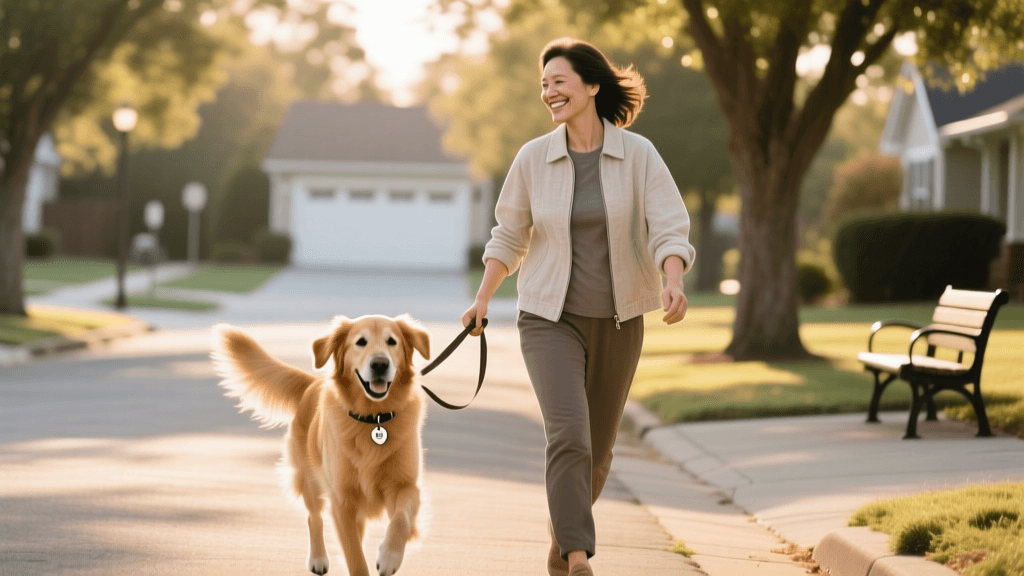
Taking your dog out into the world is one of the genuine pleasures of dog ownership. Whether it's a morning walk through a busy park, a trip to a dog-friendly café, or navigating a crowded high street, the experience can be joyful — or stressful — depending largely on how prepared you and your dog are. Good etiquette isn't about being overly cautious or apologetic for having a dog. It's about making shared spaces work for everyone: other dog owners, people who are nervous around dogs, children, cyclists, and the dogs themselves.
The good news is that most etiquette problems are solvable with a bit of knowledge, some consistent training, and the right equipment. This guide covers the practical realities of day-to-day dog ownership in public, drawing on guidance from Dogs Trust, the RSPCA, and the lived experience of navigating real places with real dogs.
On-Lead Behaviour and When It Matters
One of the most common flashpoints in public spaces is the off-lead dog approaching an on-lead dog. It happens constantly in parks, and it causes a disproportionate amount of conflict. An on-lead dog may be on the lead for any number of reasons: it's in training, it's reactive, it's recovering from surgery, or its owner simply doesn't feel confident letting it off yet. None of these reasons are visible to the owner of the bounding Labrador heading over at full speed.
Dogs Trust guidance consistently emphasises that a dog running up to another dog uninvited is not "just being friendly" — it's a potential trigger for fear, aggression, or injury. According to Dogs Trust's 2022 annual behaviour survey, reactive behaviour in dogs is one of the top three reasons owners seek professional training help, with over 40% of respondents reporting their dog had shown some form of reactivity in public spaces.
The practical rule is straightforward: if another dog is on a lead, keep yours on too until you've checked with the owner. A simple "Is it okay if they meet?" takes three seconds and prevents a great deal of stress. If the other owner says no, accept that without question.
Lead Length and Control
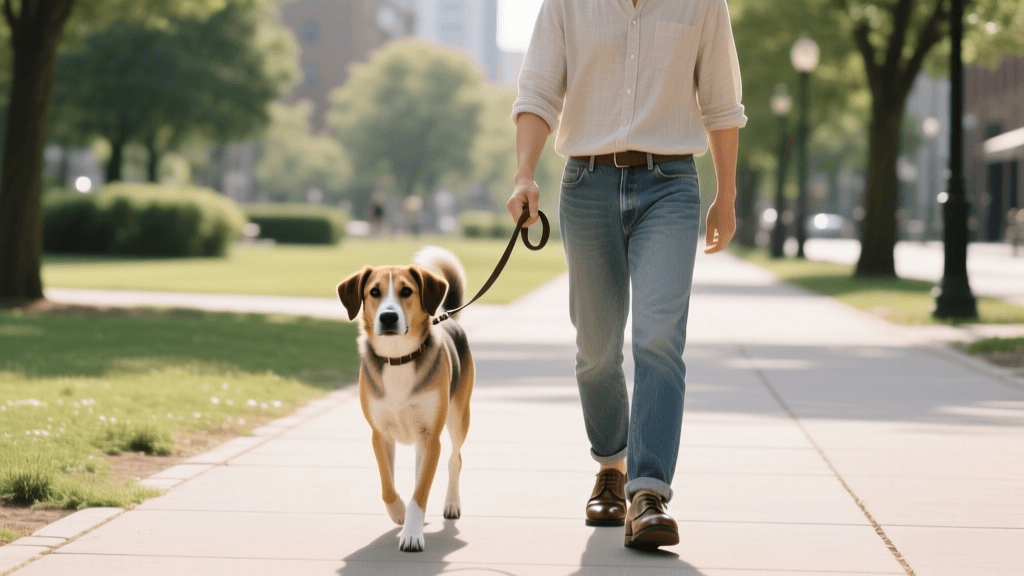
Extendable leads are popular, but they come with real limitations in busy environments. A dog on a 5-metre flexi-lead in a crowded park has significantly less predictable movement than one on a standard 1.8-metre fixed lead. The cord can also be a trip hazard for cyclists and joggers, and it gives the owner far less immediate control if the dog lunges or bolts.
For busy urban environments, a fixed lead of between 1.2 and 1.8 metres is generally recommended by trainers. Brands like Ruffwear and Julius-K9 make durable, well-fitting options with padded handles that reduce strain on your wrist during longer walks. If you want to give your dog more freedom in open spaces, a long-line training lead — typically 10 metres — is a safer alternative to a flexi-lead because it doesn't retract and gives you more physical control.
Harnesses vs Collars
The RSPCA advises that for dogs who pull, a well-fitted harness distributes pressure more safely than a collar, which can put strain on the trachea and neck. Front-clip harnesses, such as the PerfectFit or the Ruffwear Front Range, redirect a pulling dog's momentum without causing discomfort. This matters in public spaces where unexpected distractions — a squirrel, a child on a scooter, another dog — can cause sudden lunges.
Poo Bags, Bins, and the Basics of Public Hygiene
Dog fouling remains one of the most cited complaints about dog owners in public spaces. A 2023 survey by Keep Britain Tidy found that 57% of non-dog-owning respondents listed dog mess as their primary concern about dogs in shared spaces. It's also a genuine public health issue: Toxocara canis, a roundworm found in dog faeces, can cause toxocariasis in humans, with children being particularly vulnerable due to contact with contaminated soil.
The mechanics are simple: carry more bags than you think you need, pick up immediately, and use the bins provided. Most local councils in England and Wales have dog waste bins within 500 metres of popular walking routes, though provision varies. If no bin is available, double-bag the waste and take it to the nearest general litter bin — it's legal and preferable to leaving it.
Biodegradable poo bags are worth the marginal extra cost. Brands like Beco Pets and Adios produce bags that break down in landfill conditions, unlike standard plastic bags which can persist for hundreds of years. A roll of 15 bags typically costs under £1.50 and fits in any pocket.
"Dog fouling is not just antisocial — it's a public health risk. Owners have a legal responsibility to clean up after their dogs in public places, and failure to do so can result in a fixed penalty notice of up to £100 in England." — Keep Britain Tidy, 2023
Dog-Friendly Venues: Cafés, Pubs, and Shops
The number of dog-friendly venues in the UK has grown substantially over the past decade. A 2023 report by the pet industry trade body PFMA estimated that approximately 13 million dogs live in UK households, and the hospitality sector has responded accordingly. Chains like Brewdog, Wetherspoons, and many independent pubs now actively welcome dogs, as do a growing number of cafés and even some retail spaces.
But being welcomed doesn't mean anything goes. Dogs in indoor venues should be able to settle quietly under a table or beside a chair without approaching other customers, begging for food, or barking. This requires a dog that has been trained to settle on cue — a skill that takes consistent practice but is entirely achievable for most dogs with regular work.
Teaching a Settle
A settle is simply teaching your dog to lie down calmly in a designated spot, even in a distracting environment. Start at home with a mat or blanket, rewarding your dog for lying on it with high-value treats. Gradually increase the duration and introduce mild distractions. Once reliable at home, practise in progressively busier environments — a quiet café terrace before a busy indoor space.
Dogs Trust recommends building this skill over several weeks rather than expecting it immediately in a new environment. Bringing a familiar mat or blanket to a venue helps, as the dog associates the object with the settle behaviour regardless of location.
It's also worth calling ahead to any venue you plan to visit. Even dog-friendly places may have restrictions — dogs allowed in the garden but not indoors, for example, or a maximum of one dog per table. Checking in advance avoids awkward situations on arrival.
Children, Strangers, and Unexpected Interactions
Children are often the most unpredictable element in any public space interaction involving dogs. They move quickly, make sudden noises, and frequently approach dogs without asking — sometimes running directly at them with arms outstretched. Even a well-socialised, gentle dog can be startled by this, and a startled dog may snap or jump up.
The RSPCA's Be Dog Smart campaign, which has reached over 1 million children in UK schools since its launch, teaches children to always ask before touching a dog and to approach calmly from the side rather than head-on. As a dog owner, you can support this by actively managing interactions: step between your dog and an approaching child if needed, ask the child to wait and crouch down, and let your dog approach in its own time rather than pushing it toward the child.
If your dog is uncomfortable with children or strangers, that's not a character flaw — it's information. Work with a qualified trainer (look for members of the Association of Pet Behaviour Counsellors or the Institute of Modern Dog Trainers) to build positive associations gradually. In the meantime, advocate for your dog in public by politely but clearly telling people your dog needs space.
Practical Checklist for Public Outings
Before heading out, it helps to run through a quick mental checklist. The following covers the essentials for most public outings:
- At least 3–4 poo bags per hour of walking expected
- Water and a collapsible bowl for walks over 30 minutes, especially in warm weather
- A well-fitted harness or collar with an up-to-date ID tag (legally required in England under the Control of Dogs Order 1992)
- High-value treats for reinforcing calm behaviour and recall
- A fixed lead appropriate for the environment
- Knowledge of your dog's triggers and a plan for managing them
For longer outings or travel, the following table summarises common public settings and the key etiquette considerations for each:
| Setting | Lead Required? | Key Considerations |
|---|---|---|
| Urban park (general area) | Check local bylaws | Recall reliability essential before off-lead; avoid approaching on-lead dogs |
| Designated dog exercise area | Usually off-lead permitted | Monitor interactions; remove dog if conflict arises |
| Dog-friendly café or pub | Yes, indoors | Settle behaviour required; bring a mat; don't allow begging |
| High street / shopping area | Yes | Keep close to owner; avoid blocking pavements; be aware of cyclists |
| Beach (seasonal restrictions) | Varies by season and zone | Check local council rules; many UK beaches ban dogs May–September |
| Public transport | Yes | TfL allows dogs on all services; must be under control; muzzle not required but advisable for anxious dogs |
Noise, Barking, and Managing Excitement in Public
A dog that barks persistently in public — at other dogs, at cyclists, at people — is stressful for its owner and disruptive to everyone nearby. Barking in public is usually driven by one of three things: excitement, frustration, or fear. Each requires a different approach, which is why blanket corrections rarely work.
For excitement barking — the dog that loses its mind when it sees another dog — the most effective long-term strategy is teaching an incompatible behaviour. A dog that is focused on its owner and performing a sit or a hand-touch cannot simultaneously be lunging and barking. This takes time to build, but even 10 minutes of focused training per day produces measurable results within 4–6 weeks for most dogs.
For fear-based reactivity, the approach is different. Punishment — including shouting, lead corrections, or spray deterrents — increases anxiety and typically makes reactivity worse over time. The RSPCA explicitly advises against aversive training methods, noting that they can damage the human-dog bond and increase the risk of aggression. Counter-conditioning, where the dog learns to associate the trigger with something positive, is the evidence-based approach and is best done with professional guidance.
- Identify your dog's threshold distance — the point at which it notices the trigger but hasn't yet reacted
- Work consistently at or just below that distance, rewarding calm behaviour with high-value treats
- Gradually decrease the distance over multiple sessions as the dog's response improves
- Avoid flooding — don't push the dog past its threshold, as this sets back progress
- Track progress over weeks, not days; reactivity work is a long game
Hyde Park in London, Hampstead Heath, and Victoria Park in East London are all popular training grounds for reactive dog owners because of their size — there's enough space to work at distance from other dogs while still exposing the dog to the stimulus. Many professional trainers run group reactive dog classes in these and similar locations across the UK.
The broader point is that good public etiquette with dogs is not a fixed standard you either meet or don't. It's an ongoing practice, shaped by your dog's individual needs, the specific environment you're in, and the people and animals you share it with. The owners who navigate public spaces most successfully are those who stay observant, stay flexible, and keep their dog's welfare — and everyone else's comfort — genuinely in mind.
Robin Maitland
All our authors care for dogs every day — read more of their work on the authors page.