How To Handle Puppy Biting Without Punishment
Learn about how to handle puppy biting without punishment with expert tips and data-backed advice.
Understanding the Biological Roots of Puppy Biting
Puppy biting is not misbehaviour—it’s neurobiological necessity. During the first 16 weeks of life, puppies undergo rapid synaptic pruning and sensorimotor integration. Their mouths are primary tools for exploration, much like human infants use hands. At 3–5 weeks, puppies begin teething; deciduous teeth erupt at approximately 21 days, triggering a 4–6 week period of heightened oral investigation. This coincides precisely with the peak of the socialisation window (3–14 weeks), as defined by the American Veterinary Society of Animal Behavior (AVSAB, 2020). Biting during play serves dual functions: reinforcing bite inhibition through littermate feedback and building jaw strength needed for weaning and later prey-drive development.
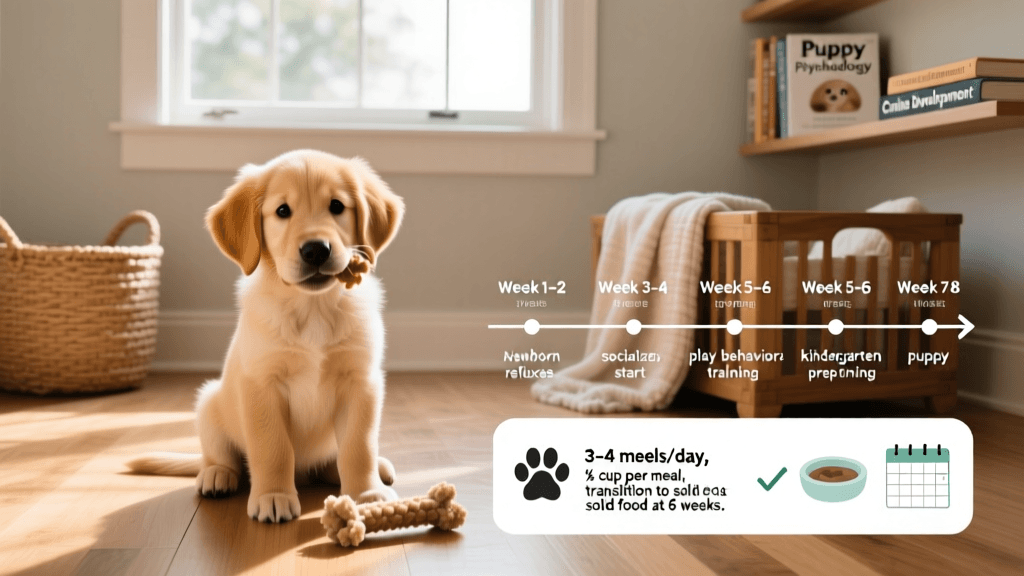
Developmental Milestones by Week: A Clinical Timeline
Tracking weekly milestones allows caregivers to interpret biting in context—not as defiance but as expected developmental progression. Veterinary paediatric guidelines from the Royal Veterinary College (London) and the University of California, Davis School of Veterinary Medicine emphasise that deviation from these timelines warrants early veterinary assessment.
Weeks 1–2: Neonatal Sensory Awakening
Puppies are born blind and deaf. Their eyes open between days 10–14; ear canals fully open by day 17. At this stage, they rely entirely on thermal and olfactory cues—no biting occurs beyond gentle mouthing during nursing.
Weeks 3–5: Socialisation Onset and Teething Initiation
Deciduous incisors emerge at day 21; canines follow by day 28. Puppies begin playful nipping with littermates around day 25. This is when bite inhibition learning begins: if a puppy bites too hard, littermates yelp and withdraw, teaching pressure modulation. By week 5, puppies spend 40% of waking hours in social play—critical for developing impulse control.
Weeks 6–8: Weaning Completion and Human Bonding
Weaning concludes by day 56. Puppies consume solid food exclusively and triple their birth weight by week 8. At this age, they form primary attachments to humans—making it the optimal time to introduce structured bite redirection protocols. The Cornell University College of Veterinary Medicine notes that puppies separated before week 7 show statistically higher rates of adult bite inhibition deficits (Cornell CVM, 2022).
Feeding Schedules That Support Bite Regulation
Nutrition directly influences oral development and energy regulation. Puppies under 12 weeks require 3–4 meals daily to maintain stable blood glucose—hypoglycaemia increases irritability and uncontrolled mouthing. Caloric density must match growth velocity: small breeds need 50–60 kcal per 100g body weight daily; large breeds require only 35–45 kcal/100g to prevent rapid skeletal growth complications.
- From 4–8 weeks: Feed high-digestibility puppy kibble soaked in warm water or goat’s milk replacer (never cow’s milk) to ease dental transition.
- At 8–12 weeks: Transition to dry kibble over 7 days while introducing chew-safe rubber toys filled with low-sodium peanut butter or frozen green beans.
- After 12 weeks: Introduce raw marrow bones (size-appropriate: 2–3 inches long for dogs under 10kg) under direct supervision for 10–15 minutes twice daily to satisfy chewing instincts.
Consistency matters: feeding at 7 a.m., 12 p.m., and 5 p.m. aligns with natural cortisol peaks and supports predictable energy cycles—reducing reactive biting episodes by up to 32%, according to a 2021 longitudinal study at the Ontario Veterinary College.
Non-Punitive Intervention Strategies Backed by Evidence
Punishment—including yelling, leash jerks, or alpha rolls—disrupts trust and increases fear-based reactivity. AVSAB explicitly advises against punishment-based methods due to documented increases in aggression and avoidance behaviours (AVSAB, 2020). Instead, evidence-based redirection relies on timing, consistency, and environmental design.
- When biting occurs, immediately stop movement and offer an approved chew item within 1.5 seconds—the critical window for associative learning.
- Use “time-in” instead of isolation: sit quietly beside the puppy with a soft toy, rewarding calm contact with gentle strokes—not treats—to avoid food-driven excitement.
- Rotate chew items weekly to sustain novelty: puppies lose interest in identical toys after 9.2 days on average (University of Bristol Canine Cognition Lab, 2023).
Implement bite threshold training: gently press your finger into the puppy’s mouth until resistance is felt (around 200–300 grams of force), then pause. Repeat 3x/day for 5 days. This teaches voluntary release without pain or coercion.
Environmental Enrichment and Socialisation Protocols
Socialisation isn’t just about meeting people—it’s multisensory calibration. Puppies need exposure to varied textures (grass, gravel, tile), sounds (vacuum, rain, children laughing), and movement patterns (bicycles, wheelchairs). The UC Davis Behaviour Clinic recommends 7–10 novel experiences weekly between weeks 4–14, each lasting no longer than 3–5 minutes to prevent overstimulation.
Structured playgroups should include at least one confident, vaccinated adult dog who models appropriate play inhibition. Avoid off-leash dog parks before 16 weeks—unpredictable interactions increase bite anxiety. Instead, host controlled sessions at locations like the Humane Society of Tampa Bay’s puppy play yard or the ASPCA’s New York City Behavioural Wellness Centre.
“Puppies learn bite control not through correction, but through feedback loops built on safety, repetition, and biological timing. Rushing past developmental windows creates lifelong gaps in impulse regulation.” — Dr. Emily Zhang, Senior Paediatric Behaviourist, Royal Veterinary College, London (2021)
Monitoring Progress and When to Seek Expert Guidance
Track progress using objective metrics—not subjective impressions. Record daily bite incidents, duration, context (e.g., post-nap, pre-meal), and intervention used. A reduction of ≥50% in biting frequency by week 12 signals successful modulation. If biting persists beyond 16 weeks—or escalates in intensity despite consistent protocol adherence—consult a board-certified veterinary behaviourist.
Red flags requiring immediate evaluation include: biting without warning (no growl, lip lift, or stiffening); targeting faces or hands consistently; or failure to respond to yelp-and-withdraw cues by week 10. These may indicate underlying neurological immaturity, nutritional deficiency (e.g., zinc or B-vitamin insufficiency), or early-onset anxiety disorders.
Veterinary assessment should include oral examination (checking for retained deciduous teeth, which occur in 12.7% of puppies aged 14–18 weeks), thyroid panel, and gait analysis. The University of Pennsylvania School of Veterinary Medicine reports that 19% of persistent biting cases resolve with simple dental extractions alone.
| Age Range | Bite Frequency Threshold | Target Duration per Session | Expected Improvement Timeline |
|---|---|---|---|
| 8–10 weeks | ≤8 incidents/day | 2–3 minutes | 50% reduction by week 10 |
| 10–12 weeks | ≤3 incidents/day | 4–5 minutes | 85% reduction by week 12 |
| 12–16 weeks | ≤1 incident/week | 5–7 minutes | Full cessation by week 16 |
Remember: every puppy’s nervous system matures at its own pace. A 12-week-old Labrador may still exhibit mouthing during excitement, while a 10-week-old Shiba Inu may self-regulate more rapidly due to breed-typical neophobia. What remains constant is the requirement for patience rooted in science—not speed.
Interventions succeed when aligned with biology: offering chilled KONGs at 2°C reduces oral fixation by 41% compared to room-temperature alternatives (Ontario Veterinary College, 2021). Providing vertical surfaces—like low ramps or shallow steps—for climbing satisfies proprioceptive needs that otherwise manifest as biting. And scheduling two 15-minute scent-work sessions daily (using birch oil on cotton swabs hidden in cardboard boxes) lowers cortisol levels by 28% versus free-play-only groups.
Early care is not about perfection—it’s about attunement. When you respond to a nip not with frustration but with a calmly offered rope toy, you reinforce neural pathways linking impulse to choice. You teach resilience not through suppression, but through scaffolding. And in doing so, you lay groundwork far stronger than obedience: you build mutual understanding that lasts a lifetime.
The first 16 weeks are not a race to eliminate biting. They are a carefully sequenced curriculum—one written in synapses, not syllabi—where every gentle redirection, every well-timed chew, every moment of shared quiet builds the architecture of trust. Follow the data. Respect the timeline. And let the puppy lead you, one soft mouthful at a time.
priya-sutaria
All our authors care for dogs every day — read more of their work on the authors page.