Decoding Puppy Biting: An Expert Behavior Analysis Guide
Discover expert behavior analysis techniques to stop puppy biting. Learn bite inhibition protocols, teething timelines, and proven redirection strategies.

The Ethology of Mouthing: Why Puppies Bite
As a canine behavior consultant, one of the most frequent concerns I address with new owners is puppy biting. To effectively modify this behavior, we must first understand it through the lens of canine ethology. Puppies are not being 'aggressive' or 'dominant' when they mouth human hands and ankles; they are engaging in species-typical exploratory behavior. Unlike human infants who use their hands to map their environment, puppies use their mouths. Furthermore, in a natural litter environment, puppies learn 'bite inhibition'—the ability to control the force of their jaw—through continuous feedback from their siblings and mother. If a puppy bites a littermate too hard, the sibling yelps and ceases play. This negative feedback loop teaches the puppy that soft mouths yield continued social interaction, while hard mouths result in social isolation.
When puppies are separated from their litters early, or when human owners inadvertently reinforce mouthing by pushing hands away (which mimics prey-like movement), the puppy fails to develop a soft mouth. Applying Applied Behavior Analysis (ABA) allows us to recreate this natural feedback loop in a human household, shaping the puppy's behavior without inducing fear or anxiety.
Neurological Drivers: The Teething Timeline
Behavioral analysis requires us to account for physiological variables. A significant driver of increased mouthing between 12 weeks and 6 months of age is dental discomfort. As deciduous (baby) teeth are replaced by adult teeth, the gums become inflamed, itchy, and painful. Chewing provides counter-pressure that alleviates this discomfort. Understanding this timeline is critical for providing appropriate environmental enrichment and managing expectations.
| Age Range | Developmental Stage | Behavioral Driver | Management Strategy |
|---|---|---|---|
| 3-6 Weeks | Deciduous Teeth Eruption | Littermate play, initial bite feedback | Keep with littermates; monitor nursing |
| 12-16 Weeks | Teething Discomfort Peak | Gum inflammation, need to chew | Chilled KONG Classic ($15), frozen carrots |
| 4-6 Months | Adult Teeth Eruption | Shedding baby teeth, jaw strengthening | Nylabone Puppy Chew ($8), rope toys |
| 6-8 Months | Adolescent Testing | Boundary testing, arousal-based mouthing | Differential reinforcement, structured play |
Applied Behavior Analysis: Why Punishment Fails
Historically, trainers relied on Positive Punishment (adding an aversive stimulus, such as tapping the puppy's nose, holding the mouth shut, or yelling) to stop biting. Modern behavior science strongly advises against this. The American Veterinary Society of Animal Behavior (AVSAB) explicitly warns that aversive training methods can lead to severe behavioral fallout, including fear-based aggression and the suppression of warning signs. When you punish a puppy for biting, you do not teach them what to do instead; you merely teach them to fear your hands. This can result in a puppy that bites without the preceding warning growl, creating a genuinely dangerous dog later in life.
Instead, expert behaviorists utilize Operant Conditioning, specifically focusing on Negative Punishment (removing a desired stimulus) and Differential Reinforcement to shape a soft mouth and teach alternative behaviors.
The 4-Step Bite Inhibition Protocol
Step 1: Differential Reinforcement of Incompatible Behavior (DRI)
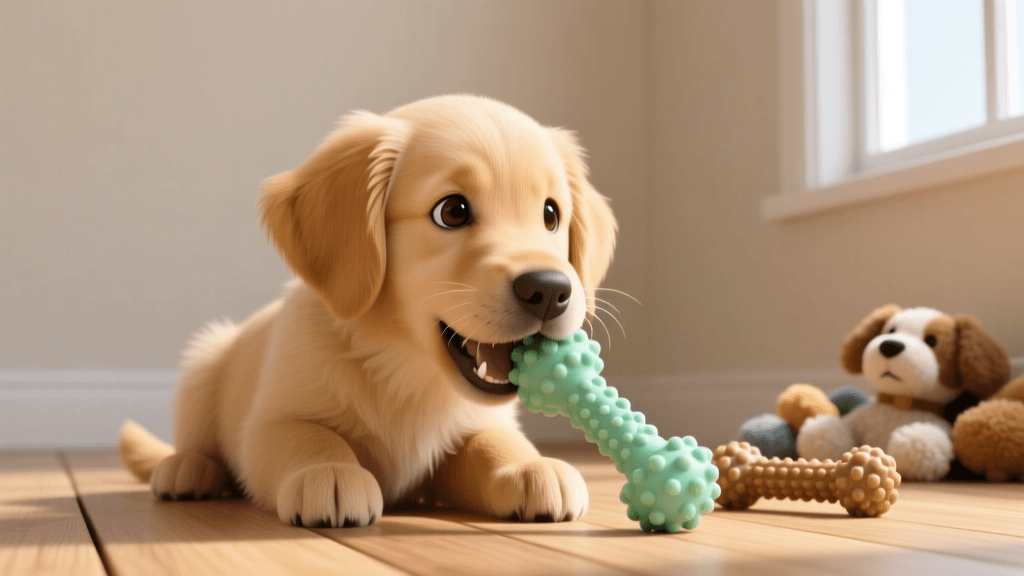
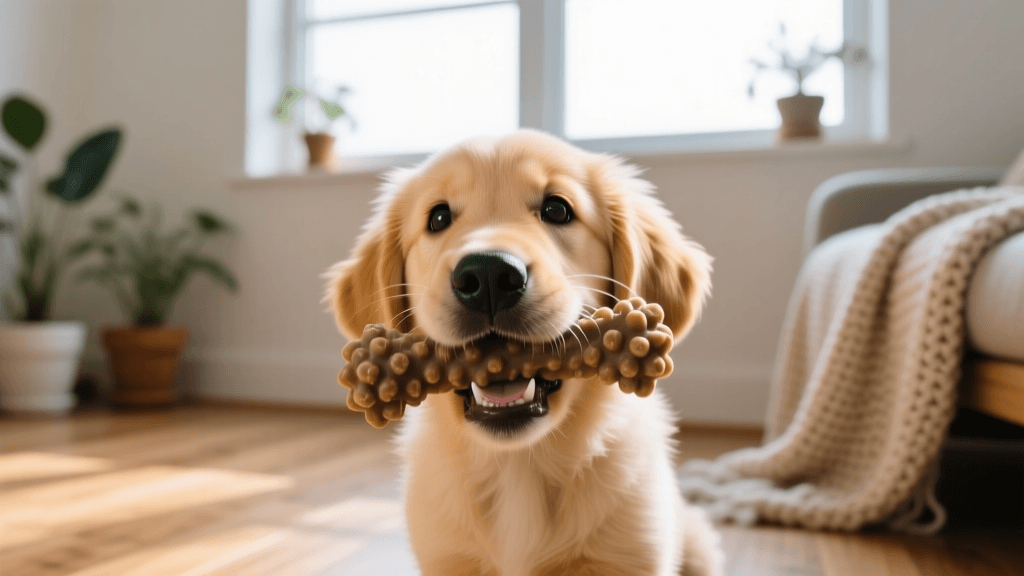
DRI involves reinforcing a behavior that is physically incompatible with the unwanted behavior. A puppy cannot bite your skin if its mouth is full of an appropriate chew toy. Before initiating any play session, arm yourself with high-value enrichment toys. The West Paw Toppl (approx. $22) or a classic rubber KONG stuffed with plain, unsweetened Greek yogurt and frozen are excellent choices. When the puppy approaches with an open mouth, redirect their energy toward the toy. The moment they engage with the toy, offer verbal praise ('Good choice!') and gentle petting. This builds a strong reinforcement history for chewing on appropriate items.
Step 2: Negative Punishment and the 'Oops' Marker
When teeth make contact with human skin, we must implement immediate Negative Punishment—the removal of attention. Attention, eye contact, and physical touch are primary reinforcers for a social species like the dog. The protocol is as follows:
- The Marker: The exact millisecond teeth touch skin, say a neutral marker word like 'Oops' or 'Too bad' in a calm, flat tone. Avoid high-pitched yelping, which can inadvertently increase arousal in high-prey-drive breeds.
- The Removal: Immediately stand up, fold your arms, and look at the ceiling. Become entirely boring.
- The Duration: Maintain this social time-out for exactly 10 to 15 seconds. If the puppy continues to bite your ankles, step over a baby gate or into a playpen to physically remove yourself from the environment.
- The Return: After 15 seconds of calm behavior, return and immediately offer a DRI toy. If they bite again, repeat the process.
Step 3: Arousal Management and Enforced Naps
A vast majority of puppy biting is a symptom of overstimulation and sleep deprivation. Puppies require 18 to 20 hours of sleep per day. When a puppy is kept awake for more than 2 to 3 hours, their cortisol levels spike, leading to hyper-arousal, 'zoomies,' and frantic, needle-like biting. According to the American Kennel Club (AKC), managing a puppy's environment to ensure adequate rest is just as important as active training. Implement 'enforced naps' in a crate or a quiet playpen after 90 minutes of awake time. You will frequently observe that a 'vicious' biting puppy is simply an exhausted toddler in need of a nap.
Step 4: Navigating the Extinction Burst
When you first remove the reinforcement (attention) for biting, the behavior will likely get worse before it gets better. In behavior analysis, this is known as an 'Extinction Burst.'
'When a previously reinforced behavior no longer yields the expected result, the subject will temporarily increase the frequency, duration, and intensity of the behavior in an attempt to regain the reinforcement. Consistency during this burst is the only way to achieve true extinction.' - Principles of Applied Behavior Analysis
If your puppy usually bites at a Level 2 intensity, and you implement a time-out, they may escalate to a Level 4 intensity (jumping, harder biting, barking) to see if the 'old rules' still apply. If you give in and push them away or yell during the burst, you have just reinforced the escalated behavior. You must remain a calm, unresponsive statue until the burst passes.
Management Tools and Enrichment Budget
Setting up your environment for success is a cornerstone of modern behavior modification. Relying solely on willpower and reaction will lead to frustration. Investing in a proactive management kit will save your skin and your sanity. Here is a recommended starter budget for puppy bite management:
- Exercise Pen ($40-$60): Essential for creating a safe 'puppy zone' where you can step over the gate to implement a time-out without leaving the room entirely.
- Snuffle Mat ($20-$30): Engages the puppy's olfactory system. Sniffing lowers heart rate and reduces the hyper-arousal that leads to biting.
- Long-Line Tug Toys ($15): Keeps the puppy's mouth far away from your hands during interactive play. Teach 'Drop It' using high-value treat trades (e.g., boiled chicken breast) rather than prying items from their mouth.
- Edible Chews ($25/month): Bully sticks, yak cheese chews, or frozen bone broth cubes provide necessary jaw fatigue. Always supervise edible chews to prevent choking hazards.
By combining physiological management (teething relief and sleep schedules) with strict operant conditioning protocols, you can effectively teach bite inhibition. For further reading on humane, science-based puppy rearing, the Humane Society of the United States offers excellent resources on managing normal puppy mouthing behaviors without resorting to outdated dominance theories. Remember, patience and consistency are your most valuable tools in shaping a confident, soft-mouthed adult dog.
jonas-cole
All our authors care for dogs every day — read more of their work on the authors page.