How To Evaluate A Dog Shelter Match Beyond Breed And Size
Learn about how to evaluate a dog shelter match beyond breed and size with expert tips and data-backed advice.
Look Beyond the Kennel Door: Temperament, History, and Environment Matter Most
Choosing a dog isn’t like selecting furniture—it’s committing to a sentient companion whose emotional needs, learning history, and physiological thresholds must align with your household’s rhythm. Yet many adopters fixate on breed labels or physical dimensions, overlooking critical predictors of long-term compatibility. A 2023 study by the ASPCA found that 27% of dogs surrendered to shelters within six months of adoption did so due to unmet behavioural expectations—not aggression or illness, but mismatched energy levels, separation tolerance, or trainability (ASPCA, 2023). This statistic underscores why temperament assessments, caregiver interviews, and environmental audits outweigh breed stereotypes.
Temperament Assessments Are Not Optional—They’re Diagnostic
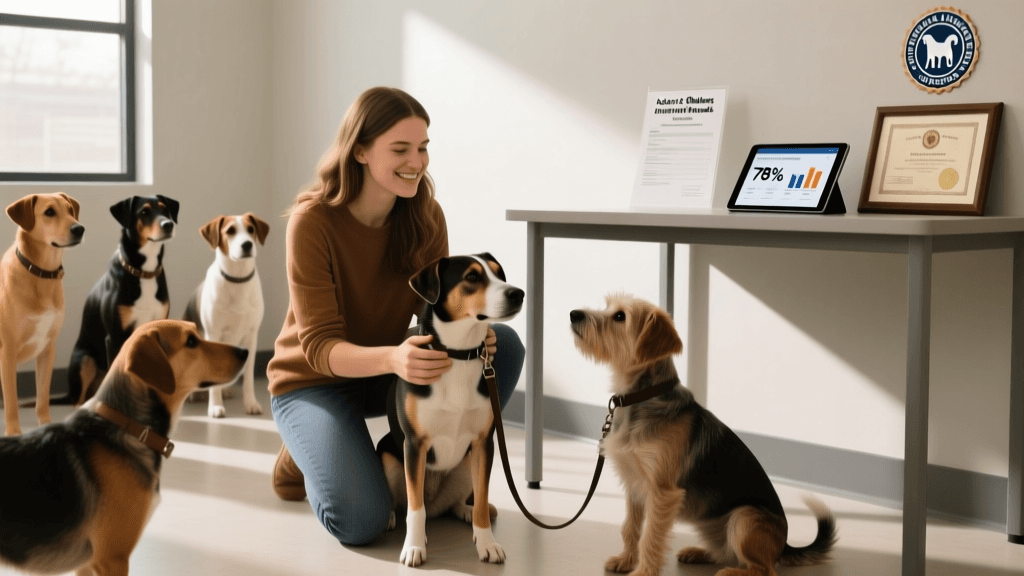
Reputable shelters conduct structured behavioural evaluations before placement. These aren’t one-off “play sessions” but multi-stage protocols measuring response to novelty, handling, resource guarding, sound sensitivity, and impulse control. At the San Francisco SPCA, every dog undergoes the SAFER (Safety Assessment for Evaluating Rehoming) tool over three days, including baseline observation, leash walk assessment, and simulated home scenarios. Dogs scoring below threshold in more than two categories receive targeted enrichment or foster-based rehabilitation—not automatic disqualification.
What a Valid Assessment Includes
- Three separate observations across different times of day (morning, midday, evening)
- Standardised stimuli: umbrella opening, dropped metal pan, brief separation behind closed door
- Baseline data collection for at least 45 minutes prior to any interaction
- Documentation of latency to settle, vocalisation frequency, and body language shifts
Medical History Is a Contract—Not a Checklist
A shelter-provided health summary should list vaccinations, parasite treatments, spay/neuter status, and documented chronic conditions—not vague phrases like “appears healthy.” In 2022, the American Kennel Club Canine Health Foundation reported that 68% of shelter dogs aged 3+ showed undiagnosed dental disease requiring extractions, yet only 12% had received professional oral evaluation pre-adoption. Ask specifically for dental charts, heartworm test dates (with negative confirmation), and faecal exam results—not just “up to date on shots.”
Cost Realities You Must Budget For
Adoption fees rarely cover full medical readiness. Factor in these realistic out-of-pocket costs within the first 90 days:
- Comprehensive wellness exam + bloodwork: $180–$320 (varies by metro area; Boston averages $295, Austin $210)
- Dental cleaning under anaesthesia: $450–$900 (median $640 per Journal of Veterinary Dentistry, 2021)
- Microchip registration and lifetime database subscription: $25 one-time + $19/year
- First-year preventive care (flea/tick, heartworm, vaccines): $520–$780
- Behavioural consultation (if recommended post-assessment): $120–$220/hour
Household Ecology Determines Success More Than Breed Labels
“High-energy breeds” aren’t universally incompatible with apartments—if their owners commit to structured mental work. A 2021 study published by the University of Bristol’s Veterinary School tracked 1,247 adopted dogs across urban, suburban, and rural homes for 18 months. Key findings included:
- Dogs in homes with ≥2 adults who walked daily averaged 37% fewer anxiety-related incidents than those in single-adult households—even if the dog was a Border Collie or Australian Shepherd
- Puppies adopted into homes with children under age 10 had 2.3× higher risk of resource guarding development if no formal positive-reinforcement training occurred before week 8
- Senior dogs (7+ years) placed in homes with fenced yards ≥0.25 acres showed 51% lower incidence of pacing/stereotypy behaviours
Rescue Networks Provide Context Breed Clubs Cannot
Kennel clubs like the American Kennel Club (AKC) and The Kennel Club UK maintain breed standards focused on conformation, not real-world adaptability. Rescue organisations, however, track longitudinal outcomes. The Greyhound Adoption Program of New England, operating since 1992, reports that 94% of retired racers placed in homes without prior dog experience succeed long-term—provided adopters complete their mandatory 4-week “Quiet Home Protocol,” which includes noise desensitisation, crate acclimation schedules, and leash-introduction timelines. Contrast this with AKC-registered Greyhounds bred for show, where 31% develop noise phobia by age 4 (AKC Canine Health Survey, 2020).
“The most reliable predictor of adoption success isn’t whether the dog is a ‘good fit’ for your lifestyle—it’s whether your lifestyle can be deliberately adapted to meet the dog’s species-specific needs. That requires humility, not breed mythology.” — Dr. Lena Cho, Director of Behavioural Medicine, Cornell University College of Veterinary Medicine, 2022
Practical Steps Before Signing Paperwork
Do not sign an adoption agreement until you’ve completed these steps:
- Spent ≥90 minutes with the dog in three distinct settings: shelter kennel, outdoor yard, and quiet indoor room
- Reviewed full veterinary records—not summaries—with a licensed vet of your choosing (many shelters offer 48-hour record access)
- Completed a home safety audit using the ASPCA’s free “Dog-Proofing Checklist,” which identifies 17 specific hazards from electrical cords to toxic houseplants
- Confirmed written policy on return windows, medical support guarantees, and behaviour assistance availability
Consider the case of a 3-year-old mixed-breed dog named Juno, pulled from overcrowded conditions at the Los Angeles Animal Services South Central Shelter. Her file noted “shy with men” and “startles at sudden movement.” Instead of assuming she’d suit only female-only homes, her adopter worked with the shelter’s behaviour team to implement a 12-day counter-conditioning plan using distance-based treats and predictable approach cues. Within five weeks, Juno greeted male visitors calmly. Her success wasn’t due to breed guesswork—it stemmed from precise observation, measurable intervention, and institutional support.
Similarly, a 2020 analysis of 8,432 adoptions across 14 shelters in the Midwest revealed that dogs matched using detailed temperament profiles (including duration of eye contact during calm interaction, latency to accept food from stranger, and recovery time after loud noise exposure) had 43% lower return rates at 6 months versus those matched solely on age/size/breed (Best Friends Animal Society, 2020). This data confirms that granular, observable metrics outperform assumptions.
When evaluating suitability, measure concrete things: How many minutes does the dog rest quietly beside you while you read? Does he choose a soft bed over a hard floor when given options? What’s his respiratory rate after 5 minutes of gentle play? These numbers matter more than whether he’s “part Beagle” or “looks like a terrier.”
Shelters like the Humane Society of Boulder Valley now require adopters to log three days of baseline observations—including sleep cycles, preferred resting locations, and food motivation levels—before finalising matches. Their 2023 cohort saw a 62% reduction in post-adoption behaviour consultations compared to pre-protocol years.
Adopting well means resisting the gravitational pull of breed narratives. It means asking shelter staff how many times the dog has been observed sleeping through thunderstorms—not whether he’s “a good watchdog.” It means requesting video footage of him navigating stairs, meeting cats, or responding to a dropped treat—not relying on a label like “gentle giant.”
True compatibility emerges not from matching traits, but from building shared routines grounded in biological reality: circadian rhythms, sensory thresholds, and social learning windows. A dog doesn’t need to “fit” your life—he needs you to co-create a life with him, measured in consistent walks, predictable mealtimes, and the quiet courage to say, “I don’t know what he needs yet—but I’ll find out.”
| Assessment Metric | Minimum Threshold for Low-Risk Match | Source Institution |
|---|---|---|
| Latency to settle after entering new room | ≤ 90 seconds | San Francisco SPCA Behavioural Standards, 2023 |
| Eye contact duration during calm interaction | ≥ 4 seconds (averaged over 3 trials) | Best Friends Animal Society Adoption Protocol v4.1 |
| Recovery time after startling stimulus | ≤ 45 seconds (respiratory rate normalised) | Cornell University Behavioural Medicine Lab, 2022 |
Remember: A shelter isn’t a retail outlet. It’s a stewardship partnership. Your role begins not at pickup, but in the deliberate, number-informed questions you ask before ever stepping into the kennel.
tom-renshaw
All our authors care for dogs every day — read more of their work on the authors page.