Rescue Dog First Week At Home What To Expect
Learn about rescue dog first week at home what to expect with expert tips and data-backed advice.
Before Your Rescue Dog Comes Home
The week before your rescue dog arrives is arguably more important than the first week itself. Shelters across the UK and US report that a significant number of returned dogs come back within the first 30 days — not because the dog was the wrong fit, but because the home wasn't ready. According to the American Society for the Prevention of Cruelty to Animals (ASPCA, 2023), approximately 3.1 million dogs enter US shelters every year, and around 10% of adopted dogs are returned within the first month. Getting your preparation right dramatically reduces that risk.
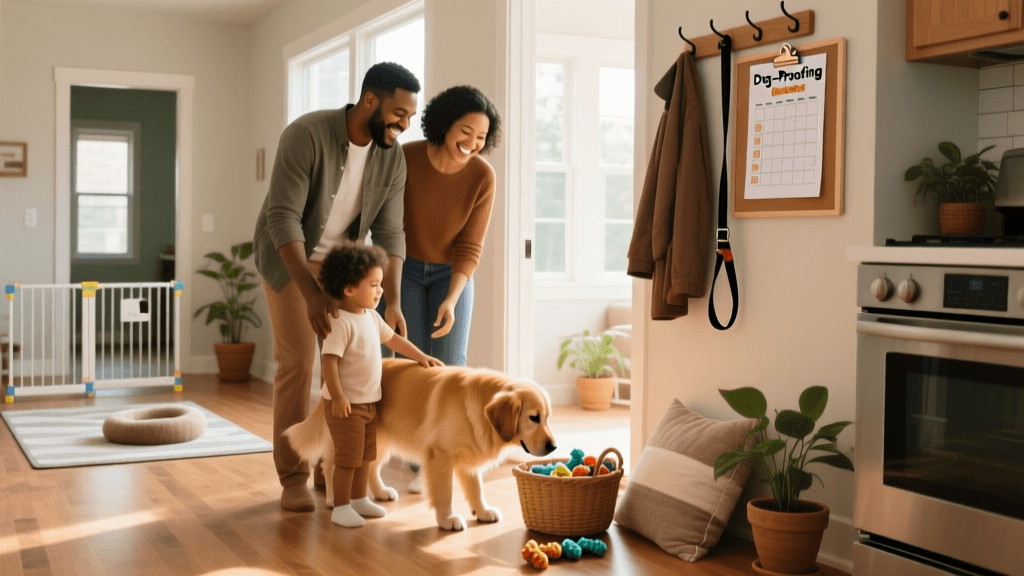
Start by designating a single quiet room or corner as your dog's base. This is where they'll sleep, eat, and decompress during the first few days. Avoid the temptation to give them free run of the house immediately — too much space too soon is overwhelming for a dog that has likely lived in a kennel run measuring no more than 4 by 8 feet. A crate, a dog bed, or even a playpen in a low-traffic area gives them a predictable anchor point in an unpredictable new world.
Budget realistically before collection day. First-week costs catch many new owners off guard. Beyond the adoption fee — which typically runs £150–£250 at UK rescue centres and $50–$500 at US shelters depending on the organisation — you'll need to account for immediate supplies.
| Item | Estimated UK Cost | Estimated US Cost |
|---|---|---|
| Collar, lead, ID tag | £20–£40 | $25–$50 |
| Crate or dog bed | £30–£80 | $40–$100 |
| Food (matching shelter brand) | £15–£30 | $20–$40 |
| Bowls, toys, treats | £20–£35 | $25–$45 |
| Vet check (first 7 days) | £40–£70 | $50–$100 |
Ask the shelter which food the dog has been eating and buy a bag of the same brand. Switching food abruptly causes digestive upset, which is the last thing you want layered on top of stress-related loose stools — a near-universal feature of the first week.
The Car Ride Home and First Hours
For many rescue dogs, the car journey is their first experience of a vehicle. Keep it calm. Bring a second person if possible so one can drive while the other sits near the dog without forcing contact. A familiar-smelling blanket from the shelter, if the rescue centre will provide one, can reduce anxiety measurably during transit.
When you arrive home, take the dog straight to the garden or a quiet outdoor space before entering the house. Let them sniff, toilet, and breathe. Don't rush the front door. This single step — outdoor decompression before indoor introduction — is recommended by Battersea Dogs & Cats Home, one of the UK's oldest and most respected rescue organisations, as a core part of their adoption guidance.
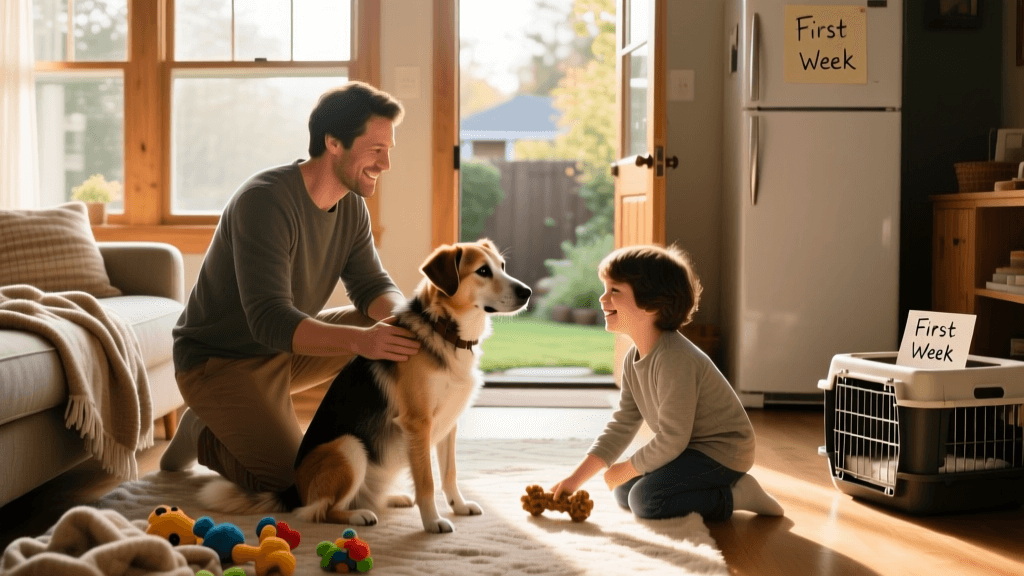
Inside, keep the first few hours low-stimulus. No visitors, no children rushing over, no other pets introduced yet. Sit on the floor near the dog's designated space and let them approach you. Many rescue dogs will spend the first hour simply sniffing every corner of the room. This is normal and healthy — they are mapping their new environment.
The 3-3-3 Rule Explained
Experienced rescue adopters and behaviourists frequently reference the 3-3-3 rule as a realistic timeline for adjustment. The framework, widely cited by organisations including the Humane Society of the United States, breaks down as follows:
- First 3 days: The dog is overwhelmed and shut down. They may not eat, drink, play, or make eye contact. Some hide. Some pace. This is not a personality indicator — it is shock.
- First 3 weeks: The dog begins to understand the routine. They start to show their real personality, test boundaries, and form early attachments. Housetraining accidents are common even in previously housetrained dogs.
- First 3 months: The dog feels genuinely settled. True bonding occurs. Behavioural quirks that were suppressed by stress may now emerge — this is when professional training support is most valuable if needed.
Understanding this timeline prevents the most common adoption mistake: expecting a happy, playful, bonded dog within 48 hours and interpreting anything less as failure.
Sleep, Routine, and the First Night
The first night is hard for almost everyone. Dogs that slept quietly in kennels may whine, bark, or pace when left alone in a new space. This is separation distress, not separation anxiety in the clinical sense — the distinction matters because the response is different. Separation distress is situational and resolves with routine; clinical separation anxiety requires structured behaviour modification and sometimes veterinary support.
For the first few nights, many behaviourists recommend sleeping near the dog — either with the crate in your bedroom or on a mattress near their bed. This is not creating a bad habit; it is providing safety during a vulnerable transition. You can gradually move the sleeping arrangement over two to three weeks once the dog is settled.
Building a Feeding and Walking Schedule
Predictability is the fastest route to a calm dog. Feed at the same times each day — most adult rescue dogs do well on two meals, roughly 12 hours apart. Walk at consistent times. Even short, 20-minute walks on a fixed schedule do more for anxiety reduction than longer, unpredictable outings.
Keep early walks close to home. A dog that bolts in a new neighbourhood is a genuine risk — even dogs with good recall in the shelter environment may panic and run when overwhelmed. Use a double-attachment system: a collar with an ID tag and a harness, with the lead clipped to both. The Dogs Trust, which rehomes over 14,000 dogs annually across the UK, specifically advises this dual-attachment approach for the first 30 days post-adoption.
Introducing Other Pets
If you have existing pets, introductions require patience and structure. For dogs meeting dogs, the first meeting should happen on neutral ground — a park or quiet street, not inside the home. Walk them parallel at a distance of about 10 metres, gradually closing the gap over 15–20 minutes as body language stays relaxed. Avoid face-to-face greetings on lead, which create tension.
For dogs meeting cats, management is everything in the first two weeks. Keep the cat's spaces — including feeding stations and litter trays — completely inaccessible to the dog. Use baby gates and closed doors. Allow scent exchange before visual contact. Rushing this process is the primary cause of cat-dog household breakdowns in the first month.
What Normal Stress Looks Like
New owners frequently mistake normal stress responses for illness or permanent behavioural problems. Knowing what to expect prevents unnecessary panic and unnecessary vet visits — while also helping you recognise when something genuinely needs attention.
Common stress behaviours in the first week include: not eating for 24–48 hours, loose stools or vomiting once or twice, excessive sleeping, yawning and lip-licking when approached, low tail carriage, and reluctance to engage with toys. These are all within the range of normal adjustment responses.
Behaviours that warrant a vet call within 24 hours include: complete refusal to drink water for more than 12 hours, bloody diarrhoea, repeated vomiting, laboured breathing, or signs of pain such as guarding a body part or yelping when touched.
"We always tell new adopters: the dog you see in week one is not the dog you'll have in month three. Give them time, give them structure, and resist the urge to flood them with love and stimulation. Quiet consistency is the kindest thing you can offer." — Rehoming advisor, Blue Cross Animal Rescue, Birmingham, 2024
Real Owner Experiences From the First Seven Days
Sarah, who adopted a four-year-old Greyhound named Archie from Greyhound Trust Leeds in 2023, described the first three days as "eerily quiet." Archie didn't bark, didn't explore, and slept for roughly 18 hours a day. By day five he had started following her from room to room. By day ten he was playing with a squeaky toy. "If I hadn't read about the 3-3-3 rule beforehand, I would have called the rescue and said something was wrong with him," she said.
Marcus, based in Austin, Texas, adopted a two-year-old mixed breed from Austin Pets Alive! in early 2024. His dog, Biscuit, had the opposite presentation — hyperactive, unable to settle, and destructive when left alone for even 20 minutes. Marcus worked with a certified behaviourist for six weeks and used a structured crate training protocol. "By week three she could handle 90 minutes alone without destroying anything. It just took consistency and not expecting her to be a finished product on day one."
These two experiences represent the two ends of the adjustment spectrum. Both dogs are now described by their owners as settled, affectionate companions. The timeline was different; the outcome was the same.
The First Vet Visit
Book a vet appointment within the first seven days, even if the dog appears healthy and came with a clean bill of health from the rescue. This visit serves multiple purposes: it establishes a baseline health record, allows the vet to check for conditions that may not have been caught at the shelter, and — critically — begins the process of the dog associating the vet with neutral or positive experiences before any stressful procedures are needed.
Bring all paperwork from the rescue, including vaccination records, microchip documentation, and any notes on known health conditions or medications. In the UK, ensure the microchip is transferred to your name on the relevant database — this is a legal requirement under the Microchipping of Dogs (England) Regulations 2015. In the US, registration requirements vary by state, but most shelters will have already registered the chip; you'll need to update the contact details to your own.
Ask your vet about flea and worming treatment timing, particularly if the rescue's last treatment date is unclear. Many rescue dogs arrive with subclinical parasite loads that only become apparent once the stress of rehoming suppresses their immune response further.
- Confirm microchip registration is in your name
- Review vaccination schedule and book any boosters needed
- Discuss flea, tick, and worming prevention going forward
- Raise any behavioural concerns early — vets can refer to accredited behaviourists
- Ask about pet insurance if you haven't already arranged it before collection day
Pet insurance is worth arranging before, not after, the first vet visit. Pre-existing conditions noted at that first appointment may be excluded from future claims if the policy wasn't in place beforehand. In the UK, the average annual cost of dog ownership including veterinary care runs to approximately £1,875 per year according to the PDSA Animal Wellbeing Report (PDSA, 2023), with unexpected illness or injury costs frequently exceeding £1,000 in a single incident.
The first week with a rescue dog is rarely what people imagine. It is quieter, stranger, and more emotionally complex than the joyful montage most people picture. But it is also the foundation of something that, given time and consistency, becomes one of the most rewarding relationships a person can have. The dogs that come through rescue have often had difficult starts. What they need from you in week one is not excitement or grand gestures — it is simply the reliable presence of someone who isn't going anywhere.
Anouk Beaumont
All our authors care for dogs every day — read more of their work on the authors page.