How To Clean Your Dogs Eyes And Ears
Learn about how to clean your dogs eyes and ears with expert tips and data-backed advice.
Keeping Your Dog's Eyes and Ears Healthy
Routine eye and ear care is one of the most overlooked aspects of dog ownership, yet it plays a significant role in preventing infections, discomfort, and long-term sensory damage. According to the PDSA Animal Wellbeing Report (2023), ear disease is among the top five reasons dogs are brought to veterinary practices in the United Kingdom, accounting for approximately 1 in 7 consultations. With the right technique, the correct products, and a consistent schedule, most owners can manage basic eye and ear hygiene at home — reducing vet visits and keeping their dog comfortable year-round.
Before you begin any cleaning routine, it is worth understanding the anatomy involved. A dog's ear canal is L-shaped, running vertically before turning horizontally toward the eardrum. This structure makes it easy for moisture, wax, and debris to accumulate, particularly in breeds with floppy ears such as Cocker Spaniels, Basset Hounds, and Labrador Retrievers. The eyes, meanwhile, are vulnerable to discharge, environmental irritants, and breed-specific conditions such as entropion or excessive skin folds around the orbit.
Understanding Normal vs. Abnormal Discharge
Not all eye or ear discharge signals a problem. A small amount of clear or slightly grey crust at the inner corner of the eye — sometimes called "sleep" — is entirely normal and simply represents dried tear fluid and cellular debris. Similarly, a light beige or pale brown waxy residue in the outer ear canal is a healthy sign that the ear is self-cleaning.
Abnormal signs are more distinct. For the eyes, watch for:
- Yellow, green, or thick white discharge, which may indicate bacterial conjunctivitis
- Excessive tearing or staining on the fur below the eye (epiphora), common in Maltese and Shih Tzus
- Redness of the sclera or conjunctiva lasting more than 24 hours
- Squinting, pawing at the eye, or sensitivity to light
- Cloudiness or a visible film over the cornea
For the ears, abnormal signs include a dark brown or black discharge resembling coffee grounds (often associated with ear mites), a strong yeasty or foul odour, redness and swelling of the ear flap or canal entrance, and persistent head shaking or scratching. The British Small Animal Veterinary Association (BSAVA) Manual of Canine and Feline Dermatology (2012) notes that Malassezia pachydermatis, a yeast organism, is implicated in the majority of canine otitis externa cases and thrives in warm, moist environments.
How to Clean Your Dog's Eyes
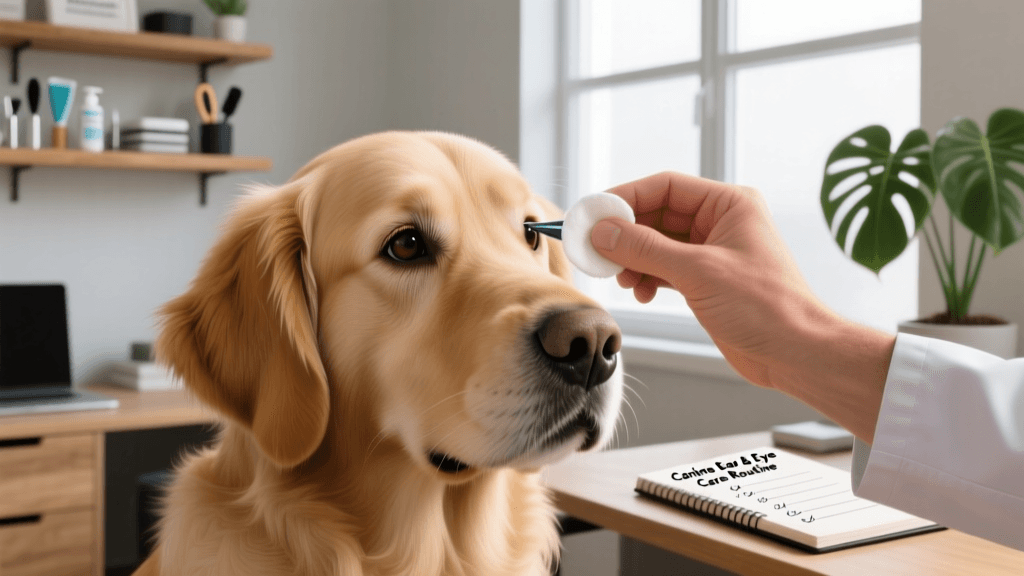
Eye cleaning should be a gentle, brief process. Aim to clean the area around the eyes two to three times per week for breeds prone to discharge, and once weekly for dogs with minimal buildup. Always wash your hands thoroughly before touching your dog's face.
What You Will Need
- Sterile saline solution or a veterinary-approved eye wash (such as Optrex Veterinary Eye Wash or TrizEDTA Aqueous Flush)
- Soft, lint-free cotton pads — avoid cotton wool balls, which can leave fibres
- A clean towel
Do not use tap water directly on the eye surface, as it is not sterile and can introduce bacteria. Human eye drops containing preservatives or active pharmaceutical ingredients should also be avoided unless specifically prescribed by a vet.
Step-by-Step Eye Cleaning
Seat your dog in a calm, well-lit area. Gently hold their head still with one hand, tilting it slightly upward. Using a cotton pad dampened with saline, wipe from the inner corner of the eye outward in a single stroke. Use a fresh pad for each wipe and for each eye to prevent cross-contamination. If there is dried crust, hold the damp pad against it for 10 to 15 seconds to soften it before wiping — never scrape or pick at hardened discharge.
For dogs with deep facial folds, such as Bulldogs or Pugs, use a separate damp pad to clean inside the fold itself, then dry the area thoroughly. Moisture trapped in skin folds creates an ideal environment for bacterial and yeast overgrowth, leading to fold dermatitis. The Royal Veterinary College (RVC) in Hertfordshire has published research indicating that brachycephalic breeds are significantly more likely to develop ocular surface disease, with one study finding that 58% of Pugs examined had at least one clinically relevant eye condition.
How to Clean Your Dog's Ears
Ear cleaning frequency depends on the individual dog. Most dogs with upright ears and no history of ear problems need cleaning no more than once every two to four weeks. Dogs with floppy ears, dogs that swim regularly, or those with a history of recurrent infections may need weekly cleaning. Over-cleaning is a genuine risk — it can strip the ear of its natural protective wax and disrupt the local microbiome, paradoxically increasing infection risk.
Choosing the Right Ear Cleaner
Use only veterinary-formulated ear cleaners. Products containing chlorhexidine, salicylic acid, or lactic acid are commonly recommended for routine maintenance. Avoid alcohol-based products, which are irritating to inflamed tissue, and never use hydrogen peroxide or vinegar solutions without veterinary guidance. If your dog has a ruptured eardrum — which can occur with severe or chronic otitis — many standard ear cleaners are contraindicated and can cause serious damage. A vet should confirm the eardrum is intact before you begin any home cleaning programme.
Recommended products available through UK veterinary practices include Epi-Otic Advanced Ear Cleanser and Ceva Douxo Calm Ear. Both are pH-balanced and designed to break down wax without causing irritation.
Step-by-Step Ear Cleaning
Hold the ear flap upright to straighten the vertical canal. Insert the nozzle of the ear cleaner just inside the ear canal opening — do not push it deep into the canal. Squeeze in enough solution to fill the canal; for a medium-sized dog (10–25 kg), this is typically 1–2 ml. Gently massage the base of the ear for 20 to 30 seconds — you should hear a squelching sound as the solution loosens debris. Allow your dog to shake their head, which brings loosened material up toward the outer canal. Use a cotton pad or ball to wipe out the visible portion of the canal and the inner surface of the ear flap. Never insert cotton buds (Q-tips) into the ear canal, as this pushes debris deeper and risks perforating the eardrum.
"Owners should be taught to clean ears only as far as they can see. The use of cotton-tipped applicators in the ear canal is strongly discouraged and can cause significant trauma." — BSAVA Manual of Canine and Feline Dermatology, 3rd Edition
Breed-Specific Considerations
Certain breeds require more vigilant care due to their anatomy or coat type. Cocker Spaniels, for example, have pendulous ear flaps that restrict airflow, creating a warm, humid microenvironment. A 2019 study published in the Veterinary Record found that Cocker Spaniels were 3.9 times more likely to be diagnosed with otitis externa than crossbreed dogs of similar age and weight.
Poodles and other breeds with hair growing inside the ear canal were historically subjected to routine ear plucking, but current veterinary guidance from institutions including the University of Edinburgh Royal (Dick) School of Veterinary Studies suggests that plucking should only be performed when clinically indicated, as it can cause micro-trauma and inflammation that increases infection risk.
Flat-faced breeds — including French Bulldogs, Bulldogs, and Boxers — often have shallow eye sockets and prominent eyes that are more exposed to environmental irritants. These dogs benefit from daily eye checks and may require more frequent cleaning than other breeds.
When to See a Veterinarian
Home cleaning is a preventive measure, not a treatment. If you notice any of the following, book a veterinary appointment rather than attempting to manage the problem yourself:
- Discharge that is yellow, green, or blood-tinged from either the eye or ear
- Swelling, heat, or pain when touching the ear or the area around the eye
- A sudden change in the amount or character of discharge
- Your dog rubbing their face persistently on furniture or the floor
- Any visible foreign body in the eye or ear canal
- Loss of balance, head tilt, or circling, which may indicate middle or inner ear involvement
Ear infections that are left untreated can progress from the outer ear (otitis externa) to the middle ear (otitis media) and, in severe cases, the inner ear (otitis interna), potentially causing permanent hearing loss or neurological signs. The PDSA estimates that the average cost of treating a single episode of otitis externa in the UK ranges from £150 to £400 depending on severity and the number of follow-up appointments required — a compelling argument for consistent preventive care.
Products, Frequency, and Dosage at a Glance
| Area | Recommended Product Type | Frequency | Volume per Application |
|---|---|---|---|
| Eyes (routine) | Sterile saline or veterinary eye wash | 2–3 times per week | Enough to dampen a cotton pad |
| Eyes (brachycephalic breeds) | Sterile saline or vet-prescribed drops | Daily | As directed by vet |
| Ears (upright, healthy) | pH-balanced veterinary ear cleaner | Every 2–4 weeks | 1–2 ml (small/medium dog); 2–4 ml (large dog) |
| Ears (floppy or swimmer) | pH-balanced veterinary ear cleaner | Weekly | 1–2 ml (small/medium dog); 2–4 ml (large dog) |
| Facial skin folds | Damp lint-free cloth, then dry thoroughly | Daily | N/A |
Establishing a routine from puppyhood makes the process significantly easier. Dogs that are introduced to ear and eye handling as young as eight to twelve weeks old are far more tolerant of the procedure as adults. Use positive reinforcement — small, high-value treats immediately after each step — to build a positive association. Keep sessions short, ideally under five minutes, and end on a calm note even if you did not complete the full cleaning.
Regular home checks also give you a baseline understanding of what is normal for your individual dog, making it easier to spot early changes that warrant veterinary attention. Combined with annual health checks at your local veterinary practice, consistent eye and ear hygiene is one of the most practical contributions you can make to your dog's long-term quality of life.
Priya Sutaria
All our authors care for dogs every day — read more of their work on the authors page.