A Step-by-Step Guide: How to Brush Your Dog's Teeth
Learn how to brush your dog's teeth with our step-by-step training guide. Discover the best tools, techniques, and tips for optimal canine dental health.
The Hidden Dangers of Canine Periodontal Disease
Many dog owners overlook oral hygiene, assuming that bad breath is just a normal part of having a dog. However, poor dental health can lead to severe systemic issues, including heart, liver, and kidney disease. According to the American Veterinary Medical Association (AVMA), by the time dogs reach three years of age, most have at least some evidence of periodontal disease. Plaque hardens into tartar within 24 to 48 hours, and once tartar forms below the gumline, it can only be removed by a professional veterinary cleaning under anesthesia.
Fortunately, daily brushing is the gold standard for preventing plaque buildup. While the idea of brushing a dog's teeth might seem daunting, it is entirely possible with the right behavioral training approach. This step-by-step guide uses desensitization and counter-conditioning to turn a potentially stressful chore into a positive bonding experience.
Gathering Your Dental Arsenal: Tools and Costs
Before beginning your training, you need the proper equipment. Never use human toothpaste. Human toothpastes often contain fluoride, which can cause severe gastrointestinal upset in dogs, and xylitol (an artificial sweetener), which is highly toxic and can cause fatal hypoglycemia and liver failure. Always opt for veterinary-formulated enzymatic toothpastes designed to be swallowed.
| Tool Type | Recommended Brand | Estimated Cost | Best For |
|---|---|---|---|
| Enzymatic Toothpaste | Virbac C.E.T. Poultry Flavor | $10 - $14 | All dogs; dual-enzyme system breaks down plaque |
| Dual-Head Toothbrush | Petrodex Dual-Head Brush | $5 - $8 | Medium to large breeds; cleans both sides at once |
| Finger Brush | Sentry Dog Dental Care Kit | $6 - $9 | Puppies, toy breeds, and initial desensitization |
| Dental Gel (No Brush) | Petsmile Professional Pet Toothpaste | $25 - $30 | Highly resistant dogs; applied with a finger or gauze |
Phase 1: Desensitization and Counter-Conditioning (Days 1-3)
The biggest mistake owners make is introducing the toothbrush and toothpaste all at once. Dogs are naturally suspicious of objects coming toward their faces, and forcing the issue will create a lifelong phobia. Phase 1 is entirely about handling the muzzle without any dental tools.
Step 1: Muzzle Handling
Choose a quiet time when your dog is relaxed, such as after a long walk. Sit beside your dog (not directly in front of them, which can feel confrontational). Gently lift their upper lip to expose the front teeth for just one second, then immediately release and offer a high-value treat like a small piece of boiled chicken breast or freeze-dried beef liver.
Step 2: Increasing Duration
Repeat this process 5 to 10 times per session, twice a day. Gradually increase the time you hold the lip up from one second to three seconds, then five seconds. If your dog pulls away or shows signs of stress (whale eye, lip licking, yawning), you are moving too fast. Return to a shorter duration and reward heavily.
Phase 2: Introducing the Enzymatic Toothpaste (Days 4-6)
Now that your dog is comfortable with you handling their muzzle, it is time to introduce the taste of the toothpaste. Enzymatic toothpastes are flavored with dog-friendly ingredients like poultry, beef, or malt, making this step relatively easy.
Step 1: The Taste Test
Squeeze a pea-sized amount of the Virbac C.E.T. toothpaste onto your index finger. Let your dog sniff and lick it off voluntarily. Praise them enthusiastically. Do this once or twice a day so they begin to associate the tube and the smell with a delicious treat.
Step 2: Paste on the Gums
Once they are eagerly licking the paste, lift their lip (as practiced in Phase 1) and gently smear a small amount of the paste directly onto their front canine teeth and gums using your bare finger. Reward immediately with a different high-value treat. This creates a positive association: toothpaste flavor predicts an even better reward.
Phase 3: Introducing the Toothbrush (Days 7-10)
With the taste accepted, you can now introduce the physical sensation of the bristles. For small dogs or puppies, a silicone finger brush is an excellent transitional tool. For larger dogs, a dual-headed soft-bristle brush is ideal.
Step 1: Licking the Brush
Apply the toothpaste to the bristles and let your dog lick it off the brush. This familiarizes them with the texture and smell of the brush itself. Allow them to chew on the bristles gently if they wish.
Step 2: Touching the Teeth
Lift the lip and gently touch the bristles to the front incisors without making any brushing motions. Just hold it there for a second, remove it, and give a treat. Over the next few days, progress to touching the side teeth (premolars and molars) and eventually the hard-to-reach back carnassial teeth.
Phase 4: The Brushing Technique (Day 11 and Beyond)
Once your dog tolerates the brush resting against all areas of their mouth, you can begin the actual brushing motion.
Proper Angle and Motion
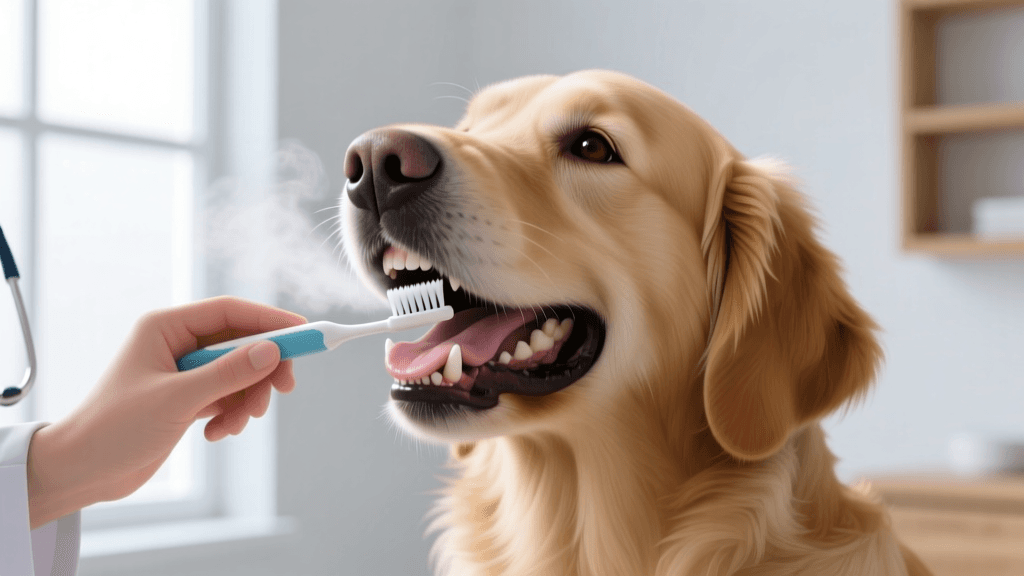
Hold the brush at a 45-degree angle to the gumline. This is crucial, as periodontal disease starts exactly where the tooth meets the gum. Use small, gentle circular motions. Focus primarily on the buccal (outer) surfaces of the teeth, as the dog's tongue naturally helps keep the inner surfaces relatively clean.
Timing and Frequency
Aim to brush for about 30 to 60 seconds total. Spend roughly 15 seconds on each side of the mouth. While daily brushing is the ultimate goal, brushing at least three to four times a week is necessary to disrupt the plaque biofilm before it calcifies into tartar. Always end the session on a positive note with a favorite toy or a long-lasting chew.
Troubleshooting Common Behavioral Roadblocks
- Clamped Mouth: If your dog refuses to open their mouth, do not pry it open. Instead, use a dental gel like Petsmile, which is designed to be applied to the outside of the teeth and gums. The dog's natural licking and tongue movements will spread the enzymatic formula.
- Growling or Snapping: Stop immediately. Growling is a warning sign that your dog is over threshold and feeling threatened. Take a step back to Phase 1 and proceed at a much slower pace. If aggression persists, consult a certified professional dog trainer (CPDT) or a veterinary behaviorist.
- Chewing the Brush: If your dog treats the toothbrush like a chew toy, switch to a finger brush or wrap a piece of sterile gauze around your index finger, apply the toothpaste, and rub the teeth manually.
Maintaining Oral Health Between Brushings
While brushing is the most effective method, supplemental dental care can help maintain oral hygiene, especially on days you miss. When shopping for dental chews, water additives, or specialized diets, always look for the Veterinary Oral Health Council (VOHC) seal of acceptance. The VOHC is an independent entity that rigorously tests pet dental products to ensure they meet strict standards for reducing plaque and tartar. Products like Purina Pro Plan Dental Chewz and Greenies have earned this prestigious seal.
When to See a Veterinarian
Home brushing is a preventive measure, not a cure for existing disease. If you notice red or bleeding gums, persistent foul breath, loose teeth, or if your dog is dropping food or chewing on only one side of their mouth, stop brushing and schedule a veterinary exam immediately. Brushing inflamed gums is painful and can cause further damage.
The American Animal Hospital Association (AAHA) strongly recommends professional dental cleanings under general anesthesia when tartar buildup or gingivitis is present. Anesthesia allows the veterinarian to safely scale below the gumline, take dental radiographs to check for hidden root disease, and polish the teeth to prevent future plaque adherence. By combining professional veterinary care with the step-by-step home brushing guide above, you can add years of health and happiness to your dog's life.
marcus-aldridge
All our authors care for dogs every day — read more of their work on the authors page.