How Dogs Use Scent To Communicate
Learn about how dogs use scent to communicate with expert tips and data-backed advice.
The Invisible Language Beneath Every Sniff
Watch a dog approach a fire hydrant, a patch of grass, or even a stranger's shoe, and you are witnessing something far more sophisticated than casual curiosity. Dogs inhabit a chemical world that humans can barely perceive. While the human nose contains roughly 6 million olfactory receptor cells, a dog's nose houses approximately 300 million — making their sense of smell somewhere between 10,000 and 100,000 times more sensitive than ours, depending on the breed and the specific compound being detected (Alexandra Horowitz, Barnard College, 2016). That extraordinary sensitivity is not an accident of evolution. It is the foundation of a rich, layered communication system that dogs have been refining for tens of thousands of years.
Scent communication in dogs operates on timescales and distances that visual or auditory signals simply cannot match. A bark fades in seconds. A posture disappears the moment the dog moves on. But a scent mark can persist for hours or even days, carrying detailed information about the individual who left it long after that animal has gone. Understanding how this system works changes the way we interpret everyday dog behaviour — and deepens our respect for what is happening inside every nose-to-ground investigation.
The Anatomy Behind the Ability
A dog's olfactory system is structurally distinct from a human's in several important ways. The most significant is the presence of a dedicated organ called the vomeronasal organ, or Jacobson's organ, located in the roof of the mouth just behind the front teeth. While the main olfactory epithelium detects general airborne odours, the vomeronasal organ specialises in detecting non-volatile chemical signals — particularly pheromones. Dogs access this organ by curling their upper lip slightly and pressing their nose to a surface, a behaviour sometimes called the Flehmen response, though it is more pronounced in horses and cats.
The architecture of the dog's nose also contributes to its power. When a dog exhales, air exits through slits on the sides of the nostrils rather than straight out the front. This design prevents outgoing air from disturbing the incoming scent stream, allowing the dog to maintain a continuous sample of the chemical environment. Research conducted at the University of Pennsylvania's Working Dog Center has demonstrated that trained detection dogs can identify a target odour even when it is diluted to concentrations as low as one part per trillion.
The Olfactory Bulb and Brain Processing
The olfactory bulb — the brain region dedicated to processing smell — accounts for roughly 12.5% of a dog's total brain mass, compared to approximately 0.01% in humans. This is not merely a larger version of the same structure; it is a qualitatively different processing system. Signals from the olfactory bulb connect directly to the amygdala and hippocampus, the brain regions associated with emotion and memory, which helps explain why scent triggers such immediate and powerful behavioural responses in dogs.
Breed Differences in Olfactory Capacity
Not all dogs are equally equipped. Scent hounds such as Bloodhounds and Basset Hounds have been selectively bred for centuries to maximise olfactory performance. The Bloodhound, in particular, has been documented following scent trails more than 130 miles long and identifying tracks that are over 300 hours old (National Canine Research Council, 2019). Brachycephalic breeds — those with shortened muzzles, like Bulldogs and Pugs — have a reduced surface area of olfactory epithelium and correspondingly diminished scent-detection ability, though they still vastly outperform humans.
Urine Marking: A Chemical Résumé
Urine is the most information-dense scent signal in a dog's communication repertoire. A single urine deposit contains data about the depositing individual's sex, reproductive status, approximate age, health condition, stress levels, and individual identity. Studies using gas chromatography-mass spectrometry have identified over 50 distinct volatile organic compounds in dog urine, each potentially carrying different informational content.
Male dogs engage in a behaviour called raised-leg urination (RLU), directing urine onto vertical surfaces such as posts, trees, and walls. This is not simply a matter of habit. Elevated deposits are more likely to be encountered at nose height by passing dogs, and they are less likely to be washed away by rain. Research published by the journal Animal Behaviour found that male dogs performing RLU deposited urine at an average height of 35 centimetres, while their actual leg length would have allowed deposits at only 20 centimetres — suggesting deliberate overmarking behaviour to signal larger body size than they actually possess (Bekoff, University of Colorado Boulder, 2001).
Overmarking — depositing urine directly on top of another dog's mark — is a common and deliberate behaviour. Dogs do not simply add their scent to a location; they actively seek out and cover existing marks, particularly those left by unfamiliar dogs or dogs of the same sex. This creates a dynamic, layered chemical record of who has passed through a territory and in what order.
What Females Communicate Through Urine
Female dogs also use urine marking, though less frequently than males outside of oestrus. During the proestrus and oestrus phases of the reproductive cycle, females dramatically increase their marking frequency and change the chemical composition of their urine. Male dogs can detect these hormonal changes from considerable distances — studies have recorded male dogs responding to the scent of a female in oestrus from over 3 kilometres away under favourable wind conditions. The specific pheromones involved include methyl p-hydroxybenzoate, a compound that has been shown in controlled laboratory conditions to elicit immediate investigative behaviour in male dogs.
Anal Glands: The Signature Scent
Located at approximately the 4 o'clock and 8 o'clock positions around the anus, the anal sacs are paired glands that produce a highly individualised secretion. Every dog's anal gland secretion has a unique chemical profile, functioning as a biological fingerprint. When dogs greet each other by sniffing the hindquarters — a behaviour that can seem puzzling or even rude to human observers — they are reading this signature directly.
The secretion is deposited automatically in small amounts with every bowel movement, which is one reason dogs are so interested in the faeces of other dogs. It is also why dogs circle before defecating: they are positioning themselves to deposit their scent mark in the most effective location relative to wind direction and foot traffic. The anal gland secretion contains a complex mixture of short-chain fatty acids, trimethylamine, and various sulphur-containing compounds. The exact ratio of these compounds is unique to each individual and remains stable enough over time to serve as reliable identification.
Paw Glands and Ground Scratching
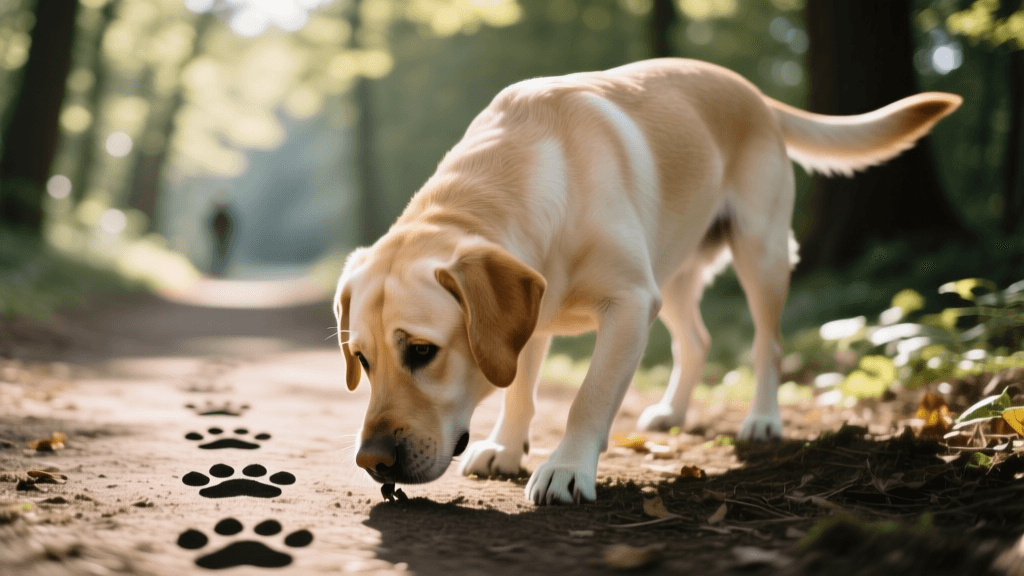
Between the digital and metacarpal pads of a dog's paws lie interdigital glands that continuously secrete a species-specific scent. Every step a dog takes deposits a small amount of this secretion, creating an olfactory trail that other dogs can follow. This is why tracking dogs are able to follow a human or animal trail — they are detecting the combination of ground disturbance odours and the secretions left by the feet.
Ground scratching after elimination — the vigorous backward kicking motion many dogs perform after urinating or defecating — serves a dual purpose. It visually marks the area with disturbed earth, and it deposits interdigital gland secretions directly onto the ground, amplifying the scent signal. Ethologist Marc Bekoff, working at the University of Colorado Boulder, documented that ground scratching occurs in approximately 65% of elimination events in free-ranging dogs and is more common in the presence of unfamiliar dogs or in novel environments.
Social Scent Gathering: What Dogs Learn From Each Other
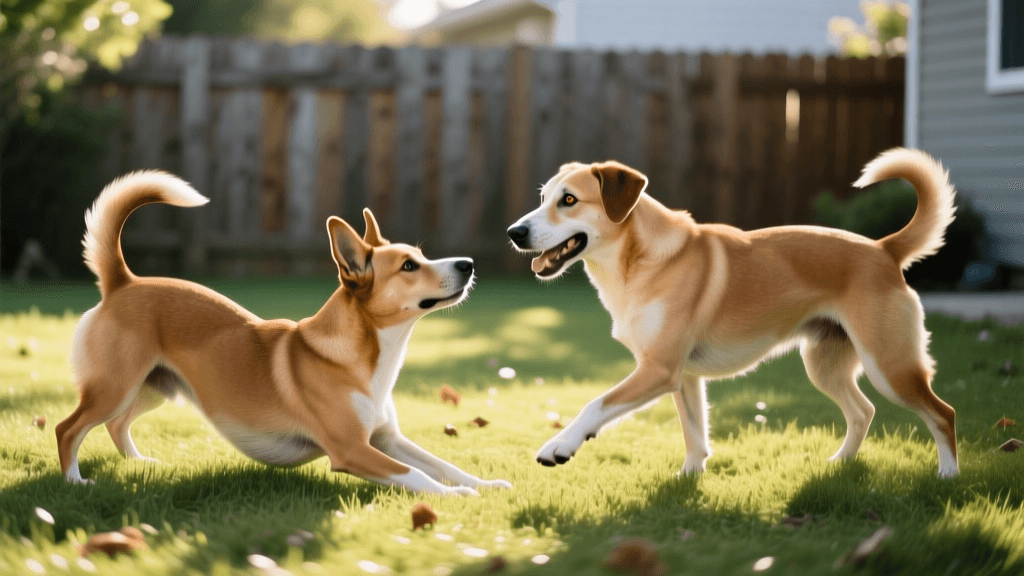
Dogs do not only broadcast scent — they actively collect and process chemical information from their environment and from other individuals. The extended sniffing investigation a dog performs when meeting another dog is a structured information-gathering exercise, not random behaviour. Dogs typically begin with the face and mouth area, then move to the flank, and finally to the anal-genital region, following a sequence that moves from general to highly specific information.
"The dog's nose is essentially a chemical reader, and every surface in the environment is a page of text. What we see as a dog 'just sniffing around' is actually a sophisticated act of reading — gathering information about individuals, events, and timelines that are completely invisible to us."
— Dr. Alexandra Horowitz, Head of the Dog Cognition Lab, Barnard College, Columbia University
The duration of sniffing investigation is not random. Dogs spend significantly more time investigating the scent of unfamiliar dogs than familiar ones, and more time on the scent of dogs of the opposite sex during the breeding season. They also show clear preferences for investigating the scent of dominant individuals, suggesting that chemical signals carry social rank information as well as identity data.
Scent and Emotional State
Recent research has established that dogs can detect emotional states in other animals — including humans — through scent alone. A study conducted at the University of Naples Federico II in 2018 demonstrated that dogs exposed to sweat samples collected from humans experiencing fear or happiness showed measurably different physiological and behavioural responses. Dogs exposed to fear-sweat showed higher heart rates, more stress-related behaviours, and sought more contact with their owners. This suggests that the chemical signals associated with emotional arousal are detectable and meaningful to dogs, adding another layer to the complexity of scent-based communication.
Scent Marking Patterns Across Different Contexts
The frequency and style of scent marking changes dramatically depending on context. Dogs in familiar home territories mark less frequently than dogs in novel environments. Dogs encountering the scent of a rival or unfamiliar conspecific increase their marking rate significantly. The following table summarises key contextual differences in marking behaviour documented across several field studies:
| Context | Average Marks per Hour | Preferred Mark Type | Primary Function |
|---|---|---|---|
| Home territory patrol | 2–4 | Urine on vertical surfaces | Territory maintenance |
| Novel environment exploration | 8–15 | Urine and ground scratch | Identity advertisement |
| Presence of unfamiliar dog scent | 12–20 | Overmarking on existing deposits | Competitive signalling |
| Female in oestrus nearby | 20–30 (males) | Urine, anal gland expression | Reproductive advertisement |
| Post-social interaction | 4–8 | Ground scratch, urine | Social record-keeping |
These patterns reveal that scent marking is not a fixed behaviour but a flexible, context-sensitive communication strategy. Dogs modulate both the quantity and type of scent signals they produce based on social circumstances, much as humans adjust the volume and content of their speech depending on the audience and setting.
Practical Implications for Dog Owners
Understanding scent communication has direct practical value for anyone living with a dog. The extended sniffing walks that dogs prefer — what researcher Alexandra Horowitz calls "smell walks" — are not inefficient or indulgent. They are cognitively enriching activities that allow dogs to process the chemical newspaper of their neighbourhood. Restricting a dog's ability to sniff is a form of sensory deprivation that can contribute to frustration and anxiety.
Scent-based enrichment activities, such as hiding food in the environment, introducing novel scent objects, or participating in nose work sports, tap directly into the dog's primary sensory modality. The American Kennel Club's Scent Work programme, developed in collaboration with researchers at Auburn University's Canine Detection Research Institute, has documented measurable reductions in anxiety-related behaviours in dogs that participate regularly in structured nose work activities.
- Allow dogs extended time to sniff during walks rather than maintaining a constant pace — even 5 to 10 minutes of uninterrupted sniffing has been shown to reduce cortisol levels measurably.
- Introduce novel scent objects (worn clothing from unfamiliar people, natural materials from different environments) to provide cognitive stimulation.
- Avoid using strong chemical cleaners on areas where dogs regularly rest or socialise, as these can mask the scent information dogs rely on to feel secure in their environment.
- Recognise that a dog pulling toward a particular spot on a walk is not being disobedient — it is responding to a specific chemical signal that may carry urgent social information.
- When introducing dogs to each other, allow adequate time for mutual scent investigation before expecting calm social interaction.
Anxiety and stress in dogs are frequently communicated through scent before they become visible in behaviour. Dogs experiencing chronic stress produce elevated levels of cortisol, which alters the chemical composition of their urine and skin secretions. Other dogs detect these changes and respond accordingly — which is one reason why a stressed dog in a household can elevate the anxiety levels of other dogs in the same environment even without any direct interaction.
- Synthetic pheromone products such as dog-appeasing pheromone (DAP) replicate the chemical signals produced by lactating females and have been shown in peer-reviewed trials to reduce anxiety-related behaviours in approximately 70% of dogs tested (Ceva Animal Health clinical trials, 2015).
- Scent from familiar individuals — including the owner's worn clothing — has measurable calming effects on dogs in novel or stressful environments, a finding replicated across multiple studies at institutions including the University of Lincoln's Animal Behaviour Cognition and Welfare Group.
The more we learn about canine olfactory communication, the clearer it becomes that dogs are not simply reacting to smells — they are reading a complex, dynamic, socially structured information system. Every sniff at a lamp post, every careful investigation of a stranger's hand, every circling before elimination is part of a communication repertoire that has been shaped by millions of years of social evolution. Recognising this transforms the experience of living with a dog from managing an animal's behaviour to participating, however partially, in a conversation conducted in a language we are only beginning to understand.
Tom Renshaw
All our authors care for dogs every day — read more of their work on the authors page.