Why Dogs Bark At Strangers
Learn about why dogs bark at strangers with expert tips and data-backed advice.
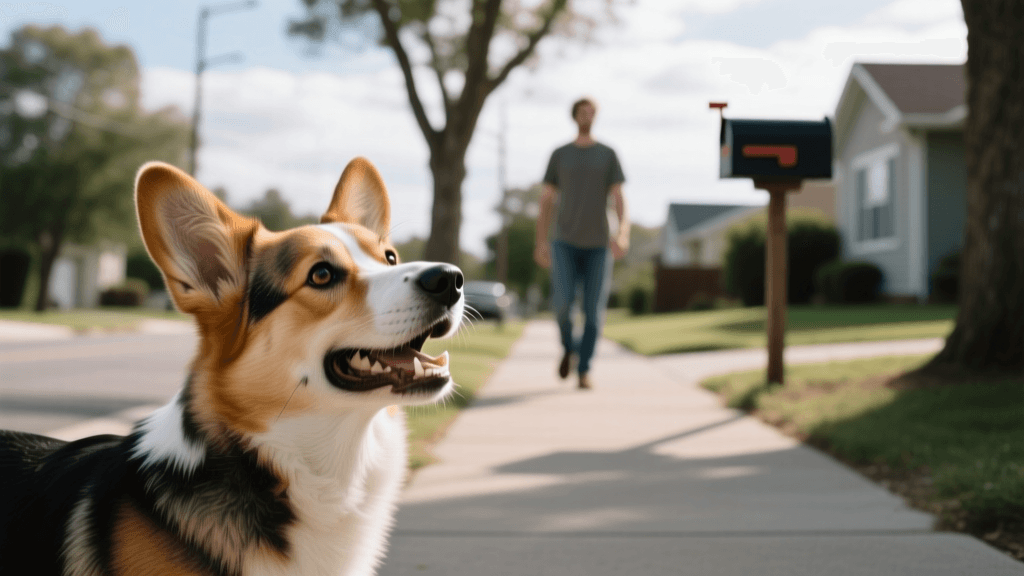
The Evolutionary Roots of Stranger-Directed Barking
When a dog erupts into a volley of barks at an unfamiliar person approaching the front door, it is easy to dismiss the behaviour as simple rudeness or poor training. In reality, that bark represents millions of years of evolutionary pressure compressed into a single, urgent vocalization. Dogs (Canis lupus familiaris) diverged from wolves somewhere between 15,000 and 40,000 years ago, and throughout that domestication process, humans selectively favoured individuals who were alert to outsiders and willing to signal their presence loudly. The result is an animal whose alarm-barking circuitry is deeply wired, not a quirk to be embarrassed about.
Research published by the Max Planck Institute for Evolutionary Anthropology has demonstrated that domestic dogs are uniquely sensitive to human social cues compared to their wolf relatives, yet they retain a strong territorial signalling repertoire. This dual inheritance — social attunement to familiar humans combined with wariness toward strangers — sits at the heart of why your dog barks at the mail carrier every single morning, even after years of uneventful deliveries.
What the Dog Is Actually Communicating
Barking is not a monolithic signal. Ethologists at the Hungarian Academy of Sciences, led by Péter Pongrácz, have conducted acoustic analyses showing that dogs produce acoustically distinct barks in different contexts. Stranger-directed barks tend to be lower in pitch, longer in duration, and delivered in rapid sequences compared to play barks, which are higher-pitched and more sporadic. In one study involving 14 adult dogs, human listeners could correctly identify the emotional context of recorded barks at a rate significantly above chance — roughly 63% accuracy — suggesting the signals carry real semantic content.
The bark directed at a stranger typically carries one or more of the following messages simultaneously: an alert to the social group that an unknown individual is present, a warning to the stranger that their approach has been detected, and a request for information from the owner about how to classify this new person. Dogs are not simply being aggressive; many are genuinely uncertain and are using vocalization to gather social feedback.
Alert Barking vs. Threat Barking
Alert barking is characterised by a sharp, single or double bark followed by a pause during which the dog orients toward the owner and checks for a reaction. The dog's body posture is typically upright but not stiff, ears forward, tail raised but not rigidly so. This is the dog saying, "Did you notice that?" Threat barking, by contrast, involves a sustained series of lower-pitched barks, a stiff body, hackles raised along the dorsal midline, and direct eye contact with the stranger. The dog has moved from information-gathering to active deterrence.
Understanding which type of bark you are hearing matters enormously for how you respond. Reinforcing alert barking with calm acknowledgment ("I see it, thank you") and then redirecting the dog is very different from the intervention required when a dog has escalated to genuine threat display.
The Role of Olfactory and Visual Triggers
Dogs possess approximately 300 million olfactory receptors compared to roughly 6 million in humans, giving them a scent-processing capability estimated to be 10,000 to 100,000 times more sensitive than ours. A stranger approaching the home carries a complex chemical signature — unfamiliar personal scent, traces of other animals, food residues, stress hormones — that the dog detects well before the person comes into visual range. This means the bark can begin before the owner has any awareness of an approaching person, which owners sometimes misinterpret as the dog barking at nothing.
Visual triggers compound the olfactory signal. Dogs are highly sensitive to gait irregularities, unusual clothing (hats, hoods, high-visibility vests), and objects being carried. A person walking with a limp, wearing a large backpack, or carrying an umbrella presents a visual profile that deviates from the dog's learned template of "safe human," and that deviation alone can trigger a barking response even in a dog that is otherwise well-socialised.
Socialisation Windows and Their Lasting Effects
The single most powerful predictor of how a dog responds to strangers in adulthood is the quality of socialisation it received between 3 and 14 weeks of age. This period, identified through landmark research at the Roscoe B. Jackson Memorial Laboratory in Bar Harbor, Maine during the 1950s and 60s by John Paul Scott and John L. Fuller, represents a sensitive window during which the puppy's brain is maximally plastic and experiences form lasting templates for what is normal and safe.
Puppies that encounter a wide variety of people — different ages, ethnicities, body types, clothing styles, and movement patterns — during this window develop broader "safe human" templates. Those with limited exposure develop narrower templates, and anyone falling outside that narrow band is more likely to trigger an alarm response. A dog raised in a rural environment with limited human diversity may bark persistently at people wearing turbans or using wheelchairs not out of aggression but because those individuals fall outside its experiential reference set.
Fear Periods and Secondary Sensitisation
Beyond the primary socialisation window, dogs experience secondary fear periods, typically around 6–14 months of age, during which negative experiences can have an outsized impact on long-term behaviour. A single frightening encounter with a stranger during this window — a person who moves suddenly, shouts, or physically intimidates the dog — can produce lasting sensitisation that manifests as heightened stranger-directed barking for years afterward. This is not stubbornness; it reflects genuine neurological encoding of threat associations in the amygdala, a process well-documented in mammalian fear-conditioning research.
The Neuroscience Behind the Bark
When a dog perceives a stranger, sensory information travels rapidly to the amygdala, the brain's threat-evaluation centre. If the stimulus is classified as potentially threatening, the amygdala activates the hypothalamic-pituitary-adrenal (HPA) axis, triggering a cascade of stress hormones including cortisol and adrenaline. Heart rate increases, muscles tense, and the laryngeal muscles prepare for vocalization — all within milliseconds of the initial perception.
Cortisol levels in dogs have been measured in multiple studies using non-invasive saliva sampling. Research from the University of Bristol's School of Veterinary Sciences found that dogs in high-arousal social situations showed cortisol elevations of 30–60% above baseline, with levels remaining elevated for up to 40 minutes after the triggering event. This physiological reality explains why a dog that barked at a visitor at 2:00 PM may still be reactive to a second visitor at 2:30 PM — the stress chemistry has not yet cleared.
Dopaminergic reward pathways also play a role. If barking successfully causes the stranger to leave (as happens every time the mail carrier departs after delivering the post), the dog receives a powerful operant reinforcement signal. The dog learns: "Barking works." This self-reinforcing loop is one reason stranger-directed barking can intensify over time without intervention, even in dogs that were not particularly reactive as puppies.
Breed Differences and Genetic Contributions
While all dogs share the basic alarm-barking circuitry, selective breeding has produced substantial variation in threshold, intensity, and persistence of stranger-directed barking. The table below summarises general tendencies across broad breed categories, based on behavioural surveys and breed-standard documentation:
| Breed Category | General Barking Tendency | Primary Historical Function | Typical Stranger Response |
|---|---|---|---|
| Livestock Guardian (e.g., Kangal, Anatolian Shepherd) | High, sustained | Deter predators and intruders from flock | Persistent alarm, territorial display |
| Herding (e.g., Border Collie, Australian Shepherd) | Moderate to high | Control livestock movement, alert handler | Alert bark, often followed by watchful silence |
| Terrier (e.g., Jack Russell, Scottish Terrier) | High, sharp | Locate and flush quarry underground | Rapid, high-pitched alarm sequence |
| Retriever (e.g., Labrador, Golden) | Low to moderate | Retrieve game, work closely with handler | Brief alert, rapid social approach |
| Sighthound (e.g., Greyhound, Whippet) | Low | Silent pursuit of prey by sight | Minimal barking, visual tracking |
These are tendencies, not certainties. Individual variation within breeds is substantial, and a well-socialised Kangal may be calmer around strangers than a poorly socialised Labrador. Genetics set the range of likely responses; environment and experience determine where within that range an individual dog lands.
Reading the Full Body Language Picture
A bark never occurs in isolation. To accurately interpret what a dog is communicating to a stranger, the bark must be read alongside the full suite of body language signals the dog is displaying simultaneously. Ethologist Turid Rugaas, whose work on canine calming signals has been widely cited in applied animal behaviour literature, identified over 30 distinct signals dogs use to communicate stress, appeasement, and social intent.
When evaluating a stranger-directed bark, observe the following simultaneously:
- Tail position and movement: A tail held high and stiff with rapid, small wags indicates high arousal and potential aggression. A tail tucked between the legs indicates fear. A loose, mid-height wag suggests uncertainty rather than threat.
- Ear position: Ears pinned flat against the skull signal fear or submission. Ears rigidly forward signal intense focus and potential threat assessment. Ears in a relaxed, natural position suggest lower arousal.
- Piloerection (hackles): Raised hair along the spine, particularly over the shoulders and base of the tail, indicates high sympathetic nervous system activation. It is not exclusively a sign of aggression — fearful dogs also raise their hackles.
- Weight distribution: A dog leaning forward onto its front feet is oriented toward the threat and may be preparing to approach. A dog with weight shifted backward is preparing to retreat or is in a conflict state between approach and avoidance.
- Lip and mouth position: A relaxed, slightly open mouth indicates lower arousal. Lips pulled back to expose teeth, or a tightly closed mouth with visible tension in the jaw muscles, indicates escalating stress.
No single signal is definitive. A dog can wag its tail while growling, or bark while displaying appeasement signals. The full picture, read together, gives the most accurate assessment of the dog's emotional state and likely next behaviour.
Environmental and Contextual Factors That Amplify Barking
The same dog may bark intensely at a stranger in one context and barely react in another. Several environmental variables reliably amplify stranger-directed barking:
- Barrier frustration: Dogs behind fences, windows, or on leashes often bark more intensely than they would if free to approach and investigate. The barrier prevents the dog from completing its natural investigative sequence, creating frustration that amplifies the vocal response. This phenomenon, sometimes called "barrier aggression," is well-documented in shelter behaviour research.
- Territorial proximity: Barking intensity typically increases as a stranger moves closer to the dog's core territory — the home interior being more defended than the front garden, which is more defended than the street. Studies measuring bark frequency and duration have found that intensity peaks when strangers cross a threshold approximately 1–3 metres from the dog's primary resting area.
- Owner anxiety: Dogs are exquisitely sensitive to their owner's emotional state. Research from the University of Vienna's Clever Dog Lab demonstrated that dogs show measurable physiological stress responses that correlate with their owner's cortisol levels. An owner who tenses up when a stranger approaches — tightening the leash, holding their breath, speaking in a higher-pitched voice — communicates to the dog that the situation is indeed threatening, amplifying rather than calming the barking response.
- Time of day and fatigue: Dogs that are under-exercised or in a state of chronic under-stimulation have more arousal energy available to direct at perceived threats. A dog that has had two hours of physical and mental exercise is measurably less reactive to novel stimuli than the same dog after a sedentary day.
"The dog is not misbehaving. The dog is doing exactly what its evolutionary history, developmental experience, and current emotional state are directing it to do. Our job is not to suppress that communication but to understand it and, where necessary, help the dog build new associations that make the world feel safer."
— Dr. Karen Overall, veterinary behaviourist and author of Manual of Clinical Behavioral Medicine for Dogs and Cats, University of Pennsylvania School of Veterinary Medicine
Evidence-Based Approaches to Modifying the Behaviour
For owners who find their dog's stranger-directed barking problematic, the evidence strongly favours counter-conditioning and desensitisation over punishment-based suppression. Punishment — including shock collars, spray bottles, or physical corrections — may temporarily suppress the bark but does not address the underlying emotional state. A dog that has been punished for barking at strangers may stop barking while its fear or arousal remains unchanged or increases, removing a warning signal without removing the underlying tension. This is associated with increased risk of uninhibited biting in the clinical behaviour literature.
Counter-conditioning works by pairing the appearance of a stranger with something the dog finds highly rewarding — typically high-value food — at a distance below the dog's reaction threshold. Over repeated trials, the dog begins to associate the sight of a stranger with the anticipation of reward, gradually shifting the emotional response from alarm to positive anticipation. The process requires patience: meaningful behavioural change typically requires 4–8 weeks of consistent daily practice, and some dogs with deep fear histories require 6 months or more of structured work.
The American Veterinary Society of Animal Behavior (AVSAB), in its 2021 position statement on humane training methods, explicitly recommends positive reinforcement-based approaches as the first-line intervention for fear and anxiety-related behaviours including stranger-directed barking, citing both efficacy data and welfare considerations. Their guidance notes that aversive methods carry a documented risk of increasing aggression in approximately 25% of cases where they are applied to fear-based behaviours.
Priya Sutaria
All our authors care for dogs every day — read more of their work on the authors page.