How Dogs Dream And What They Dream About
Learn about how dogs dream and what they dream about with expert tips and data-backed advice.
The Science Behind Canine Sleep
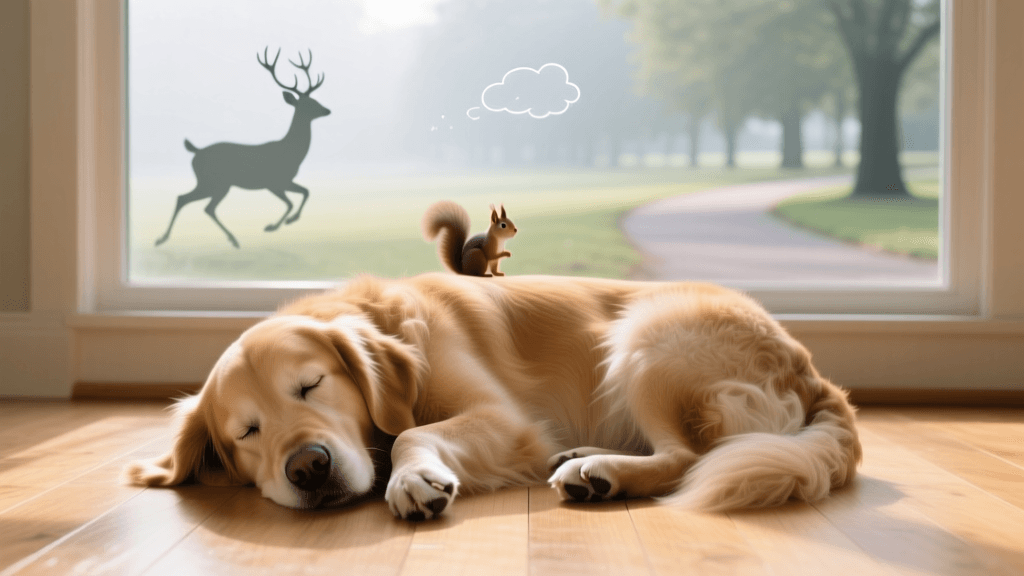
Watch a sleeping dog long enough and you will almost certainly witness something remarkable: a twitch of the paws, a muffled bark, rapid flickering beneath closed eyelids. These are not random muscle spasms. They are the outward signs of a brain actively replaying the day, processing memories, and — by every measure neuroscientists have — dreaming. Dogs share the same fundamental sleep architecture as humans, and that shared biology tells us a great deal about what happens inside a dog's mind when the lights go out.
Sleep in mammals is divided into two broad phases: non-rapid eye movement (NREM) sleep and rapid eye movement (REM) sleep. NREM is the deeper, restorative phase during which the body repairs tissue and consolidates basic physiological functions. REM sleep is where dreaming occurs. During REM, the brainstem sends signals that temporarily paralyse the large skeletal muscles — a mechanism researchers believe evolved to prevent animals from physically acting out their dreams. In dogs, this paralysis is incomplete, which is why you see those characteristic leg paddles and facial twitches.
What Electroencephalography Reveals
The most direct evidence that dogs dream comes from electroencephalography (EEG) studies measuring electrical activity in the brain during sleep. Researchers at the Massachusetts Institute of Technology (MIT) conducted landmark work on rats in 2001, demonstrating that hippocampal neurons fired in the same sequence during REM sleep as they had while the animals navigated a maze earlier that day — essentially replaying the experience. While that study focused on rodents, the neurological parallels to dogs are strong: both species possess a hippocampus with the same functional role in spatial memory and episodic recall.
More directly relevant to dogs, a 2016 study by researchers at Budapest's Eötvös Loránd University used polysomnography to record brain activity in dogs during sleep. The team found clear REM phases characterised by low-amplitude, high-frequency brain waves — the same signature seen in dreaming humans. Dogs in the study spent approximately 12% of their total sleep time in REM, compared to roughly 20–25% in adult humans. Puppies and older dogs showed higher proportions of REM sleep, a pattern also observed in human infants and the elderly.
The Role of the Pons
A small structure in the brainstem called the pons is responsible for the muscle atonia — the temporary paralysis — that accompanies REM sleep. In a series of experiments conducted at Harvard Medical School, researchers selectively deactivated the pons in cats during REM sleep. Without the inhibitory signal, the cats began to move purposefully: stalking, pouncing, and reacting to apparent stimuli that existed only in their sleeping minds. The behaviour was organised and goal-directed, not random. Dogs have an anatomically identical pons, and the same mechanism operates in them. When a dog's legs paddle during sleep, it is the pons failing to fully suppress the motor commands being generated by a dreaming brain.
Memory Consolidation During Sleep
Sleep is not passive downtime for the brain. During NREM and REM cycles, the hippocampus transfers information to the neocortex for long-term storage — a process called memory consolidation. Studies on dogs at the Hungarian Academy of Sciences (2017) found that dogs trained on a new task performed significantly better after a sleep period than after an equivalent period of wakefulness. Dogs allowed to sleep for an average of 1.5 hours after training showed a 15% improvement in task recall compared to dogs kept awake. This suggests that what dogs dream about is, at least in part, the experiences they are actively encoding into long-term memory.
What Dogs Are Likely Dreaming About
Because we cannot ask a dog to describe its dreams, researchers rely on behavioural observation, neuroimaging analogies, and comparative psychology to make educated inferences. The consensus is that dogs dream about the things that occupy their waking lives: familiar people, other animals, smells, physical activities, and emotionally significant events.
Dr. Stanley Coren, a psychologist and canine behaviour researcher at the University of British Columbia, has written extensively on this subject. Based on the MIT rat studies and the known similarities between canine and human sleep architecture, Coren argues that dogs most likely replay recent experiences during REM sleep. A dog that spent the afternoon chasing a ball will probably dream about chasing. A dog that had a tense encounter with another dog may relive that encounter. The content is autobiographical rather than abstract.
Size, Breed, and Dream Frequency
Interestingly, the size of a dog appears to influence both the frequency and duration of its dreams. Smaller dogs tend to enter REM sleep more frequently but for shorter periods — a Chihuahua may cycle into REM every 10 minutes, with each episode lasting roughly 1–2 minutes. Larger breeds like Great Danes or Saint Bernards enter REM less often but sustain it for longer stretches, sometimes 5–10 minutes per episode. This mirrors a pattern seen across mammalian species: smaller animals generally have shorter but more frequent REM cycles than larger ones, possibly because their higher metabolic rates require more frequent sleep-stage transitions.
Breed-specific behaviours also appear to surface during sleep. Sporting breeds like Retrievers and Spaniels frequently show swimming or retrieving motions. Herding breeds such as Border Collies sometimes exhibit the characteristic low crouch and eye-stalk posture. Scent hounds like Beagles often produce vocalizations that sound remarkably like the baying they do on a trail. These observations, while anecdotal, are consistent with the hypothesis that dogs replay species-typical and individually learned behaviours during REM.
Reading Your Dog's Sleep Behaviour
Understanding what normal dream behaviour looks like helps owners distinguish it from signs of distress or neurological problems. The following behaviours during sleep are generally considered normal expressions of REM activity:
- Twitching or paddling of the legs, as if running or swimming
- Soft whimpering, whining, or muffled barking
- Rapid eye movements visible beneath closed lids
- Facial muscle contractions, including lip curling or ear flicking
- Tail wagging or thumping against the floor
- Changes in breathing rate, alternating between slow and rapid
These behaviours typically last between 30 seconds and 2 minutes before the dog either wakes or transitions back into NREM sleep. They are most common in the first REM episode, which usually begins 20–30 minutes after a dog falls asleep.
The question owners most frequently ask is whether they should wake a dog that appears to be having a bad dream. The general guidance from veterinary behaviourists is to avoid doing so unless the dog is in physical danger of injuring itself. Waking a dog abruptly from REM sleep can cause a startle response that, in some dogs, triggers a defensive bite — not out of aggression, but out of disorientation. The old saying "let sleeping dogs lie" has genuine behavioural grounding.
Nightmares and Sleep Disorders in Dogs
Dogs can experience the canine equivalent of nightmares. A dog that has been through trauma — abuse, a serious accident, prolonged isolation — may show signs of distress during REM sleep that go beyond the gentle twitching of a pleasant dream. These include vocalizations that sound fearful rather than playful, more intense physical movements, and difficulty settling back into sleep after waking.
This is consistent with what is known about post-traumatic stress in animals. Research conducted at Walter Reed Army Institute of Research on military working dogs found that dogs exposed to combat environments showed altered sleep patterns, including increased REM disruption and more frequent nighttime waking, compared to non-deployed dogs. The study, published in 2014, identified sleep disturbance as one of the key markers of canine PTSD alongside hypervigilance and avoidance behaviours.
A separate condition worth noting is REM Sleep Behaviour Disorder (RBD), in which the normal muscle atonia of REM sleep fails entirely, causing dogs to act out their dreams with full physical force. Dogs with RBD may leap up, run into walls, or bite at invisible objects. This is distinct from normal dream twitching and warrants veterinary evaluation, as it can be associated with underlying neurological conditions. Certain breeds, including Labrador Retrievers and Doberman Pinschers, appear to have a higher reported incidence of sleep disorders generally.
"The evidence strongly suggests that dogs experience something functionally equivalent to dreaming — that their sleeping brains replay waking experiences in a way that serves memory consolidation and emotional processing. The neurological machinery is the same; only the content differs from our own."
— Dr. Matthew Wilson, neuroscientist, Massachusetts Institute of Technology, speaking on comparative sleep research
How Sleep Needs Vary Across a Dog's Life
Dogs sleep far more than humans. Adult dogs average 12–14 hours of sleep per day, though this varies considerably by age, breed, and activity level. Puppies under 12 weeks old may sleep 18–20 hours per day, with a disproportionately large share of that time spent in REM — reflecting the enormous amount of neural development and learning occurring in those early weeks. Senior dogs also sleep more than healthy adults, often 16–18 hours, and show increased REM disruption as age-related neurological changes accumulate.
| Life Stage | Average Daily Sleep | Approximate REM % | REM Episode Duration |
|---|---|---|---|
| Puppy (under 12 weeks) | 18–20 hours | ~25% | 1–3 minutes |
| Adolescent (3–12 months) | 14–16 hours | ~18% | 2–4 minutes |
| Adult (1–7 years) | 12–14 hours | ~12% | 3–7 minutes |
| Senior (8+ years) | 16–18 hours | ~15% | 2–5 minutes (often fragmented) |
Working dogs and highly active breeds tend to have more consolidated, efficient sleep than sedentary dogs. A Border Collie that has spent the day herding will typically fall into deep NREM sleep faster and show more organised REM cycles than a dog that has been inactive. Physical and mental stimulation during waking hours appears to improve sleep quality — a finding that aligns with human sleep research and has practical implications for how owners structure their dogs' daily routines.
The environment in which a dog sleeps also matters. Dogs are social sleepers by nature; in the wild, canids sleep in proximity to their pack for warmth and security. Domestic dogs that sleep near their owners or in familiar, low-stress environments show fewer nighttime disturbances and more complete sleep cycles. This is not sentimentality — it reflects the neurological reality that a dog's threat-detection systems remain partially active during sleep, and a secure environment allows those systems to stand down enough for deep, restorative rest.
Paying attention to your dog's sleep is, in a real sense, paying attention to its mental health. The quality of a dog's dreams — whether they are replaying a joyful afternoon at the park or reliving something frightening — is a window into its emotional life. Providing rich, positive daily experiences, a secure sleeping environment, and appropriate veterinary care when sleep disturbances arise are among the most direct ways an owner can support not just a dog's waking wellbeing, but the inner life it carries into sleep.
Supporting Healthy Sleep in Your Dog
Given what research tells us about the importance of REM sleep for memory consolidation and emotional regulation, there are concrete steps owners can take to support their dog's sleep quality:
- Establish a consistent sleep location. Dogs sleep best in a familiar spot with a stable temperature. Sudden changes in sleeping environment can disrupt sleep cycles.
- Provide adequate daily exercise. Physical activity promotes deeper NREM sleep and more organised REM cycles. The appropriate amount varies by breed and age, but most adult dogs benefit from at least 45–60 minutes of moderate activity per day.
- Avoid disturbing REM sleep. If your dog is twitching or vocalising softly, it is in the middle of a dream. Unless there is a safety concern, allow the cycle to complete naturally.
- Monitor for signs of sleep disorders. Violent movements, repeated waking, or distressed vocalisations that occur nightly warrant a conversation with a veterinarian or veterinary neurologist.
- Minimise late-evening stress. Stressful events close to bedtime — loud noises, confrontational interactions, unfamiliar visitors — can elevate cortisol levels and fragment sleep architecture in the hours that follow.
The science of canine dreaming is still developing, but the foundational picture is clear. Dogs have the neurological hardware for dreaming, they use sleep to process and consolidate their experiences, and the content of their dreams almost certainly reflects the texture of their daily lives. Every twitch and muffled bark is a small piece of evidence that the inner life of a dog is richer, and more continuous with our own, than we once assumed.
Priya Sutaria
All our authors care for dogs every day — read more of their work on the authors page.