What Your Dogs Tail Position Tells You
Learn about what your dogs tail position tells you with expert tips and data-backed advice.

Reading the Silent Language of the Tail
A dog's tail is one of the most expressive tools in the canine communication arsenal, yet it is also one of the most misread. Many people assume a wagging tail means a happy dog — but the reality is far more nuanced. The position, speed, direction, and stiffness of a tail all carry distinct meanings, and misinterpreting these signals can lead to misunderstandings between dogs and the humans who care for them.
Canine body language is a whole-body system. The tail does not operate in isolation; it works in concert with ear position, facial expression, posture, and vocalisation. That said, the tail is often the most visible and dynamic signal, making it a valuable starting point for anyone wanting to better understand their dog's emotional state.
The Anatomy Behind the Signal
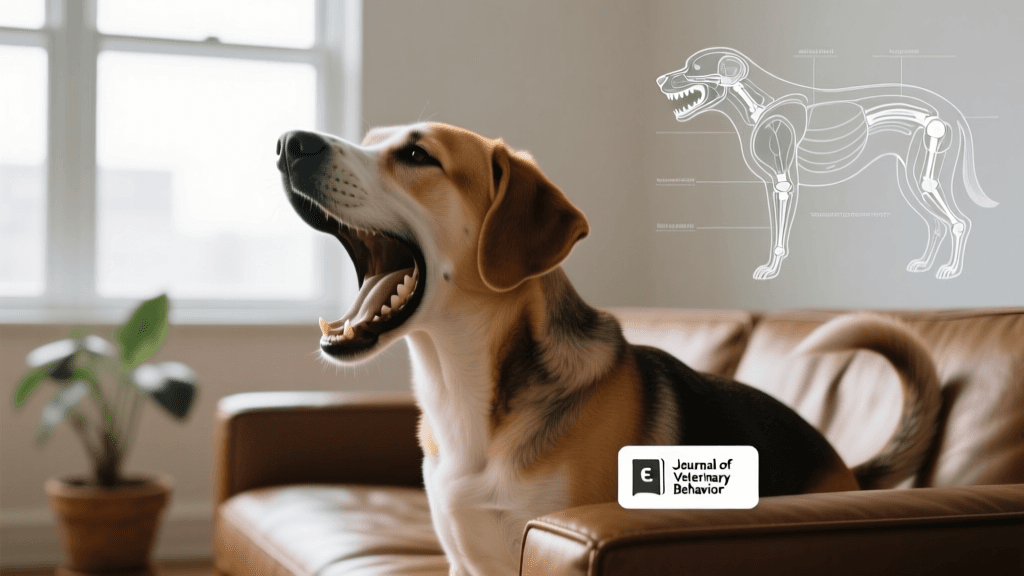
Dogs have between 6 and 23 caudal vertebrae, depending on breed, and the muscles controlling tail movement are connected to the same neural pathways that regulate emotional arousal. Research published by the University of Trento in Italy found that tail wagging is not symmetrically controlled — the left and right hemispheres of the brain govern different emotional states, and this asymmetry is reflected in the direction of the wag itself.
A study conducted by Giorgio Vallortigara and colleagues at the University of Trento, published in Current Biology (2013), demonstrated that dogs wag more to the right side of their body when they see their owner, and more to the left when they encounter an unfamiliar, potentially threatening dog. This left-right asymmetry corresponds to the brain's lateralisation of positive and negative affect — the left hemisphere (controlling right-side movement) is associated with approach and positive emotions, while the right hemisphere governs withdrawal and negative states.
This finding has practical implications. In a follow-up experiment, other dogs shown video footage of a dog wagging left showed elevated heart rates and anxious behaviour, suggesting dogs themselves can read this directional signal — even if humans typically cannot.
Tail Height and What It Communicates
The vertical position of the tail relative to the dog's spine is one of the clearest indicators of arousal and confidence. Ethologists use the concept of a "neutral" tail position — the natural resting angle for a given breed — as a baseline. Deviations above or below this neutral point carry meaning.
High Tail Positions
A tail held high, above the line of the back, signals arousal and confidence. In many contexts this is a positive sign — an excited dog greeting a familiar person. However, a tail held rigidly vertical, sometimes called a "flagpole" tail, is a warning signal. It indicates high arousal combined with assertiveness or potential aggression. The tail may vibrate rapidly in short, stiff movements rather than sweeping broadly.
According to the American Veterinary Society of Animal Behavior (AVSAB), a stiff, high tail combined with a forward-leaning posture and direct eye contact is one of the clearest pre-aggression signals a dog can display. Recognising this combination can prevent bites in both domestic and shelter settings.
Low and Tucked Tail Positions
A tail held below the neutral position indicates submission, anxiety, or fear. The lower the tail, the more intense the emotional state. A tail tucked tightly between the hind legs, pressing against the abdomen, represents maximum fear or submission. Dogs in this posture are not comfortable and should not be approached forcefully.
It is worth noting that some breeds — including Greyhounds, Whippets, and Italian Greyhounds — carry their tails naturally low due to anatomy, not temperament. Context and the full body picture always matter.
The Neutral, Relaxed Tail
A tail hanging loosely at or near the neutral position, with gentle, broad sweeping movements, indicates a calm and content dog. This is the tail position most associated with a dog that is comfortable in its environment and not under stress.
Speed and Arc: The Wag Itself
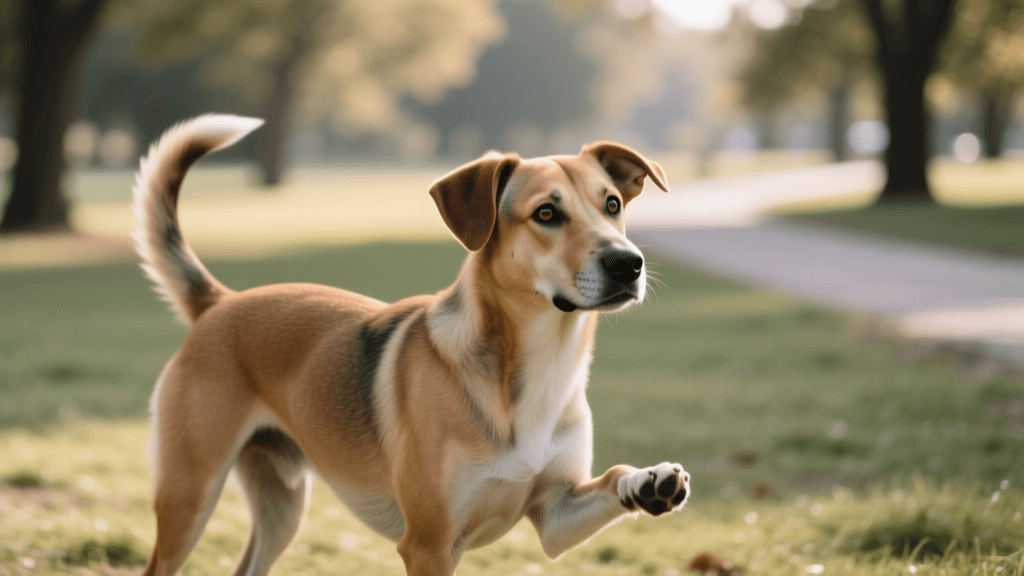
The speed of a wag correlates with the intensity of the emotional state, not necessarily its valence. A slow, tentative wag can indicate uncertainty or mild interest. A fast, full-body wag — where the hindquarters swing along with the tail — typically signals high positive arousal, such as greeting a beloved person after an absence.
Researchers at the Istituto di Scienze e Tecnologie della Cognizione in Rome have studied the relationship between wag frequency and social context. Their data suggest that wag rates above approximately 3–4 cycles per second are associated with high-intensity positive social interactions, while slower wags in the 1–2 cycles per second range appear during investigative or uncertain states.
The arc of the wag also matters. A broad, sweeping wag that moves the entire rear end is generally a positive, relaxed signal. A wag with a small, tight arc — even if fast — can indicate tension. The dog is aroused but constrained, which may reflect conflict or uncertainty about a situation.
"The tail is not a simple on/off happiness indicator. It is a dynamic, lateralised, context-dependent signal that reflects the dog's internal emotional state with remarkable precision — if you know how to read it."
— Dr. Giorgio Vallortigara, Centre for Mind/Brain Sciences, University of Trento, 2013
Breed Differences and Physical Variation
Selective breeding has produced enormous variation in tail morphology, which complicates interpretation. Breeds with naturally curled tails — such as Akitas, Basenjis, and Pugs — cannot lower their tails to signal submission in the same way a Labrador can. Breeds with docked tails, a practice now banned or restricted in many countries including the United Kingdom under the Animal Welfare Act 2006, lose a significant portion of their communicative range.
A study from the University of Edinburgh's Royal (Dick) School of Veterinary Studies found that dogs with docked tails were approached more cautiously by other dogs in off-leash settings, and received fewer friendly social signals. The researchers concluded that tail docking impairs intraspecific communication, potentially increasing social tension and conflict between dogs.
The following table summarises common tail positions and their most likely interpretations across typical domestic dog breeds:
| Tail Position | Movement Quality | Likely Emotional State |
|---|---|---|
| Vertical / flagpole | Stiff, rapid short vibration | High arousal, assertiveness, potential aggression |
| Above neutral, broad sweep | Fast, loose, full-body involvement | Excited, positive, friendly |
| Neutral / horizontal | Slow, relaxed sweep | Calm, content, comfortable |
| Below neutral, slight drop | Slow or still | Mild uncertainty, mild submission |
| Tucked between legs | Still or pressed flat | Fear, extreme submission, pain |
| Horizontal, rigid | Still, pointing back | Focused attention, prey drive (pointing breeds) |
Tail Signals in Social Interaction
Dogs use tail signals differently depending on their audience. Research from the Anthrozoology Institute at the University of Southampton has shown that dogs produce more exaggerated tail movements when interacting with humans than with other dogs, suggesting they have learned to amplify signals for a species that is less adept at reading subtle cues.
When two dogs meet, the initial tail position is a rapid social negotiation. A dog that approaches with its tail held high and stiff is projecting confidence and may be issuing a challenge. A dog that approaches with its tail in a neutral or slightly lowered position is signalling non-threat. Dogs that have been well socialised typically modulate their tail position dynamically throughout a greeting, adjusting as they read the other dog's responses.
- Tail held high on approach: Confidence or challenge — watch for accompanying body stiffness and direct gaze.
- Tail in neutral with loose body: Friendly, non-threatening greeting — typically safe to allow interaction.
- Tail tucked on approach: Fearful or highly submissive — the dog may be overwhelmed and should not be pressured.
- Tail wagging asymmetrically to the left: Negative emotional valence — the dog may be stressed or threatened by what it sees.
- Tail wagging asymmetrically to the right: Positive emotional valence — the dog is likely comfortable and approaching with friendly intent.
Pain, Illness, and Tail Behaviour
Changes in habitual tail carriage can also indicate physical problems. A dog that normally carries its tail high but suddenly holds it low or still may be experiencing pain in the tail, lower back, or anal region. Conditions such as limber tail syndrome — also called cold water tail or swimmer's tail — cause the tail to hang limply from the base, often after swimming in cold water or prolonged crating. The condition is painful and typically resolves within a few days with rest, but veterinary assessment is advisable.
Anal gland discomfort, spinal disc issues, and injuries to the caudal vertebrae can all manifest as changes in tail position or movement. If a dog's tail behaviour changes suddenly without an obvious behavioural explanation, a veterinary examination should be the first step.
- Note the dog's normal, resting tail position as a personal baseline.
- Observe whether any change in tail carriage coincides with specific activities, environments, or interactions.
- Check for other signs of discomfort: reluctance to sit, scooting, licking at the base of the tail, or vocalisation when the tail is touched.
- Consult a veterinarian if the change persists for more than 24–48 hours or is accompanied by other symptoms.
Practical Application for Dog Owners
Understanding tail signals is not an academic exercise — it has real consequences for safety and welfare. Children are disproportionately represented in dog bite statistics, in part because they are less likely to read warning signals correctly. Teaching children to look at the whole dog, including tail position and stiffness, before approaching is one of the most effective bite prevention strategies available.
For multi-dog households, monitoring tail signals during introductions and play can help owners intervene before tension escalates. Play that begins with loose, high wags and relaxed bodies can shift if one dog becomes overstimulated — the tail may stiffen, the arc may narrow, and the body may become more rigid. Recognising this shift early allows for a timely break before conflict develops.
Professional trainers and behaviourists routinely use tail reading as part of their assessment toolkit. Certified Applied Animal Behaviourists (CAABs) and veterinary behaviourists trained through programmes at institutions such as the Cummings School of Veterinary Medicine at Tufts University incorporate systematic body language assessment — including tail analysis — into behavioural consultations and treatment plans for anxiety, aggression, and fear-based disorders.
The more time you spend observing your own dog in a variety of contexts — at rest, during play, when meeting strangers, when startled — the more accurately you will be able to read their individual baseline and detect meaningful deviations. Every dog has a personal communication style built on the shared foundation of canine body language, and the tail is one of the most reliable windows into what they are experiencing in any given moment.
Anouk Beaumont
All our authors care for dogs every day — read more of their work on the authors page.