Top Puppy Breeds for Remote Workers: 2026 Training Guide
Discover the best puppy breeds for remote workers in 2026 and learn essential home office independence training protocols to prevent separation anxiety.
Why Remote Work Requires Specialized Puppy Training in 2026
As we navigate the flexible, hybrid work models of 2026, bringing a new puppy into a home office environment is a dream for many remote professionals. However, the reality of balancing Zoom meetings, deep-focus tasks, and puppy potty breaks can quickly become overwhelming. The secret to a harmonious home office isn't just about picking a 'low-energy' dog; it is about selecting a breed with the right psychological profile for independence and implementing a rigorous 'Home Office Independence Training' protocol from day one.
Remote workers face a unique behavioral challenge: the puppy is never truly alone, which can inadvertently lead to severe separation anxiety when the owner eventually leaves for errands, hybrid office days, or social events. According to the ASPCA, dogs that are constantly in the presence of their owners are at a higher risk of developing distress behaviors when that routine is inevitably broken. Therefore, the best puppy breeds for remote workers are those that respond exceptionally well to boundary training, place commands, and solitary enrichment.
Top 3 Puppy Breeds for Remote Workers (And How to Train Them)
1. The Standard Poodle: The Intelligent Co-Worker
Standard Poodles are remarkably intelligent, highly trainable, and thrive when given a 'job.' For a remote worker, a Poodle's job is learning to settle on a mat and observe quietly. Because they are so smart, they can easily become bored and invent their own games (like chewing your wireless mouse) if not mentally stimulated. Training a Poodle for the home office requires heavy emphasis on puzzle toys and obedience drills before your workday begins. A 30-minute morning training session focusing on impulse control will yield a calm, focused Poodle for the next four hours.
2. The Greyhound: The 45-MPH Couch Potato
Despite their racing background, Greyhounds are notorious couch potatoes. They are incredibly sensitive, quiet, and naturally inclined to sleep for 18 hours a day. For remote workers who need absolute silence during conference calls, a Greyhound is an excellent choice. The primary training focus for a Greyhound puppy is crate training and 'place' command generalization. Because they are sensitive, they do not respond well to harsh corrections; instead, use high-value treats like freeze-dried liver to reward quiet settling on their designated office bed.
3. The Cavalier King Charles Spaniel: The Affectionate Assistant
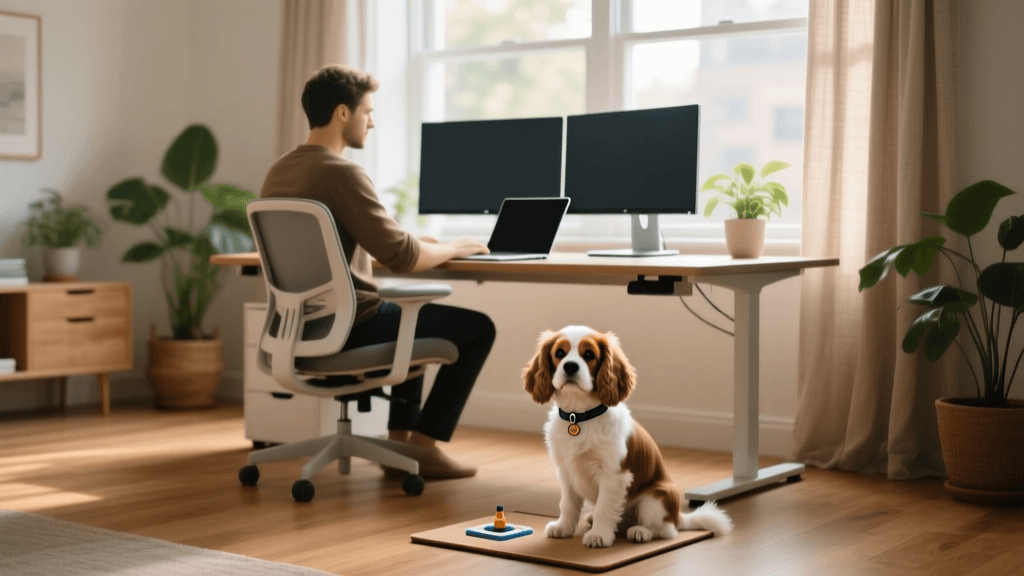
Cavaliers are eager to please, deeply affectionate, and highly adaptable to indoor living. They are the ultimate 'velcro dogs,' which makes them wonderful companions but a risk for separation anxiety. If you choose a Cavalier, your training must heavily prioritize independence. You must teach them that being in a different room, or behind a baby gate while you work, is a safe and rewarding experience. According to the American Kennel Club (AKC), teaching a solid 'place' command is foundational for establishing healthy boundaries with affectionate breeds.
The 2026 Home Office Independence Training Protocol
To ensure your puppy thrives in a remote work environment, follow this structured, three-phase training protocol. This routine is designed to build duration, focus, and independence.
Step 1: Mastering the 'Place' Command for Video Calls
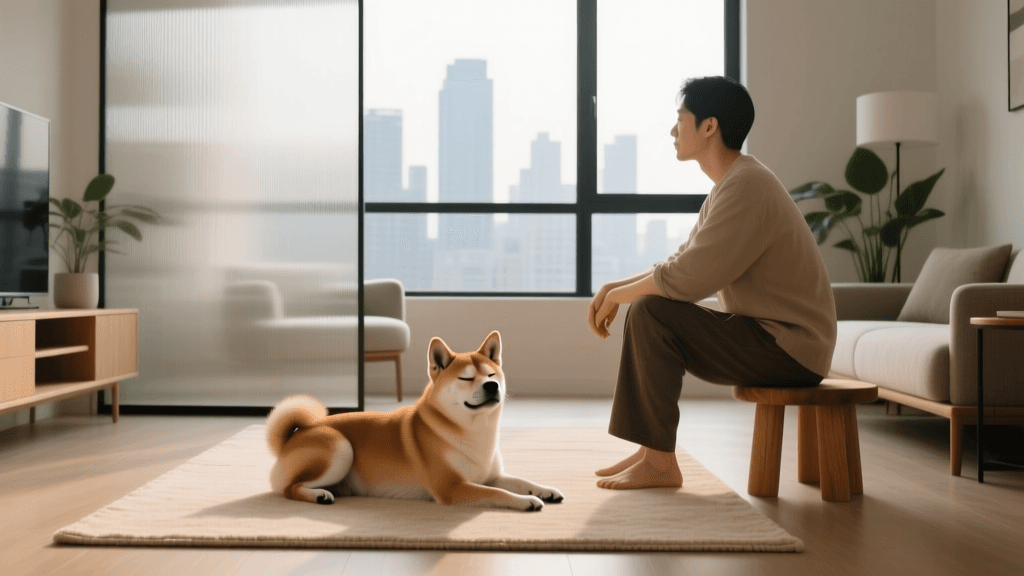
The 'place' command is non-negotiable for remote workers. You need your dog to go to a specific bed and stay there while you are on camera.
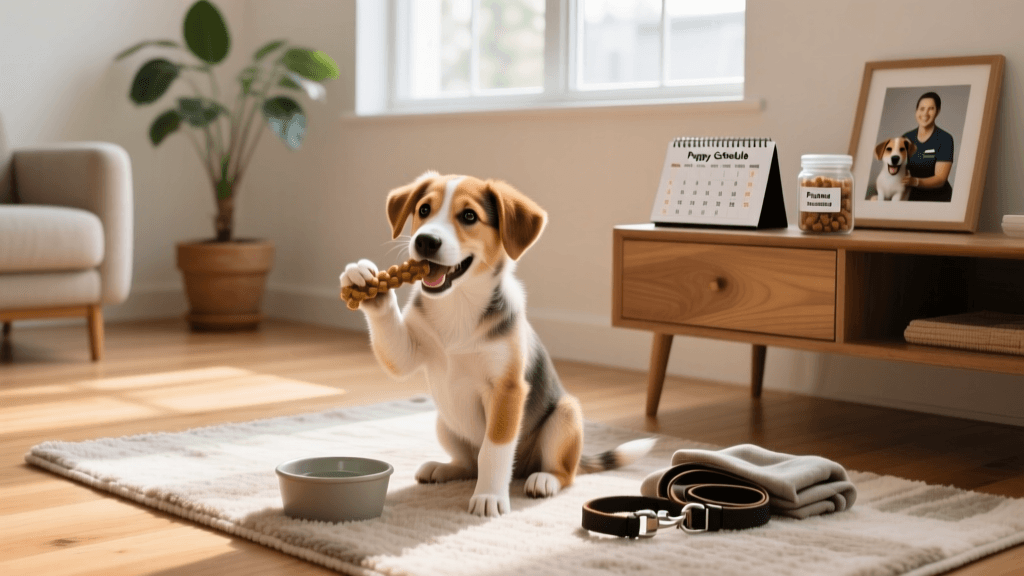
- Week 1 (Luring and Marking): Use a raised, chew-proof bed like the Kuranda PVC Dog Bed ($140). Lure the puppy onto the bed with a high-value treat (e.g., Zuke's Mini Naturals). The moment all four paws are on the bed, use a clicker or a verbal marker ('Yes!') and reward.
- Week 2 (Adding Duration): Delay the reward. Ask the puppy to stay on the bed for 5 seconds, then 10, then 30. Feed treats continuously while they remain on the bed to reinforce that staying put equals a steady income of rewards.
- Week 3 (Adding Distractions): Begin simulating work. Sit at your desk, type loudly, and move your mouse. If the puppy breaks the 'place' command, calmly guide them back without a treat. Only reward when they hold the position despite your movements.
- Week 4 (The Zoom Test): Start a mock video call. Speak in your normal 'meeting voice.' Toss treats to the bed intermittently to reward calm behavior while you 'present' to your screen.
Step 2: Keyboard and Audio Desensitization
Puppies can be startled or overly stimulated by the sudden clacking of mechanical keyboards or the chime of notification bells. To prevent your puppy from barking at every Slack notification, you must desensitize them to your office soundscape.
- Record the sounds of your typing, phone ringing, and notification chimes on your smartphone.
- Play the recording at a very low volume (10%) while feeding the puppy their daily kibble or playing a gentle game of tug.
- Gradually increase the volume by 10% each day over two weeks.
- Pair the sound of an incoming video call ringtone with a high-value chew, like a bully stick or a frozen West Paw Toppl ($25). The puppy will learn that a ringing phone predicts a delicious treat, eliminating anxiety or reactive barking.
Step 3: Preventing Velcro-Dog Separation Anxiety
Because you are home 24/7, your puppy assumes this is the baseline of reality. You must artificially create absences to build their confidence. The Humane Society emphasizes that independent enrichment is vital for preventing distress when dogs are left alone.
- The Baby Gate Protocol: Set up a baby gate at your office door. Put the puppy in a safe, puppy-proofed room with a snuffle mat and a long-lasting chew. Close the gate and work for 30 minutes. They know you are there, but they cannot access you. This builds emotional resilience.
- False Departures: Twice a week, put on your shoes, grab your keys, walk out the front door, and immediately return without acknowledging the puppy. This strips the 'departure cues' of their anxiety-inducing power.
- Camera Monitoring: Use a pet camera like the Furbo 360 ($215) to monitor your puppy when you leave for a 20-minute coffee run. If they settle within 5 minutes, your independence training is working. If they pace and whine, you need to shorten your absences and increase solo-enrichment activities.
Breed Training Comparison Chart
| Breed | Primary Training Focus | Daily Mental Enrichment Needed | Separation Anxiety Risk |
|---|---|---|---|
| Standard Poodle | Impulse control & 'Job' assignment | High (60+ mins of puzzles/training) | Moderate |
| Greyhound | Crate training & settling | Low (20 mins of sniffing/chewing) | Low |
| Cavalier King Charles | Independence & boundary training | Moderate (40 mins of interactive play) | High |
Essential 2026 Training Gear for the Home Office
Success in home office puppy training relies heavily on managing the environment. Investing in the right gear in 2026 will save you from ruined electronics and behavioral regressions.
- Kuranda Chewproof Dog Bed ($140): The gold standard for the 'place' command. Its raised, PVC design prevents chewing and keeps the dog cool during long work sessions.
- West Paw Toppl ($25): An interlocking treat toy that you can freeze with bone broth and kibble. Perfect for keeping a puppy occupied during a 45-minute team stand-up meeting.
- Snuffle Mat ($30): Simulates foraging and tires out a puppy's brain in just 15 minutes. Use this right before you need an hour of uninterrupted deep work.
- Furbo 360 Dog Camera ($215): Essential for monitoring separation anxiety protocols. The 2026 models feature advanced AI bark alerts and treat-tossing capabilities to reward quiet behavior remotely.
- Snappy Trainer ($15): A safe, non-toxic deterrent strip you can place on the edges of your desk or on top of loose cables to teach the puppy that your workspace is strictly off-limits.
Conclusion
Working from home with a puppy in 2026 is a highly rewarding experience, provided you approach it with a structured training mindset. By selecting a breed that aligns with your work style—whether it's the brilliant Standard Poodle, the sleepy Greyhound, or the loving Cavalier—and rigorously applying the Home Office Independence Training Protocol, you will cultivate a polite, confident, and settled companion. Remember, independence is a learned skill. Start your 'place' commands, audio desensitization, and false departures on day one, and your home office will remain a sanctuary of productivity and canine companionship.
hannah-wickes
All our authors care for dogs every day — read more of their work on the authors page.